





In Current Affairs for 09 September 2026, we will see the latest national and international current affairs news. These important current affairs will be beneficial for your upcoming NDA, CDS, CDS OTA, AFCAT, TA, Agniveer Army, Agniveer Navy, Agniveer Air Force, Women Military Police, INET, MNS, ACC exams, SCO, PCSL, CAPF, and SSB interviews, and direct entries for Army, Navy, and Air Force like SSC Tech, TGC, JAG, NCC, TES, 10+2 Cadet. Download a PDF file about current events at the end of this article. Let us now see the Current Affairs.
Current Affairs 09 September 2026
Himalaya Diwas 2026
Himalaya Diwas is observed every year on 9 September to draw attention to the ecological, cultural and economic importance of the Himalayan region. The day also highlights the urgent need to protect the fragile Himalayan environment.
Significance in 2026
The observance has gained additional importance in 2026 amid reports indicating continued glacier retreat and declining seasonal snow cover across the Hindu Kush Himalaya (HKH) region.
According to the 2026 assessment cited in the source, glaciers in the HKH lost approximately 12% of their glacier coverage and 9% of their estimated ice mass between 1990 and 2020.
The rate of ice loss has also accelerated, with the pace reportedly doubling since 2000. Some glaciers have experienced ice losses of up to 27 metres since 1975.
Declining Snow Persistence
The ICIMOD Snow Update 2026 reported that snow persistence in the Hindu Kush Himalaya was 27.8% below the average. This marked the fourth consecutive year of below-normal snow persistence in the region.
Origin of Himalaya Diwas
Himalaya Diwas was first declared in Uttarakhand in 2015. Its objectives include increasing awareness about Himalayan conservation, promoting sustainable development and encouraging community participation in protecting the region.
Key Facts
- Himalaya Diwas: 9 September
- First declared: 2015
- State: Uttarakhand
- Region: Hindu Kush Himalaya
- Major concerns: Glacier loss and declining snow persistence
- 2026 snow persistence: 27.8% below average
- Consecutive years of below-normal snow: 4

27th World Knowledge Forum Begins in Seoul
The 27th World Knowledge Forum (WKF) began in Seoul, South Korea, on 8 September 2026. The three-day international gathering brings together political leaders, business executives, academics and technology experts to discuss major global developments.
The event will continue until 10 September 2026.
Theme
The theme of the 27th World Knowledge Forum 2026 is:
“The Promethean Moment: Architecting the Co-Intelligence Order.”
Major Areas of Discussion
The forum focuses on some of the most important issues shaping the future, including:
- Artificial intelligence
- Human-machine collaboration
- Future of the global economy
- Technological transformation
- Emerging global trends
Venue and Organiser
The 2026 edition is being held at Jangchung Arena and The Shilla Seoul.
The event is sponsored by the Maekyung Media Group.
Why It Matters
The World Knowledge Forum provides an international platform for experts and decision-makers to exchange ideas on technological, economic and geopolitical changes. The 2026 discussions place particular emphasis on the relationship between humans and artificial intelligence.
Quick Revision
- Event: 27th World Knowledge Forum
- Location: Seoul, South Korea
- Dates: 8–10 September 2026
- Theme: The Promethean Moment: Architecting the Co-Intelligence Order
- Key topics: AI, human-machine cooperation and global economy
- Sponsor: Maekyung Media Group
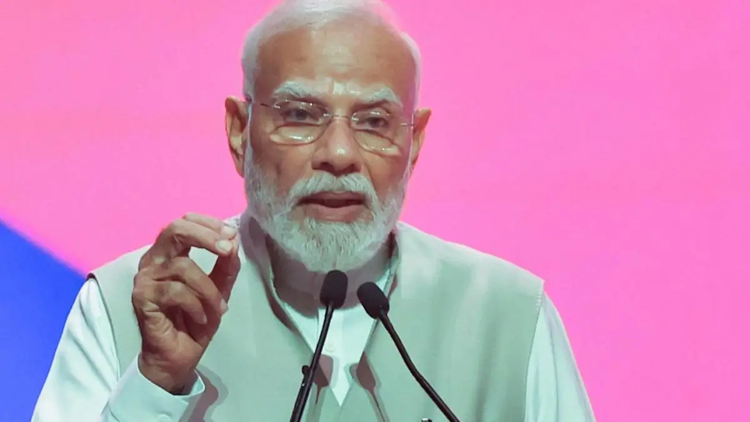
PM Modi Inaugurates Global Fintech Fest 2026
Prime Minister Narendra Modi inaugurated the Global Fintech Fest 2026 in Mumbai on 8 September 2026.
The event focused on the role of emerging technologies, financial inclusion and consumer trust in shaping India’s future fintech ecosystem.
Moving Beyond Digital Payments
Addressing global fintech leaders and investors, PM Modi emphasised that India’s fintech growth should move beyond payments and expand access to:
- Credit
- Insurance
- Savings
- Pension services
He also highlighted the transformative impact of UPI on India’s digital payments landscape.
Digital Public Infrastructure
India’s emergence as a major fintech hub has been supported by its Digital Public Infrastructure (DPI).
Important components include:
- Aadhaar
- UPI
- Mobile connectivity
- JAM Trinity
These digital systems have helped expand access to financial services across different sections of society.
Economic Growth
PM Modi also highlighted India’s economic performance amid global uncertainties, pointing to 7.8% economic growth during the April–June period.
Financial Inclusion
The scale of India’s financial inclusion was reflected in the number of accounts and digital identities. As of 26 August 2026, the number of Jan Dhan accounts had crossed 59.15 crore, while Aadhaar registrations had exceeded 144 crore by March 2026.
Quick Revision
- Event: Global Fintech Fest 2026
- Venue: Mumbai
- Date: 8 September 2026
- Inaugurated by: Prime Minister Narendra Modi
- Key focus: Fintech, technology, financial inclusion and consumer trust
- Major digital platforms: Aadhaar, UPI and JAM Trinity
- Jan Dhan accounts: Over 59.15 crore
Shekhawati Havelis Added to UNESCO Tentative List
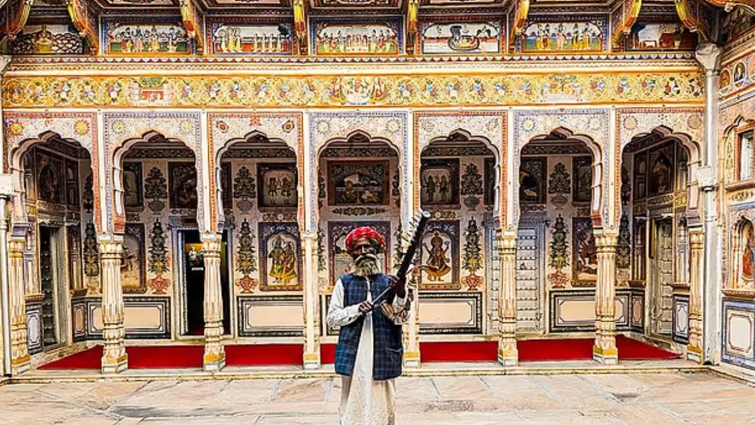
The historic Shekhawati Havelis of Rajasthan have achieved an important milestone in their journey towards possible international heritage recognition after being included in the UNESCO Tentative List.
Architectural and Cultural Importance
The havelis of Shekhawati are renowned for their distinctive architecture and artistic features. They are characterised by:
- Colourful façades
- Elaborate fresco paintings
- Large courtyards
- Grand architectural designs
Together, these structures provide valuable visual evidence of the lifestyle, traditions and cultural heritage of northeastern Rajasthan.
What Does Tentative List Mean?
Being included on the UNESCO Tentative List does not mean that the Shekhawati Havelis have already received World Heritage Site status.
The Tentative List is an important preliminary stage through which countries identify heritage properties that may subsequently be nominated for inscription on the UNESCO World Heritage List.
Significance
The listing increases international attention towards the architectural and cultural heritage of Shekhawati and can support efforts for its long-term conservation.
Quick Revision
- Heritage: Shekhawati Havelis
- State: Rajasthan
- Status: UNESCO Tentative List
- Known for: Frescoes, colourful façades and courtyards
- Important distinction: Tentative List ≠ World Heritage List
Tung Chee-hwa, Hong Kong’s First Post-Colonial Leader, Dies at 89
Tung Chee-hwa, the first Chief Executive of the Hong Kong Special Administrative Region (HKSAR), died in Hong Kong at the age of 89.
He became Hong Kong’s first Chief Executive after Britain transferred sovereignty over Hong Kong to China on 1 July 1997.
Political Career
Tung served as Chief Executive from 1 July 1997 until 12 March 2005. He resigned during his second term before completing it.
The position of Chief Executive is the head of the Hong Kong Special Administrative Region under the Basic Law, which came into force on 1 July 1997.
Early Life and Business Career
Tung was born in Shanghai on 29 May 1937. He was the eldest son of shipping entrepreneur C.Y. Tung.
In 1982, Tung took control of the family’s shipping business, Orient Overseas. The company later became part of COSCO Shipping Holdings following its sale in 2018.
Legacy
Tung played a historic role in Hong Kong’s transition from British rule to the post-1997 administrative system under Chinese sovereignty.
According to the supplied information, Forbes estimated his wealth at approximately $3.2 billion at the time of his death, with much of it connected to the family’s shipping business and the later sale of Orient Overseas International.
Quick Revision
- Name: Tung Chee-hwa
- Born: 29 May 1937
- Birthplace: Shanghai
- First Chief Executive of: HKSAR
- Term: 1 July 1997 – 12 March 2005
- Age at death: 89
- Business: Orient Overseas

India Launches Advanced Ocean Research Vessel ORV Sagar Manthan
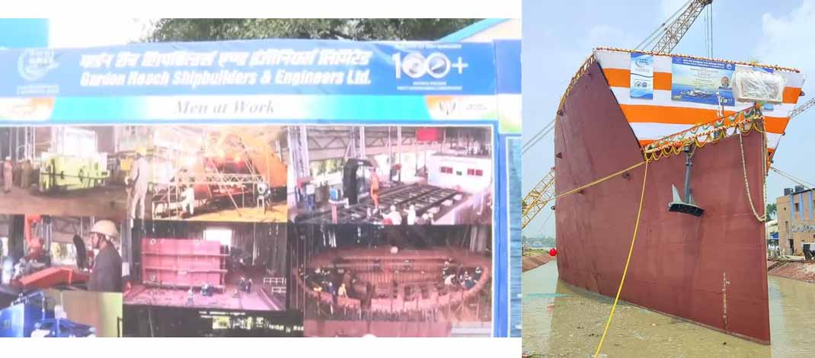
India launched the advanced Ocean Research Vessel (ORV) Sagar Manthan on 9 September 2026 at the Rishi Bankim Shipyard in Kolkata.
The vessel, identified as Yard 3041, has been designed and constructed by Garden Reach Shipbuilders & Engineers (GRSE) for the National Centre for Polar and Ocean Research (NCPOR) under the Ministry of Earth Sciences.
Built for Deep-Sea Research
ORV Sagar Manthan is a specialised platform designed for marine scientific research, oceanographic observation and deep-sea operations.
The vessel is approximately 89.5 metres long and has been designed to operate in challenging environments, including the Southern Ocean.
Part of Deep Ocean Mission
The vessel has been developed under Vertical-4, Deep Ocean Survey and Exploration, of the Government of India’s Deep Ocean Mission.
The project has an estimated cost of around ₹840 crore, while the vessel is expected to have a service life of approximately 30 years.
Major Capabilities
Sagar Manthan will support a wide range of scientific and underwater activities, including:
- Deep-sea mineral exploration
- Subsea oil and gas seismic surveys
- Seabed sampling
- Deployment of Autonomous Underwater Vehicles (AUVs)
- Deployment of Remotely Operated Vehicles (ROVs)
- Marine geological research
- Ocean-resource assessment
Replacing Sagar Kanya
The new vessel is expected to gradually replace ORV Sagar Kanya, India’s earlier multidisciplinary oceanographic research vessel.
Sagar Kanya was procured from Germany in 1983 and served for approximately 43 years.
Significance
Sagar Manthan will strengthen India’s ability to conduct scientific research and resource exploration in deep and challenging ocean environments. It is an important asset for expanding India’s capabilities in marine science and deep-ocean exploration.
Quick Revision
- Vessel: ORV Sagar Manthan
- Launch date: 9 September 2026
- Shipyard: Rishi Bankim Shipyard, Kolkata
- Builder: GRSE
- Length: 89.5 metres
- Project cost: About ₹840 crore
- Service life: 30 years
- Mission: Deep Ocean Mission
- Replaces: ORV Sagar Kanya
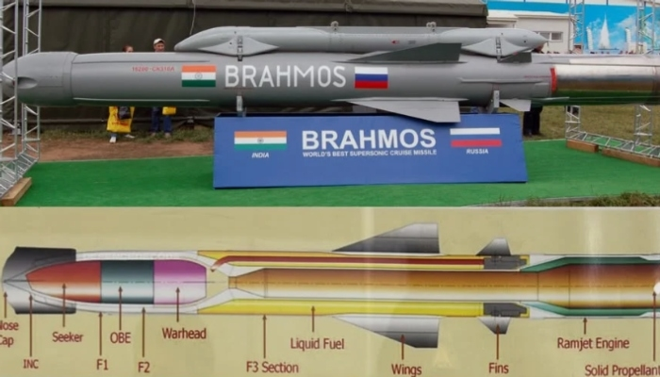
India’s Emerging BrahMos Belt Strategy
The concept of a “BrahMos Belt” refers to a proposed network of coastal supersonic cruise-missile deployments by Southeast Asian countries around the South China Sea.
The concept highlights the growing role of the BrahMos missile in India’s defence exports and regional security partnerships.
What is BrahMos?
BrahMos is a supersonic cruise missile jointly developed by India and Russia through BrahMos Aerospace.
The missile derives its name from the Brahmaputra and Moskva rivers.
It is known for its high speed and sea-skimming flight profile, which enhances its effectiveness in maritime strike missions.
Philippines Deal
The Philippines has received the shore-based variant of BrahMos for its coastal defence batteries under a contract valued at approximately $375 million.
Other Southeast Asian countries, including Vietnam and Indonesia, have also been associated with discussions regarding potential BrahMos procurement, although the status of individual engagements has varied.
Strengthening Defence Exports
India and Russia are pursuing upgrades to the BrahMos system aimed at improving its operational capabilities and export potential.
The missile represents one of India’s prominent examples of India-Russia defence co-development.
India has also strengthened institutional support for defence exports through defence wings in Indian embassies.
According to the supplied information, the defence-diplomacy budget was increased to ₹400 crore for 2025–26, with a target of establishing 85–90 defence wings by 2030.
Strategic Significance
The growing international interest in BrahMos can strengthen India’s defence-industrial base and expand its role as a supplier of advanced military technology.
A wider network of BrahMos-equipped coastal systems could also contribute to deterrence and maritime security in the Indo-Pacific.
Quick Revision
- Missile: BrahMos
- Developed by: India and Russia
- Organisation: BrahMos Aerospace
- Name derived from: Brahmaputra + Moskva
- Philippines contract: About $375 million
- Type: Supersonic cruise missile
- Key feature: Sea-skimming capability
- “BrahMos Belt”: Proposed regional coastal missile network
Akasa Air Operates First Commercial Flight Using 1% Sustainable Aviation Fuel
Akasa Air operated its first commercial flight using a blend containing 1% Sustainable Aviation Fuel (SAF) on 8 September 2026.
The flight operated between Mumbai and Goa, with the SAF blend supplied by Bharat Petroleum Corporation Limited (BPCL).
What is Sustainable Aviation Fuel?
SAF is an alternative aviation fuel produced using non-fossil sources and renewable feedstocks. These can include:
- Used cooking oil
- Agricultural residues
- Municipal waste
- Other renewable raw materials
SAF can be blended with conventional aviation turbine fuel and used in existing aircraft and airport fuel infrastructure, subject to applicable certification and blending limits.
Why SAF Matters
Aviation is a major source of carbon emissions. SAF blending is one approach being explored to reduce the lifecycle carbon footprint of aviation.
The 1% blend used by Akasa Air represents a commercial demonstration under actual operational conditions. Such demonstrations help assess fuel handling, refuelling processes and flight performance.
BPCL-Akasa Partnership
BPCL and Akasa Air signed a Memorandum of Understanding (MoU) on 14 July 2026 to establish a framework for SAF supply and offtake across India.
The arrangement covers areas such as supply-chain planning, fuel availability and future commercial deployment of SAF in Indian aviation.
Significance
The flight represents an important step in India’s efforts to explore cleaner aviation-fuel alternatives and develop the infrastructure required for greater SAF adoption.
Quick Revision
- Airline: Akasa Air
- First SAF commercial flight: 8 September 2026
- SAF blend: 1%
- Route: Mumbai–Goa
- SAF supplier: BPCL
- MoU date: 14 July 2026
- SAF objective: Reduce lifecycle carbon emissions

Review Questions
1. Himalaya Diwas is observed annually on which date?
A. September 5
B. September 7
C. September 9
D. September 11
Answer: C. September 9
2. According to the 2026 assessment, glaciers in the Hindu Kush Himalaya lost approximately what percentage of their glacier coverage between 1990 and 2020?
A. 8%
B. 12%
C. 15%
D. 20%
Answer: B. 12%
3. What is the theme of the 27th World Knowledge Forum 2026?
A. Technology for a Sustainable World
B. The Future of Global Innovation
C. The Promethean Moment: Architecting the Co-Intelligence Order
D. Artificial Intelligence for Humanity
Answer: C. The Promethean Moment: Architecting the Co-Intelligence Order
4. Where was the Global Fintech Fest 2026 inaugurated by Prime Minister Narendra Modi?
A. Bengaluru
B. Hyderabad
C. Mumbai
D. New Delhi
Answer: C. Mumbai
5. Which of the following is a major component of India’s Digital Public Infrastructure mentioned in the context of fintech?
A. Aadhaar
B. UPI
C. JAM Trinity
D. All of the above
Answer: D. All of the above
6. The Shekhawati Havelis of Rajasthan have been added to which UNESCO category?
A. World Heritage List
B. Intangible Cultural Heritage List
C. Tentative List
D. Memory of the World Register
Answer: C. Tentative List
7. ORV Sagar Manthan has been developed under which mission?
A. National Mission for Clean Ganga
B. Deep Ocean Mission
C. Sagarmala Programme
D. National Water Mission
Answer: B. Deep Ocean Mission
8. Which company has developed ORV Sagar Manthan for the National Centre for Polar and Ocean Research?
A. Cochin Shipyard Limited
B. Mazagon Dock Shipbuilders Limited
C. Garden Reach Shipbuilders & Engineers
D. Hindustan Shipyard Limited
Answer: C. Garden Reach Shipbuilders & Engineers
9. BrahMos is a joint development between India and which country?
A. France
B. Israel
C. Russia
D. United States
Answer: C. Russia
10. Akasa Air’s first commercial flight using a 1% SAF blend operated between which two cities?
A. Delhi and Mumbai
B. Mumbai and Goa
C. Bengaluru and Chennai
D. Mumbai and Ahmedabad
Answer: B. Mumbai and Goa


