





In Defence Current Affairs for 08 October 2026, we will see the latest national and international current affairs news. These important current affairs will be beneficial for your upcoming NDA, CDS, CDS OTA, AFCAT, TA, Agniveer Army, Agniveer Navy, Agniveer Air Force, Women Military Police, INET, MNS, ACC exams, SCO, PCSL, CAPF, and SSB interviews, and direct entries for Army, Navy, and Air Force like SSC Tech, TGC, JAG, NCC, TES, 10+2 Cadet. Download a PDF file about current events at the end of this article. Let us now see the Current Affairs.
Defence Current Affairs 08 October 2026
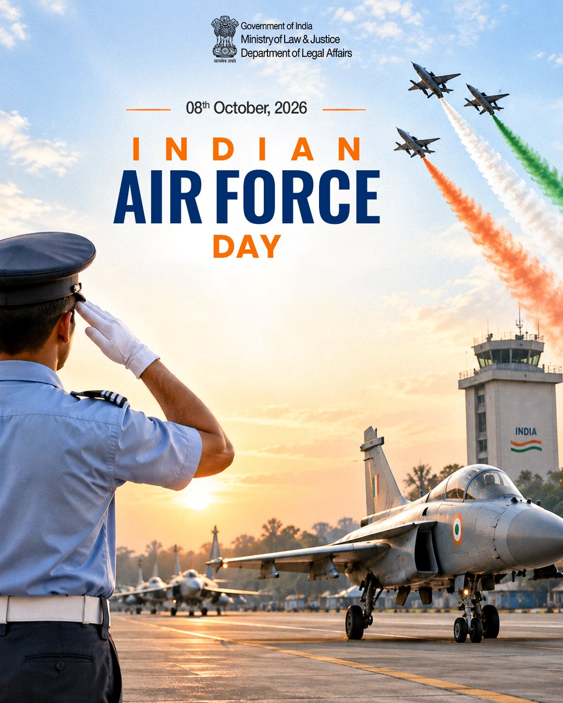
94th Indian Air Force Day 2026
India observed the 94th Indian Air Force Day on 8 October 2026, honouring the courage, professionalism and dedication of the country’s Air Warriors.
Prime Minister Narendra Modi conveyed his greetings to the personnel of the Indian Air Force and praised their commitment to safeguarding India’s airspace. President Droupadi Murmu, along with other national leaders, also extended their wishes on the occasion.
The official theme for the 94th anniversary is “Indian Air Force: Infallible, Impervious and Precise”, highlighting the force’s operational strength, resilience and precision.
The main ceremonial celebrations are being conducted at Hindon Air Force Station in Ghaziabad, Uttar Pradesh. The event is returning to Hindon after a gap of three years.
The celebrations feature a spectacular aerial display involving advanced fighter aircraft, helicopters and air-defence systems. A women-led rifle drill is also among the highlights, along with precision flying manoeuvres.
The Indian Air Force was established on 8 October 1932. Its official motto is “Nabhaḥ Spriśaṃ Dīptam”, meaning “Touch the Sky with Glory.” The motto is derived from the Bhagavad Gita.
Key Facts
- Indian Air Force Day: 8 October
- 2026: 94th anniversary
- Theme: “Indian Air Force: Infallible, Impervious and Precise”
- Main Venue: Hindon Air Force Station, Ghaziabad
- Established: 8 October 1932
- Motto: “Nabhaḥ Spriśaṃ Dīptam”
- Meaning: “Touch the Sky with Glory”
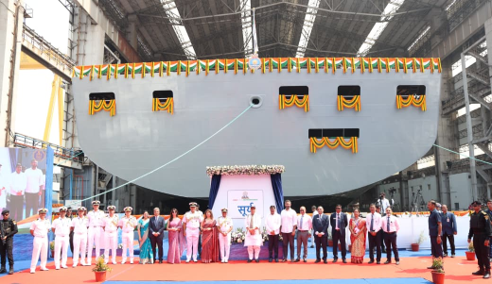
Launch and Keel Laying of Fleet Support Ships
Hindustan Shipyard Limited (HSL), Visakhapatnam, achieved an important milestone in India’s indigenous naval shipbuilding programme with the launch of FSS-1, the first of the Fleet Support Ships, on 6 October 2026.
The ship was launched by Smt Laila Swaminathan, President of the Navy Welfare & Wellness Association (NWWA), in the presence of Raksha Mantri Rajnath Singh, who attended the ceremony as the Chief Guest.
The event also marked the keel laying of FSS-5, the fifth vessel in the Fleet Support Ship series. In addition, the Raksha Mantri inaugurated the Augmented Slipway, representing a significant infrastructure enhancement at HSL.
The Fleet Support Ships have been indigenously designed and constructed by HSL. With more than 82% indigenous content, the programme demonstrates cooperation among the Indian Navy, shipbuilding industry, defence companies and MSMEs.
These vessels will strengthen the Indian Navy’s operational logistics, allowing the fleet to operate with greater strategic reach and mobility.
Apart from their primary logistical role, the ships will also be capable of supporting Humanitarian Assistance and Disaster Relief (HADR) missions and Non-Combatant Evacuation Operations (NEO). This capability will help in the rapid movement of relief supplies and evacuation of personnel during emergencies.
The project is considered an important contribution to India’s domestic shipbuilding ecosystem and supports the objectives of Aatmanirbhar Bharat and Make in India.
Key Facts
- Ship launched: FSS-1
- Date: 6 October 2026
- Shipyard: Hindustan Shipyard Limited, Visakhapatnam
- Keel laid: FSS-5
- Indigenous content: More than 82%
- Additional roles: HADR and NEO
- Key initiatives: Aatmanirbhar Bharat and Make in India
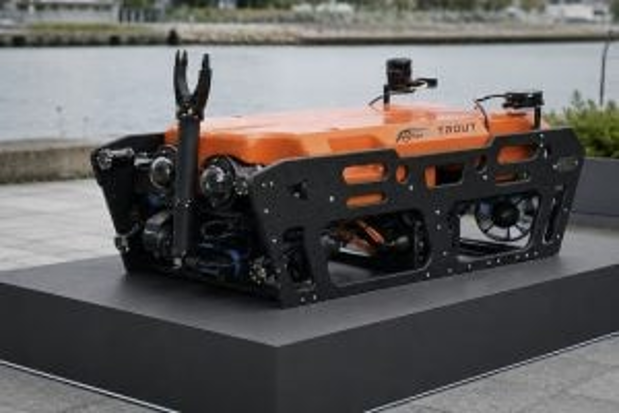
Indian Navy Receives Indigenous Military-Grade ROVs
The Indian Navy has received its first indigenously manufactured military-grade Remotely Operated Vehicle (ROV) systems.
On 7 October 2026, Kochi-based company Eye ROV delivered two TROUT underwater ROV systems to the Indian Navy. These are the first two units of a total order for five systems.
The TROUT ROV is capable of operating at depths of up to 300 metres, providing the Navy with an indigenous capability for a variety of underwater missions.
A Remotely Operated Vehicle is an uncrewed underwater system controlled by an operator, generally through a tether connecting the vehicle to a surface control station. Such systems can be equipped with cameras, lights, sensors and robotic manipulator arms.
ROVs are different from Autonomous Underwater Vehicles (AUVs). While an ROV normally remains connected to and controlled from the surface, an AUV can operate underwater without continuous direct control through a tether.
The EyeROV TROUT has been developed for missions including underwater inspection, surveillance and reconnaissance, search and recovery, detection and robotic intervention. Its capabilities are designed to support operations in challenging underwater conditions, including strong currents and poor visibility.
The system was developed under the iDEX DISC 7 SPRINT Challenge.
Innovations for Defence Excellence (iDEX) is a Ministry of Defence initiative aimed at encouraging innovators and enterprises to develop defence and aerospace technologies. SPRINT is an Indian Navy initiative focused on promoting indigenous technology development for naval applications.
Key Facts
- System: EyeROV TROUT
- Company: Eye ROV
- Location: Kochi
- Delivery: 7 October 2026
- Initial systems delivered: 2
- Total systems ordered: 5
- Maximum operating depth: 300 metres
- Development programme: iDEX DISC 7 SPRINT Challenge
Starlink Establishes 20 Gateway Sites in India
Starlink has established 20 satellite gateway sites in India, forming an important part of the ground infrastructure required to support its satellite communication services.
The gateway facilities contain hundreds of antennas that connect Starlink’s satellite network with terrestrial communication infrastructure.
Speaking at the India Mobile Congress 2026, Starlink Business Operations Vice President Lauren Dreyer stated that the company had developed security controls specifically for India to ensure that Indian user data remains within the country.
Starlink is currently awaiting the necessary final regulatory approvals before launching its commercial services in India.
A satellite gateway is a ground-based station that connects satellite networks with terrestrial communication systems. Gateway antennas transmit and receive signals between satellites and ground infrastructure, helping provide connectivity to users.
Starlink operates a network of satellites in Low Earth Orbit (LEO). LEO extends to approximately 2,000 kilometres above Earth, while geostationary satellites operate at around 35,786 kilometres above the equator.
Satellite broadband networks require both orbital satellites and supporting ground infrastructure, including gateway stations.
Key Facts
- Gateway sites in India: 20
- Company: Starlink
- Parent company: SpaceX
- Event: India Mobile Congress 2026
- LEO altitude: Up to about 2,000 km
- Commercial services: Awaiting final regulatory clearances

France Tests M51.3 Ballistic Missile from Le Vigilant
France conducted a test launch of its upgraded M51.3 strategic ballistic missile from the nuclear-powered ballistic-missile submarine Le Vigilant on 6 October 2026.
The unarmed missile was launched off Finistère in western France and subsequently splashed down in the North Atlantic, several hundred kilometres away from any coastline.
The test, designated Operation SMERTRIOS, was conducted as an acceptance firing after Le Vigilant completed a major mid-life overhaul known in France as an IPER. The objective was to verify the submarine’s ability to operate the M51 missile system following the refit.
A Submarine-Launched Ballistic Missile (SLBM) is a ballistic missile designed to be launched from a submarine. An SSBN is a nuclear-powered submarine equipped to carry and launch such ballistic missiles.
The M51 missile family forms a key component of France’s sea-based nuclear deterrent. The missile is manufactured by ArianeGroup.
The M51.3 variant entered operational service on 24 October 2025. Its estimated range exceeds 9,500 kilometres.
The missile is designed to carry TNO-2 oceanic nuclear warheads and incorporates improvements intended to enhance accuracy and penetration capabilities against missile-defence systems.
The test was monitored by France’s Directorate General of Armament’s missile test directorate, with the instrumentation ship Monge also participating in tracking activities.
Key Facts
- Missile: M51.3
- Country: France
- Submarine: Le Vigilant
- Test date: 6 October 2026
- Operation: SMERTRIOS
- Estimated range: More than 9,500 km
- Manufacturer: ArianeGroup
- Missile type: SLBM

Pakistan Test-Fires Fatah-4 Cruise Missile
Pakistan conducted a test of an extended-range version of its indigenous Fatah-4 ground-launched cruise missile on 6 October 2026.
According to Pakistan’s Inter-Services Public Relations (ISPR), the test was aimed at validating additional technical parameters associated with several subsystems of the missile.
The base Fatah-4 is reportedly capable of striking targets at ranges of up to 750 kilometres, with an accuracy of approximately five metres. The conventional cruise missile has been developed by Pakistan’s National Engineering and Scientific Commission (NESCOM).
One of the reported characteristics of the missile is its terrain-hugging flight capability. It can reportedly fly as low as 50 metres, which is intended to reduce its exposure to radar detection.
The extended-range test involved additional subsystems intended to improve the missile’s accuracy and survivability. However, ISPR did not disclose the revised range or additional technical specifications of the tested version.
Cruise missiles generally fly within the atmosphere and use guidance systems to adjust their flight path during the mission.
Key Facts
- Missile: Fatah-4
- Country: Pakistan
- Type: Ground-launched cruise missile
- Developer: NESCOM
- Base-version range: Up to 750 km
- Reported low-altitude flight: Up to 50 metres
- Test: Extended-range variant
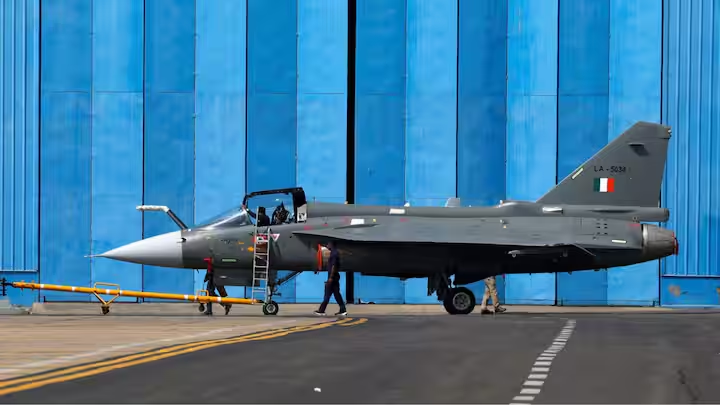
LCA Fighter Engine Supplies Stabilise as GE Ships Four Sets to HAL
Engine supplies for India’s indigenous Light Combat Aircraft (LCA) programme are showing signs of stabilisation, with GE Aerospace shipping four new engine sets to Hindustan Aeronautics Limited (HAL) during the previous month.
GE Aerospace has reiterated its commitment to supplying the engines required for India’s fighter aircraft programme. HAL expects GE to increase deliveries to more than 20 engines annually from 2027.
The engines are crucial for the production and delivery of LCA Mk1A fighter aircraft to the Indian Air Force.
HAL had earlier placed an order for 99 F404 engines with GE Aerospace worth approximately $700 million, with deliveries originally scheduled to begin in 2024. Supply-chain challenges subsequently affected the delivery schedule.
According to the supplied information, penalties have been imposed on GE Aerospace because of delays, with liquidated damages applicable to delayed engine deliveries.
In addition, an order worth approximately $1 billion for 113 F404 engines was signed with GE for the second batch of LCA Mk1A aircraft.
At the same time, HAL is continuing discussions with GE Aerospace regarding technology transfer for the more advanced F414 engine.
The F414 is associated with India’s next-generation LCA Mk2 programme, whose prototype is already under development.
Key Facts
- Engine manufacturer: GE Aerospace
- Aircraft: LCA Mk1A
- Engine: F404
- Recent engine sets shipped: 4
- Expected annual deliveries from 2027: More than 20
- Earlier order: 99 F404 engines
- Additional order: 113 F404 engines
- Future aircraft: LCA Mk2
- Advanced engine under discussion: F414
Quick Revision
| Topic | Important Fact |
|---|---|
| Indian Air Force Day 2026 | 94th Anniversary |
| IAF Day Theme | Indian Air Force: Infallible, Impervious and Precise |
| IAF Establishment | 8 October 1932 |
| IAF Motto | Nabhaḥ Spriśaṃ Dīptam |
| FSS-1 | Launched at HSL on 6 October 2026 |
| FSS Indigenous Content | Over 82% |
| Indigenous ROV | EyeROV TROUT |
| TROUT Depth | Up to 300 metres |
| Starlink Gateway Sites | 20 in India |
| French Missile | M51.3 |
| M51.3 Range | More than 9,500 km |
| Pakistan Missile | Fatah-4 |
| Fatah-4 Base Range | Up to 750 km |
| LCA Mk1A Engine | GE F404 |
| LCA Mk2 Engine under discussion | GE F414 |
Review Questions
- What was the official theme of the 94th Indian Air Force Day 2026?
A. Touch the Sky with Glory
B. Power in Partnership
C. Indian Air Force: Infallible, Impervious and Precise
D. Strength, Courage and Honour
Answer: C. Indian Air Force: Infallible, Impervious and Precise - The 94th Indian Air Force Day 2026 celebrations were mainly held at which
location?
A. Air Force Station Ambala
B. Air Force Station Hindon
C. Air Force Station Jodhpur
D. Air Force Station Gwalior
Answer: B. Air Force Station Hindon - Which Fleet Support Ship was launched at Hindustan Shipyard Limited on 6
October 2026?
A. FSS-2
B. FSS-3
C. FSS-4
D. FSS-1
Answer: D. FSS-1 - What is the approximate indigenous content of the Fleet Support Ships being built
by HSL?
A. More than 60%
B. More than 70%
C. More than 82%
D. More than 90%
Answer: C. More than 82% - What is the maximum operating depth of the indigenous EyeROV TROUT system
delivered to the Indian Navy?
A. 100 metres
B. 200 metres
C. 300 metres
D. 500 metres
Answer: C. 300 metres - How many satellite gateway sites has Starlink established in India?
A. 10
B. 15
C. 20
D. 25
Answer: C. 20 - Which strategic ballistic missile was test-fired by France from the submarine Le
Vigilant on 6 October 2026?
A. M51.1
B. M51.2
C. M51.3
D. M56
Answer: C. M51.3 - What is the reported base-version range of Pakistan’s Fatah-4 cruise missile?
A. 500 km
B. 650 km
C. 750 km
D. 1,000 km
Answer: C. 750 km - Which engine is currently used for the LCA Mk1A fighter aircraft?
A. GE F404
B. GE F414
C. EJ200
D. AL-31FP
Answer: A. GE F404 - The more advanced GE F414 engine is being discussed in connection with which
Indian fighter programme?
A. LCA Mk1A
B. AMCA Mk1
C. LCA Mk2
D. TEDBF
Answer: C. LCA Mk2
ALSO READ:
- Latest Daily Current Affairs and Defence Updates
- Latest Daily Current Affairs September 2026[DOWNLOAD PDF]
- Latest Daily Current Affairs August 2026[DOWNLOAD PDF]
- Latest Daily Current Affairs July 2026[DOWNLOAD PDF]
- Latest Daily Current Affairs June 2026[DOWNLOAD PDF]
- Latest Daily Current Affairs May 2026[DOWNLOAD PDF]
- Latest Daily Current Affairs April 2026[DOWNLOAD PDF]
- Latest Daily Current Affairs March 2026[DOWNLOAD PDF]
- Latest Daily Current Affairs February 2026[DOWNLOAD PDF]
- Latest Daily Current Affairs January 2026[DOWNLOAD PDF]
- Latest Daily Current Affairs November 2025[DOWNLOAD PDF]
- Latest Daily Current Affairs October 2025[DOWNLOAD PDF]
- Latest Daily Current Affairs August 2025[DOWNLOAD PDF]
- Latest Daily Current Affairs July 2025[DOWNLOAD PDF]


