In Current Affairs for 28 October 2026, we will see the latest national and international current affairs news. These important current affairs will be beneficial for your upcoming NDA, CDS, CDS OTA, AFCAT, TA, Agniveer Army, Agniveer Navy, Agniveer Air Force, Women Military Police, INET, MNS, ACC exams, SCO, PCSL, CAPF, and SSB interviews, and direct entries for Army, Navy, and Air Force like SSC Tech, TGC, JAG, NCC, TES, 10+2 Cadet. Download a PDF file about current events at the end of this article. Let us now see the Current Affairs.
Current Affairs 28 October 2026
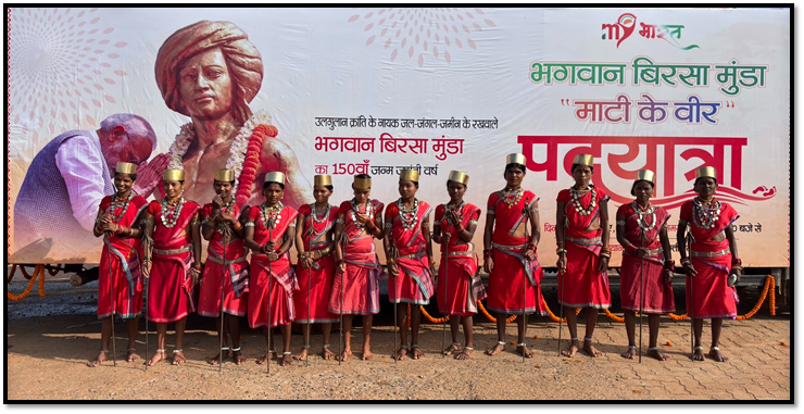
Janjatiya Gaurav Diwas 2026
The Ministry of Tribal Affairs will organise Janjatiya Gaurav Pakhwada from 1 to 15 November 2026 across India. The programme will conclude on 15 November with the observance of Janjatiya Gaurav Diwas, commemorating the birth anniversary of tribal freedom fighter Bhagwan Birsa Munda, popularly known as Dharti Aaba.
Background and Significance
The Government of India designated 15 November as Janjatiya Gaurav Diwas in 2021 to recognise the contributions of tribal communities and honour tribal leaders who played important roles in India’s freedom struggle.
Birsa Munda, a prominent leader of the Munda community, led the Ulgulan, meaning the “Great Tumult”, against British colonial rule and the exploitation of tribal people during the late nineteenth century. His movement remains an important symbol of tribal resistance and the struggle for rights and dignity.
Objectives of Janjatiya Gaurav Pakhwada
The fortnight-long observance aims to increase awareness of government schemes, welfare programmes and entitlements available to tribal communities. It will also help facilitate the delivery of benefits to eligible tribal families.
According to the presentation, more than 300 projects are planned during the campaign, comprising 228 inaugurations and 74 foundation-stone laying ceremonies.
Constitutional Provisions Related to Scheduled Tribes
Two important constitutional provisions are relevant to tribal administration:
- Article 342: Provides for the specification of Scheduled Tribes in relation to each State or Union Territory through a Presidential notification, subject to the constitutional procedure for subsequent modifications.
- Fifth Schedule: Deals with the administration and control of Scheduled Areas and Scheduled Tribes in specified States.
Significance
Janjatiya Gaurav Diwas highlights the historical contributions of tribal freedom fighters and promotes awareness of tribal heritage, constitutional safeguards and welfare initiatives.
Key facts for examinations
- Observance: Janjatiya Gaurav Diwas
- Date: 15 November
- Associated personality: Bhagwan Birsa Munda
- Government designation: 2021
- Pakhwada dates in 2026: 1–15 November
- Movement led by Birsa Munda: Ulgulan
- Article 342: Specification of Scheduled Tribes
- Fifth Schedule: Administration and control of Scheduled Areas and Scheduled Tribes in specified States
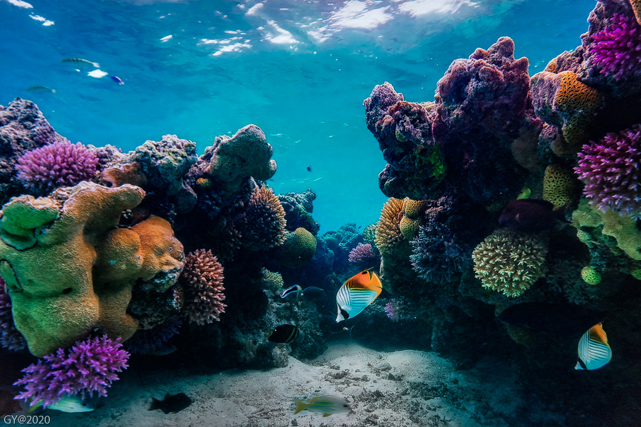
Global Coral Reef Ecosystems Face a Severe Risk of Collapse
A global assessment by the International Union for Conservation of Nature (IUCN) has highlighted the serious threats facing shallow-water coral reef ecosystems. According to the assessment described in the presentation, nearly all the evaluated ecosystems face an extremely high risk of collapse by 2075.
Findings of the Global Assessment
The first global evaluation of coral reef ecosystems under the IUCN Red List of Ecosystems examined 127 ecosystems. Of these, 122 ecosystems, or approximately 96%, were classified as Critically Endangered, according to the supplied material.
The assessment covered tropical and subtropical marine ecoregions across more than 80 countries and territories. The evaluated coral reefs covered approximately 188,362 square kilometres of shallow, light-accessible marine environments. More than 250 experts contributed to the assessment.
The report was launched on 22 October 2026 at the 17th Conference of the Parties to the Convention on Biological Diversity (CBD COP17) in Yerevan, Armenia.
Major Threats to Coral Reefs
The assessment identifies climate change as a major driver of the deterioration of coral reef ecosystems. Two particularly important threats are:
- Ocean warming: Rising sea temperatures can cause coral bleaching, during which corals lose the symbiotic algae that provide much of their energy.
- Marine heatwaves: Prolonged periods of unusually high ocean temperatures can intensify bleaching, increase coral mortality and disrupt reef ecosystems.
The degradation of coral reefs can affect marine biodiversity, fisheries, coastal protection and the livelihoods of communities dependent on marine resources.
Why Coral Reefs Matter
Coral reefs provide habitats for a wide variety of marine organisms. They also support fishing and tourism and help reduce wave energy along coastlines. Their deterioration can therefore have ecological, economic and social consequences.
Significance
The assessment underlines the need to reduce greenhouse gas emissions, protect marine habitats and strengthen coral reef conservation and restoration efforts. Protecting these ecosystems is essential for maintaining ocean biodiversity and improving the resilience of coastal communities.
Key facts for examinations
- Organisation: International Union for Conservation of Nature (IUCN)
- Assessment: IUCN Red List of Ecosystems
- Ecosystems assessed: 127
- Ecosystems classified as Critically Endangered: 122 (96%)
- Report launch date: 22 October 2026
- Venue: CBD COP17, Yerevan, Armenia
- Major threats: Ocean warming and marine heatwaves
Poland and the United Kingdom Sign Three-Year Defence Cooperation Plan
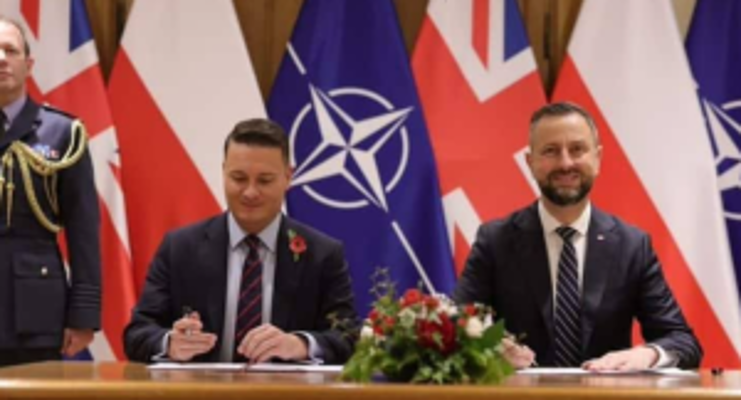
Poland and the United Kingdom signed a three-year defence cooperation agreement in Warsaw on 27 October 2026. Known as the Warsaw Defence Plan, the agreement aims to strengthen military cooperation, develop defence capabilities and improve coordination in response to emerging security threats.
According to the presentation, the plan was signed by Polish Deputy Prime Minister and Defence Minister Władysław Kosiniak-Kamysz and UK Defence Secretary Wes Streeting.
Background: Northolt Treaty
The Warsaw Defence Plan implements the UK–Poland Security and Defence Partnership Treaty, also known as the Northolt Treaty, which the presentation states was signed by Prime Ministers Donald Tusk and Keir Starmer on 27 May 2026.
The plan establishes a framework for cooperation across land, sea, air, cyber and defence-industrial domains.
Major Areas of Cooperation
1. Advanced defence technology
Both countries intend to expand collaboration in artificial intelligence, drone technology, counter-drone systems and modern deterrence capabilities. Joint military exercises will also support training and operational coordination.
2. Maritime security
The agreement includes plans to increase joint maritime defence activities and coordination in the Baltic Sea, an important region for European security.
3. Naval modernisation
The Miecznik programme, which involves the construction of multi-purpose frigates, forms part of the wider defence context discussed in the plan.
4. Integrated air defence
Cooperation covers Poland’s Narew, Pilica and Pilica+ air-defence programmes. The presentation also notes Poland’s procurement of the Narew system from MBDA UK.
5. Ammunition production
The plan includes the establishment of an independent production line for 155 mm ammunition, supporting efforts to expand defence manufacturing capacity.
Defence Industry and Strategic Coordination
The two countries intend to improve procurement coordination and increase production capabilities. Existing industrial cooperation involves companies such as MBDA UK, BAE Systems and Poland’s PGZ.
The agreement also addresses security concerns associated with Russian hybrid activities, including reported drone incursions. Poland and the United Kingdom reaffirmed their support for Ukraine amid the ongoing conflict.
Significance
The Warsaw Defence Plan reflects efforts to strengthen European defence capabilities while maintaining the importance of the transatlantic alliance.
Poland became a member of NATO in 1999, whereas the United Kingdom was among NATO’s founding members in 1949.
Key facts for examinations
- Countries: Poland and the United Kingdom
- Agreement: Warsaw Defence Plan
- Signing date: 27 October 2026
- Duration: Three years
- Location: Warsaw, Poland
- Treaty being implemented: Northolt Treaty
- Key areas: AI, drones, air defence, maritime security and ammunition production
- NATO membership: Poland — 1999; United Kingdom — founding member, 1949
Uttar Pradesh Approves PRAGATI AI and Robotics Park
The Uttar Pradesh Cabinet approved the establishment of a major artificial intelligence and robotics park in Greater Noida on 27 October 2026. Named the Platform for Robotics and AI Growth Through Technology and Innovation (PRAGATI) Park, the project is intended to encourage investment, promote advanced technology and create employment opportunities.
According to the presentation, the proposed park will cover 69.52 acres and is projected to generate more than 100,000 direct and indirect jobs. At full scale, it is expected to contribute approximately ₹2,000 crore annually in Gross Value Added (GVA).
Structure of the Park
The development will be divided into two zones:
- Eight-acre Public-Private Partnership (PPP) zone: To be developed and operated by a Special Purpose Vehicle (SPV).
- 61.52-acre private investment zone: Intended for private enterprises establishing industrial units and related activities.
An SPV is a separate legal entity created to carry out a particular project or business activity.
Ownership and Investment Structure
For the PPP zone, the Greater Noida Authority will hold a 26% equity stake in the SPV, while the selected industrial partner will hold the remaining 74%.
The Greater Noida Authority will contribute ₹21.1 crore as equity. The state government will provide an interest-free loan of ₹126.2 crore for a period of 30 years.
Together, these amounts represent financial support of ₹147.3 crore for the eight-acre zone. The state’s IT and Electronics Department will also reimburse the lease premium for the plot to the Greater Noida Authority under the prescribed arrangement.
The industrial partner will be selected through a quality-based process.
In contrast, private enterprises will independently develop the 61.52-acre zone. The presentation specifies that the state government will have no capital liability for this part of the project.
Economic and Technological Significance
PRAGATI Park is intended to support the growth of AI and robotics-related industries in Uttar Pradesh. By providing a dedicated development area, the project could encourage private investment, industrial collaboration and the creation of skilled employment.
Its projected contribution to GVA and employment reflects the state’s broader ambition to expand its technology-driven economy.
Key facts for examinations
- Project: PRAGATI Park
- Full form: Platform for Robotics and AI Growth Through Technology and Innovation
- Location: Greater Noida, Uttar Pradesh
- Approval date: 27 October 2026
- Total area: 69.52 acres
- Projected employment: More than 100,000 direct and indirect jobs
- Projected annual GVA: Approximately ₹2,000 crore
- PPP zone: 8 acres
- Private investment zone: 61.52 acres
- SPV equity distribution: Greater Noida Authority — 26%; industrial partner — 74%
India and Mexico Begin Negotiations for a Preferential Trade Agreement
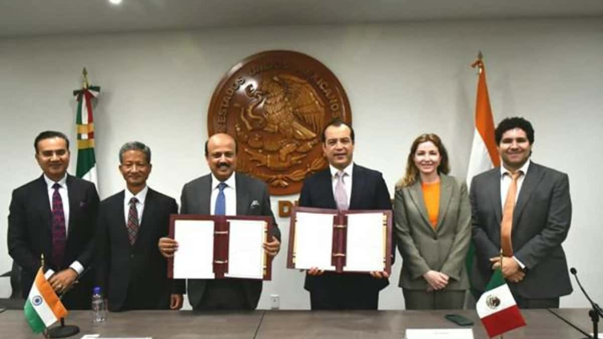
India and Mexico formally initiated negotiations for a Preferential Trade Agreement (PTA) after signing the Terms of Reference (ToR) in Mexico City on 26 October 2026. The signing took place during the visit of India’s Commerce Secretary Rajesh Agrawal.
The proposed agreement aims to improve market access, reduce selected trade barriers and strengthen commercial relations between the two countries.
Background of the Agreement
The negotiations follow an understanding reportedly reached between Prime Minister Narendra Modi and Mexican President Claudia Sheinbaum during the G7 Summit in Canada in June 2025.
The Terms of Reference establish the framework for negotiations, defining their scope, procedures and proposed roadmap.
What Is a Preferential Trade Agreement?
A Preferential Trade Agreement allows participating countries to grant tariff concessions on selected goods traded between them.
Unlike a comprehensive free trade agreement, a PTA generally covers a narrower range of products and provides preferential treatment for specific items rather than necessarily eliminating tariffs across most trade.
Why Is the Agreement Important?
The presentation states that Mexico introduced tariffs of up to 50% on 1,463 items from countries without bilateral trade agreements, effective 1 January 2026.
The proposed India–Mexico PTA is intended to address the potential impact of these tariffs on Indian exporters. The sectors identified as important include:
- Automobiles and automotive components.
- Textiles and footwear.
- Plastics and steel.
- Chemicals.
- Toys.
Improved tariff treatment could help Indian businesses compete in the Mexican market, although the final benefits will depend on the products covered and the terms agreed by both countries.
Bilateral Trade Figures
According to the presentation, India–Mexico merchandise trade reached approximately US$7.83 billion in the financial year 2025–26.
India’s exports to Mexico during that period were reported at US$5.73 billion, including automobiles valued at US$1.92 billion.
Mexico has also expressed interest in an early-harvest arrangement, under which the two countries could liberalise trade in selected products before completing negotiations on the wider agreement.
Significance
The proposed PTA could help diversify India’s export markets, strengthen economic relations with Latin America and improve opportunities for Indian manufacturers. It also demonstrates the importance of trade negotiations in responding to changing tariff policies and international market conditions.
Key facts for examinations
- Countries: India and Mexico
- Agreement under negotiation: Preferential Trade Agreement
- Terms of Reference signed: 26 October 2026
- Location: Mexico City
- Indian official mentioned: Commerce Secretary Rajesh Agrawal
- Merchandise trade in FY 2025–26: Approximately US$7.83 billion
- India’s exports to Mexico: US$5.73 billion
- Mexican tariffs mentioned: Up to 50% on 1,463 items
- Early harvest: Early liberalisation of selected products before conclusion of broader negotiations
Review Questions
Q1. When is Janjatiya Gaurav Diwas observed in India?
A) 2 October
B) 15 November
C) 26 November
D) 9 August
Answer: B) 15 November
Q2. The Ulgulan movement was led by which tribal freedom fighter?
A) Sidhu Murmu
B) Tantia Bhil
C) Bhagwan Birsa Munda
D) Alluri Sitarama Raju
Answer: C) Bhagwan Birsa Munda
Q3. According to the supplied presentation, how many coral reef ecosystems were classified as Critically Endangered in the IUCN assessment?
A) 105 out of 127
B) 112 out of 127
C) 122 out of 127
D) 127 out of 127
Answer: C) 122 out of 127
Q4. Where was the report on global coral reef ecosystem risks launched, according to the presentation?
A) Geneva, Switzerland
B) Yerevan, Armenia
C) Nairobi, Kenya
D) Baku, Azerbaijan
Answer: B) Yerevan, Armenia
Q5. Which two countries signed the Warsaw Defence Plan on 27 October 2026?
A) Poland and Germany
B) Poland and France
C) Poland and the United Kingdom
D) United Kingdom and Ukraine
Answer: C) Poland and the United Kingdom
Q6. What is the full form of PRAGATI in the name of Uttar Pradesh’s proposed AI and robotics park?
A) Platform for Robotics and AI Growth Through Technology and Innovation
B) Programme for Research and Advanced Governance in Technology and Industry
C) Platform for Research, Automation, Growth and Artificial Technology Integration
D) Programme for Robotics and Advanced Technology in Industry
Answer: A) Platform for Robotics and AI Growth Through Technology and Innovation
Q7. What is the total area proposed for PRAGATI Park in Greater Noida?
A) 49.52 acres
B) 59.52 acres
C) 69.52 acres
D) 79.52 acres
Answer: C) 69.52 acres
Q8. What percentage of equity will the Greater Noida Authority hold in the Special Purpose Vehicle (SPV) for PRAGATI Park’s PPP zone?
A) 26%
B) 49%
C) 51%
D) 74%
Answer: A) 26%
Q9. India and Mexico formally launched negotiations for which type of trade agreement in October 2026?
A) Comprehensive Economic Partnership Agreement
B) Preferential Trade Agreement
C) Bilateral Investment Treaty
D) Customs Union Agreement
Answer: B) Preferential Trade Agreement
Q10. According to the supplied presentation, what was the approximate value of India–Mexico bilateral merchandise trade in FY 2025–26?
A) US$5.23 billion
B) US$6.50 billion
C) US$7.83 billion
D) US$10.25 billion
Answer: C) US$7.83 billion