Every year thousands of young aspirants preparing for the NDA, CDS, AFCAT, INET and CAPF (AC) examinations dream of wearing a maroon beret, a black dungaree or the Balidan badge. India’s special forces and commando units are the sharp end of the country’s security system.
For aspirants, these units matter. Questions on their names, parent forces, mottos and famous operations appear regularly in general knowledge papers, and SSB interviewers often ask candidates who mention special forces what a particular unit actually does. A clear, accurate picture will help you answer with confidence.
Below are 10 elite special forces and commando units of India, drawn from the Army, Navy, Air Force, Central Armed Police Forces, central agencies and state police. The numbering is only for easy reading and is not an official ranking. Strength figures for most of these units are classified or vary between sources, so we have left them out.
1. Para (Special Forces), Indian Army
Parent force: Parachute Regiment, Indian Army
Origins: 9 Para Commando, raised on 1 July 1966 from the Meghdoot Force
Regimental motto: Shatrujeet (Conqueror of the Enemy)
Identity: Maroon beret and the Balidan (sacrifice) badge
Notable operations: Operation Pawan (Sri Lanka), Kargil War, the 2015 strike on militant camps along the India–Myanmar border and the September 2016 surgical strikes across the Line of Control
Para (SF) is the Indian Army’s main special forces arm and the best known commando force in the country. It traces its roots to the 1965 India–Pakistan war, when an ad hoc group called the Meghdoot Force carried out raids behind enemy lines. Its success led to the raising of 9 Para Commando in July 1966.
Para SF operators are trained for deep reconnaissance, direct action raids, counter-insurgency and counter-terrorism in jungles, deserts, mountains and high altitude. Selection is voluntary and probation is famously tough. Basic special forces training is linked to the Special Forces Training School at Nahan in Himachal Pradesh. Only those who complete training and prove themselves in operations earn the Balidan badge, which is worn on the right chest. Lance Naik Mohan Nath Goswami of 9 Para (SF) was awarded the Ashoka Chakra posthumously for his actions in Jammu and Kashmir in 2015.
2. MARCOS (Marine Commando Force), Indian Navy
Parent force: Indian Navy
Raised: February 1987 as the Indian Marine Special Force; renamed Marine Commando Force in 1991
Motto: The Few, The Fearless
Nicknames: Magarmach (the crocodiles) and ‘Dadiwala Fauj’ (the bearded army)
Notable operations: Operation Pawan (1987), Operation Cactus in the Maldives (1988), Operation Black Tornado in Mumbai (2008), anti-piracy operations including the rescue of the crew of MV Lila Norfolk (January 2024)
MARCOS is the special forces unit of the Indian Navy. It was raised in 1987 to carry out operations in a maritime environment, such as raids from the sea, reconnaissance of beaches, ship boarding, underwater combat diving and counter-terrorism at sea.
The unit has seen action from the Jaffna lagoons during Operation Pawan to the Taj and Trident hotels during the 26/11 Mumbai attacks. In January 2024, MARCOS from INS Chennai boarded the bulk carrier MV Lila Norfolk in the Arabian Sea after a reported hijack attempt and brought all 21 crew members to safety.
3. Garud Commando Force, Indian Air Force
Parent force: Indian Air Force
Raised: 2004; the first batch passed out on 6 February 2004
Motto: Prahar se Suraksha (Defence by Offence)
Training centre: Garud Regimental Training Centre, Air Force Station Chandinagar, Uttar Pradesh
Notable recognition: Corporal Jyoti Prakash Nirala, Ashoka Chakra (posthumous)
The Garud Commando Force is the special forces unit of the Indian Air Force. The idea took shape after terrorist attacks on air bases in Jammu and Kashmir in 2001, when the IAF felt the need for its own force to protect vital air assets. The first Garud batch passed out in February 2004.
Garuds are trained for airfield protection, combat search and rescue, special reconnaissance, counter-terrorism and operations behind enemy lines in support of air operations. Unlike Para SF and MARCOS, airmen can be recruited directly into the Garud trade through the Airmen Selection Centres, and their long training includes paratrooping at the Paratroopers Training School in Agra. In November 2017, Corporal Jyoti Prakash Nirala was killed fighting terrorists in Bandipora, Jammu and Kashmir, and was posthumously awarded the Ashoka Chakra, the first for the Garuds. The IAF has also highlighted the role of its special forces in Operation Sindoor.
4. National Security Guard (NSG)
Parent ministry: Ministry of Home Affairs
Raised: 1984; given statutory status by the National Security Guard Act, 1986
Raising Day: 16 October
Motto: Sarvatra Sarvottam Suraksha
Popular name: Black Cats
Notable operations: Operation Black Thunder at the Golden Temple (1986 and 1988), the Akshardham temple attack (2002), Operation Black Tornado in Mumbai (2008) and the Pathankot air base attack (2016)
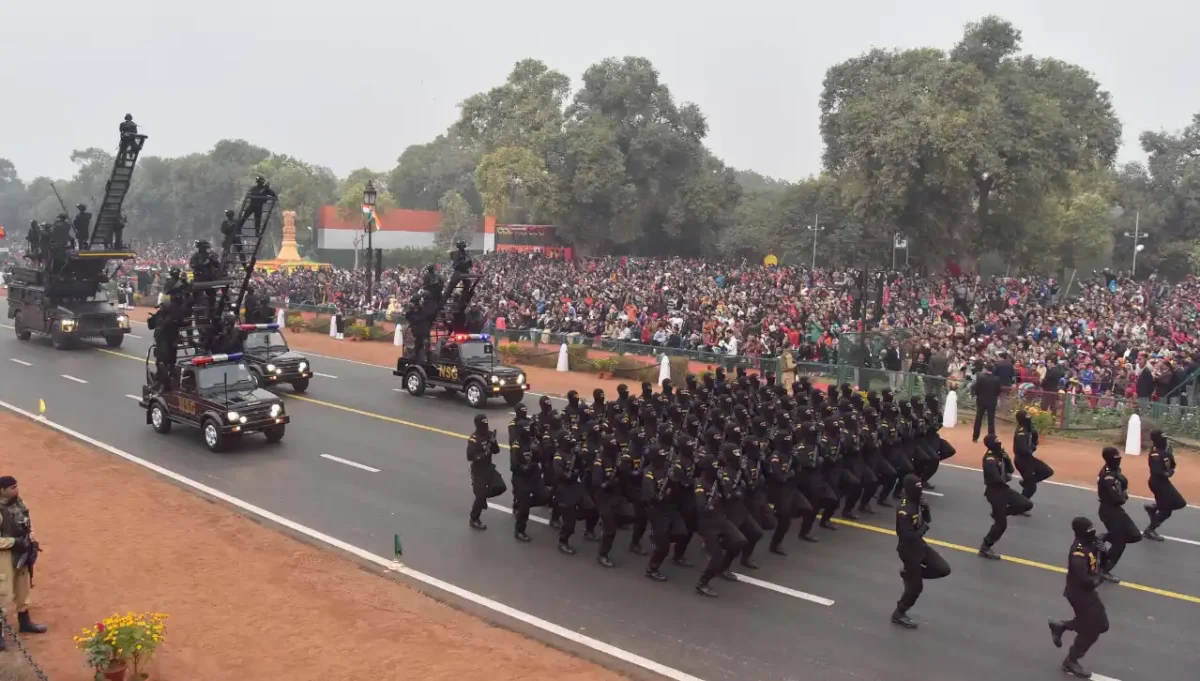
The NSG is India’s federal counter-terrorism and hostage rescue force. It was raised in 1984 and is often called the Black Cats because of its black uniform and the black cat insignia. Its headquarters and main training centre are at Manesar in Haryana, and it also has regional hubs in major cities so that teams can respond quickly to a terror attack.
The NSG is a mixed force. Its Special Action Groups are drawn mainly from the Indian Army, while its Special Ranger Groups are drawn from the Central Armed Police Forces and state police. During the 26/11 Mumbai attacks, Major Sandeep Unnikrishnan of the NSG was killed while leading his team at the Taj hotel and was awarded the Ashoka Chakra posthumously. The NSG also trains state police anti-terror squads and has opened its commando training to women personnel.
5. Special Frontier Force (SFF)
Raised: 14 November 1962, soon after the India–China war
Early name: Establishment 22, after its first Inspector General, Major General Sujan Singh Uban
Headquarters: Chakrata, Uttarakhand
Controlled by: Cabinet Secretariat; headed by an Inspector General of Major General rank from the Army
Notable operations: 1971 war in the Chittagong Hill Tracts and the occupation of key heights on the south bank of Pangong Tso in eastern Ladakh (2020)
The Special Frontier Force is one of India’s most secretive units. It was raised in November 1962 to operate behind Chinese lines in the event of another war, and it originally drew heavily on Tibetans living in exile in India. Because it reports to the Cabinet Secretariat rather than to an armed service, it is not part of the Army’s regular order of battle, though it works closely with the Army.
The SFF came into public view in August 2020, when its troops helped the Army occupy dominating heights on the south bank of Pangong Tso during the standoff with China in eastern Ladakh. Company Leader Nyima Tenzin of the SFF was killed by a landmine during that operation.
6. Ghatak Platoons, Indian Army
Parent force: Infantry battalions of the Indian Army
Meaning: Ghatak means ‘deadly’ or ‘killer’
Training: Commando Wing of the Infantry School, Belagavi, Karnataka
Role: Battalion-level strike, raid and assault team
Notable action: Capture of Tiger Hill in the Kargil War (1999), where Grenadier Yogendra Singh Yadav of 18 Grenadiers won the Param Vir Chakra
Ghatak platoons are not a separate unit. Every infantry battalion of the Indian Army has its own Ghatak platoon, made up of the fittest and most motivated soldiers of that battalion. They act as the commanding officer’s shock troops, leading raids, ambushes, assaults on enemy positions and quick reaction tasks in counter-insurgency areas.
The best known Ghatak action came during the Kargil War. On the night of 3–4 July 1999, the Ghatak platoon of 18 Grenadiers climbed a near-vertical cliff to assault Tiger Hill. Grenadier Yogendra Singh Yadav, badly wounded, kept fighting and helped clear enemy bunkers, and he was awarded the Param Vir Chakra.
7. Special Protection Group (SPG)
Parent ministry: Cabinet Secretariat, Government of India
Raised: 1985; given statutory status by the Special Protection Group Act, 1988
Motto: Shauryam Samarpanam Surakshanam (Bravery, Dedication, Security)
Role: Proximate security of the Prime Minister
The SPG was raised in 1985 after the assassination of Prime Minister Indira Gandhi, to give the Prime Minister close protection by a specialised force. The SPG Act of 1988 made it a statutory force. Its personnel are drawn from the Central Armed Police Forces, state police and other organisations, and they are trained in close protection, threat assessment, advance security liaison and counter-assault tactics. It is a protection force rather than an offensive special forces unit, but its selection and training standards make it one of India’s most elite forces.
A 2019 amendment to the SPG Act limited SPG protection to the serving Prime Minister and immediate family members living with them at the official residence, and to a former Prime Minister and family for a limited period after leaving office.
8. CoBRA (Commando Battalion for Resolute Action), CRPF
Parent force: Central Reserve Police Force (CRPF)
Raised: 2008; ten battalions raised between 2008 and 2011
Speciality: Jungle and guerrilla warfare against Left Wing Extremism
Training: CoBRA School of Jungle Warfare and Tactics (CSJWT), Belagavi district, Karnataka
Deployment: Left Wing Extremism and insurgency affected states, including Chhattisgarh, Jharkhand, Odisha and Bihar
CoBRA is the specialised jungle warfare force of the CRPF, India’s largest Central Armed Police Force. It was raised in 2008 to take on Maoist insurgents in the dense forests of central and eastern India. CoBRA personnel are selected from within the CRPF and go through demanding commando and jungle warfare training before joining a CoBRA battalion.
CoBRA teams carry out long-range patrols, intelligence-based operations and raids deep inside forest areas, often for days at a time, alongside state police units. They have played a major role in the security push that has sharply reduced Maoist violence in recent years.
9. Greyhounds, Andhra Pradesh and Telangana Police
Parent force: Andhra Pradesh Police and Telangana Police
Raised: 1989 in undivided Andhra Pradesh
Founder: IPS officer K.S. Vyas
Speciality: Anti-Maoist jungle warfare
Notable recognition: Deputy Assault Commander K. Prasad Babu, Ashoka Chakra (posthumous)
The Greyhounds are a state police special force, but they are widely regarded as one of the most effective counter-insurgency units in India. They were raised in 1989 in undivided Andhra Pradesh to fight the growing Maoist movement. The force was the vision of IPS officer K.S. Vyas, who was later assassinated by Maoists in Hyderabad in 1993.
Greyhounds operate in small, highly mobile teams that move deep into the forest for combing operations, relying on strong local intelligence. Their success in undivided Andhra Pradesh inspired similar forces in other states, such as Odisha’s Special Operations Group and Maharashtra’s C-60. After the state was bifurcated in 2014, the force was shared between Andhra Pradesh and Telangana. Greyhounds Deputy Assault Commander K. Prasad Babu was awarded the Ashoka Chakra posthumously for his courage during an anti-Maoist operation.
10. Force One, Maharashtra Police
Parent force: Maharashtra Police
Raised: 2009, after the 26/11 Mumbai attacks
Commissioned: November 2009, in Mumbai
Headquarters: Goregaon, Mumbai
Role: Urban counter-terrorism and hostage rescue
The 26/11 Mumbai attacks showed that a city could be held hostage for hours while specialist central forces were on their way. In response, the Government of Maharashtra decided in 2009 to raise its own commando force on the lines of the NSG. Force One was commissioned in Mumbai in November 2009, just before the first anniversary of the attacks.
Force One is trained for urban counter-terrorism, hostage rescue, counter-sniper tasks and the protection of vital installations in and around Mumbai. Its commandos are selected from volunteers within the Maharashtra Police, and its headquarters and training facilities are at Goregaon.
Conclusion
India’s special forces and commando units cover a wide range of tasks. Para SF, MARCOS and Garud are the special forces of the three services, and the government has also set up the tri-service Armed Forces Special Operations Division to plan joint special operations. The NSG and SPG protect the nation against terrorism and safeguard its leadership, the SFF handles strategic missions, Ghatak platoons give every infantry battalion a strike team, and CoBRA, the Greyhounds and Force One hold the line against insurgency and urban terror at home.
If you hope to serve in one of these units, start with the basics. Clear your written exam, prepare well for the SSB, build exceptional physical fitness and be honest about your motivation. In the interview, show that you understand what these units actually do and the sacrifice they demand, rather than relying on movie images of commandos.
Frequently Asked Questions (FAQs)
1. Which is the oldest special forces unit of the Indian Army?
9 Para Commando, raised on 1 July 1966 from the Meghdoot Force, is the oldest unit of today’s Para (Special Forces). The Special Frontier Force is older, having been raised in 1962, but it is not part of the Army.
2. What are the special forces of the three services called?
The Army has Para (Special Forces), the Navy has the Marine Commando Force (MARCOS) and the Air Force has the Garud Commando Force.
3. Why is the NSG called the Black Cats?
Because of the black uniform and the black cat insignia worn by its commandos. The NSG was raised in 1984 and works under the Ministry of Home Affairs.
4. Can women join Indian commando units?
Opportunities are growing. The NSG has trained women commandos, and the CISF and several state police forces have inducted women into commando roles. Rules for each force differ, so check the latest official notifications.
5. Is there an official ranking of India’s special forces?
No. Each unit is designed for different tasks, terrain and threats, so there is no official ranking. Lists like this one are only meant to help you learn about them.