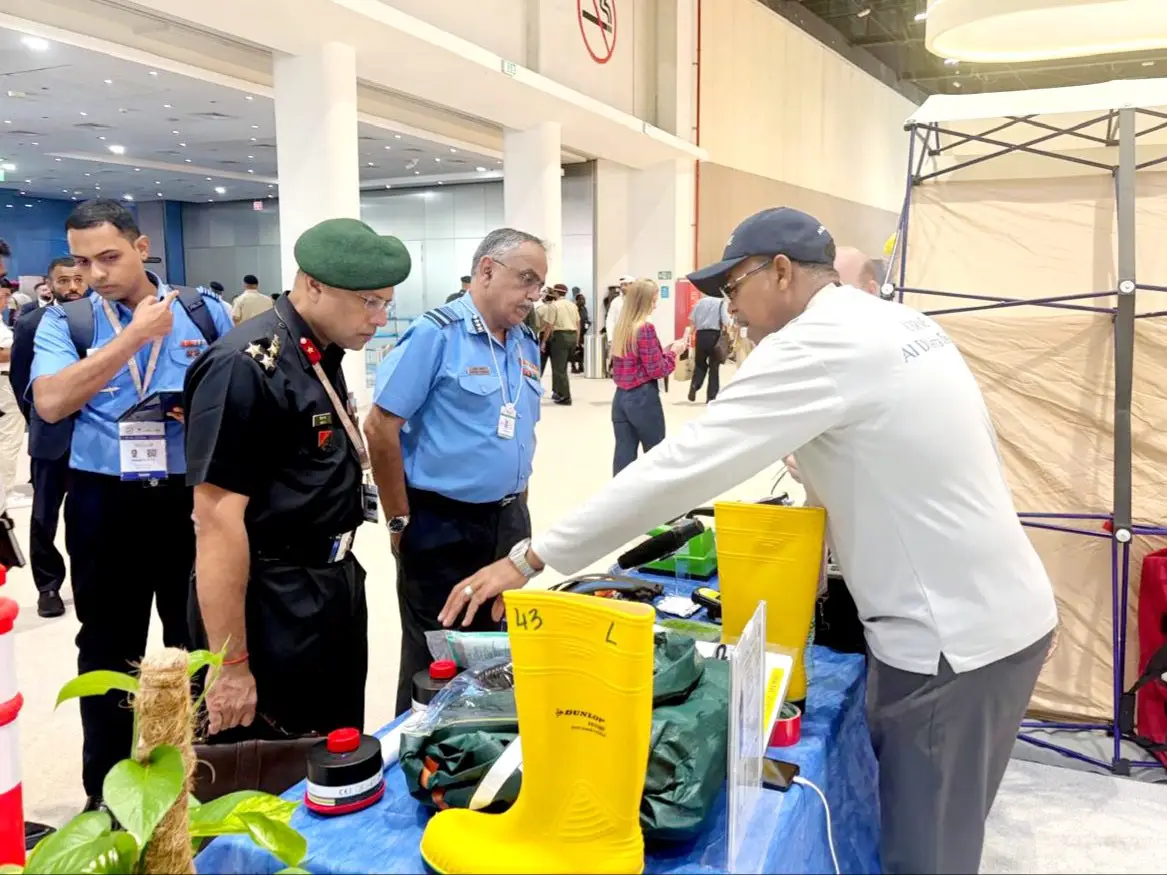
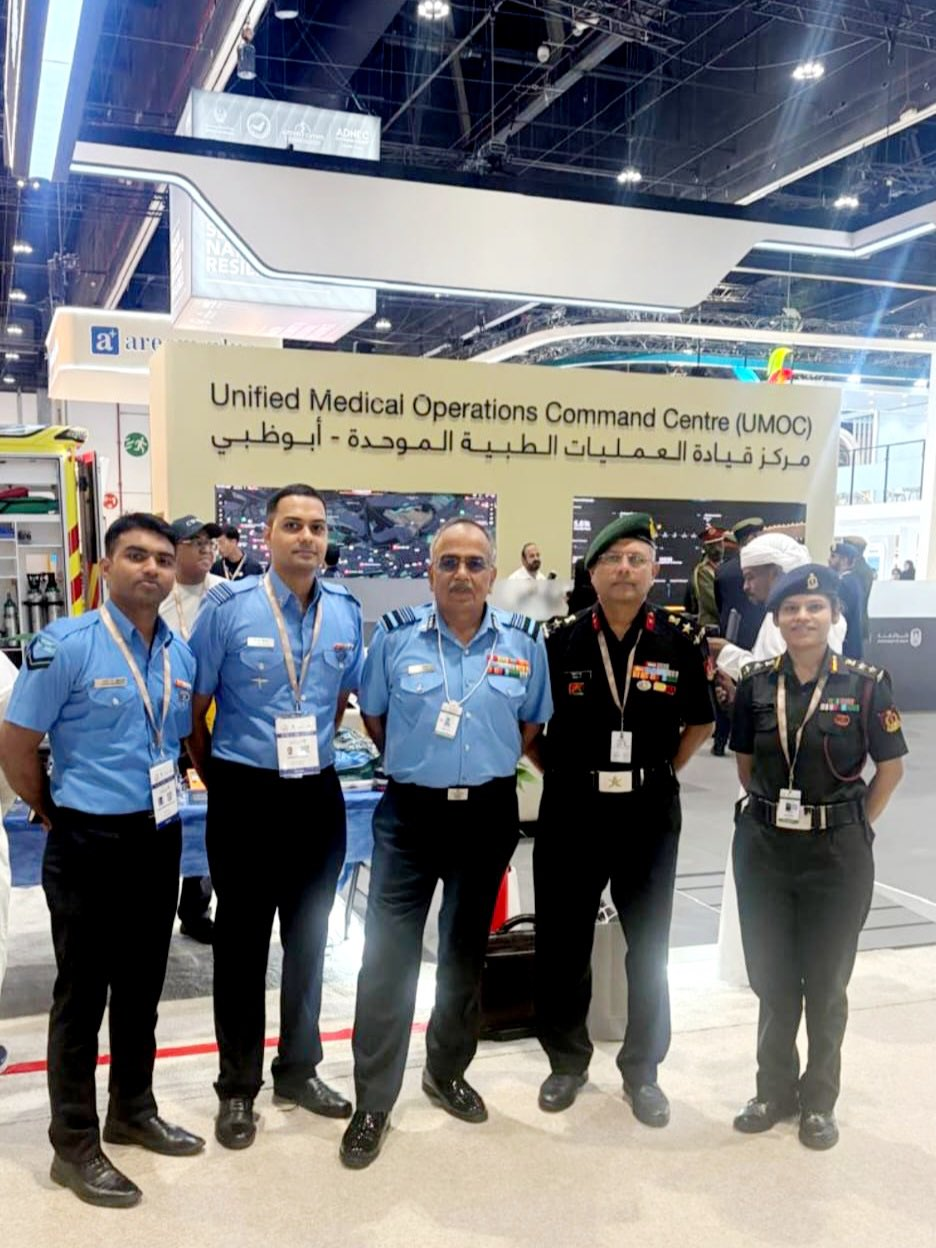
Air Marshal Sandeep Thareja, Director General Armed Forces Medical Services (DGAFMS), is leading India’s delegation at the 46th International Committee of Military Medicine (ICMM) Conference in Abu Dhabi, United Arab Emirates. The conference, running from November 9 to 13, 2026, brings together military medical professionals and representatives from participating countries to discuss military healthcare, battlefield casualties, disaster response and lessons from contemporary conflicts.
The gathering provides a forum for exchanging operational experience and considering ways to strengthen international cooperation. Its discussions include how military healthcare systems can prepare for demanding conditions and deliver effective treatment in operational environments.
Air Marshal Thareja’s engagements include developments in military medical care, particularly the needs of casualties during prolonged operations and high-intensity conflict.
Casualty care and battlefield trauma
Prolonged combat casualty care is among the conference’s key subjects. In some battlefield conditions, operational constraints, difficult terrain, contested airspace or logistical limits can delay evacuation to advanced medical facilities. Medical personnel may therefore need to provide emergency treatment and stabilisation for an extended period until evacuation is possible. This requires specialised training, planning, equipment and the ability to sustain essential treatment.
Delegates are also discussing battlefield trauma management. Combat injuries may include severe bleeding, blast trauma, burns, fractures and multiple injuries, making rapid assessment and coordinated medical intervention important to survival and recovery.
The conference is examining how military medical practices must adapt as warfare changes. New weapons technology, unmanned systems and operational tactics can affect casualty evacuation, medical logistics and the provision of emergency care in conflict zones. Lessons from ongoing conflicts have also underscored the importance of medical resilience, forward support and treatment capabilities that can be maintained in difficult conditions.
Disaster response and international cooperation
Disaster response is another focus, including the role of military medical organisations in natural disasters, humanitarian emergencies and other major crises. Armed Forces medical teams may provide emergency healthcare, establish temporary medical facilities and assist civilian authorities when local health infrastructure is under pressure. In India, the Armed Forces contribute personnel, equipment and medical resources to humanitarian assistance and disaster relief operations.
The Indian delegation has interacted with representatives of participating countries to explore cooperation in military healthcare, with particular attention to battlefield trauma care and civil-military collaboration. Such exchanges allow military medical organisations to compare approaches to casualty management and consider practices that could improve healthcare delivery in operational settings.
The participation also highlights the role of the Armed Forces Medical Services (AFMS), which provides medical services to personnel of the Indian Army, Indian Navy and Indian Air Force. Its responsibilities include preventive healthcare, clinical treatment, operational medical support and specialised medical training.
As DGAFMS, Air Marshal Sandeep Thareja heads the tri-service medical organisation responsible for supporting the Armed Forces’ healthcare requirements. The role includes overseeing military medical preparedness, professional standards and the development of medical capabilities for operational and institutional needs.
International platforms such as the ICMM Conference support professional links among military medical organisations and the exchange of knowledge on trauma care, training, disaster response and healthcare coordination. The conference is scheduled to conclude on November 13, offering the Indian delegation further opportunities to engage with international counterparts on current medical challenges and possible areas of cooperation.