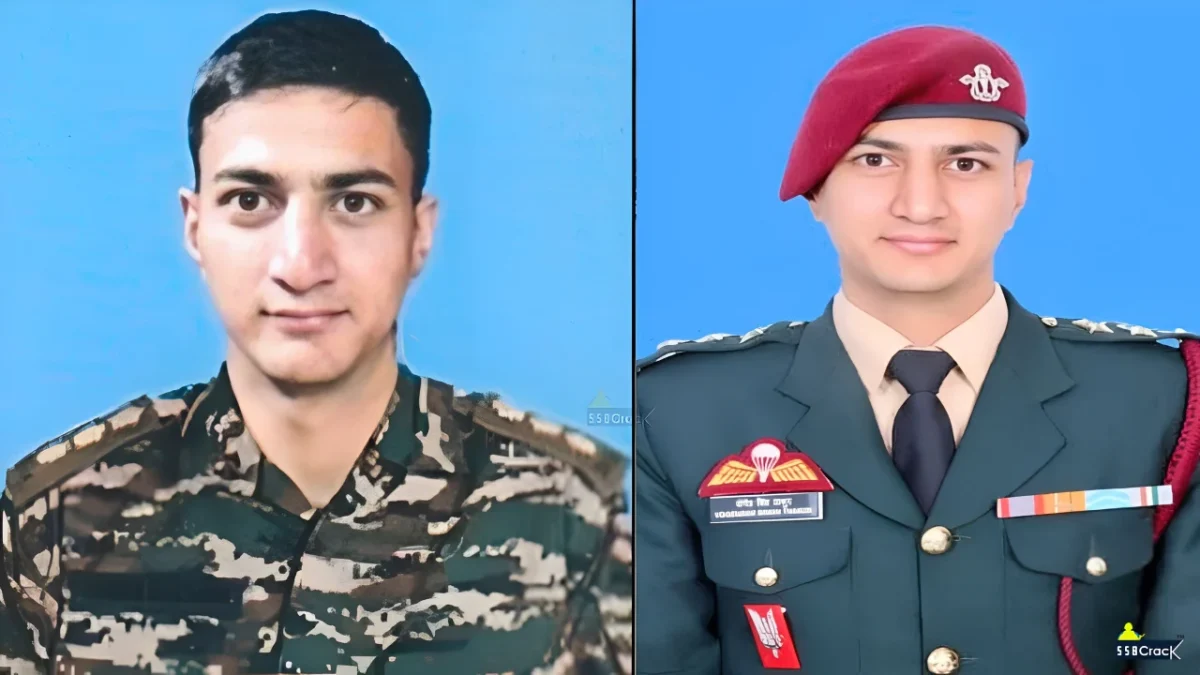
On a foggy July morning in 2025, in the hills of the Basantgarh area of Udhampur district in Jammu and Kashmir, a young officer of the 6th Battalion of the Parachute Regiment (Special Forces) crawled forward under heavy fire and closed to within 30 metres of a group of terrorists. When the firefight ended, a hardcore Jaish-e-Mohammed terrorist had been neutralised. That officer was Captain Yogender Singh Thakur, and for that action he was awarded the Shaurya Chakra, India’s third-highest peacetime gallantry award.
His name featured in the list of gallantry awards approved by the President on the eve of the 77th Republic Day in January 2026, and he received the medal from President Droupadi Murmu at the Defence Investiture Ceremony at Rashtrapati Bhavan on 8 June 2026. For NDA, CDS and SSB aspirants, his story is a clear example of what a junior officer in the Special Forces is expected to do: plan patiently, keep the team’s nerve, and lead from the front when the moment comes.
Captain Yogender Singh Thakur at a Glance
| Detail | Information |
|---|---|
| Rank and name | Captain Yogender Singh Thakur (also reported as Yoginder or Yogendra) |
| Service number | IC-85492Y |
| Unit | 6 Para (Special Forces) |
| Hometown | Dart Bagla panchayat, Jogindernagar sub-division, Mandi district, Himachal Pradesh |
| Parents | Anil Thakur (retired school principal) and Beena Devi (homemaker) |
| Schooling | Saraswati Vidya Mandir, Balkarupi (Jogindernagar); alumnus of Rashtriya Military School, Chail |
| Operation | Counter-terrorist operation, Basantgarh area, Udhampur district, J&K, July 2025 |
| Award | Shaurya Chakra, announced on the eve of Republic Day 2026 |
| Investiture | 8 June 2026, Rashtrapati Bhavan, New Delhi |
Early Life in Mandi, Himachal Pradesh
Captain Thakur comes from Dart Bagla panchayat in the Jogindernagar sub-division of Mandi district. Himachal Pradesh has a long tradition of sending its sons into the Army, and many villages in the region count serving soldiers and veterans in almost every family. He grew up in a household that valued education: his father, Anil Thakur, is a retired school principal, and his mother, Beena Devi, is a homemaker.
He studied at Saraswati Vidya Mandir in Balkarupi, Jogindernagar, a school run under the Vidya Bharati network. Teachers there have described him as a disciplined, meritorious student who did well in class and took part actively in cultural and co-curricular activities. He is also an alumnus of the Rashtriya Military School, Chail, which publicly congratulated him on the award and listed him by his cadet number, 3869. Military schools like Chail prepare boys for a life in uniform from an early age, and many of their cadets go on to the NDA and other officer entries.
When news of the award reached Jogindernagar, the reaction was one of pride. Villagers and well-wishers gathered at the family home to congratulate his parents, and both his schools spoke of him as an inspiration for their students. The principal of RMS Chail said his gallant act was a matter of immense pride for the school and a source of inspiration for all cadets committed to serving the nation.
Serving With 6 Para (Special Forces)
The Parachute Regiment’s Special Forces battalions are among the most demanding units in the Indian Army. Officers and soldiers are not posted there by default; they volunteer, and they must get through a tough probation that tests physical endurance, mental resilience and tactical skill before they earn the maroon beret and the Balidan badge. Only then are they considered fit to operate in small teams, often deep in difficult terrain and for long periods.
Captain Thakur served with 6 Para (SF). Public records of his gallantry award do not give details of his commissioning or of the year he joined the battalion, so this article does not speculate on them. What the record does show is that, as a captain, he was trusted to lead a special team on a mission against a Jaish-e-Mohammed group in one of the most testing sectors in Jammu and Kashmir.
The Basantgarh Operation, July 2025
Basantgarh, in the upper reaches of Udhampur district, is a remote, forested and mountainous area. Its thick cover and rugged ridgelines have long made it a difficult place to track infiltrating terrorists. In July 2025, intelligence agencies reported the presence of a Jaish-e-Mohammed group in the area.
Patience in the Ambush
According to the accounts of his citation, Captain Thakur was tasked on 21 July 2025 with leading a special mission to track and neutralise the group. In terrain like Basantgarh, such missions are rarely quick. His team set up surveillance and an ambush, and when they picked up suspicious movement roughly one kilometre away, he repositioned the ambush party so that the area stayed under observation.
Contact in the Fog
On 26 July 2025, at around 0900 hours, the surveillance team spotted suspicious individuals about 300 metres away. Visibility was poor and dense fog covered the slopes. Captain Thakur moved his team so that the terrorists could not slip away and so that there was no collateral damage. The terrorists then opened heavy, indiscriminate fire on the team.
Close-Quarter Battle
Under continuous fire, Captain Thakur crawled forward and manoeuvred to outflank the group. He engaged the terrorists in a close-quarter battle from a distance of about 30 metres and neutralised a hardcore Jaish-e-Mohammed terrorist, while holding his position under intense fire. His action denied the group an escape route and removed a serious threat to security forces and civilians in the region.
The citation credits him with exceptional courage, combat skill and leadership, and with a complete disregard for his own safety in the line of duty. It is the kind of action the Shaurya Chakra exists to recognise.
The Shaurya Chakra and Its Significance
The Shaurya Chakra ranks after the Ashoka Chakra and the Kirti Chakra in the order of peacetime gallantry awards. On the eve of the 77th Republic Day, the President approved gallantry awards for 70 Armed Forces personnel, including 13 Shaurya Chakras, one of them posthumous. Captain Thakur was one of several Para SF personnel on that list, alongside officers and soldiers from other Special Forces battalions, the Assam Rifles, the Rashtriya Rifles, the Navy and the CRPF.
He was formally decorated during Phase-I of the Defence Investiture Ceremony 2026, held at Rashtrapati Bhavan on 8 June 2026, where President Droupadi Murmu conferred Kirti Chakras, Vir Chakras and Shaurya Chakras on personnel of the Defence Forces, Central Armed Police Forces and State Police.
Lessons for Defence Aspirants
- Patience is a combat skill. The operation began with days of tracking and surveillance. Officers must be able to wait, watch and adjust a plan calmly before the decisive moment comes.
- Lead from the front. When the firing started, Captain Thakur did not direct the fight from the rear. He moved forward himself. The SSB looks for exactly this willingness to take responsibility.
- Think about consequences. His moves were aimed both at stopping the terrorists from escaping and at avoiding collateral damage. Good leadership weighs the mission against its impact on others.
- Small towns produce great officers. He comes from a village panchayat in Mandi district and studied at a local school and a military school. Background is no barrier to the Special Forces.
- Fitness and training pay off. Crawling under fire in fog and mountain terrain needs stamina built over years. Start working on your physical fitness well before your SSB.
Frequently Asked Questions
1. Who is Captain Yogender Singh Thakur?
He is an officer of 6 Para (Special Forces) of the Indian Army, from Dart Bagla panchayat in Jogindernagar, Mandi district, Himachal Pradesh. He was awarded the Shaurya Chakra for a counter-terrorist operation in Jammu and Kashmir in July 2025.
2. Why was he awarded the Shaurya Chakra?
During an operation in the Basantgarh area of Udhampur district, he crawled forward under heavy fire in dense fog, outflanked a group of terrorists and neutralised a hardcore Jaish-e-Mohammed terrorist from about 30 metres.
3. When did he receive the award?
The award was announced on the eve of the 77th Republic Day in January 2026, and President Droupadi Murmu presented it at the Defence Investiture Ceremony at Rashtrapati Bhavan on 8 June 2026.
4. Which schools did he attend?
He studied at Saraswati Vidya Mandir, Balkarupi, in Jogindernagar, and is an alumnus of the Rashtriya Military School, Chail.
5. What is the Shaurya Chakra?
It is India’s third-highest peacetime gallantry award, after the Ashoka Chakra and the Kirti Chakra.
Conclusion
Captain Yogender Singh Thakur’s path runs from a village panchayat in Mandi and the classrooms of Balkarupi and Chail to the maroon beret of 6 Para (SF) and the forests of Basantgarh. On a fog-bound morning, with bullets coming his way, he chose to move forward. For every young person preparing for the NDA, CDS or SSB, his Shaurya Chakra is a reminder that courage in the Army is built on discipline, patience and the willingness to lead by example.