In Defence Current Affairs for 21 November 2026, we will see the latest national and international current affairs news. These important current affairs will be beneficial for your upcoming NDA, CDS, CDS OTA, AFCAT, TA, Agniveer Army, Agniveer Navy, Agniveer Air Force, Women Military Police, INET, MNS, ACC exams, SCO, PCSL, CAPF, and SSB interviews, and direct entries for Army, Navy, and Air Force like SSC Tech, TGC, JAG, NCC, TES, 10+2 Cadet. Download a PDF file about current events at the end of this article. Let us now see the Current Affairs.
Defence Current Affairs 21 November 2026
Delivery of DSC A21 (Yard 326) to the Indian Navy
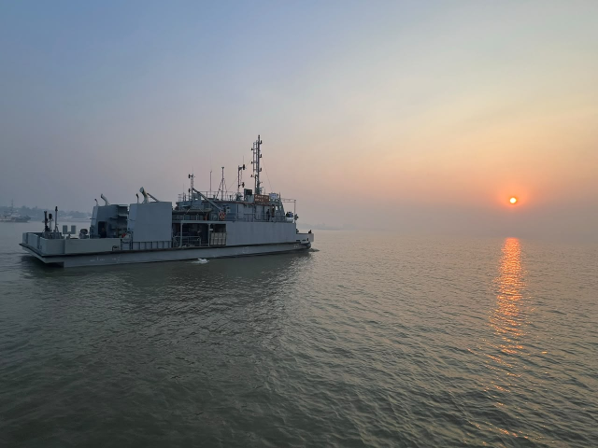
The Indian Navy received DSC A21 (Yard 326), the latest vessel under the Diving Support Craft (DSC) project, on 20 November 2026 at the Naval Dockyard, Mumbai. The vessel has been indigenously designed and constructed by Titagarh Rail Systems Limited (TRSL), Kolkata, highlighting India’s growing capabilities in domestic shipbuilding.
DSC A21 features a modern catamaran-hull design, which provides enhanced stability, a larger deck area and improved sea-keeping capabilities. The vessel is equipped with advanced diving equipment to perform specialised underwater operations.
The ship has been designed and constructed in accordance with the applicable naval rules and regulations of the Indian Register of Shipping (IRS). The Naval Science and Technological Laboratory (NSTL), Visakhapatnam, conducted hydrodynamic analysis and model testing during the design phase.
The induction of DSC A21 will strengthen the Indian Navy’s capabilities in several specialised areas, including:
- Diving support operations.
- Underwater inspection and maintenance.
- Salvage assistance.
- Coastal operational deployment.
The vessel represents another achievement under the Government of India’s Make in India initiative and reflects the Ministry of Defence’s continued emphasis on indigenous defence manufacturing.
Key Facts for Exams
- Vessel: DSC A21 (Yard 326).
- Project: Diving Support Craft.
- Delivered on: 20 November 2026.
- Shipbuilder: Titagarh Rail Systems Limited.
- Location: Naval Dockyard, Mumbai.
- Hull design: Catamaran.
- Hydrodynamic testing: NSTL, Visakhapatnam.
Pakistan Tests China-Supplied HD-1C (Fatah-3) Missile
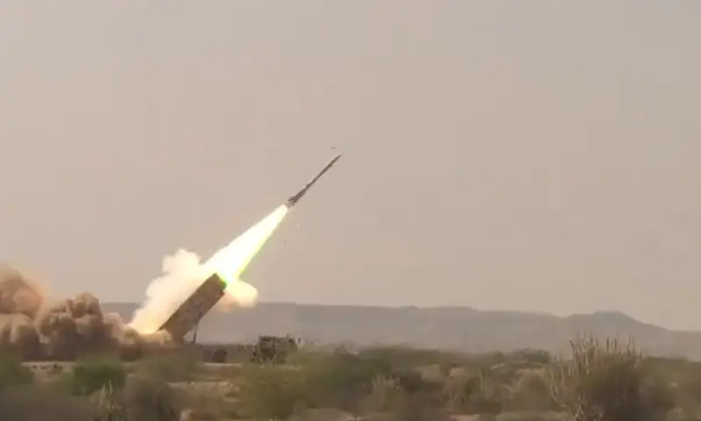
Pakistan successfully conducted a test launch of its Fatah-3 supersonic cruise missile on 18 November 2026. The test was carried out by the Pakistan Army’s Army Rocket Force Command and announced by the country’s military media organisation, the Inter-Services Public Relations (ISPR).
According to ISPR, the test represents an important step towards strengthening Pakistan’s conventional military capabilities. The missile reportedly incorporates advanced navigation and propulsion technologies, enabling it to engage targets at extended distances with high precision while travelling at supersonic speeds.
The system is expected to improve the operational reach and strike flexibility of the Army Rocket Force Command. Pakistani military officials also highlighted its potential contribution to the country’s conventional deterrence capabilities.
The launch was observed by the Commander of the Army Rocket Force Command, senior military officers and scientists and engineers associated with the missile programme. Pakistan’s President Asif Ali Zardari congratulated the personnel involved in the successful test.
About the Fatah Missile Family
Pakistan’s Fatah missile programme includes different types of rocket and missile systems designed for conventional strike operations.
| Missile | Description |
|---|---|
| Fatah-1 | Guided artillery rocket system |
| Fatah-2 | Conventional ballistic missile system |
| Fatah-2 Extended Range | Extended-range ballistic missile variant |
| Fatah-3 | Supersonic cruise missile |
| Fatah-4 | Subsonic ground-launched cruise missile |
| Fatah-4 Extended Range | Longer-range cruise missile variant |
The Fatah-3 was publicly introduced during Pakistan’s National Day Parade in March 2024. At the time, its announced range was approximately 450 km.
Open-source assessments have suggested that the missile could achieve speeds between Mach 2.2 and Mach 3.5, with some estimates extending to Mach 4. Its estimated operational range is generally placed between 290 km and 450 km. However, these figures have not been independently confirmed as official technical specifications.
Key Facts for Exams
- Missile: Fatah-3.
- Country: Pakistan.
- Type: Supersonic cruise missile.
- Test date: 18 November 2026.
- Conducted by: Pakistan Army’s Army Rocket Force Command.
- Announcement: ISPR.
- Public unveiling: March 2024.
Exercise Sahayata Setu 2026
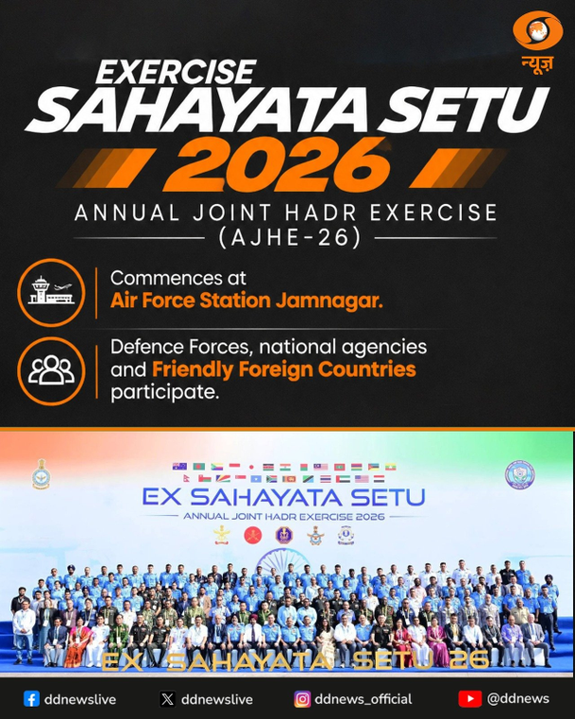
The Indian Air Force successfully conducted the multinational Humanitarian Assistance and Disaster Relief (HADR) exercise Sahayata Setu 2026 at Air Force Station Jamnagar, Gujarat, from 17 to 19 November 2026.
The exercise was organised under the aegis of Headquarters Integrated Defence Staff (HQ IDS) and Headquarters South Western Air Command (HQ SWAC), in collaboration with participating Indian agencies and Friendly Foreign Countries (FFCs).
The primary objective was to strengthen international cooperation, improve disaster-response preparedness and develop coordination among military and civilian agencies during natural disasters and other humanitarian emergencies.
The exercise concluded with a Multi-Agency Capability Demonstration (MACD), showcasing coordinated disaster-response operations across land, air and maritime domains. Delegates from participating foreign countries also interacted with Indian officials during the concluding programme.
The event was attended by General N. S. Raja Subramani, Chief of Defence Staff (CDS), as the Chief Guest. Other prominent dignitaries included Air Chief Marshal Ashutosh Dixit, Chief of the Air Staff, Gujarat Minister of Forest and Environment Arjun Modhwadia, and senior commanders from the Indian Army, Navy and Air Force.
Major Components of the Exercise
Sahayata Setu 2026 incorporated several activities to improve collective preparedness and facilitate the exchange of operational knowledge:
1. Seminar: Provided a platform for sharing experiences, technical knowledge and best practices in disaster management.
2. Tabletop Exercise (TTX): Enabled participating agencies to practise coordinated decision-making and formulate responses to simulated disaster situations.
3. Static Display: Offered participants an opportunity to understand the equipment, technologies and capabilities used in HADR operations.
4. Multi-Agency Capability Demonstration (MACD): Demonstrated practical coordination between different agencies and the execution of disaster-response activities across multiple operational domains.
QUAD HADR Working Group Meeting
An important feature of the exercise was the meeting of the QUAD Humanitarian Assistance and Disaster Relief (HADR) Working Group. The meeting reinforced the participating countries’ commitment to developing effective regional disaster-response mechanisms and strengthening capacity-building initiatives.
Addressing the media, the Chief of Defence Staff emphasised the importance of a coordinated Whole-of-Nation Approach to disaster relief. He also highlighted India’s role as a reliable first responder in the Indo-Pacific and Indian Ocean Region (IOR), guided by its Neighbourhood First Policy and the vision of MAHASAGAR (Mutual and Holistic Advancement for Security and Growth Across Regions).
Key Facts for Exams
- Exercise: Sahayata Setu 2026.
- Type: Multinational HADR exercise.
- Organised by: Indian Air Force.
- Venue: Air Force Station Jamnagar, Gujarat.
- Dates: 17–19 November 2026.
- Under the aegis of: HQ IDS and HQ SWAC.
- Chief Guest: General N. S. Raja Subramani (CDS).
- Important component: Multi-Agency Capability Demonstration.
- Additional feature: QUAD HADR Working Group meeting.
Voyager 1: First Human-Made Object to Reach One Light-Day from Earth
NASA’s Voyager 1 achieved a historic milestone on 18 November 2026, when it reached a distance of approximately one light-day from Earth. It is the first human-made object to travel this far into space.
Launched on 5 September 1977, Voyager 1 is an unmanned interstellar space probe developed by the National Aeronautics and Space Administration (NASA). Its mission was initially designed to explore the outer planets of our Solar System, but it eventually became one of humanity’s most remarkable achievements in space exploration.
What Does One Light-Day Mean?
A light-day is the distance travelled by light in one day at approximately 299,792 kilometres per second.
At Voyager 1’s distance:
- A radio signal takes approximately 24 hours to travel from the spacecraft to Earth.
- A two-way communication cycle takes roughly 48 hours.
- Its distance from Earth is approximately 25.9 billion kilometres, or more than 16 billion miles.
The spacecraft is travelling at approximately 61,000 km/h relative to the Sun and is operating beyond the Sun’s heliosphere in interstellar space.
Power Source and Current Status
Voyager 1 receives electrical power from three Radioisotope Thermoelectric Generators (RTGs). These devices convert heat generated by the radioactive decay of plutonium-238 into electricity.
As its power supply gradually declines, NASA engineers have been switching off selected instruments and systems to extend the spacecraft’s operational life. The probe continues to operate with two active science instruments, although engineers are also working to resolve a recent interruption in the transmission of science and engineering data.
Major Achievements of Voyager 1
1. Jupiter Flyby (1979): Voyager 1 explored Jupiter and provided detailed observations of its atmosphere, moons and ring system.
2. Saturn Flyby (1980): It studied Saturn, its rings and several moons, including Titan, providing valuable information about the planet and its surrounding environment.
3. Entry into Interstellar Space (2012): On 25 August 2012, Voyager 1 crossed the heliopause, becoming the first spacecraft to enter interstellar space.
4. Pale Blue Dot (1990): The spacecraft captured the iconic image of Earth from a great distance, showing our planet as a tiny pale-blue point against the vastness of space.
5. Golden Record: Voyager 1 carries a gold-plated copper phonograph record containing sounds, music, greetings and images representing life and civilisation on Earth. It was designed as a message for any potential extraterrestrial intelligence that might encounter the spacecraft.
Key Facts for Exams
- Spacecraft: Voyager 1.
- Agency: NASA.
- Launch date: 5 September 1977.
- One light-day milestone: 18 November 2026.
- First spacecraft to enter interstellar space.
- Heliopause crossing: 25 August 2012.
- Jupiter flyby: 1979.
- Saturn flyby: 1980.
- Famous image: Pale Blue Dot (1990).
- Power source: Radioisotope Thermoelectric Generators (RTGs).
- Carries: Golden Record.

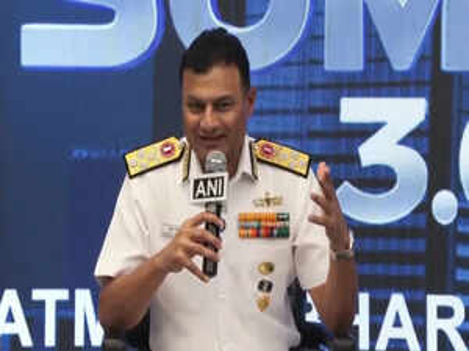
Indian Navy Has 49 Ships on Order, All Being Built in India: Navy Chief
Indian Navy Chief Admiral Krishna Swaminathan has highlighted India’s remarkable progress in indigenous warship construction, stating that approximately 49 naval ships are currently on order and all are being constructed within India.
Speaking at the National Security Summit 3.0 in New Delhi, the Navy Chief emphasised that the Indian Navy had moved away from its earlier dependence on foreign shipbuilders and had transformed itself from a Buyers’ Navy into a Builders’ Navy.
He further stated that the Navy has already commissioned more than 100 indigenously designed and constructed vessels, marking a significant achievement in India’s defence manufacturing journey.
Evolution of Indigenous Warship Construction in India
The Navy Chief highlighted several important milestones in the development of India’s domestic naval shipbuilding industry:
- 1960: India constructed its first indigenous warship, marking the beginning of its domestic warship-building journey.
- 1964: The Central Design Office was established to strengthen indigenous naval ship-design capabilities.
- 2022: India commissioned its first indigenously designed and constructed aircraft carrier, INS Vikrant.
INS Vikrant: A Major Achievement in Aatmanirbharta
The commissioning of INS Vikrant in 2022 represented a major milestone in India’s efforts towards defence self-reliance.
INS Vikrant is India’s first indigenously designed and constructed aircraft carrier. Its development has strengthened India’s position among a limited group of countries possessing the capability to design and build aircraft carriers domestically.
The Navy Chief also highlighted India’s achievement in developing nuclear-propelled ballistic missile submarines, reflecting the country’s growing technological capabilities in advanced naval platforms.
Vision 2047: A Fully Aatmanirbhar Navy
Admiral Krishna Swaminathan reiterated the Indian Navy’s objective of becoming a completely Aatmanirbhar (self-reliant) Navy by 2047.
To achieve this vision, the Navy is working with the Ministry of Defence, public-sector enterprises and private-sector industries to establish a strong indigenous defence manufacturing ecosystem.
The strategy focuses on developing domestic capabilities for manufacturing warships, advanced naval systems, equipment and other critical technologies, thereby reducing dependence on foreign suppliers.
The initiative also aims to encourage innovation, strengthen domestic industries, generate employment and enhance India’s maritime security capabilities.
Review Questions
- DSC A21 (Yard 326), recently delivered to the Indian Navy, has been indigenously
constructed by which company?
A. Cochin Shipyard Limited
B. Titagarh Rail Systems Limited
C. Garden Reach Shipbuilders & Engineers
D. Mazagon Dock Shipbuilders Limited
Correct Answer: B. Titagarh Rail Systems Limited - The Fatah-3 missile, recently test-fired by Pakistan, belongs to which category?
A. Subsonic cruise missile
B. Intercontinental ballistic missile
C. Supersonic cruise missile
D. Hypersonic glide vehicle
Correct Answer: C. Supersonic cruise missile - Exercise Sahayata Setu 2026 was conducted at which of the following locations?
A. Air Force Station Hindon
B. Air Force Station Jamnagar
C. Air Force Station Jodhpur
D. Air Force Station Gwalior
Correct Answer: B. Air Force Station Jamnagar - The QUAD HADR Working Group meeting was an important feature of which
exercise?
A. Exercise Malabar 2026
B. Exercise Sahayata Setu 2026
C. Exercise Tiger Triumph 2026
D. Exercise Mitra Shakti 2026
Correct Answer: B. Exercise Sahayata Setu 2026 - Voyager 1 crossed the heliopause and entered interstellar space on which date?
A. 5 September 1977
B. 20 August 2010
C. 25 August 2012
D. 18 November 2026
Correct Answer: C. 25 August 2012 - Which famous photograph of Earth was captured by Voyager 1 in 1990?
A. Earthrise
B. Blue Marble
C. Pale Blue Dot
D. The Blue Planet
Correct Answer: C. Pale Blue Dot - What is the approximate number of Indian Navy ships currently on order, all of
which are being constructed in India, according to the Navy Chief?
A. 29
B. 39
C. 49
D. 59
Correct Answer: C. 49 - In which year was India’s first indigenously designed and constructed aircraft
carrier, INS Vikrant, commissioned?
A. 2018
B. 2020
C. 2022
D. 2024
Correct Answer: C. 2022 - What is the target year for the Indian Navy to become a completely Aatmanirbhar
Navy?
A. 2030
B. 2035
C. 2040
D. 2047
Correct Answer: D. 2047 - Hitler was the dictator of which country?
A. Russia
B. Egypt
C. France
D. Germany
ANSWER: D - What was the name given to World war I by historians?
A. First War
B. European war
C. The Great war
D. Seven-year War
ANSWER: C - Cairo Is The Capital Of
A. Egypt
B. Qatar
C. UAE
D. Maldives
ANSWER: A - Indian Army Has How Many Operational Commands?
A. 3
B. 4
C. 5
D. 6
ANSWER: D - SALVEX (Salvage) Ex Conducted B/W India And
A. USA
B. UK
C. Uganda
D. European Union
ANSWER: A - Mil Mi-35 Is A
A. Attack Helicopter
B. Fighter Jet
C. Tank
D. UAV
ANSWER: A - The Training Command of The IAF Is In
A. Bengaluru
B. New Delhi
C. Pune
D. Mumbai
ANSWER: A - “Good Economics for Hard Times” Book Is Written By
A. Abhijit V. Banerjee
B. Thomas Sowell
C. Hew Strachan
D. APJ Abdul Kalam
ANSWER: A - Germany Borders With The
A. Netherlands
B. Belgium
C. Czech Republic
D. All of the above
ANSWER: D - “Jat balwan, jai bhagwan” Is The War Cry Of
A. JKRIF
B. RR
C. CORPS OF ENGINEERS
D. JAT REGIMENT
ANSWER: D - Sub Lieutenant Rank of Indian Navy Is Equivalent to which rank of Indian
Army?
A. Commodore
B. Captain
C. Commander
D. Lieutenant
ANSWER: D - On which dates did the US drop atom bombs on Hiroshima and Nagasaki
respectively?
A. Aug 6, 1945 & Aug 9, 1945
B. Aug 6, 1945 & Sept 12,1945
C. Aug 5, 1946 & Aug 8, 1946
D. Aug 9, 1946 & Aug 12, 1946
ANSWER: A
ALSO READ:
- Latest Daily Current Affairs and Defence Updates
- Latest Daily Current Affairs October 2026[DOWNLOAD PDF]
- Latest Daily Current Affairs September 2026[DOWNLOAD PDF]
- Latest Daily Current Affairs August 2026[DOWNLOAD PDF]
- Latest Daily Current Affairs July 2026[DOWNLOAD PDF]
- Latest Daily Current Affairs June 2026[DOWNLOAD PDF]
- Latest Daily Current Affairs May 2026[DOWNLOAD PDF]
- Latest Daily Current Affairs April 2026[DOWNLOAD PDF]
- Latest Daily Current Affairs March 2026[DOWNLOAD PDF]
- Latest Daily Current Affairs February 2026[DOWNLOAD PDF]
- Latest Daily Current Affairs January 2026[DOWNLOAD PDF]
- Latest Daily Current Affairs November 2025[DOWNLOAD PDF]