


In Defence Current Affairs for 24 November 2026, we will see the latest national and international current affairs news. These important current affairs will be beneficial for your upcoming NDA, CDS, CDS OTA, AFCAT, TA, Agniveer Army, Agniveer Navy, Agniveer Air Force, Women Military Police, INET, MNS, ACC exams, SCO, PCSL, CAPF, and SSB interviews, and direct entries for Army, Navy, and Air Force like SSC Tech, TGC, JAG, NCC, TES, 10+2 Cadet. Download a PDF file about current events at the end of this article. Let us now see the Current Affairs.
Defence Current Affairs 24 November 2026
Indian Navy Receives Indigenous ASW Shallow Water Craft ‘ASHANK’
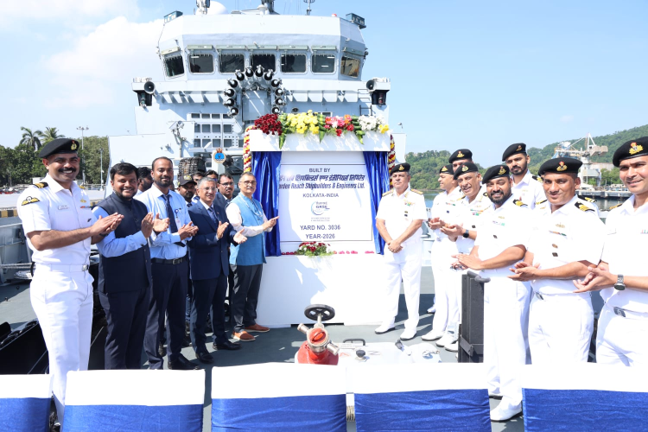
The Indian Navy received ‘Ashank’ (Yard 3036), an indigenously designed and constructed Anti-Submarine Warfare Shallow Water Craft (ASW SWC), on 23 November 2026 at Visakhapatnam.
The vessel has been built by Garden Reach Shipbuilders and Engineers (GRSE), Kolkata, as part of India’s efforts to strengthen indigenous naval shipbuilding capabilities.
The ASW shallow water craft have been designed and constructed in accordance with the classification rules of the Indian Register of Shipping (IRS).
Key Features and Capabilities of ASHANK
Ashank is equipped with modern naval warfare technologies that enhance the Indian Navy’s ability to detect, monitor and counter underwater threats.
Its major equipment includes:
- State-of-the-art lightweight torpedoes.
- Indigenous rocket launchers.
- Advanced sonar systems.
- Waterjet propulsion technology.
The vessel is specifically designed to undertake Anti-Submarine Warfare (ASW) operations in coastal waters. It will strengthen the Navy’s underwater surveillance, coastal security and mine-laying capabilities.
These vessels are also among the largest Indian naval warships powered by waterjets.
Indigenous Defence Manufacturing
One of the most significant aspects of Ashank is its indigenous content, which exceeds 80 per cent. This reflects the increasing participation of Indian shipyards and domestic defence manufacturers in building advanced naval platforms.
The delivery of Ashank represents another important step towards achieving the Government’s vision of Aatmanirbhar Bharat in the defence sector.
Important Facts for Exams:
- Ship: ASHANK (Yard 3036).
- Category: Anti-Submarine Warfare Shallow Water Craft.
- Builder: Garden Reach Shipbuilders and Engineers (GRSE).
- Location of GRSE: Kolkata.
- Delivery Date: 23 November 2026.
- Delivery Location: Visakhapatnam.
- Indigenous Content: More than 80%.
- Classification: Indian Register of Shipping (IRS).
- Primary Role: Anti-Submarine Warfare in coastal waters.
INS Sahyadri Concludes Port Visit to Da Nang, Vietnam
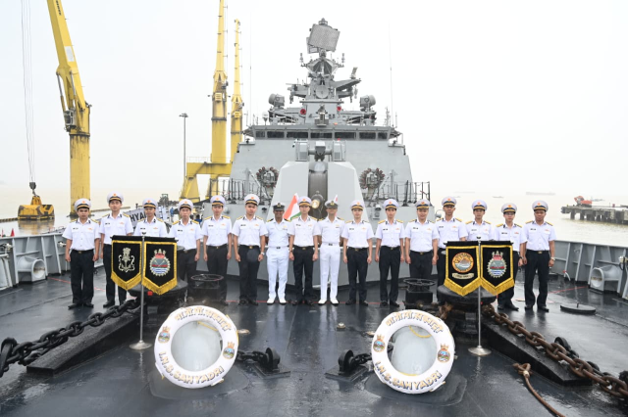
The Indian Navy’s indigenous Guided Missile Stealth Frigate INS Sahyadri successfully completed its port visit to Da Nang, Vietnam, from 20 to 22 November 2026.
The visit was part of the ship’s operational deployment to the Far East and aimed at strengthening maritime cooperation between India and Vietnam.
During its stay, the Indian naval crew participated in several professional and cultural activities designed to promote closer relations between the two countries’ naval forces.
Major Activities During the Visit
The engagements included:
- Meetings and interactions with senior officials of the Vietnam People’s Navy.
- Cross-visits involving personnel from both navies.
- Cultural exchange programmes.
- Professional interactions to enhance mutual understanding and cooperation.
These activities provided an opportunity for naval personnel from both countries to exchange experiences, develop professional relationships and strengthen mutual trust.
Significance of India–Vietnam Naval Cooperation
India and Vietnam share important maritime interests in the Indo-Pacific region. Their naval partnership contributes to regional stability, maritime security and cooperation.
INS Sahyadri’s visit also reflects India’s commitment to strengthening relationships with friendly countries through naval diplomacy.
The deployment is consistent with two important Indian foreign policy initiatives:
1. Act East Policy: India’s policy to strengthen economic, strategic and cultural relations with Southeast Asian and East Asian countries.
2. MAHASAGAR Vision: Mutual and Holistic Advancement for Security and Growth Across Regions. It reflects India’s broader approach towards maritime cooperation, security and development.
Important Facts for Exams:
- Warship: INS Sahyadri.
- Type: Guided Missile Stealth Frigate.
- Visiting Country: Vietnam.
- Port: Da Nang.
- Visit Duration: 20–22 November 2026.
- Navy: Indian Navy.
- Partner Navy: Vietnam People’s Navy.
- Related Indian policy: Act East Policy.
- Maritime vision: MAHASAGAR.
Active Protection Systems and Countermeasures for Armoured Vehicles
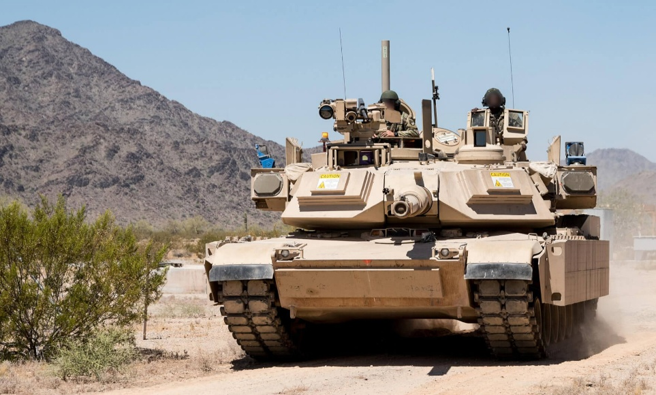
Modern armoured vehicles face increasingly sophisticated battlefield threats, particularly from Anti-Tank Guided Missiles (ATGMs) and Rocket-Propelled Grenades (RPGs).
Traditional armoured vehicles primarily depended on heavy protective plating. However, improvements in anti-armour weapon technology have made it necessary to develop more advanced protection mechanisms.
Modern military vehicles therefore use a combination of passive armour, reactive armour and Active Protection Systems (APS) to improve battlefield survivability.
Major Types of Protection Systems
1. Passive Armour
Passive armour refers to fixed protective materials installed on military vehicles to absorb, deflect or reduce the impact of incoming projectiles.
Common materials include:
- Hardened steel.
- Aluminium alloys.
- Composite ceramics.
Unlike active systems, passive armour does not require electronic sensors or an active response to incoming threats.
2. Reactive Armour
Reactive armour is designed to respond when struck by an incoming projectile. It helps reduce the effectiveness of certain anti-armour weapons by disrupting their penetration mechanism.
It provides an additional protective layer over the vehicle’s basic armour.
3. Active Protection Systems (APS)
Active Protection Systems use sensors and other electronic equipment to identify incoming threats and initiate countermeasures before the projectile strikes the vehicle.
These systems provide an additional layer of defence against modern anti-tank weapons.
Soft-Kill and Hard-Kill Countermeasures
Active protection and countermeasure technologies can broadly be understood through two approaches:
- Soft-Kill Systems: These interfere with the targeting or guidance mechanism of incoming weapons without physically destroying them.
- Hard-Kill Systems: These use physical interception to destroy or neutralise incoming projectiles before they hit the protected vehicle.
Examples of Protection Systems
| System | Country | Major Features |
|---|---|---|
| Shtora-1 | Russia | Infrared jammers, laser-warning receivers and smoke grenade launchers |
| VIRSS | India | Vehicle Integrated Radio Jammer and Survivability System; soft-kill example |
| LEDS-150 | South Africa | Integrates laser warning and multi-spectral smoke countermeasures |
Significance for Modern Warfare
The development of advanced protection systems is essential for improving the survivability of tanks and other armoured platforms.
As anti-tank weapons become more sophisticated, military forces increasingly require integrated protection combining armour, electronic countermeasures and threat detection technologies.
Important Facts for Exams:
- APS: Active Protection System.
- ATGM: Anti-Tank Guided Missile.
- RPG: Rocket-Propelled Grenade.
- Passive Armour: Fixed protective material.
- Soft-Kill: Disrupts targeting or guidance.
- Hard-Kill: Physically destroys or intercepts a threat.
- Shtora-1: Russian protection system.
- VIRSS: Indian soft-kill system.
- LEDS-150: South African protection system.
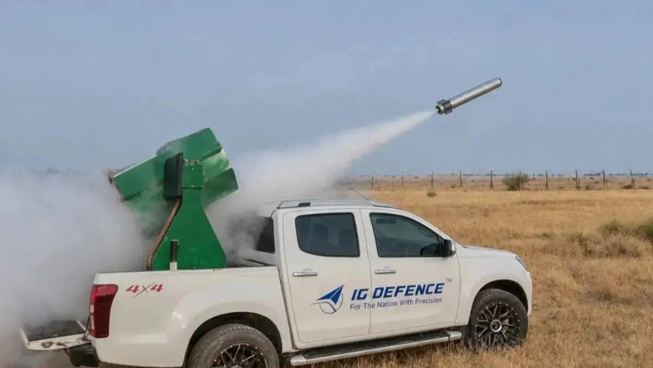
India Successfully Tests Indigenous JWALA MK-1 Counter-Drone System
India successfully test-fired JWALA MK-1, an indigenous autonomous counter-drone micro-missile system, at the Pokhran test range in Rajasthan on 23 November 2026.
Developed by Indian defence technology company IG Defence, the system is described as India’s first autonomous Counter-Unmanned Aircraft System (CUAS) micro-missile platform.
The development represents an important step towards strengthening India’s ability to counter hostile unmanned aerial vehicles (UAVs).
Major Features of JWALA MK-1
The system has been designed to detect, identify and neutralise hostile drones. Its stated operational range extends up to 5 kilometres.
Its important technological features include:
- Dual-Pulse Solid Rocket Motor: Provides propulsion for the micro-missile.
- Artificial Intelligence Integration: The system uses an AI-powered mission management platform called GRID.
- Autonomous Operation: Supports the process of identifying and engaging hostile drones.
- Hard-Kill Capability: Neutralises incoming drones through physical destruction rather than merely disrupting their communication systems.
Role of GRID Technology
GRID serves as the intelligence and mission-management backbone of JWALA MK-1. It integrates artificial intelligence with the counter-drone system to support its operational functions.
Why Is JWALA MK-1 Important?
The growing use of inexpensive drones in modern warfare has created new security challenges for military forces.
Conventional air-defence systems can be expensive when deployed against low-cost unmanned aerial threats. JWALA MK-1 is intended to provide a more cost-effective countermeasure against hostile drones.
The system is expected to complement existing air-defence capabilities and strengthen protection against emerging aerial threats.
Important Facts for Exams:
- System: JWALA MK-1.
- Category: Autonomous Counter-Drone Micro-Missile System.
- Developer: IG Defence.
- Test Location: Pokhran, Rajasthan.
- Test Date: 23 November 2026.
- Operational Range: Up to 5 km.
- Motor: Dual-pulse solid rocket motor.
- AI Platform: GRID.
- Technology: Hard-Kill Counter-Drone System.
- CUAS: Counter-Unmanned Aircraft System.
DRDO Awards Contract to olee.space for Indigenous Laser Communication System for Drones
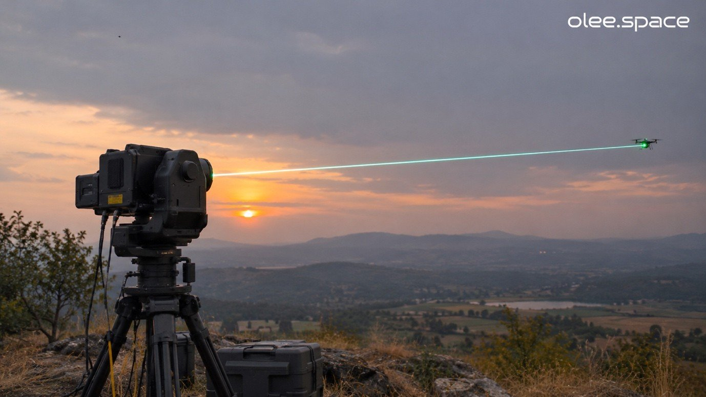
The Defence Research and Development Organisation (DRDO), under the Ministry of Defence, has awarded a development contract to Pune-based deep-tech company olee.space on 23 November 2026.
The project involves developing an indigenous laser-based communication system for drones. The company has been given a period of 18 months to complete the project.
The initiative aims to strengthen secure, high-speed communication capabilities for unmanned aerial platforms without depending on conventional radio-frequency communication.
Major Components of the Project
The contract covers the development of two types of Free Space Optical Communication (FSOC) terminals:
- Ground-based FSOC terminals.
- Airborne FSOC terminals.
The system will incorporate automatic Pointing, Acquisition and Tracking (PAT) capabilities.
These technologies are intended to establish and maintain a laser communication link between a ground station and a moving drone.
What Is Free Space Optical Communication (FSOC)?
Free Space Optical Communication is a technology that uses light, generally laser beams, to transmit information through open space rather than through physical cables or conventional radio-frequency links.
Its potential advantages include:
- High-speed data transmission.
- Secure communication.
- Reduced dependence on radio-frequency communication.
- Resistance to conventional radio-frequency jamming.
Why Is This Technology Important?
Radio-frequency jamming has emerged as a major challenge in modern drone warfare. During the Russia–Ukraine conflict, some drones have used fibre-optic cables to maintain communication and avoid radio-frequency interference.
However, fibre-optic cables can restrict operational range and may become damaged, tangled or disconnected.
Laser-based communication offers an alternative approach, although maintaining a stable laser connection with a moving aerial platform is a technically challenging task.
About olee.space
- Founded: 2023.
- Headquarters: Pune, Maharashtra.
- Founders: James Solomon and Suman Hiremath.
- Sector: Photonics and laser communication technologies.
- Seed Funding: US$3 million in August 2025.
- Previous Achievement: Delivered a production-grade Directed Energy Weapon (DEW) system to the Indian Armed Forces in May 2026.
Important Facts for Exams:
- Organisation awarding contract: DRDO.
- Company: olee.space.
- Location: Pune, Maharashtra.
- Contract Date: 23 November 2026.
- Project Completion Period: 18 months.
- Technology: Free Space Optical Communication (FSOC).
- Technical Capability: Pointing, Acquisition and Tracking (PAT).
- Main Objective: Secure laser-based drone communication.
Indian Navy and Coast Guard Plan to Acquire 76 Naval Utility Helicopters
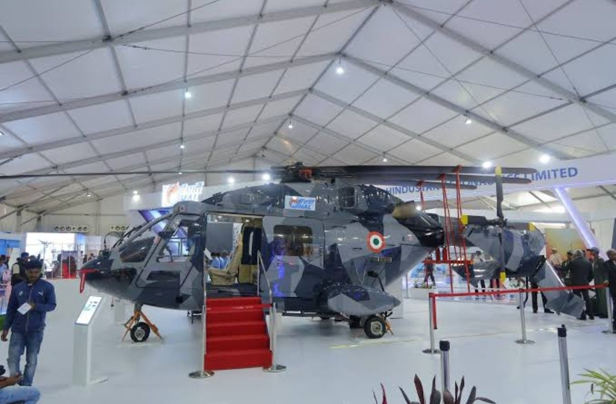
The Indian Navy and the Indian Coast Guard are planning to procure 76 Naval Utility Helicopters under a proposed defence acquisition programme estimated at approximately ₹15,000 crore.
The proposed procurement aims to replace their ageing Cheetah and Chetak helicopter fleets and improve operational capabilities.
According to the proposal, the helicopters will be manufactured in India through partnerships between domestic defence companies and foreign Original Equipment Manufacturers (OEMs).
Proposed Distribution of Helicopters
The planned allocation of 76 helicopters is as follows:
| Defence Organisation | Number of Helicopters |
|---|---|
| Indian Navy | 51 |
| Indian Coast Guard | 25 |
| Total | 76 |
The project is expected to be considered at a high-level meeting of the Defence Ministry and is likely to be pursued under the Buy and Make (Indian) category of the Defence Acquisition Procedure.
The two organisations are looking for helicopters in the 5-tonne-plus category to address operational requirements and limitations associated with their existing fleets.
Separate Helicopter Procurement Plans of the Army and Air Force
The Indian Army and Indian Air Force are also working towards replacing their ageing light utility helicopter fleets.
Their combined requirement involves approximately 400 Light Utility Helicopters (LUH).
The proposed manufacturing arrangement includes:
- 200 helicopters to be manufactured by Hindustan Aeronautics Limited (HAL).
- Another 200 helicopters to be manufactured by private-sector companies in partnership with foreign OEMs.
The Defence Acquisition Council has recently cleared the programme for 200 helicopters to be manufactured by private companies, with the tender expected to be issued soon.
Other Indian Navy Helicopter Programmes
The Indian Navy had earlier proposed procuring 111 Naval Light Utility Helicopters, but the programme made limited progress.
Separately, the Navy is planning to acquire 60 Utility Helicopters Marine (UH Marine) from HAL, which is developing these helicopters indigenously.
According to the information provided, the combined requirement for light helicopters across India’s defence forces is approximately 500.
Operational Importance of Utility Helicopters
Light utility helicopters are important for a wide range of military operations, including:
- Reconnaissance and surveillance.
- Movement of personnel and equipment.
- Support to troops deployed in difficult terrain.
- Operations in high-altitude and remote border areas.
These helicopters are particularly important in challenging operational environments, from the Siachen region in northern India to Arunachal Pradesh in the northeast.
Review Questions
- Which shipbuilder constructed the Anti-Submarine Warfare Shallow Water Craft
(ASW SWC) ‘ASHANK’?
A) Mazagon Dock Shipbuilders Limited
B) Garden Reach Shipbuilders and Engineers
C) Cochin Shipyard Limited
D) Goa Shipyard Limited
Correct Answer: B) Garden Reach Shipbuilders and Engineers - What is the approximate indigenous content of the ASW Shallow Water Craft
‘ASHANK’?
A) 50%
B) 60%
C) 70%
D) More than 80%
Correct Answer: D) More than 80% - INS Sahyadri recently concluded its port visit to which country?
A) Indonesia
B) Vietnam
C) Singapore
D) Philippines
Correct Answer: B) Vietnam - What is the full form of MAHASAGAR, associated with India’s maritime vision?
A) Maritime Advancement for Security and Growth Across Regions
B) Mutual and Holistic Advancement for Security and Growth Across Regions
C) Maritime Alliance for Strategic Growth and Regional Relations
D) Mutual Alliance for Homeland Security and Global Advancement
Correct Answer: B) Mutual and Holistic Advancement for Security and Growth Across
Regions - Which of the following is an example of a Russian Active Protection System that
combines infrared jammers, laser-warning receivers and smoke grenade launchers?
A) LEDS-150
B) VIRSS
C) Shtora-1
D) GRID
Correct Answer: C) Shtora-1 - JWALA MK-1, recently tested in India, is primarily associated with which defence
technology?
A) Anti-tank missile system
B) Autonomous counter-drone micro-missile system
C) Long-range ballistic missile
D) Naval air-defence system
Correct Answer: B) Autonomous counter-drone micro-missile system - What is the name of the AI-powered mission management platform integrated
into JWALA MK-1?
A) AKASH
B) NETRA
C) GRID
D) TRINETRA
Correct Answer: C) GRID - DRDO awarded a contract to which Pune-based company for developing an
indigenous laser-link communication system for drones?
A) ideaForge
B) olee.space
C) IG Defence
D) Tonbo Imaging
Correct Answer: B) olee.space - What is the full form of FSOC in the context of the DRDO–olee.space project?
A) Free Space Optical Communication
B) Frequency Signal Optical Control
C) Fast Secure Optical Connection
D) Free Satellite Optical Communication
Correct Answer: A) Free Space Optical Communication - Under the proposed ₹15,000 crore Naval Utility Helicopter programme, how
many helicopters are planned for the Indian Navy?
A) 25
B) 40
C) 51
D) 60
Correct Answer: C) 51 - C-130J Super Hercules Is A
A. Destroyer
B. OPV
C. Submarine
D. Transport Aircraft
ANSWER: D - “Secure Application for Internet (SAI)” Has Been Developed By
A. IAF
B. Indian Army
C. ICG
D. NSG
ANSWER: B - Joint Exercises B/w The India and Nepal Is Called:
A. Surya Kiran
B. SLINEX
C. Indra
D. Yudha Abhyas
ANSWER: A - Hq Of Mazagaon Dockyard Limited Is In
A. New Delhi
B. Mumbai
C. Chennai
D. Kolkata
ANSWER: B - “Battle Ready for 21st Century” Book Is Written By
A. Shashi Tharoor
B. Geetanjali Shree’s
C. Richa Mishra
D. Lt Gen AK Singh and Brig. Narendra Kumar
ANSWER: D - Where Is the Hq of The Eastern Command of The Indian Navy?
A. Kochi
B. Vishakhapatnam
C. Pune
D. Mumbai
ANSWER: B - Joint Exercises B/w The India and USA Is Called:
A. Surya Kiran
B. Vajra Prahar
C. Yudha Abhyas
D. Both B & C
ANSWER: D - In IAF Flights are sub-divisions of squadrons, commanded by a__.
A. Squadron Leader
B. Flying Officer
C. Air Marshal
D. None of the above
ANSWER: A - DRDO Lakshya Is A
A. Fighter Jet
B. Ship
C. Tank
D. UAV
ANSWER: D - Exercise Samudra Shakti Conducted B/w Indonesia &
A. India
B. Nepal
C. Bangladesh
D. Bhutan
ANSWER: A
ALSO READ:
- Latest Daily Current Affairs and Defence Updates
- Latest Daily Current Affairs October 2026[DOWNLOAD PDF]
- Latest Daily Current Affairs September 2026[DOWNLOAD PDF]
- Latest Daily Current Affairs August 2026[DOWNLOAD PDF]
- Latest Daily Current Affairs July 2026[DOWNLOAD PDF]
- Latest Daily Current Affairs June 2026[DOWNLOAD PDF]
- Latest Daily Current Affairs May 2026[DOWNLOAD PDF]
- Latest Daily Current Affairs April 2026[DOWNLOAD PDF]
- Latest Daily Current Affairs March 2026[DOWNLOAD PDF]
- Latest Daily Current Affairs February 2026[DOWNLOAD PDF]
- Latest Daily Current Affairs January 2026[DOWNLOAD PDF]
- Latest Daily Current Affairs November 2025[DOWNLOAD PDF]




