




In AFCAT 2 2026 Exam Static GK, we will see the latest national and international current affairs news. These important current affairs will be beneficial for your upcoming NDA, CDS, CDS OTA, AFCAT, TA, Agniveer Army, Agniveer Navy, Agniveer Air Force, Women Military Police, INET, MNS, ACC exams, SCO, PCSL, CAPF, and SSB interviews, and direct entries for Army, Navy, and Air Force like SSC Tech, TGC, JAG, NCC, TES, 10+2 Cadet. Download a PDF file about current events at the end of this article. Let us now see the Current Affairs.
AFCAT 2 2026 Exam Static GK – Defence Current Affairs 2026
Mission Aagaman: India’s First Private Orbital Rocket Launch
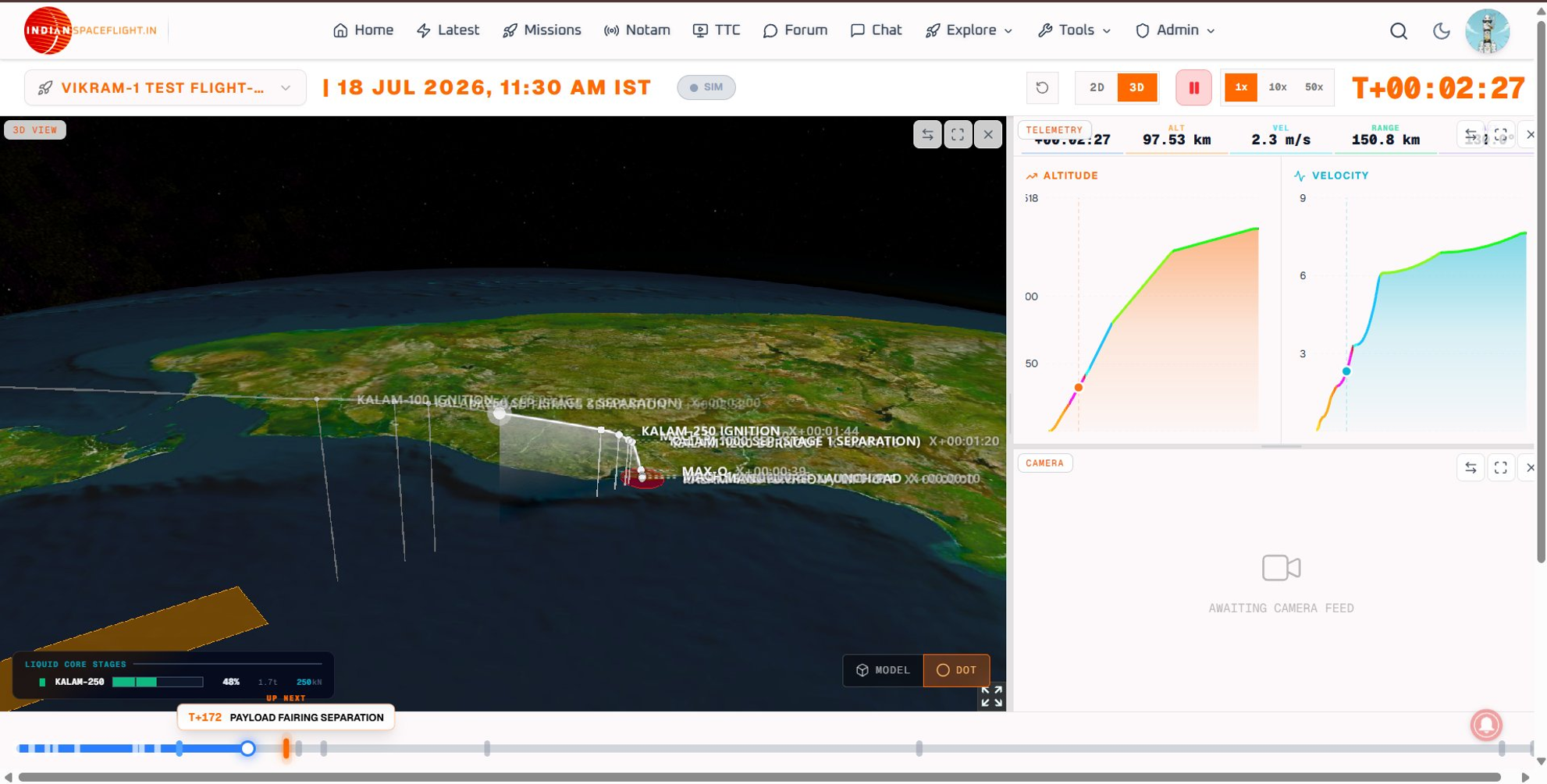
India’s space sector achieved a historic milestone with the successful launch of Vikram-1, the country’s first privately developed orbital-class launch vehicle, by Hyderabad-based Skyroot Aerospace. Named Mission Aagaman, the launch marks the beginning of a new era in which private companies play an active role in India’s space exploration and commercial satellite launch capabilities. The mission represents a significant achievement for India’s rapidly expanding private space ecosystem and reflects the success of recent space-sector reforms.
A Historic Milestone for India’s Space Industry
Mission Aagaman is the first attempt by an Indian private company to place payloads into orbit using an indigenously designed and developed launch vehicle. The mission was launched from the Satish Dhawan Space Centre (SDSC-SHAR), Sriharikota, the same spaceport used for ISRO’s major launch missions. A successful launch demonstrates that India’s private sector is now capable of contributing to orbital space missions alongside the national space agency.
About Vikram-1
Named after Dr. Vikram Sarabhai, the father of India’s space programme, Vikram-1 is a multi-stage launch vehicle developed entirely by Skyroot Aerospace. The rocket is designed to place small satellites weighing up to 350 kg into Low Earth Orbit (LEO), making it suitable for commercial satellite launches, Earth observation missions, scientific experiments, and technology demonstrations.
Mission Aagaman: Meaning and Objective
The word “Aagaman” means “arrival” in Sanskrit, symbolising the arrival of India’s private space industry into the global orbital launch market. The maiden mission primarily serves as a technology demonstration flight, validating the rocket’s propulsion system, avionics, stage separation, navigation, and flight performance before future commercial missions. The rocket carried multiple technology demonstration payloads from Indian and international customers into orbit.
Unique Features of the Mission
Mission Aagaman included several symbolic and technological highlights. The rocket carried a handwritten postcard from Prime Minister Narendra Modi bearing the message “Vande Mataram”, along with messages from scientists, engineers, astronauts, and unique artistic payloads. These additions celebrated India’s scientific achievements while showcasing the country’s growing confidence in private space innovation.
Importance for India’s Space Programme
The success of Vikram-1 strengthens India’s ambition to become a major player in the global commercial launch market. It demonstrates that Indian private companies can independently develop advanced launch vehicles and provide affordable launch services for small satellites. The mission also supports the Government of India’s vision of expanding private participation through organisations such as IN-SPACe and the Indian Space Policy.
The development is expected to encourage investment, promote technological innovation, create high-skilled employment opportunities, and strengthen India’s position in the global space economy. As demand for launching small satellites continues to increase worldwide, private launch vehicles such as Vikram-1 can help India emerge as a competitive and reliable launch service provider.
General NS Raja Subramani Assumes Charge as CDS
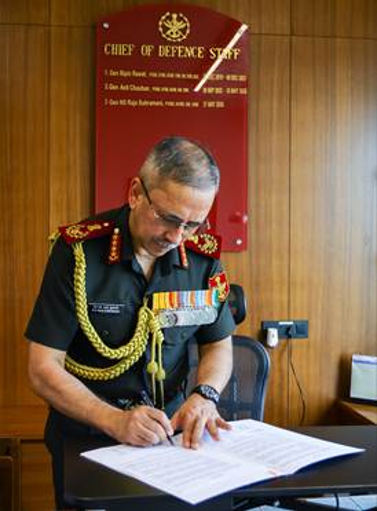
- General NS Raja Subramani, PVSM, AVSM, SM, VSM, assumed charge as the third Chief of Defence Staff (CDS) and Secretary, Department of Military Affairs on May 31, 2026.
- He acknowledged the exemplary leadership and contribution of his predecessors and pledged to build upon their achievements. Expressing gratitude to the country for the trust reposed in the Defence Forces, General NS Raja Subramani asserted that they would work in unison with all stakeholders as part of the Whole-of-Nation approach to further strengthen national security.
- A highly decorated officer with over four decades of service, General Subramani was commissioned into the Garhwal Rifles in December 1985.
- His distinguished career includes a number of key Command and Staff appointments, including General Officer Commanding, 2 Corps, General Officer Commanding-in-Chief, Central Command; and the Vice Chief of the Army Staff. Prior to assuming the appointment of CDS, he served as Military Adviser at the National Security Council Secretariat.
Admiral Krishna Swaminathan Assumes Charge As CONS
- Admiral Krishna Swaminathan, PVSM, AVSM, VSM assumed charge as the 27th Chief of the Naval Staff of the Indian Navy on 31 May 2026. He succeeds Admiral Dinesh Kumar Tripathi, PVSM, AVSM, NM who superannuated after 41 years of distinguished service.
- Admiral Krishna Swaminathan was commissioned into the Indian Navy on 01 July 1987. A Communication and Electronic Warfare specialist, he has held a wide range of operational, staff and training appointments during a distinguished career spanning nearly four decades.
- Admiral Swaminathan’s sea commands include the guided missile vessels INS Vidyut and INS Vinash, guided missile corvette INS Kulish, guided missile destroyer INS Mysore and aircraft carrier INS Vikramaditya.
Vice Admiral Sanjay Vatsayan Assumes Charge As Flag Officer Commanding-in-Chief
- Vice Admiral Sanjay Vatsayan, PVSM, AVSM, NM, assumed charge as the Flag Officer Commanding-in-Chief, Western Naval Command, at a ceremonial parade held in Mumbai on 30 May 2026.
- Prior to this appointment, he served as Vice Chief of the Naval Staff at Naval Headquarters, New Delhi. On assuming charge, he paid homage to the bravehearts who have made the supreme sacrifice in service to the Nation, at Gaurav Stambh, Naval Dockyard, Mumbai.
- An alumnus of NDA, Khadakwasla Pune, the Flag Officer was commissioned into the Indian Navy on 01 Jan 1988. A specialist in Gunnery and Missile Systems, he has held a wide range of command, operational, staff and training assignments, both afloat and ashore, during his distinguished naval career spanning more than three decades.
- The Flag Officer has served onboard various frontline warships, including command of Coast Guard Ship C-05, Missile Vessels INS Vibhuti and Nashak, Missile Corvette INS Kuthar and Guided Missile Frigate INS Sahyadri.
Inauguration of ‘Nausena Shaurya Vatika’
- Raksha Mantri Rajnath Singh and UP CM Yogi Adityanath jointly inaugurated ‘Nausena Shaurya Vatika’ in Lucknow on May 30, 2026. Built at a cost of Rs 19 crore over an area spanning over two acres, this Open-Air Display Museum honours the spirit, valour & prowess of the Indian Navy.
- It showcases the artefacts and weapon systems of INS Gomati, which was decommissioned on May 29, 2022 after 34 years of service.
- Speaking on the occasion, Raksha Mantri described the Nausena Shaurya Vatika as not only a tourist attraction, but also a symbol of inspiration that would remind future generations of the true cost of freedom and security.
- AK 726 (Naval Gun Installed onboard Naval Warship), ZIF 101 launcher for Surface-to-Air Missiles, Surface-to-Surface Anti-Ship and Surface-to-Air Missiles and Ship’s radar, torpedo launcher, anchors, ship’s masts and other artefacts of INS Gomati are on display at the park.
- It also features a Walkthrough Museum of TU 142M, a long range maritime patrol aircraft which is no longer in service.
- INS Gomati derives her name from the vibrant river Gomti and was commissioned on April 16, 1988 by the then Raksha Mantri at Mazagon Dock Limited. The third ship of the Godavari class guided-missile frigates, INS Gomati was also the oldest warrior of the Western Fleet when decommissioned.
- During her service, she participated in Operations Cactus, Parakram and Rainbow, and several bilateral & multinational naval exercises. For her remarkable spirit and stellar contribution to national maritime security, she was twice awarded the coveted Unit Citation, once in 2007-08 and again in 2019-20.
Multilateral Exercise Pragati 2026 Concludes
- The maiden edition of Multilateral Exercise PRAGATI 2026, conducted at Umroi Military Station, Meghalaya, concluded with a 72-hour validation exercise, showcasing the interoperability, mutual trust, and collective resolve of the participating armed forces to address common security challenges.
- The event was attended by six Vice Chiefs and over 40 senior military officials from the 13 participating friendly foreign countries. Lieutenant General Dhiraj Seth, Vice Chief of the Army Staff, hosted the dignitaries from all participating countries.
- PRAGATI, which stands for Partnership of Regional Armies for Growth and Transformation in the Indian Ocean Region, brought together more than 400 troops from India, Bhutan, Cambodia, Malaysia, Maldives, Myanmar, Nepal, Philippines, Seychelles, Sri Lanka, Vietnam, Indonesia and Laos
- This maiden edition of Exercise PRAGATI has laid a strong foundation for like-minded nations striving for a peaceful, prosperous and secure region; and serves as a precursor to future editions of the exercise.
Vice Admiral Vineet McCarty Assumes Charge as Commander-in-Chief of Andaman & Nicobar Command
- Vice Admiral Vineet McCarty, AVSM, assumed charge as the 20th Commander-in-Chief of the Andaman & Nicobar Command (ANC) at Sri Vijaya Puram on June 1, 2026. His appointment marks an important leadership transition in India’s only integrated Tri-Service Operational Command, which plays a crucial role in safeguarding national interests in the Indo-Pacific region.
- A highly experienced naval officer with over 36 years of distinguished service, Vice Admiral McCarty brings extensive expertise in operational, strategic, training, and joint-service domains.
- Early Career and Professional Education
- Commissioned into the Indian Navy on July 1, 1989, Vice Admiral McCarty is a specialist in Gunnery and Missile Warfare. Throughout his career, he has demonstrated exceptional leadership and professional excellence in a variety of challenging assignments.
- He is an alumnus of the Defence Services Staff College (DSSC), Wellington, and the National Defence College (NDC), New Delhi, both premier institutions for advanced military education and strategic studies.
- Distinguished Naval Career
- Vice Admiral McCarty has held numerous important sea and shore appointments during his naval career. His operational journey began as a member of the commissioning crew of INS Delhi, one of the Indian Navy’s frontline guided missile destroyers. He subsequently completed various specialist appointments onboard the warship, gaining extensive operational experience.
- His command assignments include:
- INS Ajay
- INS Khanjar
- INS Shivalik
- These commands provided him with valuable experience in maritime operations, fleet management, and naval warfare.
- Key Staff and Training Appointments
- In addition to his sea commands, Vice Admiral McCarty has served in several important staff and training positions. Some of his notable assignments include:
- Training Commander at the Indian Naval Academy
- Command Plans Officer at Headquarters Eastern Naval Command
- Commodore Naval Plans at Naval Headquarters
- These roles contributed significantly to operational planning, training, force development, and capability enhancement within the Indian Navy.
- Strategic Importance of Andaman & Nicobar Command
- The Andaman & Nicobar Command is India’s first and only integrated Tri-Service Command, bringing together personnel and assets from the Army, Navy, and Air Force under a unified command structure.
- Located at a strategically vital position near major international sea lanes, the command plays a critical role in:
- Maritime surveillance and security
- Protection of sea lines of communication
- Humanitarian assistance and disaster relief operations
- Regional security cooperation
- Safeguarding India’s interests in the Indo-Pacific
- The command serves as a key pillar of India’s maritime strategy and defence posture in the Indian Ocean Region.
- Vision for the Future
- Upon assuming command, Vice Admiral McCarty highlighted the strategic importance of the Andaman & Nicobar Command in ensuring maritime security and regional stability.
- He reaffirmed his commitment to:
- Enhancing operational preparedness
- Strengthening jointness among the three armed services
- Improving interoperability and coordination
- Reinforcing the command’s role in national and regional security
- His leadership is expected to further strengthen India’s ability to respond to emerging security challenges in the Indo-Pacific region.
BRO Celebrates 37th Raising Day of Project UDAYAK
- The Border Roads Organisation (BRO) celebrated the 37th Raising Day of Project UDAYAK on June 1, 2026, at Doomdooma in Assam. The occasion marked over three decades of dedicated service in developing and maintaining strategic infrastructure across India’s North-Eastern region. The celebrations highlighted the project’s significant contribution to national security, regional connectivity, and socio-economic development in some of the country’s most remote and challenging terrains.
- Commemorating Three Decades of Service
- The Raising Day celebrations were marked by a variety of ceremonial, welfare, and community outreach activities. As part of the event, Project UDAYAK organized:
- Swachhata Abhiyan (Cleanliness Drive)
- Road Safety Awareness Campaigns
- Run and Walkathon Events
- Medical Camps
- Dental Health Camps
- These activities benefited local communities and reflected the project’s commitment not only to infrastructure development but also to social welfare and community engagement.
- Internal events such as Sainik Sammelan and troop interactions were also conducted to strengthen morale, foster camaraderie, and recognize the contributions of personnel serving in demanding operational environments.
- Strategic Role of Project UDAYAK
- Project UDAYAK is one of the key projects of the Border Roads Organisation responsible for constructing and maintaining strategic road infrastructure in the easternmost parts of Arunachal Pradesh and adjoining areas of Assam.
- The project is entrusted with the maintenance and development of more than 1,457 kilometers of road network. Its area of responsibility includes several strategically important districts:
- Anjaw
- Lohit
- Dibang Valley
- Longding
- Tirap
- Changlang
- These regions are located near sensitive international borders and play a critical role in India’s defence and border management strategy.
- Enhancing Connectivity Along Strategic Frontiers
- Project UDAYAK has been instrumental in improving connectivity in remote and strategically important areas situated along:
- The Line of Actual Control (LAC)
- The Indo-Myanmar Border
- By building and maintaining roads, bridges, and other critical infrastructure, the project facilitates the movement of security forces, enhances border management capabilities, and supports the development of local communities.
- The project is currently engaged in the construction of roads and border fencing infrastructure along the Indo-Myanmar border, which is expected to further strengthen national security and improve accessibility in frontier regions.
- Major Infrastructure Achievements
- Over the years, Project UDAYAK has successfully executed several landmark infrastructure projects despite difficult terrain, adverse weather conditions, and logistical challenges.
- In 2025, the project completed:
- 12 strategic bridges
- One important road project
- One helipad
- These infrastructure assets were inaugurated by Defence Minister Rajnath Singh and have significantly improved mobility, connectivity, and operational preparedness in the region.
- The projects have also contributed to economic growth by improving access to markets, healthcare, education, and other essential services for local populations.
- Contribution to National Security and Development
- The strategic road infrastructure developed by Project UDAYAK serves multiple purposes. It supports military logistics and operational readiness while simultaneously promoting socio-economic development in remote border areas.
- Improved connectivity has enabled better integration of border communities with the national mainstream and enhanced disaster response capabilities in the region.
- The project’s efforts align with the Government of India’s broader objective of strengthening border infrastructure and ensuring balanced regional development in the North-East.
- Looking Ahead
- As Project UDAYAK completed 37 years of service, it reaffirmed its commitment to nation-building, excellence, and infrastructure development in some of India’s most challenging operational environments.
- With ongoing projects aimed at enhancing border connectivity and security, Project UDAYAK continues to play a vital role in supporting India’s strategic interests and fostering development in the North-Eastern region.
Flight-tests of RudraM-II
- DRDO and the IAF have conducted the successful flight-tests of RudraM-II Air-to-Surface Missile from an airborne platform. The tests were conducted under extreme release conditions with critical trajectory establishing the capability of all subsystems.
- The missiles after release were guided to a predefined target with pin-point accuracy. All the test objectives were fully met as confirmed by the flight data captured by various range instruments deployed by Integrated Test Range (ITR), Chandipur.
- Rudram-II has been indigenously developed by Research Centre Imarat, Hyderabad as the nodal DRDO laboratory in collaboration with other sister labs such as Defence Research and Development Laboratory, High Energy Materials Research Laboratory, Armament Research & Development Establishment & ITR.
- The Rudram missile is an indigenously developed air-to-surface anti-radiation missile (ARM) designed by the Defence Research and Development Organisation (DRDO). It is developed to detect, track, and destroy enemy radar systems, communication installations, and other radio-frequency emitting targets, thereby enhancing the combat capability of the Indian Armed Forces.
- What is an Anti-Radiation Missile?
- An anti-radiation missile is specifically designed to home in on electromagnetic radiation emitted by enemy radar and air-defense systems. By neutralizing these systems, the missile helps friendly aircraft operate more safely in hostile airspace.
- Key Features of Rudram Missile
- Type: Air-to-Surface Anti-Radiation Missile
- Developer: Defence Research and Development Organisation (DRDO)
- Country: India
- Launch Platform: Fighter aircraft such as the Sukhoi Su-30MKI
- Guidance System: Inertial Navigation System (INS) with GPS support and passive homing seeker
- Role: Suppression and destruction of enemy air defence systems
- Rudram-1
- Rudram-1 is the first missile in the Rudram series.
- Features
- Range of approximately 100–150 km
- Capable of targeting surveillance radars, tracking radars, and communication stations
- Can lock onto targets before or after launch
- Effective against enemy air-defense networks
- Rudram-2
- The Rudram-2 is an advanced version with improved range and strike capability.
- Features
- Longer range than Rudram-1
- Higher speed and enhanced precision
- Designed to engage heavily defended targets
- Strengthens India’s Suppression of Enemy Air Defence (SEAD) capabilities
- Rudram-3
- The Rudram-3 is under development as a long-range stand-off weapon.
- Expected Features
- Range exceeding 300 km
- Ability to strike strategic targets deep inside enemy territory
- Advanced navigation and targeting systems
- Enhanced survivability against modern air-defense systems
- Significance for India
- The Rudram missile series provides several strategic advantages:
- Reduces dependence on imported anti-radiation missiles.
- Strengthens the Indian Air Force’s capability to neutralize enemy radar networks.
- Enhances India’s indigenous defence manufacturing under the Atmanirbhar Bharat initiative.
- Improves survivability of fighter aircraft during combat operations.
Solar Industries, BDL Joins DRDO Development For Project Kusha
- Project Kusha represents India’s most ambitious indigenous air defence program, combining DRDO’s technological leadership with private sector partners Solar Industries and Bharat Dynamics Limited under the Development-cum-Production Partner (DcPP) model.
- The system is designed to provide a multi-layered shield against advanced aerial threats, with phased induction planned between 2028 and 2030.
- Project Kusha has been conceived as a long-range surface-to-air missile (LRSAM) system capable of neutralising drones, cruise missiles, stealth aircraft, and ballistic missiles before they penetrate Indian airspace.
- The system is structured around three interceptor variants. The M1 interceptor, with a range of 120 to 150 kilometres, is optimised for short-range engagements against low-flying or stealthy targets.
- The M2 interceptor extends the reach to approximately 250 kilometres, while the M3 interceptor pushes the envelope to 350–400 kilometres, capable of engaging threats at hypersonic speeds.
- All three interceptors travel at speeds exceeding Mach 5, with simulations confirming performance up to Mach 5.5. The M3 variant is specifically designed to counter intermediate-range ballistic missiles travelling at re-entry speeds of up to 4 kilometres per second, equivalent to Mach 12.
- Project Kusha is not an isolated initiative but part of India’s broader “Sudarshan Chakra” air defence network. It will supplement existing systems such as the Barak 8, the Russian-origin S-400, and the indigenous ballistic missile defence program.
India Develops ‘MITHYA’ Electronic Warfare System
- India is developing the “MITHYA” electronic warfare system to protect its strategic missile arsenal from advanced Ballistic Missile Defence networks, marking a major leap in survivability and deterrence.
- The system is self-powered, deployable during flight, and designed to jam, spoof, and mask hostile radars, ensuring India’s long-range missiles remain credible against evolving threats.
- India’s defence establishment has initiated the development of the MITHYA system, a sophisticated electronic warfare suite tailored for strategic missile platforms.
- The system is being designed to counter increasingly advanced ballistic missile defence networks deployed by adversaries, which pose a challenge to the survivability of India’s deterrent arsenal.
- The system is reportedly linked to the “A5C” platform, believed to be associated with advanced variants of the Agni-V missile series. This connection suggests that MITHYA is intended to complement India’s premier long-range strategic missile ecosystem, enhancing its ability to penetrate sophisticated defences.
India Discovers Offshore Natural Gas At Sri Vijayapuram
- India has announced a significant breakthrough in its offshore energy exploration program with the discovery of natural gas at the Sri Vijayapuram‑3 well, located about 15 kilometres off the east coast of the Andaman Islands.
- The announcement was made by the Minister for Petroleum and Natural Gas, Hardeep Singh Puri, who emphasised that the find reinforces the vast energy potential of the Andaman Sea and marks another success in the ongoing exploration campaign in the basin.
- The discovery was made at a water depth of 355 metres, underscoring the technical capabilities of India’s offshore exploration teams in navigating challenging subsea environments.
- The Sri Vijayapuram‑3 well forms part of a broader exploration initiative aimed at mapping and harnessing the hydrocarbon potential of India’s eastern offshore territories. The Andaman Sea, with its complex geological structures and relatively under‑explored basins, has been identified as a promising zone for natural gas reserves.
- This development is likely to stimulate interest among both public sector enterprises and private operators in exploring the Andaman basin further. The combination of strategic location, growing demand, and technological feasibility makes the region an attractive frontier for future investment.
DRDO Develops Indigenous AI For Cyber Defence
- The DRDO has embarked on a significant initiative to develop an indigenous artificial intelligence system tailored for cyber defence.
- This project is designed to address critical areas such as vulnerability discovery, malware analysis, and threat intelligence, with the aim of creating a defence-grade AI capability that operates entirely within secure military networks.
- By doing so, India seeks to reduce its dependence on foreign AI models for sensitive national security applications, ensuring that all model weights, training data, inference logs, and operational outputs remain confined to defence-controlled infrastructure.
- Officials have emphasised that the system will function in a fully air-gapped environment, thereby eliminating risks associated with external connectivity. This approach is intended to safeguard against potential backdoors, adversarial model poisoning, and reliance on overseas computing infrastructure.
- The AI platform will be capable of identifying a wide range of software vulnerabilities, including memory corruption bugs, use-after-free and double-free vulnerabilities, authentication bypasses, injection attacks, cryptographic weaknesses, and logic flaws.
- The scale of the project is ambitious, with DRDO envisioning a large language model in the 30–70 billion parameter category. This places the system in the same class as advanced global AI models currently available.
- This initiative aligns with the Ministry of Defence’s declaration of 2025 as the “Year of Reforms,” which placed strong emphasis on technology-driven transformation in areas such as artificial intelligence, machine learning, and cyber capabilities.
Air Marshal Ashutosh Dixit Will Be Next Vice Chief
- Air Marshal Ashutosh Dixit, a decorated fighter pilot and seasoned test pilot, has been appointed as the next Vice Chief of the Air Staff of the Indian Air Force.
- He will assume charge on 1 July 2026, succeeding Air Marshal Nagesh Kapoor, at a crucial juncture when the IAF is intensifying its modernisation drive and advancing theatre command integration.
- His tenure has been marked by significant contributions towards the creation of integrated theatre commands, improving coordination and operational synergy between the Army, Navy, and Air Force. His transition to the Vice Chief’s role is expected to bring this cross-service perspective into the Air Force’s leadership structure.
- Commissioned into the fighter stream of the IAF on 6 December 1986, he is an alumnus of the National Defence Academy, Khadakwasla, the Defence Services Staff College in Bangladesh, and the National Defence College, New Delhi.
- A qualified flying instructor and experimental test pilot, he has logged over 3,300 flying hours on more than 20 types of aircraft, including the Mirage-2000, MiG-21, Jaguar, and Hawk. His operational experience includes participation in major operations such as Rakshak and Safed Sagar during the Kargil War, underscoring his combat credentials.
India Expands Nuclear Arsenal To 190 Warheads
- India has once again marginally expanded its nuclear arsenal in 2025, bringing its estimated stockpile to approximately 190 warheads by early 2026, according to the Stockholm International Peace Research Institute (SIPRI) Yearbook 2026.
- The report highlights that New Delhi continues to modernise its nuclear delivery systems, with increasing emphasis on long-range capabilities designed to reach deep into China, while simultaneously maintaining focus on its enduring rivalry with Pakistan.
- The SIPRI assessment describes Operation Sindoor in May 2025 as an unusually severe military crisis between India and Pakistan. During this confrontation, India struck targets in Pakistan’s air and missile bases believed to have nuclear-related roles. Despite the intensity of the exchanges, both sides took deliberate steps to avoid escalating a full-scale nuclear conflict.
- India has retained its position as the world’s fifth-largest military spender and the second-largest importer of major arms during the 2021–25 period. Military expenditure reached $92.1 billion in 2025, marking an 8.9 per cent increase from the previous year.
- India ranks behind only the United States, China, Russia and Germany in defence spending.
- The SIPRI report identifies 162 countries as recipients of major arms between 2021 and 2025. The five largest recipients were Ukraine, India, Saudi Arabia, Qatar and Pakistan, together accounting for 35 per cent of total arms imports.
- India alone accounted for 8.2 percent of global arms imports, consolidating its position as the world’s second-largest arms importer.


