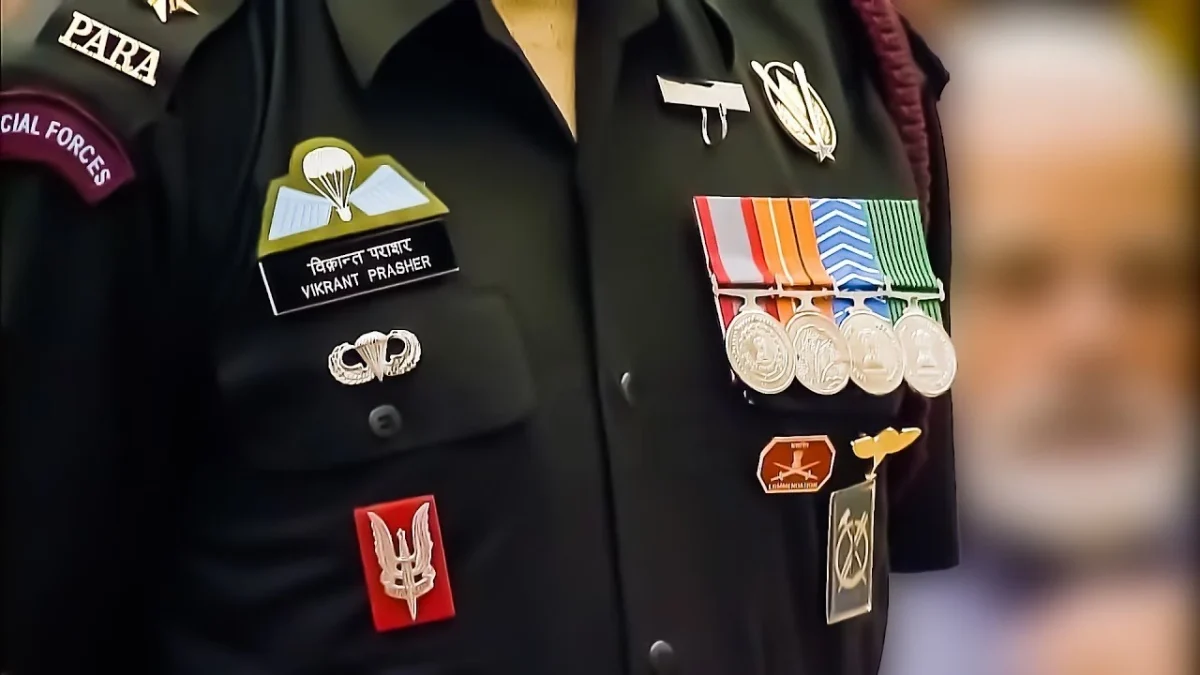
The Indian Army’s PARA Special Forces, popularly known as PARA SF, are among the country’s most highly trained military units. Recognised by their distinctive maroon berets, Balidaan Badges and parachute wings, these soldiers represent a proud tradition of courage, discipline and specialised military service.
A PARA SF commando’s uniform can feature several badges, insignia, medals and qualification symbols. Each has a different purpose. Some represent membership in the Parachute Regiment, while others indicate specialist qualifications, military achievements or distinguished service.
The Balidaan Badge is arguably the most recognisable insignia associated with PARA SF. However, the uniform can also display parachute wings, combat free-fall qualifications, diving badges, commendation insignia, gallantry awards and other distinctions.
For defence aspirants preparing for NDA, CDS, SSB interviews and other Armed Forces examinations, understanding these symbols provides valuable insight into the Indian Army’s military traditions.
Here is a detailed explanation of 15 important badges and uniform insignia associated with PARA SF commandos in 2026.
1. Balidaan Badge – The Symbol of Sacrifice
The Balidaan Badge is the most distinctive insignia associated with the Indian Army’s PARA Special Forces.
The word “Balidaan” means sacrifice, reflecting the exceptional commitment and responsibilities associated with military service.
The badge features a downward-pointing commando dagger, wings extending from the design and a scroll bearing the word “बलिदान” in Devanagari script.
It is commonly depicted as a silver-coloured insignia mounted against a red background.
The dagger represents the commando tradition, while the wings reflect the airborne heritage of the Parachute Regiment.
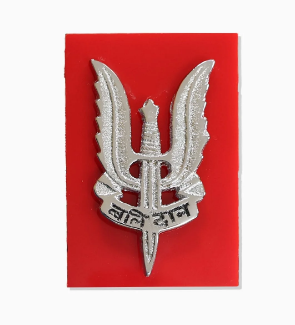
The Balidaan Badge is associated with personnel who have successfully met the applicable Special Forces qualification and authorisation requirements.
It is important to understand that parachute qualification alone does not automatically entitle a soldier to wear the Balidaan Badge.
Similarly, the popular claim that a commando must make a confirmed kill before receiving the badge is not supported by a verified, publicly available Indian Army regulation.
The badge represents professional qualification and Special Forces identity rather than a combat kill count.
2. Special Forces Shoulder Title – Identification of PARA SF Personnel
Another important uniform insignia is the Special Forces shoulder title.
It is commonly seen as a curved maroon shoulder patch with the words “SPECIAL FORCES” embroidered in light blue.
Earlier parachute commando personnel used a shoulder title bearing the word “COMMANDO.”
Public regimental accounts identify 2006 as the period when the Special Forces title replaced the older Commando designation.
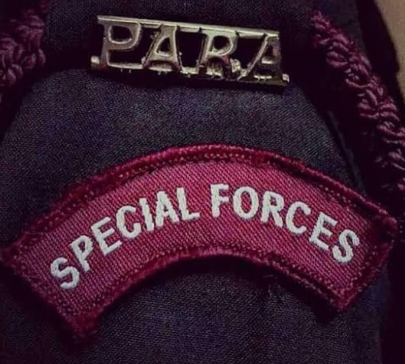
The shoulder title helps distinguish personnel associated with Special Forces formations from conventional airborne soldiers.
Unlike a medal or gallantry decoration, it is primarily an organisational identification insignia.
The precise manner in which shoulder titles are worn depends on the authorised uniform pattern and applicable dress instructions.
3. PARA Wings – The Military Parachutist Qualification
PARA Wings are among the most recognisable military qualification badges worn by Indian Army paratroopers.
The traditional Indian military parachutist brevet features an open parachute with wings extending on either side.
Commonly described versions use a white parachute and light-blue wings against an olive or grey-green background.
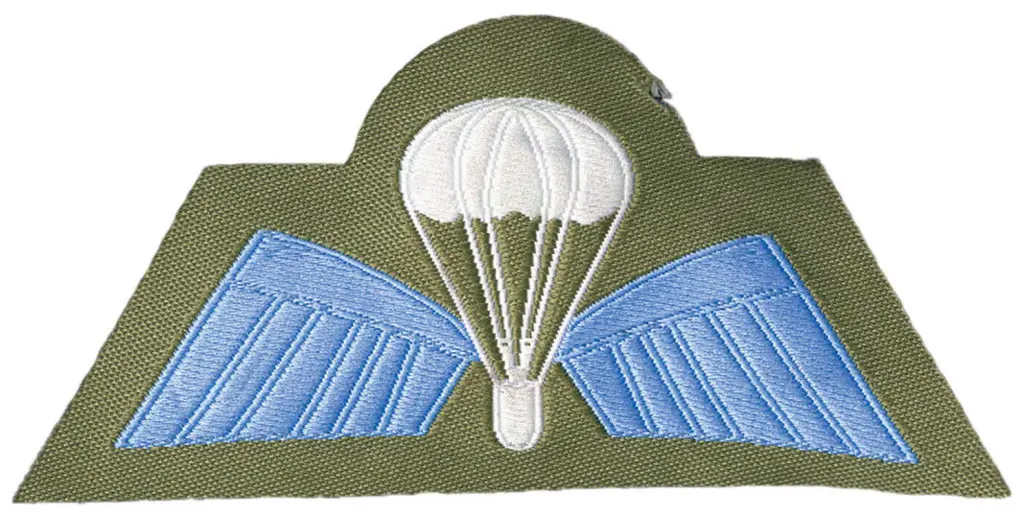
The wings indicate successful completion of the applicable military parachuting qualification.
They are associated with qualified airborne personnel, including soldiers of the Parachute Regiment and other authorised military personnel.
The important distinction is that parachute wings are not exclusively a PARA SF qualification.
A soldier may qualify as a military parachutist without becoming a Special Forces commando.
For this reason, the PARA Wings and the Balidaan Badge represent different achievements.
Parachute qualification establishes a soldier’s airborne credentials, whereas the Balidaan Badge is associated with the relevant Special Forces qualification.
4. Parachute Regiment Badge – The Symbol of Regimental Identity
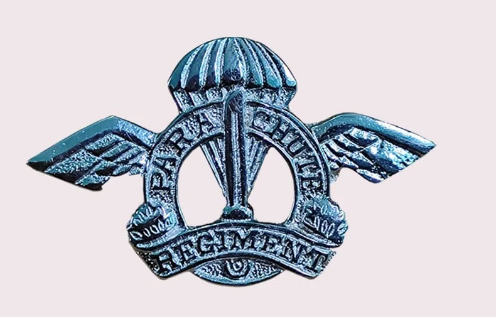
The Parachute Regiment badge represents membership and identity within one of the Indian Army’s most distinguished military regiments.
The traditional regimental insignia incorporates a parachute, outstretched wings and a dagger.
It also includes the words identifying the Parachute Regiment.
This design reflects the regiment’s airborne heritage and military traditions.
The Parachute Regiment was formally established on April 15, 1952, although its historical roots extend to earlier airborne formations and infantry battalions.
The regiment includes airborne and Special Forces elements, both sharing a strong military heritage.
The regimental badge should not be confused with specialist qualification badges.
It identifies the regiment, while other insignia may indicate qualifications, awards or specialised responsibilities.
5. Maroon Beret – The Identity of an Airborne Soldier
The maroon beret is one of the most iconic symbols associated with airborne forces around the world.
Within the Indian Army, it is closely associated with the Parachute Regiment and its airborne and Special Forces personnel.
The colour reflects an international airborne tradition that developed during the Second World War.
Indian paratroopers have continued this tradition through decades of military service.
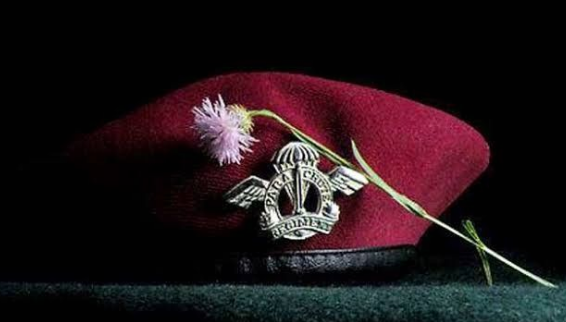
The maroon beret represents membership in the airborne community and the standards expected of those who qualify for the relevant service.
However, wearing a maroon beret does not automatically make a soldier a PARA SF commando.
Airborne infantry personnel and qualified Special Forces personnel can both be associated with the maroon beret.
The badge and headgear combination must therefore be interpreted along with the soldier’s other authorised insignia.
6. Jump Indicator Wings – Recognition of Parachuting Experience
Jump Indicator Wings are associated with a military parachutist’s accumulated parachuting experience.
Traditional descriptions of Indian Army jump-indicator insignia identify variants corresponding to particular numbers of completed jumps.
Widely circulated regimental accounts describe the following levels:
| Jump Indicator | Traditionally Reported Number of Jumps |
|---|---|
| One star | 25 jumps |
| Two stars | 50 jumps |
| Three stars | 100 jumps |
Older accounts describe small enamelled parachute-wing designs in different colours, while later descriptions mention brass insignia incorporating stars.
These indicators are distinct from the basic military parachutist brevet.
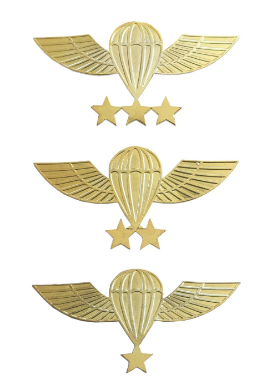
They are associated with accumulated parachuting experience rather than initial airborne qualification.
However, the exact current eligibility rules, approved patterns and wearing instructions should be confirmed against the Indian Army’s prevailing dress regulations.
Not every PARA SF soldier will necessarily possess the same jump-indicator qualification.
7. Diving Badge – Specialist Military Diving Qualification
Some Indian Army Special Forces personnel undertake specialist military diving training.
Military diving qualifications are associated with activities requiring specialised underwater skills, physical conditioning and the safe use of diving equipment.
Personnel who successfully complete the relevant authorised courses may become eligible for diving qualification insignia.
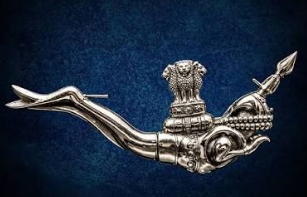
Such training can involve underwater navigation, equipment handling, emergency procedures and operating safely in difficult aquatic conditions.
The possession of a diving badge indicates a specialised professional qualification.
It does not mean that every PARA SF soldier is a qualified combat diver.
Different soldiers acquire different qualifications according to the requirements of their service and professional responsibilities.
Diving badges may also exist in different forms across military organisations and courses, so the specific insignia must be identified before attributing a particular qualification to its wearer.
8. Commendation Badge – Recognition of Distinguished Service
Indian Army personnel may receive commendations for exceptional devotion to duty, professional achievement or distinguished service.
One of the most familiar examples is the Chief of Army Staff Commendation.
Commendations may also be issued by designated military commanders under applicable regulations.
An eligible recipient may be authorised to wear the corresponding commendation insignia.
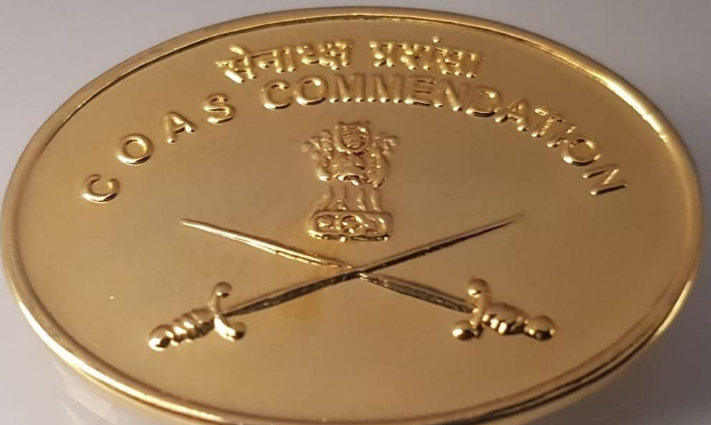
Unlike the Balidaan Badge or PARA Wings, a commendation badge is not a Special Forces qualification.
It recognises service or conduct for which the individual has been formally commended.
A PARA SF commando may receive such recognition for professional excellence, dedication or actions performed during military service.
The award of a commendation is subject to the relevant rules and does not automatically imply the award of a gallantry medal.
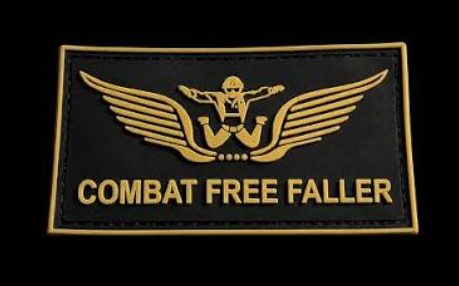
9. Combat Free Fall Badge – Advanced Military Parachuting
Combat free-fall qualification is an advanced military parachuting discipline.
It requires specialised training beyond the basic military parachutist course.
Personnel who complete an authorised military free-fall qualification may become eligible for the corresponding badge or brevet.
Two terms frequently associated with military free-fall training are HALO and HAHO.
HALO stands for High Altitude Low Opening, while HAHO stands for High Altitude High Opening.
HALO generally involves a parachutist exiting at high altitude and opening the parachute at a comparatively lower altitude.
HAHO involves opening the parachute at a higher altitude, permitting extended travel under canopy in suitable conditions.
These techniques require specialised equipment, extensive preparation and professional training.
Older articles sometimes claim that a specific number of jumps or a particular maximum altitude is universally required for all Indian Army combat free-fall qualifications.
Such figures should not be presented as current universal standards without an authenticated syllabus or applicable Army training instruction.
The important distinction is that military free-fall is an advanced qualification, and not every PARA SF soldier necessarily possesses it.
10. Tiger Hill Badge – A Wartime and Commemorative Association
Tiger Hill occupies a special place in Indian military history because of the 1999 Kargil War.
The recapture of Tiger Hill was a major achievement during Operation Vijay and became a powerful symbol of the courage and determination of Indian soldiers.
The battle is especially associated with troops of the 18 Grenadiers and supporting formations.
In some online descriptions of military insignia, references appear to a Tiger Hill Badge or an emblem associated with the Kargil campaign.
However, there is insufficient publicly verified evidence to establish a universally recognised, current PARA SF qualification badge formally called the Tiger Hill Badge.
It would therefore be inaccurate to state that every PARA SF commando who participated in the recapture of Tiger Hill automatically received such a badge.
Any historic or commemorative insignia associated with the campaign should be assessed against its specific unit background and official authorisation.
The gallantry and sacrifices of the soldiers who fought at Tiger Hill remain an important part of Indian Army history, regardless of the precise status of an individual commemorative badge.
11. Chakrata Badge – Associated With the Special Frontier Force
The Chakrata Badge is sometimes mentioned in collections of Indian Special Forces-related insignia.
Chakrata in Uttarakhand is historically associated with the Special Frontier Force, commonly known as the SFF.
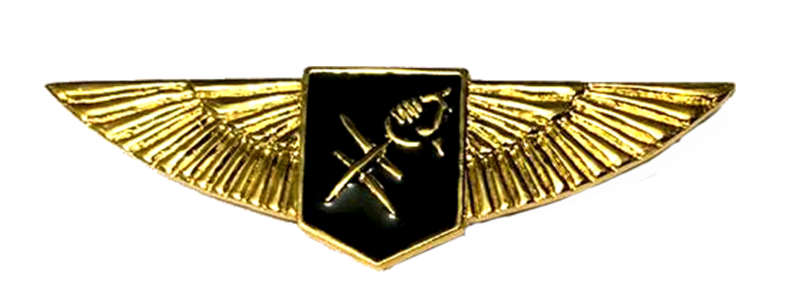
The SFF was established in 1962 following the India-China War and has a distinct organisational history.
Some descriptions of Chakrata-associated insignia depict a winged design incorporating a dagger and lightning-like elements.
However, it is important not to confuse the Special Frontier Force with the Indian Army’s PARA Special Forces.
They are distinct organisations.
Service-related insignia associated with the SFF should not automatically be described as standard PARA SF badges.
Any such badge appearing on an individual’s uniform must be understood in the context of the person’s authorised service, attachment, qualification or award.
The exact meaning and eligibility of the particular insignia should be verified rather than assumed.
12. Gallantry Medals and Military Service Decorations
PARA SF personnel, like other members of the Indian Armed Forces, may receive gallantry awards and distinguished service decorations.
These honours recognise acts of exceptional bravery, distinguished service and other achievements under the applicable award criteria.
Among India’s important military gallantry awards are the Param Vir Chakra, Ashoka Chakra, Maha Vir Chakra, Kirti Chakra, Vir Chakra and Shaurya Chakra.
These decorations are not exclusive to PARA SF.
They are awarded to eligible personnel across the Armed Forces and, where applicable, other categories of recipients.
The awards differ in their criteria and the circumstances in which they may be conferred.
For example, the Param Vir Chakra is India’s highest wartime gallantry decoration, while the Ashoka Chakra is the highest peacetime gallantry decoration.
Major Mohit Sharma of 1 PARA SF was posthumously awarded the Ashoka Chakra for his extraordinary bravery during a counter-terrorism operation in Jammu and Kashmir in 2009.
The medals and ribbons worn on a soldier’s uniform can provide valuable information about the honours and service recognition formally conferred upon that individual.
They should not be confused with training qualifications or regimental insignia.
13. Name Plate – Identification of the Soldier
The name plate is a standard military uniform identifier.
It normally displays the name or authorised form of identification of the soldier wearing the uniform.
Its purpose is practical rather than ceremonial.
Name plates help identify personnel during official duties and routine military activities.
They may be displayed differently depending on the type of uniform and prevailing dress instructions.
A name plate is not an award or special qualification.
Although it may appear alongside PARA SF insignia, it does not indicate Special Forces status by itself.
Defence aspirants should understand the distinction between ordinary identification items and military qualification badges.
14. Unit Insignia – Identity and Military Heritage
Different military formations maintain their own traditions, symbols, emblems and identities.
Within the Parachute Regiment, battalions have distinguished histories associated with military campaigns, operational service and regimental achievements.
Examples include the Mountain Rats associated with 9 PARA SF, Desert Scorpions associated with 10 PARA SF and Waghnakhs associated with 21 PARA SF.
Such names and symbols contribute to unit identity and esprit de corps.
However, a unit nickname or emblem does not automatically establish that a corresponding badge is authorised for wear on every pattern of military uniform.
Formal regimental insignia must be distinguished from unofficial patches, commemorative emblems and commercially produced designs.
The authorised use of a particular unit badge depends on prevailing dress instructions.
15. Other Specialist Course and Qualification Badges
PARA SF personnel may undergo numerous professional military courses during their careers.
Depending on their roles, they may receive training in high-altitude warfare, jungle warfare, communications, military medical skills, specialised weapons, parachuting and other relevant disciplines.
Certain courses or appointments may be associated with authorised qualification insignia.
For example, military personnel may earn badges associated with specific training achievements, instructor qualifications or specialist military roles.
Some soldiers may also hold foreign military qualifications obtained through approved training or exchange programmes.
However, successful completion of a course does not always entitle a person to wear a permanent badge.
The existence of a course certificate, souvenir patch or training-school emblem is not sufficient proof that an insignia is authorised on the Indian Army uniform.
The applicable military regulations determine which badges may be worn and under what circumstances.
Complete List of PARA SF Badges and Insignia
| Badge or Insignia | What It Signifies |
|---|---|
| Balidaan Badge | Qualified PARA Special Forces identity |
| Special Forces Shoulder Title | Association with a Special Forces formation |
| PARA Wings | Military parachutist qualification |
| Parachute Regiment Badge | Regimental identity |
| Maroon Beret | Airborne tradition and identity |
| Jump Indicator Wings | Recognised parachuting experience |
| Diving Badge | Applicable specialist diving qualification |
| Commendation Badge | Formal recognition of distinguished service or achievement |
| Combat Free Fall Badge | Advanced military free-fall qualification |
| Tiger Hill-associated Insignia | Historical or commemorative association; specific status requires verification |
| Chakrata-associated Insignia | Historical association with the Special Frontier Force; not standard PARA SF qualification |
| Gallantry Medals | Official recognition of bravery or distinguished service |
| Name Plate | Individual identification |
| Unit Insignia | Regimental or formation identity, where authorised |
| Other Specialist Badges | Approved professional courses, qualifications or appointments |
What Is the Difference Between PARA Wings and the Balidaan Badge?
This is one of the most important distinctions for defence aspirants.
PARA Wings indicate that an individual has successfully completed the applicable military parachuting qualification.
The Balidaan Badge is associated with qualification and authorised service in the PARA Special Forces.
A soldier may possess parachute wings without being qualified as a Special Forces commando.
The maroon beret is also not exclusive to the Special Forces.
Therefore, these three symbols—maroon beret, parachute wings and Balidaan Badge—should not be treated as interchangeable.
They represent related but distinct aspects of airborne military service.
Does Every PARA SF Commando Wear All 15 Badges?
No. A PARA SF commando is not expected to possess or wear every insignia discussed in this article.
The list includes several different categories of military symbols.
Some represent regimental identity, others show professional qualifications, and some are connected with awards, historical units or commemorative traditions.
A soldier’s authorised insignia depend on individual qualifications, service history, awards, appointments and the uniform being worn.
For example, a qualified Special Forces soldier may have the Balidaan Badge and parachute wings without possessing combat diving or military free-fall qualifications.
Similarly, a gallantry medal is awarded for qualifying acts of bravery rather than automatically being conferred for membership in a Special Forces unit.
This distinction is essential for understanding military uniforms correctly.
Frequently Asked Questions About PARA SF Badges
1. What is the most famous badge of PARA SF?
The Balidaan Badge is the most recognisable insignia specifically associated with Indian Army PARA Special Forces personnel.
2. Can all Indian Army soldiers wear the Balidaan Badge?
No. The badge is associated with qualified and authorised Special Forces personnel, not all Army soldiers.
3. Are PARA Wings and the Balidaan Badge the same?
No. PARA Wings represent military parachutist qualification, while the Balidaan Badge represents the applicable Special Forces qualification and identity.
4. Can a regular paratrooper wear the maroon beret?
Yes. The maroon beret is associated with the Parachute Regiment’s airborne tradition and is not exclusive to Special Forces personnel.
5. What is the Combat Free Fall Badge?
It is an insignia associated with successful completion of an authorised advanced military free-fall parachuting qualification.
6. Do all PARA SF commandos receive a diving badge?
No. Diving qualifications depend on specialist training and professional requirements.
7. What does the Balidaan Badge mean?
Balidaan means sacrifice. The badge represents the commitment and professional identity associated with the PARA Special Forces.
8. Do PARA SF commandos receive gallantry medals automatically?
No. Gallantry medals are awarded according to established criteria for qualifying acts of bravery.
9. Is the Chakrata Badge a standard PARA SF badge?
No. The term is associated in some accounts with the Special Frontier Force, which has a separate organisational history.
10. Is the Tiger Hill Badge awarded to all PARA SF commandos?
No verified public regulation establishes a universal PARA SF qualification or award by that name.
11. Can civilians wear Indian Army qualification badges?
Military qualification insignia are intended to identify authorised service and achievements. Civilians should not present themselves as qualified military personnel or misuse such insignia to impersonate members of the Armed Forces.
Conclusion
The badges and insignia of a PARA SF commando tell the story of military identity, specialised training, professional achievement and dedication to the nation.
The Balidaan Badge represents the distinctive identity of qualified Special Forces personnel, while the PARA Wings reflect airborne qualification and the maroon beret symbolises the proud tradition of the Parachute Regiment.
Other badges may recognise advanced parachuting, diving, specialist military education, distinguished service or acts of exceptional courage.
Not every badge has the same meaning, and not every soldier is entitled to wear every insignia.
For aspiring Indian Army officers and soldiers, understanding these distinctions is an important part of learning about military traditions, qualifications and professional standards.
Behind every legitimately earned military insignia are training, service, discipline and responsibility.
Shatrujeet — Conqueror of Enemies.