





In Current Affairs for 12 September 2026, we will see the latest national and international current affairs news. These important current affairs will be beneficial for your upcoming NDA, CDS, CDS OTA, AFCAT, TA, Agniveer Army, Agniveer Navy, Agniveer Air Force, Women Military Police, INET, MNS, ACC exams, SCO, PCSL, CAPF, and SSB interviews, and direct entries for Army, Navy, and Air Force like SSC Tech, TGC, JAG, NCC, TES, 10+2 Cadet. Download a PDF file about current events at the end of this article. Let us now see the Current Affairs.
Current Affairs 12 September 2026
World First Aid Day 2026
World First Aid Day 2026 will be observed on 12 September 2026, which falls on the second Saturday of September. The day highlights the importance of knowing basic first-aid techniques that can make a crucial difference during accidents, disasters and other emergencies.
The 2026 theme is “First Aid in Migration Contexts.” It draws attention to the first-aid and emergency-care requirements of migrants, refugees and displaced communities, who can face increased health and safety risks during movement and humanitarian crises.
World First Aid Day is observed every year to promote awareness about basic emergency-care skills. Simple actions such as controlling bleeding, providing appropriate assistance during injuries and responding correctly until professional medical help arrives can help prevent complications and save lives.
History of First Aid
Although people have used traditional methods to treat injuries throughout history, the organised concept of modern first-aid education developed during the 19th century.
In 1878, Colonel Francis Duncan and Surgeon-Major Peter Shepherd of the Royal Herbert Military Hospital in Woolwich played an important role in introducing first-aid training for civilians.
Surgeon-Major Peter Shepherd helped develop systematic instruction in practical techniques, including bandaging and splinting. By the end of the 19th century, first-aid courses and certification programmes had become increasingly widespread.
Exam Point
- Day: World First Aid Day
- 2026 Date: 12 September
- Observed: Second Saturday of September
- 2026 Theme: First Aid in Migration Contexts
- Important historical figures: Colonel Francis Duncan and Surgeon-Major Peter Shepherd
International Day for South-South Cooperation 2026
The International Day for South-South Cooperation is observed annually on 12 September. The day recognises the importance of cooperation among developing countries and highlights how nations can work together by sharing knowledge, expertise, technology and development experiences.
For 2026, the observance is associated with the theme:
“Solidarity Rising: Global Alliance for Inclusive and Innovative Development.”
South-South cooperation enables developing countries to exchange practical solutions that can be adapted to their own circumstances.
Major Areas of South-South Cooperation
1. Knowledge Exchange
Countries can share successful policies, development experiences and institutional practices. A solution that has worked in one developing country may provide useful lessons for another.
2. Innovation and Technology
Cooperation can facilitate the transfer of affordable technologies and locally developed innovations, particularly in areas such as agriculture, healthcare, renewable energy and digital services.
3. Tackling Development Challenges
Collective action can help developing countries address common challenges such as climate change, healthcare, food security and energy access.
Exam Point
- Day: International Day for South-South Cooperation
- Date: 12 September
- 2026 Theme: “Solidarity Rising: Global Alliance for Inclusive and Innovative Development”
- Core idea: Cooperation among developing countries through knowledge, technology and experience sharing
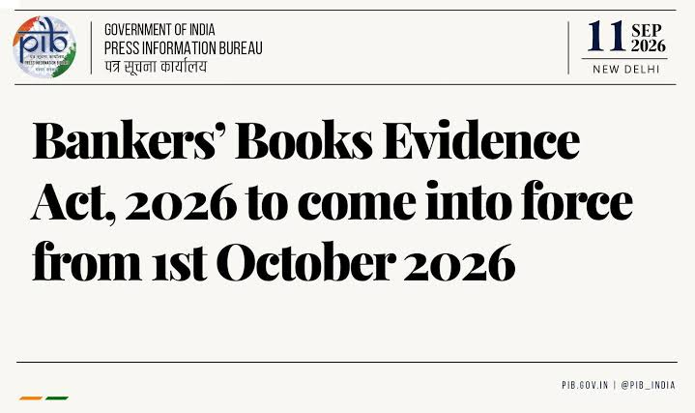
Bankers’ Books Evidence Act, 2026
A significant legal development in India’s banking sector is the introduction of the Bankers’ Books Evidence Act, 2026, which is set to replace the colonial-era legislation enacted in 1891.
The new law is scheduled to come into effect on 1 October 2026.
President Droupadi Murmu gave her assent to the legislation on 13 August 2026. The Central Government subsequently announced the date for its implementation.
The earlier Bankers’ Books Evidence Act, 1891 was framed in an era when banking records were primarily maintained in physical form. Modern banking, however, relies heavily on digital systems, electronic databases and cloud infrastructure.
The new legislation seeks to provide a contemporary legal framework for using banking records as evidence in judicial proceedings.
Technology-Neutral Approach
One of the important features of the new framework is its technology-neutral approach. It is designed to recognise banking records regardless of the technological format in which they are maintained.
These may include:
- Physical records
- Electronic records
- Digital records
- Virtual records
- Cloud-based records
- Other contemporary banking records
The change is particularly relevant as India’s banking sector continues to expand its use of digital platforms and technology-driven record management.
Exam Point
- New law: Bankers’ Books Evidence Act, 2026
- Replaces: Bankers’ Books Evidence Act, 1891
- Effective from: 1 October 2026
- Presidential assent: 13 August 2026
- President: Droupadi Murmu
- Key feature: Technology-neutral recognition of banking records
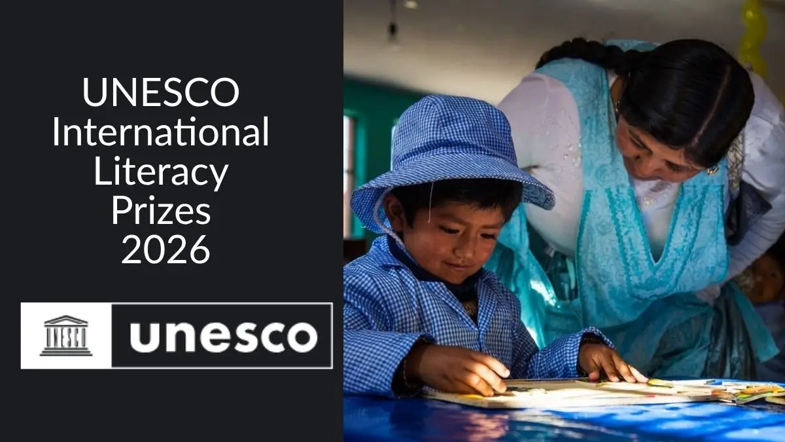
UNESCO International Literacy Prizes 2026
The United Nations Educational, Scientific and Cultural Organization (UNESCO) has announced the recipients of its International Literacy Prizes 2026.
Six recipients from Colombia, Lebanon, Mexico, the Kingdom of the Netherlands, Nigeria and Thailand were recognised for innovative initiatives aimed at improving literacy.
The prizes were presented in connection with International Literacy Day 2026, with celebrations taking place on 8–9 September in Chiapas, Mexico.
The theme associated with this year’s award programme is:
“Literacy for people, the planet and prosperity.”
The theme underlines the importance of developing literacy systems that are more inclusive, accessible and multilingual.
Selected Initiatives
Among the recognised initiatives are:
- Escuelas LEO Programme – Colombia
- Language Friendly School Programme – Kingdom of the Netherlands
- Project PAL – Nigeria
The UNESCO International Literacy Prizes have a long history. They have been awarded since 1967 and have recognised hundreds of individuals, organisations and institutions for their contribution to literacy.
UNESCO’s literacy data also highlights continuing global disparities. According to the figures referenced in the supplied material, more than 739 million young people and adults have not achieved basic literacy skills, with women accounting for a significant majority of this group.
Exam Point
- Organisation: UNESCO
- Prizes: International Literacy Prizes
- Awarded since: 1967
- 2026 event location: Chiapas, Mexico
- Associated theme: “Literacy for people, the planet and prosperity”
- Recognised countries: Colombia, Lebanon, Mexico, Kingdom of the Netherlands, Nigeria and Thailand
Thirukkural Gifted by PM Modi to Vladimir Putin
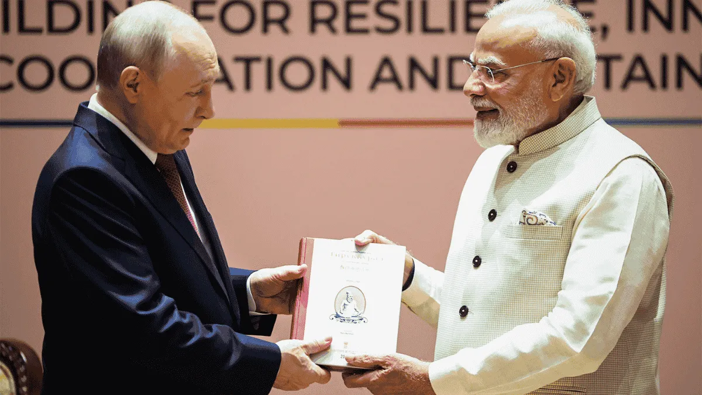
During India’s engagement with Russia ahead of the BRICS Summit, Prime Minister Narendra Modi presented Russian President Vladimir Putin with a Russian translation of the Thirukkural.
The gesture highlighted India’s rich literary and cultural heritage and also underscored the cultural dimension of India-Russia relations.
The Thirukkural, traditionally attributed to the Tamil poet-philosopher Thiruvalluvar, is one of the most influential works of classical Tamil literature.
The text contains 1,330 couplets, known as kurals, organised into 133 chapters, with each chapter containing 10 couplets.
Three Broad Sections of Thirukkural
The work is traditionally divided into three major sections:
- Aram – Virtue and ethical conduct
- Porul – Wealth, society, governance and worldly affairs
- Inbam – Love and human relationships
The Thirukkural deals with a broad range of subjects, including ethics, justice, administration, friendship, family life, social behaviour, wealth and love.
Its teachings extend beyond any single religious tradition, giving the work a broad philosophical and ethical appeal.
Exam Point
- Text: Thirukkural
- Traditional author: Thiruvalluvar
- Language: Classical/Old Tamil
- Total couplets: 1,330
- Total chapters: 133
- Sections: Aram, Porul and Inbam
- Gifted by: Prime Minister Narendra Modi
- Recipient: Russian President Vladimir Putin
- Gift: Russian translation of Thirukkural
India-US Cooperation on Undersea Cable Security
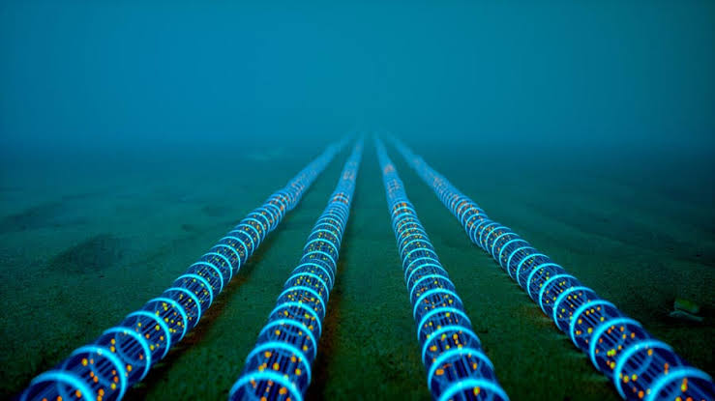
India and the United States are expanding cooperation to improve the security and resilience of undersea cable networks, which form a critical part of the world’s digital communications infrastructure.
Submarine cables carry enormous volumes of international data and support modern services such as:
- Cloud computing
- Data centres
- E-commerce
- Artificial intelligence
- International digital communication
Because of their strategic importance, protecting these cables has become an increasingly important component of national and economic security.
Undersea Cables Workshop
Government and industry experts from India and the United States participated in an Undersea Cables Workshop under the broader framework of the US-India TRUST Initiative.
The cooperation aims to strengthen the security, resilience and diversity of global subsea cable systems.
India’s expanding digital economy and its geographical position in the Indian Ocean region make the country an important potential hub for subsea digital infrastructure.
US-India TRUST Initiative
The TRUST Initiative was launched during Prime Minister Narendra Modi’s visit to Washington in February 2025.
TRUST focuses on cooperation in critical and emerging technologies involving government, academia and the private sector.
Important areas include:
- Artificial Intelligence
- Semiconductors
- Quantum computing
- Biotechnology
- Energy
- Space
Exam Point
- Issue: Undersea/submarine cable security
- Countries: India and United States
- Workshop: Undersea Cables Workshop
- Framework: US-India TRUST Initiative
- Key sectors: AI, semiconductors, quantum technology, biotechnology, energy and space
India-Russia Set $100 Billion Trade Target by 2030
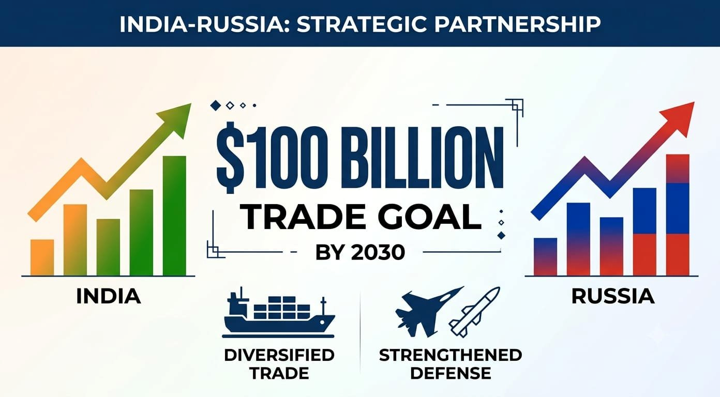
India and Russia have set an ambitious objective of taking their bilateral trade to $100 billion by 2030.
The current bilateral trade level is around $60 billion, according to the information provided.
The two countries are also working towards a Bilateral Investment Treaty and have discussed a bilateral investment target of approximately $50 billion by 2030.
The discussions took place in New Delhi in September 2026 ahead of the 18th BRICS Summit.
Areas of Industrial Cooperation
India and Russia discussed expanding cooperation across several sectors, including:
- Railways
- Steel
- Civil nuclear energy
- Critical minerals
- Advanced manufacturing
- Pharmaceuticals
- Information technology
- Artificial intelligence
- Engineering
- Automobile components
- Services
The INNOPROM India 2026 industrial exhibition was held in New Delhi around 10–11 September 2026. It provided a platform for Indian and Russian officials and businesses to explore opportunities for expanding industrial and trade relations.
Defence Cooperation
Defence remains an important pillar of India-Russia strategic relations.
The discussions included areas such as:
- S-400 systems
- BrahMos upgrades
- Potential cooperation concerning Su-57 fighter aircraft
- Defence manufacturing and technology cooperation
Energy Cooperation
Energy continues to be another major area of bilateral engagement. Discussions covered:
- Oil and gas supplies
- Fertiliser procurement
- Civil nuclear cooperation
- Possible additional sites for Russian-built nuclear power projects in India
Exam Point
- India-Russia trade target: $100 billion by 2030
- Current trade: Around $60 billion
- Investment target: Around $50 billion by 2030
- Industrial event: INNOPROM India 2026
- Major areas: Defence, energy, nuclear power, critical minerals, AI, pharmaceuticals and manufacturing
- Important defence topics: S-400, BrahMos and Su-57
Quick Revision Capsule
| Topic | Important Fact |
|---|---|
| World First Aid Day 2026 | 12 September 2026 |
| First Aid Day Theme | First Aid in Migration Contexts |
| South-South Cooperation Day | 12 September |
| South-South Cooperation Theme | Solidarity Rising: Global Alliance for Inclusive and Innovative Development |
| Bankers’ Books Evidence Act | 2026 |
| New Banking Law Effective | 1 October 2026 |
| Old Banking Law | 1891 Act |
| President who gave assent | Droupadi Murmu |
| UNESCO Literacy Prizes | 2026 |
| International Literacy Day | 8 September |
| Thirukkural | 1,330 couplets, 133 chapters |
| Traditional author of Thirukkural | Thiruvalluvar |
| Thirukkural gift | Russian translation |
| Gifted to | Vladimir Putin |
| Undersea Cable Cooperation | India-US |
| Cooperation framework | US-India TRUST Initiative |
| India-Russia Trade Target | $100 billion by 2030 |
| India-Russia Investment Target | $50 billion by 2030 |
| INNOPROM India 2026 | New Delhi |
| Major sectors | Defence, energy, nuclear, AI, manufacturing |
Review Questions
1. World First Aid Day 2026 was observed on which date?
A. 8 September 2026
B. 10 September 2026
C. 12 September 2026
D. 15 September 2026
Answer: C. 12 September 2026
Explanation: World First Aid Day is observed annually on the second Saturday of September. In 2026, it falls on 12 September. The 2026 theme is “First Aid in Migration Contexts.”
2. What is the theme of World First Aid Day 2026?
A. First Aid for a Safer World
B. First Aid in Migration Contexts
C. First Aid for Global Health
D. First Aid for Disaster Resilience
Answer: B. First Aid in Migration Contexts
Explanation: The theme highlights the importance of basic emergency-care knowledge and access to first aid for migrants and displaced populations, particularly during humanitarian emergencies.
3. The International Day for South-South Cooperation is observed annually on:
A. 10 September
B. 11 September
C. 12 September
D. 15 September
Answer: C. 12 September
Explanation: The International Day for South-South Cooperation is observed every year on 12 September. It promotes cooperation among developing countries through the sharing of knowledge, technology, expertise and development experiences.
4. What is the theme associated with the International Day for South-South Cooperation 2026?
A. Together for Sustainable Development
B. Solidarity Rising: Global Alliance for Inclusive and Innovative Development
C. Partnership for a Better Future
D. Innovation for Global Prosperity
Answer: B. Solidarity Rising: Global Alliance for Inclusive and Innovative Development
Explanation: The 2026 theme emphasises solidarity, inclusiveness and innovation as tools for accelerating development through South-South cooperation.
5. The Bankers’ Books Evidence Act, 2026 will replace which earlier legislation?
A. Banking Regulation Act, 1949
B. Reserve Bank of India Act, 1934
C. Bankers’ Books Evidence Act, 1891
D. Negotiable Instruments Act, 1881
Answer: C. Bankers’ Books Evidence Act, 1891
Explanation: The Bankers’ Books Evidence Act, 2026 is intended to replace the 1891 Act and provide a modern legal framework for the use of banking records as evidence.
6. From which date will the Bankers’ Books Evidence Act, 2026 come into force?
A. 13 August 2026
B. 1 September 2026
C. 1 October 2026
D. 1 January 2027
Answer: C. 1 October 2026
Explanation: President Droupadi Murmu gave assent to the legislation on 13 August 2026, and the Central Government announced that it would come into force from 1 October 2026.
7. The Thirukkural, traditionally attributed to Thiruvalluvar, contains how many couplets?
A. 1,000
B. 1,230
C. 1,330
D. 1,430
Answer: C. 1,330
Explanation: The Thirukkural consists of 1,330 couplets (kurals) arranged into 133 chapters, with 10 couplets in each chapter. It is a major work of classical Tamil literature.
8. Prime Minister Narendra Modi presented a Russian translation of the Thirukkural to which Russian leader?
A. Dmitry Medvedev
B. Vladimir Putin
C. Mikhail Mishustin
D. Sergey Lavrov
Answer: B. Vladimir Putin
Explanation: Prime Minister Narendra Modi presented Russian President Vladimir Putin with a Russian translation of the Thirukkural, highlighting the cultural dimension of India-Russia relations.
9. India and the United States are cooperating to strengthen the security and resilience of which critical infrastructure?
A. Satellite communication networks
B. Undersea cable systems
C. Railway networks
D. Nuclear power grids
Answer: B. Undersea cable systems
Explanation: India and the US are working together on the security and resilience of global undersea/submarine cable networks, which carry a major share of international digital communications and support cloud computing, data centres and other digital services.
10. India and Russia have set what bilateral trade target for 2030?
A. $75 billion
B. $80 billion
C. $100 billion
D. $125 billion
Answer: C. $100 billion
Explanation: India and Russia have set an ambitious target of increasing bilateral trade to $100 billion by 2030. The two countries are also discussing greater investment cooperation, defence, energy, nuclear power, critical minerals and advanced manufacturing.


