In Current Affairs for 23 October 2026, we will see the latest national and international current affairs news. These important current affairs will be beneficial for your upcoming NDA, CDS, CDS OTA, AFCAT, TA, Agniveer Army, Agniveer Navy, Agniveer Air Force, Women Military Police, INET, MNS, ACC exams, SCO, PCSL, CAPF, and SSB interviews, and direct entries for Army, Navy, and Air Force like SSC Tech, TGC, JAG, NCC, TES, 10+2 Cadet. Download a PDF file about current events at the end of this article. Let us now see the Current Affairs.
Current Affairs 23 October 2026
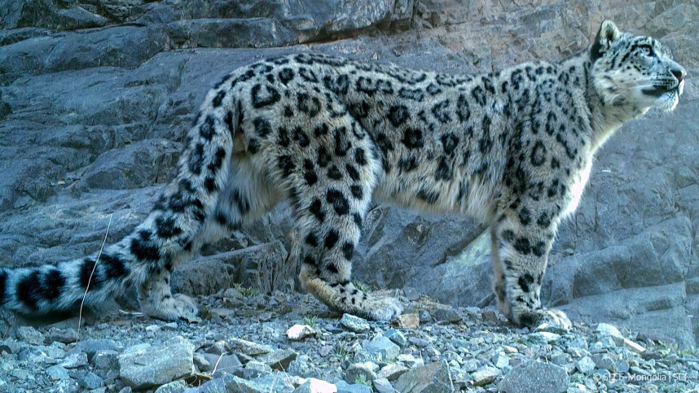
International Day of the Snow Leopard 2026
The International Day of the Snow Leopard is observed annually on 23 October to promote awareness about the conservation of snow leopards and the protection of their fragile mountain habitats. The United Nations General Assembly (UNGA) proclaimed the day in 2024 through Resolution A/RES/79/143.
The observance highlights the importance of protecting this rare big cat and maintaining the ecological balance of high-altitude mountain ecosystems.
Snow Leopard: The Ghost of the Mountains
The snow leopard, scientifically known as Panthera uncia, is a large wild cat that inhabits the mountainous regions of Central and South Asia. It is popularly called the “Ghost of the Mountains” because of its elusive behaviour, natural camouflage and preference for remote, rugged terrain.
Its thick fur, powerful limbs and long tail help it survive in cold, mountainous environments. Snow leopards play an important ecological role as predators, contributing to the balance of mountain food chains.
Global Distribution and Habitat
Snow leopards inhabit high-altitude mountain ecosystems across 12 countries:
- Afghanistan
- Bhutan
- China
- India
- Kazakhstan
- Kyrgyzstan
- Mongolia
- Nepal
- Pakistan
- Russia
- Tajikistan
- Uzbekistan
Their remote habitats and secretive nature make them difficult to observe in the wild. Habitat degradation, human–wildlife conflict and other environmental pressures make conservation efforts particularly important.
Conservation Significance
Protecting snow leopards also helps preserve the wider mountain ecosystems in which they live. Conservation initiatives can support biodiversity, protect habitats and promote cooperation among countries sharing these mountain landscapes.
The International Day of the Snow Leopard encourages governments, conservation organisations and local communities to strengthen measures for protecting the species and its natural environment.
Conclusion
The International Day of the Snow Leopard draws global attention to the need to conserve one of the world’s most elusive mountain predators. Protecting the snow leopard is closely linked to safeguarding biodiversity and maintaining healthy mountain ecosystems.
Key Facts for Competitive Exams
- Day observed: 23 October
- Scientific name: Panthera uncia
- Popular name: Ghost of the Mountains
- UNGA resolution: A/RES/79/143
- Resolution year: 2024
- Global range: 12 countries
- IUCN Red List status: Vulnerable
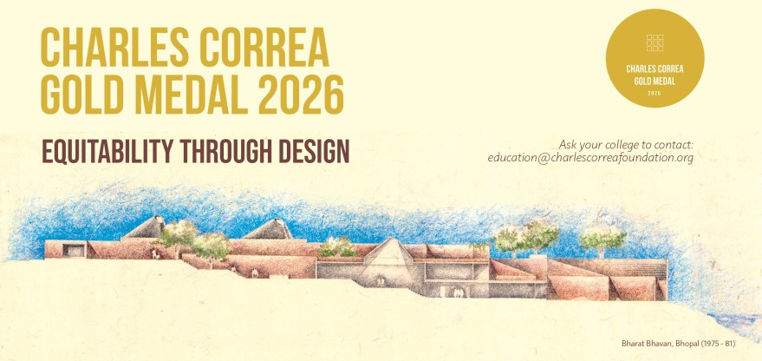
28th Charles Correa Gold Medal 2026
The 28th Charles Correa Gold Medal was awarded to an architecture student from Kochi on 22 October 2026 in Mumbai. The award recognised an undergraduate thesis titled “Energy Commons: Reimagining Energy Infrastructure as a Place for Civic Engagement.”
The award celebrates outstanding architectural research and encourages young architects to develop innovative responses to challenges in the built environment.
About the Award-Winning Thesis
The winning project explored the relationship between energy infrastructure and civic life. Its central idea was to rethink energy-related infrastructure as a space that could encourage public participation and community engagement.
The project reflected the 2026 edition’s theme, “Equitability through Design,” guided by the question: “Who are we designing for?”
This theme emphasises the importance of inclusive design and encourages architects to consider the needs of different communities when planning buildings and public spaces.
The winner received a cash prize of ₹25,000.
History of the Charles Correa Gold Medal
The Charles Correa Gold Medal was established in 1998 by renowned Indian architect Charles Correa. The Charles Correa Foundation (CCF) has administered the award annually since its inception.
The award recognises outstanding undergraduate architectural thesis projects that address important issues relating to architecture, urban development and the built environment.
Expansion of Eligibility
Since 2022, the award has been open to architecture colleges across India. Previously, eligibility was restricted to colleges located in Mumbai and Goa.
Participating institutions must be approved by the Council of Architecture (COA), which plays an important role in the regulation of architectural education and professional standards in India.
Significance
The award provides a platform for young architects to present innovative ideas and contribute to discussions on sustainable, inclusive and socially responsible design.
The 2026 theme also highlights the importance of equity in architecture, encouraging designers to consider who benefits from the spaces and infrastructure they create.
Conclusion
The 28th Charles Correa Gold Medal recognises the contribution of emerging architectural talent in India. By encouraging innovative and inclusive design, the award supports the development of built environments that respond more effectively to social needs.
Key Facts for Competitive Exams
- Award: Charles Correa Gold Medal
- Edition: 28th
- Award date: 22 October 2026
- Location: Mumbai
- Award-winning thesis: “Energy Commons: Reimagining Energy Infrastructure as a Place for Civic Engagement”
- Theme: Equitability through Design
- Cash prize: ₹25,000
- Established: 1998
- Administered by: Charles Correa Foundation
- Relevant regulatory body: Council of Architecture
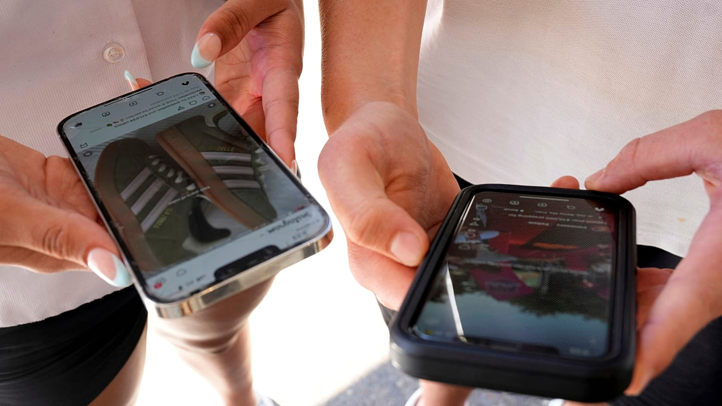
Greece Approves Social Media Ban for Children Under 15
According to the supplied current-affairs material, Greece’s Parliament approved legislation on 23 October 2026 to restrict children under the age of 15 from using social media platforms. The measure is scheduled to take effect on 1 January 2027.
The reported legislation aims to address concerns about children’s online safety, sleep patterns, concentration and overall well-being.
Platforms Covered by the Restriction
The reported framework covers platforms including:
- TikTok
The restriction is intended to apply to both existing accounts and new users. According to the supplied material, parental consent would not exempt children under 15 from the prohibition.
The reported approach places responsibility on platforms to establish systems that can identify whether users meet the required minimum age.
Age Verification and Privacy
Greek Prime Minister Kyriakos Mitsotakis reportedly stated that social media platforms had approximately two and a half months to develop age-verification systems while protecting users’ privacy.
A major challenge for digital regulation is ensuring that age checks are effective without requiring unnecessary disclosure of personal information.
The reported framework is linked to the KidsWallet app, which uses cryptographic techniques, including zero-knowledge proofs, for age verification.
What Is a Zero-Knowledge Proof?
A zero-knowledge proof is a cryptographic technique that allows one party to verify the validity of a claim without receiving the underlying information used to establish it.
For example, a digital service could verify that a user is above a specified age threshold without necessarily receiving the user’s full date of birth.
Such techniques can help balance regulatory requirements with the protection of personal data. Their effectiveness depends on the design, implementation and security of the verification system.
Why Is the Measure Important?
The reported restriction reflects growing international debate over children’s use of social media and the responsibilities of digital platforms.
Supporters of such restrictions argue that limiting access may help reduce exposure to harmful online content and excessive screen time. At the same time, age-verification requirements raise questions about privacy, implementation and how digital services should distinguish between users of different ages.
Conclusion
The reported Greek legislation represents an approach to regulating children’s access to social media through age restrictions and digital verification. Its implementation will depend on how platforms enforce the rules while protecting users’ personal information.
Current-affairs note: The legislative details and implementation date above follow the supplied presentation and have not been independently verified here.
Key Facts for Competitive Exams
- Country: Greece
- Reported parliamentary approval: 23 October 2026
- Minimum age: 15 years
- Scheduled implementation: 1 January 2027
- Prime Minister: Kyriakos Mitsotakis
- App mentioned: KidsWallet
- Privacy technology: Zero-knowledge proofs
- Main objective: Children’s online safety and well-being
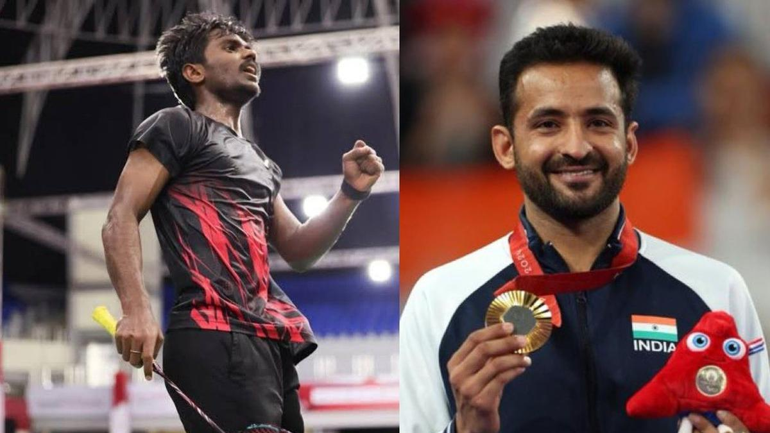
Nitesh Kumar and Naveen Sivakumar Win Para-Badminton Gold at the Asian Para Games
Introduction
Indian para-badminton players Nitesh Kumar and Naveen Sivakumar won gold medals in their respective men’s singles categories at the Asian Para Games in Nagoya, Japan, on 23 October 2026.
Their victories highlighted India’s performance in para-badminton and demonstrated the importance of specialised sporting classifications in ensuring fair competition among athletes with different impairments.
Nitesh Kumar Wins the SL3 Final
Nitesh Kumar won the men’s singles SL3 gold medal after defeating fellow Indian player Pramod Bhagat by 21–18, 21–16.
The SL3 category is intended for standing players with lower-limb impairments that significantly affect movement around the court. To accommodate the movement limitations associated with this category, matches are played on half of a standard badminton court.
Naveen Sivakumar Wins the SL4 Final
Naveen Sivakumar secured the men’s singles SL4 gold medal by defeating Indonesia’s Fredy Setiawan 21–9, 21–17.
SL4 is another standing category for players with lower-limb impairments, generally involving less severe limitations than those associated with SL3. Unlike SL3, SL4 players compete on a full badminton court.
Understanding Para-Badminton Classification
Para-badminton uses sport classes to group athletes according to their impairments and how these affect their movement and ability to play.
The six sport classes are:
- WH1 and WH2: Wheelchair players.
- SL3 and SL4: Standing players with lower-limb impairments.
- SU5: Players with upper-limb impairments.
- SH6: Players of short stature.
These classifications help create fairer competition by grouping athletes with comparable functional limitations. SU5 and SH6 are distinct classes and are not subdivisions of SL3 or SL4.
Significance for Indian Sports
The victories of Nitesh Kumar and Naveen Sivakumar strengthen India’s achievements in para-sports and highlight the contribution of athletes competing at the continental level.
Success at major international events can also encourage wider participation in adaptive sports, improve visibility for para-athletes and inspire investment in training facilities and support systems.
Conclusion
The gold-medal performances by Nitesh Kumar and Naveen Sivakumar represent an important achievement for Indian para-badminton. Their results also provide a useful example of how sport-specific classifications support competitive fairness in para-sports.
Key Facts for Competitive Exams
- Event: Asian Para Games
- Host city: Nagoya, Japan
- Date: 23 October 2026
- SL3 gold medallist: Nitesh Kumar
- SL3 final score: 21–18, 21–16 against Pramod Bhagat
- SL4 gold medallist: Naveen Sivakumar
- SL4 final score: 21–9, 21–17 against Fredy Setiawan
- Para-badminton sport classes: WH1, WH2, SL3, SL4, SU5 and SH6
Yashaswini Ghorpade and Harmeet Desai Secure a Medal at the Asian Table Tennis Championships
Introduction
Indian table tennis players Yashaswini Ghorpade and Harmeet Desai secured a mixed doubles medal at the 29th ITTF-ATTU Asian Championships in Tashkent, Uzbekistan.
The medal was assured on 23 October 2026, the day the mixed doubles champions were scheduled to be crowned. The achievement marked a significant milestone for Indian table tennis.
About the Asian Table Tennis Championships
The Asian Table Tennis Championships is a continental competition featuring national teams and players from across Asia. The event is organised by the Asian Table Tennis Union (ATTU), the continental governing body affiliated with the International Table Tennis Federation (ITTF).
The competition provides Asian players with an opportunity to compete at a high level and test themselves against leading opponents from the region.
How Table Tennis Scoring Works
International table tennis matches are played as the best of an odd number of games, commonly best of five or best of seven.
Each game is normally won by the player or pair that first reaches 11 points, provided they lead by at least two points. If the score reaches 10–10, play continues until one side establishes a two-point advantage.
These rules apply to both singles and doubles competition, including mixed doubles.
Standard Table Tennis Equipment Dimensions
The standard dimensions of a table tennis table and its equipment are important facts for sports-related competitive examinations.
- Table length: 2.74 metres
- Table width: 1.525 metres
- Table height: 76 centimetres
- Net height: 15.25 centimetres
- Ball diameter: 40 millimetres
- Ball weight: 2.7 grams
Significance of the Achievement
The medal won by Ghorpade and Desai reflects India’s growing competitiveness in international table tennis. Mixed doubles requires coordination, tactical awareness and effective communication between partners, making success in the discipline a notable team achievement.
Performances at continental championships can also strengthen India’s international sporting profile and encourage greater participation in table tennis.
Conclusion
Yashaswini Ghorpade and Harmeet Desai’s medal at the 29th ITTF-ATTU Asian Championships marks an important moment for Indian table tennis. The event also highlights the role of the ATTU and ITTF in organising and governing the sport internationally.
Key Facts for Competitive Exams
- Indian players: Yashaswini Ghorpade and Harmeet Desai
- Event: 29th ITTF-ATTU Asian Championships
- Venue: Tashkent, Uzbekistan
- Discipline: Mixed doubles
- Continental body: Asian Table Tennis Union (ATTU)
- International governing body: International Table Tennis Federation (ITTF)
- Points required to win a standard game: 11, with a two-point lead
Ahmedabad Hosts the Inaugural Commonwealth Kabaddi Championship 2026
Introduction
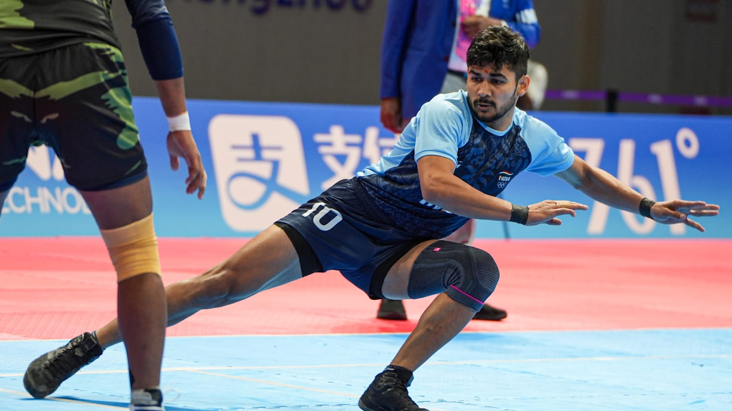
Ahmedabad is hosting the inaugural Commonwealth Kabaddi Championship from 23 to 31 October 2026. The competition is being held at the Veer Savarkar Sports Complex and features 23 squads representing 13 nations.
The championship brings together athletes from different countries and provides an international platform for the traditional Indian sport of kabaddi.
Participation and Competition Format
According to the supplied material, more than 400 athletes are participating in the championship. The competition features a total of 62 matches, divided into:
- Men’s matches: 39
- Women’s matches: 23
The scale of participation highlights the growing international reach of kabaddi and the organisation of competitions involving both men’s and women’s teams.
Organising Bodies
The championship is being organised by the Amateur Kabaddi Federation of India (AKFI) with the approval of the International Kabaddi Federation (IKF).
The event was formally unveiled at a curtain-raiser function on 21 October 2026, two days before the competition began.
The involvement of national and international kabaddi organisations supports the development and promotion of the sport across participating countries.
Participating Nations
The 13 participating nations listed in the supplied material are:
- India
- Sri Lanka
- Bangladesh
- Nigeria
- Kenya
- Tanzania
- Canada
- Singapore
- Malaysia
- Uganda
- England
- Scotland
- Australia
The participation of countries from Asia, Africa, Europe and Oceania demonstrates the championship’s broad international representation.
Significance of the Championship
Kabaddi is a contact team sport that combines agility, strength, tactical planning and coordination. Hosting an international championship provides an opportunity to showcase Indian sporting traditions while encouraging wider participation in the game.
The event also gives athletes an opportunity to gain international experience and allows organisers to strengthen the sport’s competitive structure.
For Ahmedabad, hosting the inaugural edition adds to the city’s role as a venue for major sporting events.
Conclusion
The inaugural Commonwealth Kabaddi Championship places Ahmedabad at the centre of an international competition involving men’s and women’s teams from 13 nations. With more than 400 athletes and 62 scheduled matches, the tournament provides an important platform for promoting kabaddi beyond its traditional strongholds.
Key Facts for Competitive Exams
- Event: Inaugural Commonwealth Kabaddi Championship
- Host city: Ahmedabad, Gujarat
- Venue: Veer Savarkar Sports Complex
- Dates: 23–31 October 2026
- Participating nations: 13
- Squads: 23
- Athletes: More than 400
- Total matches: 62
- Men’s matches: 39
- Women’s matches: 23
- Indian organising body: Amateur Kabaddi Federation of India (AKFI)
- International body mentioned: International Kabaddi Federation (IKF)
- Curtain-raiser: 21 October 2026
Review Questions
Q1. When is the International Day of the Snow Leopard observed annually?
A. 21 October
B. 22 October
C. 23 October
D. 24 October
Correct Answer: C. 23 October
Q2. What is the scientific name of the snow leopard?
A. Panthera tigris
B. Panthera uncia
C. Panthera leo
D. Acinonyx jubatus
Correct Answer: B. Panthera uncia
Q3. What was the theme of the 28th Charles Correa Gold Medal 2026?
A. Architecture for Sustainable Cities
B. Design for a Better Tomorrow
C. Equitability through Design
D. Green Buildings for All
Correct Answer: C. Equitability through Design
Q4. The Charles Correa Gold Medal was established in which year?
A. 1988
B. 1995
C. 1998
D. 2002
Correct Answer: C. 1998
Q5. Greece’s reported social media restriction applies to children below which age?
A. 12 years
B. 13 years
C. 15 years
D. 16 years
Correct Answer: C. 15 years
Q6. Which cryptographic technique is associated with privacy-preserving age verification in the reported Greek social media framework?
A. Blockchain mining
B. Zero-knowledge proofs
C. Quantum encryption
D. Digital watermarking
Correct Answer: B. Zero-knowledge proofs
Q7. Which Indian para-badminton player won the men’s singles SL3 gold medal at the Asian Para Games on 23 October 2026?
A. Naveen Sivakumar
B. Pramod Bhagat
C. Nitesh Kumar
D. Fredy Setiawan
Correct Answer: C. Nitesh Kumar
Q8. Which organisation is the continental governing body for table tennis in Asia?
A. International Olympic Committee (IOC)
B. Asian Table Tennis Union (ATTU)
C. Badminton Asia
D. Asian Football Confederation (AFC)
Correct Answer: B. Asian Table Tennis Union (ATTU)
Q9. Which city is hosting the inaugural Commonwealth Kabaddi Championship 2026?
A. New Delhi
B. Mumbai
C. Ahmedabad
D. Jaipur
Correct Answer: C. Ahmedabad
Q10. How many nations are participating in the inaugural Commonwealth Kabaddi Championship 2026?
A. 10
B. 12
C. 13
D. 15
Correct Answer: C. 13