In Current Affairs for 02 February 2026, we will see the latest national and international current affairs news. These important current affairs will be beneficial for your upcoming NDA, CDS, CDS OTA, AFCAT, TA, Agniveer Army, Agniveer Navy, Agniveer Air Force, Women Military Police, INET, MNS, ACC exams, SCO, PCSL, CAPF, and SSB interviews, and direct entries for Army, Navy, and Air Force like SSC Tech, TGC, JAG, NCC, TES, 10+2 Cadet. Download a PDF file about current events at the end of this article. Let us now see the Current Affairs.
Defence Current Affairs 02 February 2026
Global Defence Firms Welcome India’s ₹7.85 Lakh Crore Defence Budget Push
India’s record defence allocation of ₹7.85 lakh crore for 2026–27 has drawn strong approval from global and domestic defence manufacturers, who see it as a decisive step aligned with the country’s evolving geo-strategic challenges. Industry leaders believe the enhanced spending will significantly strengthen India’s military preparedness while accelerating indigenisation and technological self-reliance.
The defence outlay marks a sharp rise from the ₹6.81 lakh crore allocated in 2025–26, reflecting an overall growth of over 15 per cent in budget estimates. A key highlight is the nearly 22 per cent increase in capital expenditure, underscoring the government’s intent to modernise the armed forces through advanced weaponry, aircraft, naval platforms, and surveillance systems.
Out of the total allocation, ₹2.19 lakh crore has been earmarked for capital expenditure for the armed forces—funds primarily meant for acquiring new fighter jets, warships, missiles, armoured vehicles, and other high-end military hardware. Compared to the previous year’s budget estimates, this represents an increase of 21.84 per cent, signalling sustained momentum in defence modernisation.
Budget documents reveal that India spent an additional ₹6,454 crore on new military hardware in the current year, much of it linked to urgent operational requirements, including Operation Sindoor. This trend reflects India’s growing focus on readiness and rapid capability enhancement.
Focus on Modernisation and Self-Reliance
Defence experts have highlighted that the most significant aspect of the budget is its clear thrust on the modernisation of all three services—Army, Navy, and Air Force. The enhanced allocation is expected to improve combat capabilities while maintaining a balance between national security, economic development, and self-reliance under the Atmanirbhar Bharat framework.
A major portion of the capital outlay—around ₹63,734 crore—has been allocated to aircraft and aero-engines. This comes at a time when the Indian Air Force is considering the acquisition of 114 Rafale fighter jets, alongside funding for jet engines for the LCA Mk-1A programme.
To strengthen domestic defence manufacturing, the government has earmarked ₹1.39 lakh crore for procurement from Indian defence industries, a substantial rise from ₹1.11 lakh crore in 2025–26. Additionally, the removal of basic customs duty on aircraft components is expected to provide a major boost to aerospace manufacturing.
The allocation for the Defence Research and Development Organisation (DRDO) has also increased to ₹29,100 crore, with ₹17,250 crore dedicated to capital expenditure, reinforcing India’s push for indigenous innovation. Meanwhile, funding for the Agnipath scheme has seen a sharp rise, reflecting its expanding implementation across the armed forces.
Overall, defence spending accounts for 1.99 per cent of India’s projected GDP for 2026–27, indicating a sustained commitment to national security amid a complex global environment.
Ministry of Home Affairs Receives ₹2.55 Lakh Crore Boost
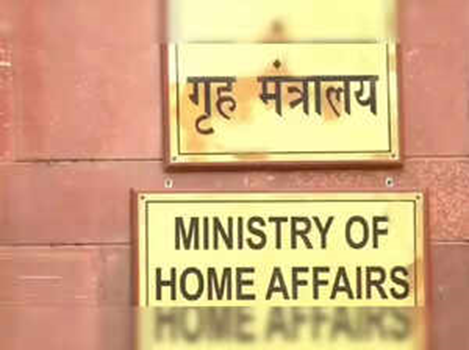
Alongside defence, internal security has also received strong emphasis in the Union Budget 2026–27. The Ministry of Home Affairs (MHA) has been allocated over ₹2.55 lakh crore, marking a 9.44 per cent increase over the previous year’s budget estimates.
Nearly 68 per cent of the allocation (₹1.73 lakh crore) has been provided under the ‘Police’ head, covering the Intelligence Bureau, Central Armed Police Forces (CAPFs), border infrastructure, and police forces in Delhi and Jammu & Kashmir.
The Intelligence Bureau (IB) has received a significant boost, with its allocation rising by 63 per cent to ₹6,782 crore. According to budget documents, the increased funding will support intelligence gathering, analysis of internal threats, and counter-terrorism operations.
Among the CAPFs, the Indo-Tibetan Border Police (ITBP) saw the highest rise, receiving ₹11,324 crore, largely to strengthen surveillance and logistics along the China border. The CRPF, India’s largest paramilitary force, was allocated ₹38,517 crore, while the BSF received ₹29,567 crore.
Other forces such as the CISF, SSB, and Assam Rifles also received incremental increases, ensuring continued support for border security and protection of vital installations. Additionally, ₹95 crore has been allocated to the BSF Air Wing for aircraft and riverine assets.
India and Arab States Strengthen Strategic Cooperation
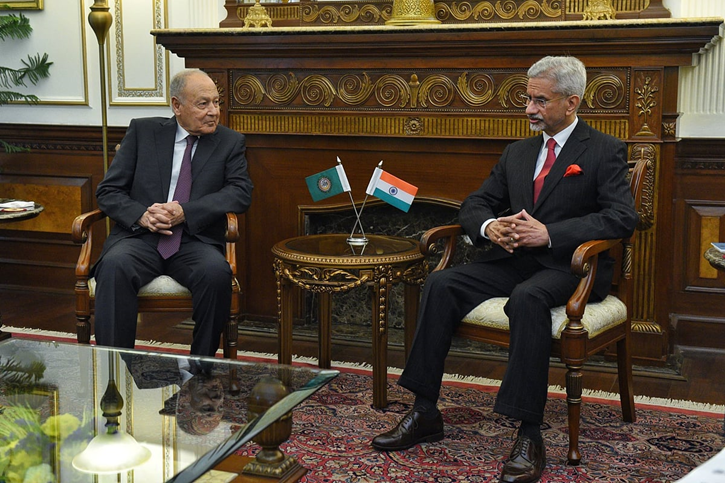
India and Arab nations have reaffirmed their commitment to closer cooperation across security, economic, and diplomatic domains. During recent discussions, foreign ministers from both sides reiterated a zero-tolerance approach to terrorism, recognising it as one of the gravest threats to global peace.
Both sides acknowledged their deep historical and civilisational ties and welcomed expanding collaboration in sectors such as energy, trade, education, healthcare, digital technology, space, agriculture, and tourism. They also discussed regional and global issues, including Palestine, multilateralism, and reforms of the United Nations Security Council.
A comprehensive roadmap for 2026–2028 has been outlined, featuring high-level meetings, energy forums, startup conclaves, cultural festivals, and new working groups on counter-terrorism, space, and food security—reflecting the growing depth of India-Arab relations.
Gravity Industries Demonstrates Jet Suit for Indian Army
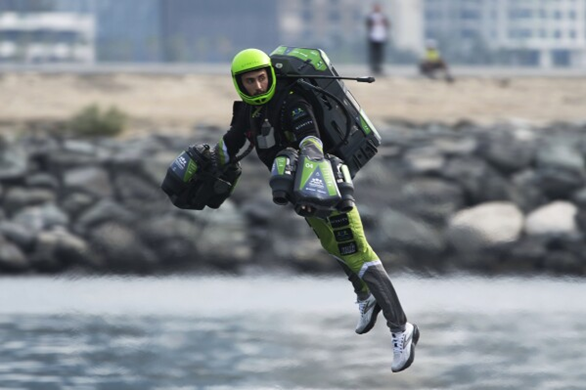
In January 2026, UK-based Gravity Industries conducted a high-profile demonstration of its Jet Suit for the Indian Army near Bengaluru. Founder Richard M. Browning showcased the suit’s ability to rapidly access rooftops and elevated positions, highlighting its potential in urban counter-terrorism operations.
Powered by five miniature jet turbines producing over 1,000 horsepower, the suit enables vertical take-off, agile manoeuvres, and speeds of up to 85 km/h. Army officials noted that such technology could offer a tactical advantage in dense urban environments where conventional access methods are risky or slow.
Odisha Emerges as a Major Defence-Aerospace Hub
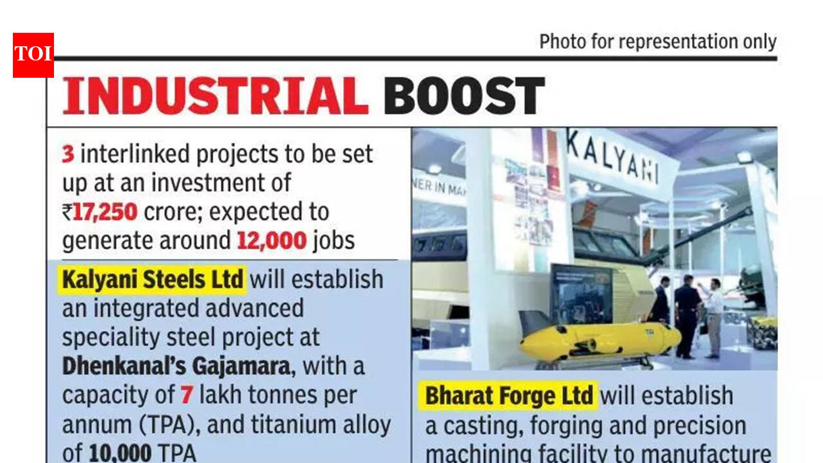
Odisha has approved a ₹17,250 crore defence-aero manufacturing complex by Kalyani Strategic Systems Limited in Dhenkanal district, marking one of eastern India’s largest private defence investments. Spread across 1,100 acres, the facility will manufacture aircraft structures, engine components, UAV parts, and defence systems using advanced technologies like composites and additive manufacturing.
The project is expected to generate over 10,000 jobs, significantly boosting local employment and ancillary industries. With strong connectivity and supportive industrial policies, Odisha is rapidly positioning itself as a key node in India’s expanding defence manufacturing ecosystem.
Conclusion
Together, these developments—from record defence spending and strengthened internal security to global partnerships and cutting-edge technology—underscore India’s strategic shift toward enhanced military capability, self-reliance, and global engagement. The 2026–27 budget signals not just higher spending, but a long-term vision for security, innovation, and economic growth.
Review Questions
1. What is the total defence allocation for India in the Union Budget 2026–27?
A. ₹6.81 lakh crore
B. ₹7.32 lakh crore
C. ₹7.85 lakh crore
D. ₹8.10 lakh crore
Answer: C. ₹7.85 lakh crore
2. The defence outlay for 2026–27 shows an overall increase of approximately:
A. 8%
B. 10%
C. 12%
D. 15%
Answer: D. 15%
3. How much amount has been earmarked for capital expenditure for the armed forces in 2026–27?
A. ₹1.86 lakh crore
B. ₹1.80 lakh crore
C. ₹2.19 lakh crore
D. ₹2.55 lakh crore
Answer: C. ₹2.19 lakh crore
4. The increase in capital outlay over Budget Estimates 2025–26 is approximately:
A. 10%
B. 15%
C. 18%
D. 21.84%
Answer: D. 21.84%
5. Which operation accounted for a major portion of additional defence hardware spending?
A. Operation Vijay
B. Operation Sindoor
C. Operation Rakshak
D. Operation Trinetra
Answer: B. Operation Sindoor
6. Defence expenditure in 2026–27 accounts for what percentage of India’s projected GDP?
A. 1.65%
B. 1.80%
C. 1.99%
D. 2.25%
Answer: C. 1.99%
7. A significant portion of capital expenditure has been allocated to which sector?
A. Submarines and destroyers
B. Cyber warfare systems
C. Aircraft and aero-engines
D. Missile defence shields
Answer: C. Aircraft and aero-engines
8. The Indian Air Force is considering procurement of how many Rafale fighter jets?
A. 90
B. 100
C. 114
D. 126
Answer: C. 114
9. How much has been earmarked for domestic defence procurement in 2026–27?
A. ₹1.11 lakh crore
B. ₹1.25 lakh crore
C. ₹1.39 lakh crore
D. ₹1.50 lakh crore
Answer: C. ₹1.39 lakh crore
10. Which organisation’s budget was increased to ₹29,100 crore?
A. ISRO
B. DRDO
C. HAL
D. BEL
Answer: B. DRDO
11. What is the allocation for the Ministry of Home Affairs (MHA) in Budget 2026–27?
A. ₹2.33 lakh crore
B. ₹2.45 lakh crore
C. ₹2.55 lakh crore
D. ₹2.75 lakh crore
Answer: C. ₹2.55 lakh crore
12. Nearly what percentage of the MHA budget is allocated under the ‘Police’ head?
A. 55%
B. 60%
C. 68%
D. 75%
Answer: C. 68%
13. Which agency saw a 63% increase in allocation in Budget 2026–27?
A. CRPF
B. BSF
C. Intelligence Bureau
D. CISF
Answer: C. Intelligence Bureau
14. Which Central Armed Police Force guards India’s border with China?
A. BSF
B. CRPF
C. ITBP
D. SSB
Answer: C. ITBP
15. Which force is responsible for guarding borders with Pakistan and Bangladesh?
A. ITBP
B. BSF
C. Assam Rifles
D. SSB
Answer: B. BSF
16. India and Arab nations reaffirmed zero tolerance towards which threat?
A. Climate change
B. Piracy
C. Terrorism
D. Cybercrime
Answer: C. Terrorism
17. The Executive Program for India–Arab cooperation will cover which years?
A. 2025–27
B. 2026–28
C. 2027–29
D. 2026–30
Answer: B. 2026–28
18. Which company showcased a Jet Suit to the Indian Army?
A. Lockheed Martin
B. Boeing
C. Gravity Industries
D. BAE Systems
Answer: C. Gravity Industries
19. The Jet Suit demonstrated for the Indian Army can reach speeds up to:
A. 60 km/h
B. 70 km/h
C. 85 km/h
D. 100 km/h
Answer: C. 85 km/h
20. The ₹17,250 crore defence-aero manufacturing hub has been approved in which state?
A. Andhra Pradesh
B. Maharashtra
C. Karnataka
D. Odisha
Answer: D. Odisha
ALSO READ:
- Latest Daily Current Affairs and Defence Updates
- Latest Daily Current Affairs November 2025[DOWNLOAD PDF]
- Latest Daily Current Affairs October 2025[DOWNLOAD PDF]
- Latest Daily Current Affairs August 2025[DOWNLOAD PDF]
- Latest Daily Current Affairs July 2025[DOWNLOAD PDF]
- Monthly Defence Current Affairs June 2025 [DOWNLOAD PDF]
- Monthly Defence Current Affairs May 2025 [DOWNLOAD PDF]
- Monthly Defence Current Affairs April 2025 [DOWNLOAD PDF]
- Monthly Defence Current Affairs March 2025 [DOWNLOAD PDF]
- Monthly Defence Current Affairs February 2025 [DOWNLOAD PDF]
- Monthly Defence Current Affairs January 2025 [DOWNLOAD PDF]
- Defence Current Affairs Year End Review 2024
- Monthly Defence Current Affairs November 2024 [DOWNLOAD PDF]
- Monthly Defence Current Affairs October 2024 [DOWNLOAD PDF]
- Monthly Defence Current Affairs September 2024 [DOWNLOAD PDF]
- Monthly Defence Current Affairs August 2024 [DOWNLOAD PDF]
- Monthly Defence Current Affairs July 2024 [DOWNLOAD PDF]
- Monthly Defence Current Affairs June 2024 [DOWNLOAD PDF]