





In Defence Current Affairs for 06 September 2026, we will see the latest national and international current affairs news. These important current affairs will be beneficial for your upcoming NDA, CDS, CDS OTA, AFCAT, TA, Agniveer Army, Agniveer Navy, Agniveer Air Force, Women Military Police, INET, MNS, ACC exams, SCO, PCSL, CAPF, and SSB interviews, and direct entries for Army, Navy, and Air Force like SSC Tech, TGC, JAG, NCC, TES, 10+2 Cadet. Download a PDF file about current events at the end of this article. Let us now see the Current Affairs.
Defence Current Affairs 06 September 2026
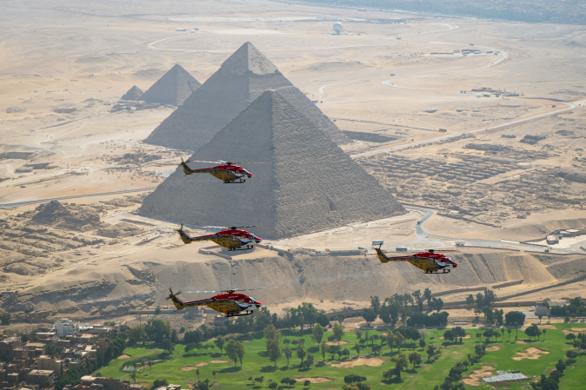
IAF’s Sarang Helicopter Team Reaches Egypt for El Alamein International Airshow 2026
The Sarang Helicopter Display Team of the Indian Air Force (IAF) has arrived in Egypt to participate in the 2nd edition of the El Alamein International Airshow. The event is scheduled to take place from 8 to 10 September 2026 at El Alamein International Airport.
Sarang is a specialised helicopter aerobatic display team of the Indian Air Force and is known for its highly coordinated aerial performances. The team is notable for operating with five helicopters, making it the world’s only five-helicopter display team.
During the airshow, Sarang will demonstrate the IAF’s standards of precision, coordination, professionalism and flying skill through carefully choreographed formations and aerial manoeuvres.
The team operates the Advanced Light Helicopter (ALH) Dhruv, an indigenously designed and manufactured helicopter. Its performances are recognised for demanding formation flying, close-proximity manoeuvres and precisely synchronised aerial sequences.
At El Alamein, the team is expected to perform its well-known “Dolphin Leap” manoeuvre. It will also introduce a new manoeuvre called the “Spot Stall Turn.”
Why is it important?
The participation of the Sarang team reflects the growing international engagement of the Indian Air Force. Such airshows provide an opportunity to showcase India’s indigenous aerospace capabilities while strengthening defence and diplomatic relations with partner countries.
Key Facts
- Team: Sarang Helicopter Display Team
- Force: Indian Air Force
- Country visited: Egypt
- Event: 2nd El Alamein International Airshow
- Dates: 8–10 September 2026
- Venue: El Alamein International Airport
- Helicopter: ALH Dhruv
- Famous manoeuvre: Dolphin Leap
- New manoeuvre: Spot Stall Turn
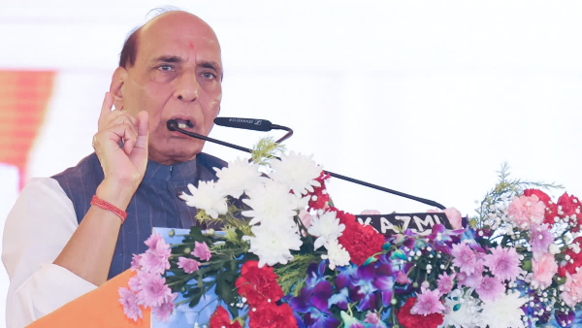
Rajnath Singh to Undertake Three-Day Visit to Sri Lanka
Defence Minister Rajnath Singh is scheduled to undertake an official three-day visit to Sri Lanka from 8 to 10 September 2026.
During his visit, the Defence Minister will hold discussions with Sri Lankan leadership on a range of issues and will also interact with members of the Indian diaspora in Colombo.
India and Sri Lanka share long-standing civilisational and cultural connections. Their contemporary partnership covers several areas, including regional security, defence, trade, economic cooperation and people-to-people relations.
India’s role during Sri Lanka’s economic crisis and its assistance following Cyclone Ditwah in 2025 have further contributed to bilateral cooperation. India acted as one of the early responders in providing assistance after the cyclone.
The visit also reflects India’s continued emphasis on its “Neighbourhood First” policy and Prime Minister Narendra Modi’s MAHASAGAR vision.
MAHASAGAR stands for:
Mutual and Holistic Advancement for Security and Growth Across Regions
The visit is expected to further strengthen cooperation between India and Sri Lanka, particularly in the areas of maritime security and defence.
Major India–Sri Lanka Joint Exercises
Mitra Shakti
Mitra Shakti is a joint military exercise involving the Indian Army and Sri Lanka Army. It focuses on areas such as counter-terrorism, tactical operations and sub-conventional warfare under a UN-mandated environment.
The 11th edition was conducted in November 2025 at Belagavi, Karnataka.
SLINEX
SLINEX stands for Sri Lanka–India Naval Exercise. It is a bilateral naval exercise aimed at improving maritime cooperation, seamanship and joint operational capabilities.
The exercise generally consists of harbour and sea phases, involving tactical and operational drills.
DIVEX
DIVEX, or Diving Exercise, is a specialised bilateral engagement focusing on underwater operations. It includes activities such as mixed-gas diving and deep-sea recovery, with recent editions being conducted in Colombo.
Key Facts
- Defence Minister: Rajnath Singh
- Country: Sri Lanka
- Visit: 8–10 September 2026
- Policy: Neighbourhood First
- MAHASAGAR: Mutual and Holistic Advancement for Security and Growth Across Regions
- Army exercise: Mitra Shakti
- Naval exercise: SLINEX
- Diving exercise: DIVEX
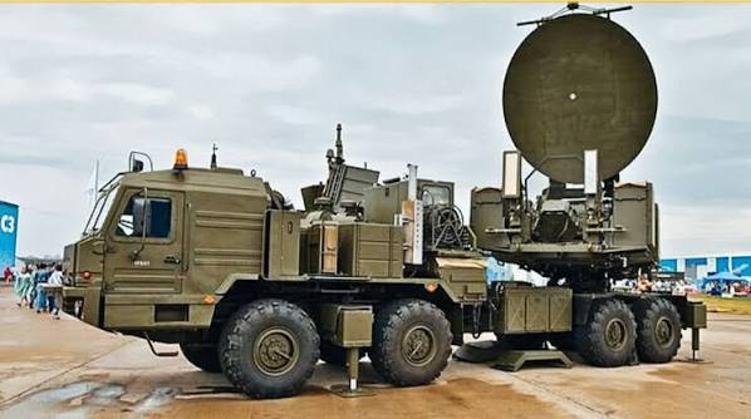
DRDO Develops New Mobile AI-Driven Jammer
The Defence Research and Development Organisation (DRDO) is developing a new electronic-warfare system designed to counter sophisticated communication networks that use artificial intelligence to make themselves difficult to detect and jam.
The system is known as the Smart Communication Jammer System (SCJS).
Modern military communication networks are becoming increasingly adaptive. Technologies such as cognitive radios and Mobile Ad Hoc Networks (MANETs) can dynamically adjust their use of the radio spectrum, making traditional electronic-countermeasure techniques more challenging.
The proposed SCJS will be a large vehicle-mounted system capable of performing multiple functions, including:
- Detection
- Analysis
- Classification
- Direction finding
- Monitoring
- Jamming
Its intended target includes tactical communication Mobile Ad Hoc Networks (MANETs).
What are MANETs?
A Mobile Ad Hoc Network is a flexible wireless network in which devices can communicate without relying entirely on fixed infrastructure.
These networks can adapt to changes in their environment and modify their configuration to use available radio-spectrum resources efficiently.
What are Cognitive Radios?
Unlike conventional radios that generally operate using predetermined frequencies, cognitive radios can monitor their surrounding electromagnetic environment and dynamically alter their operating frequency.
The source material notes that AI and machine-learning techniques can enable such systems to rapidly shift between spectrum channels, potentially within microseconds.
This adaptability makes them more difficult to detect, monitor and disrupt using conventional jamming methods.
Significance of SCJS
The development of SCJS represents an effort to strengthen India’s electronic warfare capabilities against increasingly sophisticated communication technologies.
Although cognitive-radio and MANET technologies have military applications, similar technologies can also be useful in civilian communication because they can help reduce spectrum congestion and improve the efficiency of wireless networks.
Key Facts
- Organisation: DRDO
- System: Smart Communication Jammer System
- Abbreviation: SCJS
- Type: Mobile electronic-warfare system
- Platform: Vehicle-mounted
- Target: Tactical communication MANETs
- Technology involved: AI, machine learning and cognitive radio networks
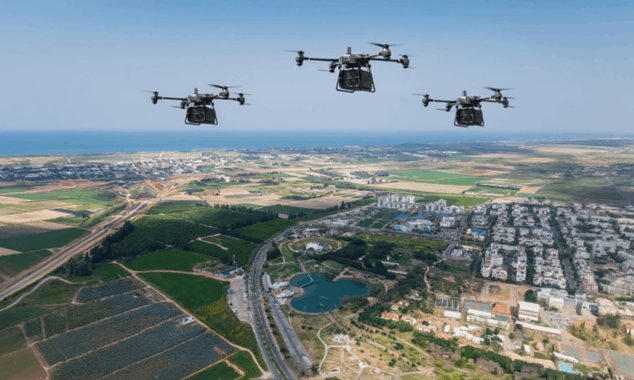
India’s Drone Revolution: National UTM Programme
India is moving towards a National Unmanned Aircraft Systems Traffic Management (UTM) programme to regulate and coordinate drone operations at altitudes below 1,000 feet.
The proposed system is intended to make drone operations safer and more organised as the country’s drone ecosystem expands across areas such as:
- Logistics
- Agriculture
- Surveillance
- Emergency services
The UTM system will work alongside the Directorate General of Civil Aviation (DGCA)’s Digital Sky platform, which already supports important functions related to drone operations, including registration, pilot certification and flight permissions.
Rapid Growth of India’s Drone Ecosystem
India’s drone sector has expanded significantly. According to the supplied material:
- More than 38,500 drones have been registered with Unique Identification Numbers (UINs).
- Nearly 40,000 DGCA-certified remote pilots are active.
- The government has approved 244 drone training organisations.
The National UTM system is intended to manage this growing number of aircraft by providing capabilities such as real-time monitoring, automated flight approvals and conflict resolution.
Applications in Agriculture
Drones are increasingly being used in agriculture for activities such as crop-related operations.
Under the Namo Drone Didi initiative, more than 1,000 drones have been distributed to women self-help groups to support agricultural productivity and reduce costs.
Digital Sky and Drone Categories
The UTM initiative will complement the Digital Sky platform, which provides services including airspace-zone information and flight-permission mechanisms.
Drones are classified into categories such as:
- Nano
- Micro
- Small
- Medium
- Large
The regulatory requirements vary according to the drone’s weight and intended operation.
Drones in Governance
India is also using drones for large-scale government programmes.
Under the SVAMITVA scheme, drones have been used to survey 3.28 lakh villages, resulting in the preparation of approximately 2.76 crore property cards across 31 states, according to the supplied material.
The National UTM programme is therefore expected to become increasingly important as drone use expands across government, commercial and public-service applications.
Key Facts
- UTM: Unmanned Aircraft Systems Traffic Management
- Regulatory altitude mentioned: Below 1,000 feet
- Platform integrated with: Digital Sky
- Registered drones: 38,500+
- Certified remote pilots: Nearly 40,000
- Approved training organisations: 244
- Major schemes mentioned: Namo Drone Didi and SVAMITVA
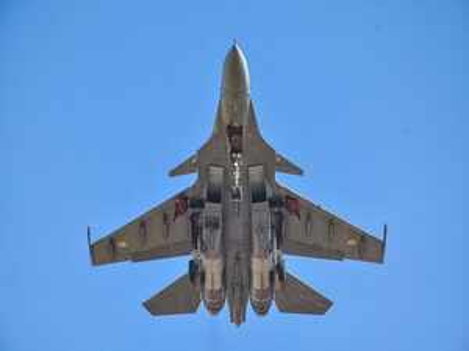
India Plans Su-30MKI Modification for RVV-BD Air-to-Air Missile Integration
The Defence Ministry is considering a proposal to modify India’s Su-30MKI fighter aircraft so that they can operate with the Russian-origin RVV-BD air-to-air missile.
The proposed integration is aimed at enhancing the long-range air-combat capability of the Indian Air Force.
According to the supplied material, the RVV-BD family includes variants designed to engage high-value airborne targets, including Airborne Early Warning and Control (AEW&C) aircraft and other surveillance platforms.
The source material describes the missile as having a range of around 300 kilometres and the capability to engage targets at very high speeds.
The proposal was expected to be considered by the Defence Acquisition Council (DAC).
Why Su-30MKI?
The Su-30MKI forms a major part of India’s fighter fleet and is one of the principal combat aircraft operated by the Indian Air Force.
More than 260 Su-30MKI aircraft are stated in the supplied material to be in Indian service.
Integrating a long-range air-to-air missile would potentially enhance the aircraft’s ability to engage threats from greater distances and provide an additional capability against high-value airborne assets.
India’s Indigenous Alternative
At the same time, India’s Defence Research and Development Organisation (DRDO) has been advancing the Astra family of air-to-air missiles.
The development of longer-range Astra variants is aimed at providing the Indian Air Force with indigenous beyond-visual-range air-combat capabilities, including versions intended for ranges exceeding 300 km, according to the supplied material.
Key Facts
- Fighter: Su-30MKI
- Proposed missile: RVV-BD
- Origin: Russia
- Reported range: Around 300 km
- Potential targets: AEW&C and other airborne surveillance aircraft
- Decision body: Defence Acquisition Council
- Indian indigenous missile family: Astra
- Operator: Indian Air Force
- Su-30MKI fleet mentioned: 260+
Review Questions
1. The Sarang Helicopter Display Team of the Indian Air Force is participating in which airshow in September 2026?
A. Dubai Airshow
B. El Alamein International Airshow
C. Paris Airshow
D. Singapore Airshow
Answer: B. El Alamein International Airshow
2. Which helicopter is operated by the IAF’s Sarang Helicopter Display Team?
A. Apache AH-64E
B. Chinook
C. ALH Dhruv
D. LCH Prachand
Answer: C. ALH Dhruv
3. Which new manoeuvre will the Sarang team showcase at the El Alamein International Airshow?
A. Cobra Roll
B. Spot Stall Turn
C. Barrel Roll
D. Loop Turn
Answer: B. Spot Stall Turn
4. Defence Minister Rajnath Singh is scheduled to visit which country from 8 to 10 September 2026?
A. Maldives
B. Sri Lanka
C. Indonesia
D. Egypt
Answer: B. Sri Lanka
5. What does MAHASAGAR stand for?
A. Maritime and Strategic Growth Across Regions
B. Mutual and Holistic Advancement for Security and Growth Across Regions
C. Mutual Alliance for Strategic Harmony and Global Action Regionally
D. Maritime Advancement for Human Security and Global Assistance
Answer: B. Mutual and Holistic Advancement for Security and Growth Across Regions
6. What is the name of DRDO’s proposed AI-driven mobile jammer system?
A. Tactical Spectrum Jammer System
B. Smart Communication Jammer System
C. Advanced Mobile Defence System
D. Cognitive Radio Defence System
Answer: B. Smart Communication Jammer System
7. The National UTM programme is primarily being developed to manage:
A. Satellite communication
B. Naval traffic
C. Drone traffic
D. Railway traffic
Answer: C. Drone traffic
8. India’s National UTM programme is intended to regulate drone operations below approximately:
A. 500 feet
B. 750 feet
C. 1,000 feet
D. 2,000 feet
Answer: C. 1,000 feet
9. Which air-to-air missile is proposed for integration with India’s Su-30MKI aircraft?
A. Meteor
B. AIM-120 AMRAAM
C. RVV-BD
D. MICA
Answer: C. RVV-BD
10. Which indigenous Indian air-to-air missile family is being developed by DRDO as a long-range capability?
A. Akash
B. Astra
C. Trishul
D. Nag
Answer: B. Astra
ALSO READ:
- Latest Daily Current Affairs and Defence Updates
- Latest Daily Current Affairs August 2026[DOWNLOAD PDF]
- Latest Daily Current Affairs July 2026[DOWNLOAD PDF]
- Latest Daily Current Affairs June 2026[DOWNLOAD PDF]
- Latest Daily Current Affairs May 2026[DOWNLOAD PDF]
- Latest Daily Current Affairs April 2026[DOWNLOAD PDF]
- Latest Daily Current Affairs March 2026[DOWNLOAD PDF]
- Latest Daily Current Affairs February 2026[DOWNLOAD PDF]
- Latest Daily Current Affairs January 2026[DOWNLOAD PDF]
- Latest Daily Current Affairs November 2025[DOWNLOAD PDF]
- Latest Daily Current Affairs October 2025[DOWNLOAD PDF]
- Latest Daily Current Affairs August 2025[DOWNLOAD PDF]
- Latest Daily Current Affairs July 2025[DOWNLOAD PDF]


