





In Defence Current Affairs for 15 September 2026, we will see the latest national and international current affairs news. These important current affairs will be beneficial for your upcoming NDA, CDS, CDS OTA, AFCAT, TA, Agniveer Army, Agniveer Navy, Agniveer Air Force, Women Military Police, INET, MNS, ACC exams, SCO, PCSL, CAPF, and SSB interviews, and direct entries for Army, Navy, and Air Force like SSC Tech, TGC, JAG, NCC, TES, 10+2 Cadet. Download a PDF file about current events at the end of this article. Let us now see the Current Affairs.
Defence Current Affairs 15 September 2026
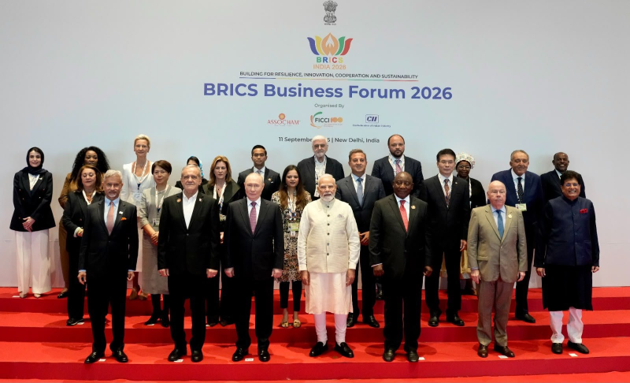
BRICS Leaders Adopt New Delhi Declaration 2026
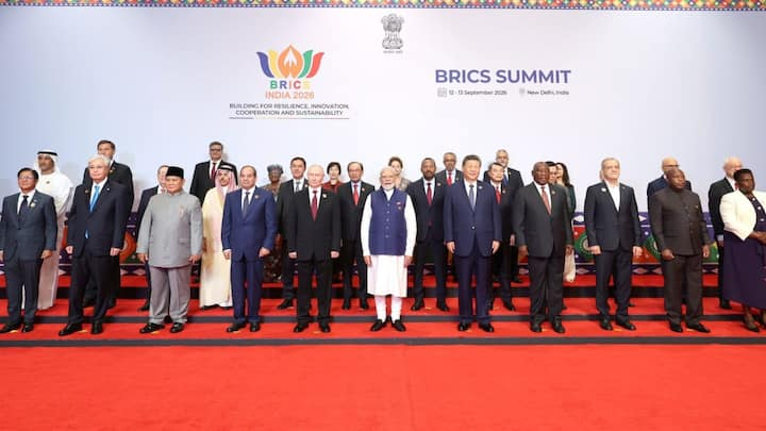
The 18th BRICS Summit, hosted by India in New Delhi, concluded with the unanimous adoption of the New Delhi Declaration 2026. Prime Minister Narendra Modi announced that all participating BRICS members agreed to the declaration without raising any objections.
The adoption came after detailed negotiations among member countries to resolve differences and arrive at a common position. The successful consensus was viewed as an important diplomatic achievement for India during its BRICS chairship.
The summit was held under the theme “Building Resilience and Innovation for Cooperation and Sustainability.” Leaders discussed issues including regional stability, economic cooperation, sustainable development and broader global challenges.
India also used the summit to strengthen its diplomatic engagement with important international partners. Prime Minister Narendra Modi held bilateral meetings with Iranian President Masoud Pezeshkian, Russian President Vladimir Putin and UN Secretary-General António Guterres.
India-Indonesia relations also received attention as PM Modi met Indonesian President Prabowo Subianto. Both leaders expressed their commitment to expanding cooperation across multiple sectors.
The unanimous declaration highlighted the ability of BRICS members to build consensus despite differences in their political and economic perspectives. It also reinforced India’s role as a bridge-builder and consensus facilitator.
Key Points for Exams
- Event: 18th BRICS Summit
- Venue: New Delhi, India
- Declaration: New Delhi Declaration 2026
- Host: India
- Theme: “Building Resilience and Innovation for Cooperation and Sustainability”
- Important meetings: Iran, Russia, UN and Indonesia
- Significance: Strengthened India’s role as a consensus builder and voice of the Global South
BRICS Confronts Oil Shock with Push for Energy Security
Energy security emerged as a major concern during the BRICS Summit in New Delhi as international crude oil prices moved above $100 per barrel. The situation was linked to the Iran conflict and attacks affecting maritime shipping and energy flows through the Strait of Hormuz.
Brent crude futures reportedly reached around $102.07 per barrel, highlighting the vulnerability of global energy markets to geopolitical tensions and disruptions in important maritime routes.
The Strait of Hormuz is particularly significant because a substantial share of the world’s oil and gas shipments passes through the waterway. Any prolonged disruption could therefore have serious consequences for major energy-importing economies, especially in Asia.
India is particularly exposed to fluctuations in international crude prices because of its dependence on imported oil. A rise in crude prices, combined with higher freight and shipping costs, can increase pressure on the country’s economy. The latest disruption has consequently added urgency to India’s efforts to diversify its energy sources and strengthen energy resilience.
BRICS has an important role in global energy because its members include both major energy producers and large consumers. Countries such as Russia, Iran, Saudi Arabia and the UAE are significant producers, while India and China are among the world’s major consumers. Brazil is also an important oil-producing country.
According to Indian government figures cited in the supplied material, BRICS members together account for approximately 49.5% of the world’s population, 40% of global GDP and 26% of global trade.
The BRICS Energy Cooperation Roadmap 2025–2030, adopted during Brazil’s presidency, seeks greater cooperation in areas such as energy security, trade, infrastructure and technology while supporting the transition towards lower-carbon energy systems.
India’s 2026 energy agenda builds on this approach through the idea of “Energy for All”, seeking to balance energy security, affordability, sustainability and innovation.
Key Points for Exams
- Major concern: Energy security
- Crude benchmark: Brent crude
- Price mentioned: Around $102.07/barrel
- Strategic waterway: Strait of Hormuz
- BRICS energy roadmap: 2025–2030
- India’s approach: Energy security + affordability + sustainability + innovation
- India’s energy slogan/approach: “Energy for All”
Malaysian PM Confirms Talks on BrahMos Missile
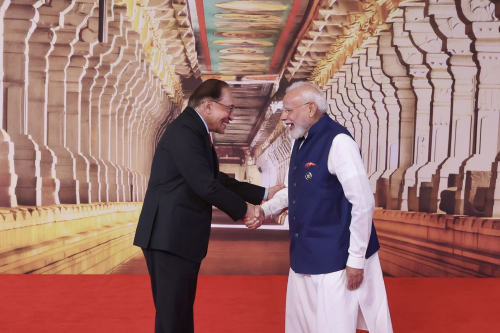
Malaysia has confirmed that it is holding exploratory discussions with India regarding the possible acquisition of the BrahMos missile system. However, Malaysian Prime Minister Datuk Seri Anwar Ibrahim clarified that no final decision has yet been taken.
Speaking in New Delhi on September 13, Anwar Ibrahim said that discussions regarding BrahMos had taken place with Prime Minister Narendra Modi. He emphasized that the Royal Malaysian Air Force would ultimately assess the operational and technical requirements before any decision is made.
The talks represent another indication of the expanding defence relationship between India and Malaysia. BrahMos is being considered for its potential contribution to Malaysia’s maritime security and aerial deterrence capabilities.
Anwar Ibrahim said that the relevant Malaysian agencies, particularly the Air Force, should continue evaluating the proposal because they possess the necessary technical and operational expertise. He also expressed strong support for continued discussions with India.
The Malaysian Prime Minister highlighted the trust developed between the two countries as an important foundation for expanding bilateral cooperation. While India-Malaysia relations have traditionally included trade and investment, defence, aerospace and maritime security are becoming increasingly important areas of engagement.
India’s growing capabilities and long experience in defence and aerospace have created additional opportunities for cooperation between the two countries.
Key Points for Exams
- Country considering BrahMos: Malaysia
- Malaysian PM: Datuk Seri Anwar Ibrahim
- Indian PM: Narendra Modi
- Missile: BrahMos
- Final assessment: Royal Malaysian Air Force
- Status: Exploratory talks; no final decision
- Major areas: Defence, aerospace and maritime security
India’s Strategic Window for Su-57 and S-500 Deal
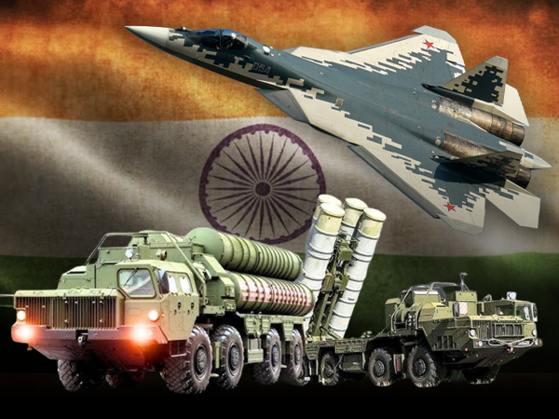
Russia has placed its Su-57 stealth fighter and S-500 Prometheus air and missile defence system at the centre of a major defence proposal for India. The systems could potentially address some immediate capability requirements, although their strategic value for India would depend heavily on the terms of technology transfer and domestic production.
The Su-57 is Russia’s fifth-generation stealth fighter. It combines low-observable characteristics with advanced avionics, long-range weapon capability and supermaneuverability.
India’s fighter fleet faces a significant numerical challenge. According to the supplied material, the Indian Air Force has 29 operational squadrons against a sanctioned strength of 42. At the same time, India’s indigenous Advanced Medium Combat Aircraft (AMCA) programme is not expected to achieve its first flight before 2029–30, potentially creating a capability gap in the interim.
The situation is further complicated by the expansion of China’s J-20 fleet and Pakistan’s plans concerning J-35 fighters.
Russia has also offered the S-500 Prometheus, described as its most advanced long-range air and missile defence system. The system is associated with an interception range of around 600 km and is designed to counter threats including ballistic missiles, hypersonic weapons and near-space targets.
For India, such a system could potentially provide an additional high-end layer above existing S-400 air-defence capabilities.
However, the long-term importance of any Su-57 and S-500 agreement would depend on India’s ability to secure favourable arrangements involving technology transfer, source-code access and co-production. Such provisions could help reduce dependence on foreign suppliers and support India’s broader objective of defence self-reliance.
Key Points for Exams
- Su-57: Russian fifth-generation stealth fighter
- S-500: Russian long-range air and missile defence system
- Approx. S-500 range mentioned: 600 km
- Existing Indian system: S-400
- IAF operational squadrons mentioned: 29
- Sanctioned strength: 42
- Indigenous fighter programme: AMCA
- Important negotiation issues: Technology transfer, source-code access and co-production
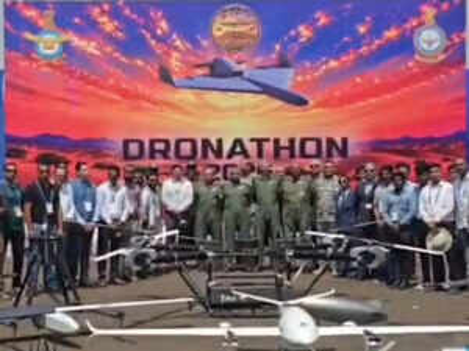
IAF’s Mega Drone Event Dronathon 2026 Begins at Pokhran Range
The Indian Air Force (IAF) has launched Dronathon 2026, a three-day event aimed at showcasing India’s capabilities in unmanned aerial systems and counter-drone technologies.
The event began at the Pokhran Range in Jaisalmer, Rajasthan, providing Indian defence companies and technology developers with an opportunity to demonstrate emerging systems under realistic operational conditions.
Dronathon 2026 was inaugurated by Vice Chief of the Air Staff Air Marshal Ashutosh Dixit. The event has been organised in line with the national objective of Atmanirbhar Bharat, with particular emphasis on strengthening the IAF’s capabilities in the unmanned warfare domain.
The programme follows an industry outreach initiative through which the IAF sought to identify Indian companies and technology developers working on unmanned systems.
A major feature of the event is the live demonstration of various UAS and counter-UAS technologies. These demonstrations are intended to help assess available systems against operational requirements identified by the Indian Air Force.
The technologies showcased include expendable Intelligence, Surveillance and Reconnaissance (ISR) systems, loitering munitions, electronic-warfare-enabled UAS, logistics and delivery drones, mapping and surveying systems and counter-drone solutions.
Several advanced technologies are also being demonstrated, including artificial intelligence, autonomous navigation, real-time data transmission and advanced payload systems.
Dronathon 2026 therefore provides an important platform for closer interaction between India’s defence industry and the armed forces while supporting indigenous development of next-generation unmanned capabilities.
Key Points for Exams
- Event: Dronathon 2026
- Organiser: Indian Air Force
- Location: Pokhran Range, Jaisalmer, Rajasthan
- Duration: Three days
- Inaugurated by: Air Marshal Ashutosh Dixit
- Focus: UAS and Counter-UAS
- Major technologies: ISR drones, loitering munitions, EW-enabled UAS, logistics drones and counter-drone systems
- Key technologies: AI, autonomous navigation and real-time data transmission
- Objective: Strengthen India’s unmanned warfare capabilities under Atmanirbhar Bharat
Review Questions
- Consider the following statements regarding the New Delhi Declaration 2026: 1. It was adopted during the 18th BRICS Summit. 2. The summit was hosted by India in New Delhi. 3. The declaration was adopted unanimously.
Which of the statements given above is/are correct?
A. 1 only
B. 1 and 2 only
C. 2 and 3 only
D. 1, 2 and 3
Answer: D - The 18th BRICS Summit hosted by India in 2026 was held under which theme?
A. One Earth, One Family, One Future
B. Building Resilience and Innovation for Cooperation and Sustainability
C. Strengthening Global South through Development
D. Reforming Multilateralism for a Sustainable Future
Answer: B - Which of the following waterways is particularly important for global energy
security because a significant share of global oil and gas supplies passes through it?
A. Strait of Malacca
B. Strait of Hormuz
C. Bab-el-Mandeb
D. Bosporus Strait
Answer: B - Consider the following statements regarding Malaysia’s discussions with India on
the BrahMos missile: 1. Malaysia has confirmed exploratory talks regarding BrahMos. 2. No final decision on acquisition has been made. 3. The Royal Malaysian Air Force will assess the operational and technical requirements.
Which of the statements given above is/are correct?
A. 1 only
B. 1 and 2 only
C. 2 and 3 only
D. 1, 2 and 3
Answer: D - The Su-57 and S-500 systems, recently discussed in the context of India’s defence
requirements, are associated with which country?
A. France
B. Israel
C. Russia
D. United States
Answer: C - Which of the following correctly describes the S-500 Prometheus?
A. A Russian fifth-generation fighter aircraft
B. A Russian long-range air and missile defence system
C. An Indian unmanned combat aerial vehicle
D. A Russian naval anti-ship missile
Answer: B - Dronathon 2026, organised by the Indian Air Force, is primarily focused on which
domain?
A. Naval warfare and submarine operations
B. Unmanned aerial systems and counter-UAS technologies
C. Cyber warfare and satellite communication
D. Fighter aircraft engine development
Answer: B - Consider the following sequence of events/topics: 1. Adoption of the New Delhi Declaration 2026. 2. Discussions on Malaysia’s possible acquisition of BrahMos. 3. Dronathon 2026 at Pokhran Range. 4. BRICS discussions on energy security amid crude oil price concerns
Which of the following represents the correct association of these events with their
principal focus?
A. BRICS diplomacy → Defence exports → Unmanned warfare → Energy security
B. Energy security → Unmanned warfare → BRICS diplomacy → Defence exports
C. Defence exports → BRICS diplomacy → Energy security → Unmanned warfare
D. Unmanned warfare → Energy security → Defence exports → BRICS diplomacy
Answer: A - Major General Rank Of Indian Army Is Equivalent To Rank Of IAF Is
A. Commander
B. Squadron Leader
C. Group Captain
D. Air Vice Marshal
ANSWER: D - The India-Bangladesh Land Boundary Agreement (LBA) came into force in
A. 2015
B. 2016
C. 2017
D. 2018
ANSWER: A - Mitra Shakti Ex Held B/w India &
A. Sri Lanka
B. USA
C. UK
D. Nepal
ANSWER: A - __Himalayan pass is situated b/w India and China.
A. Shenkota
B. Thalghat
C. Bhorghat
D. Shipki La
ANSWER: D - AMCA Stands For
A. Advanced Medium Cockpit Aircraft
B. Advanced Medium Combat Aircraft
C. Advanced Motor Combat Aircraft
D. Advanced Machine Combat Aircraft
ANSWER: B - Wartime Gallantry Award Is/Are
A. Param Vir Chakra
B. Maha Vir Chakra
C. Ashok Chakra
D. Both a & b
ANSWER: D - Military College of Telecommunication Engineering Is At
A. Gopalpur
B. Mhow
C. Pune
D. Haridwar
ANSWER: B - “Bolo Hindustan Ki Jay” Is The War Cry Of
A. JKRIF
B. RR
C. MAHAR REGIMENT
D. JKLIR
ANSWER: C - Quito Is The Capital Of
A. Ecuador
B. Qatar
C. UAE
D. Ethiopia
ANSWER: A - “The Earth spinner” Book Is Written By
A. Brisha Jain
B. Sanjay Gubbi
C. Hew Strachan
D. Anuradha Roy
ANSWER: D - Joint Exercises B/w The India And Japan Is Called:
A. Shinyuu Maitri
B. SLINEX
C. Indra
D. Yudha Abhyas
ANSWER: A - Motto of Territorial Army Is
A. Rhino Charge
B. Duty Unto Death
C. Valour
D. Savdhani Va Shoorta
ANSWER: D
ALSO READ:
- Latest Daily Current Affairs and Defence Updates
- Latest Daily Current Affairs August 2026[DOWNLOAD PDF]
- Latest Daily Current Affairs July 2026[DOWNLOAD PDF]
- Latest Daily Current Affairs June 2026[DOWNLOAD PDF]
- Latest Daily Current Affairs May 2026[DOWNLOAD PDF]
- Latest Daily Current Affairs April 2026[DOWNLOAD PDF]
- Latest Daily Current Affairs March 2026[DOWNLOAD PDF]
- Latest Daily Current Affairs February 2026[DOWNLOAD PDF]
- Latest Daily Current Affairs January 2026[DOWNLOAD PDF]
- Latest Daily Current Affairs November 2025[DOWNLOAD PDF]
- Latest Daily Current Affairs October 2025[DOWNLOAD PDF]
- Latest Daily Current Affairs August 2025[DOWNLOAD PDF]
- Latest Daily Current Affairs July 2025[DOWNLOAD PDF]


