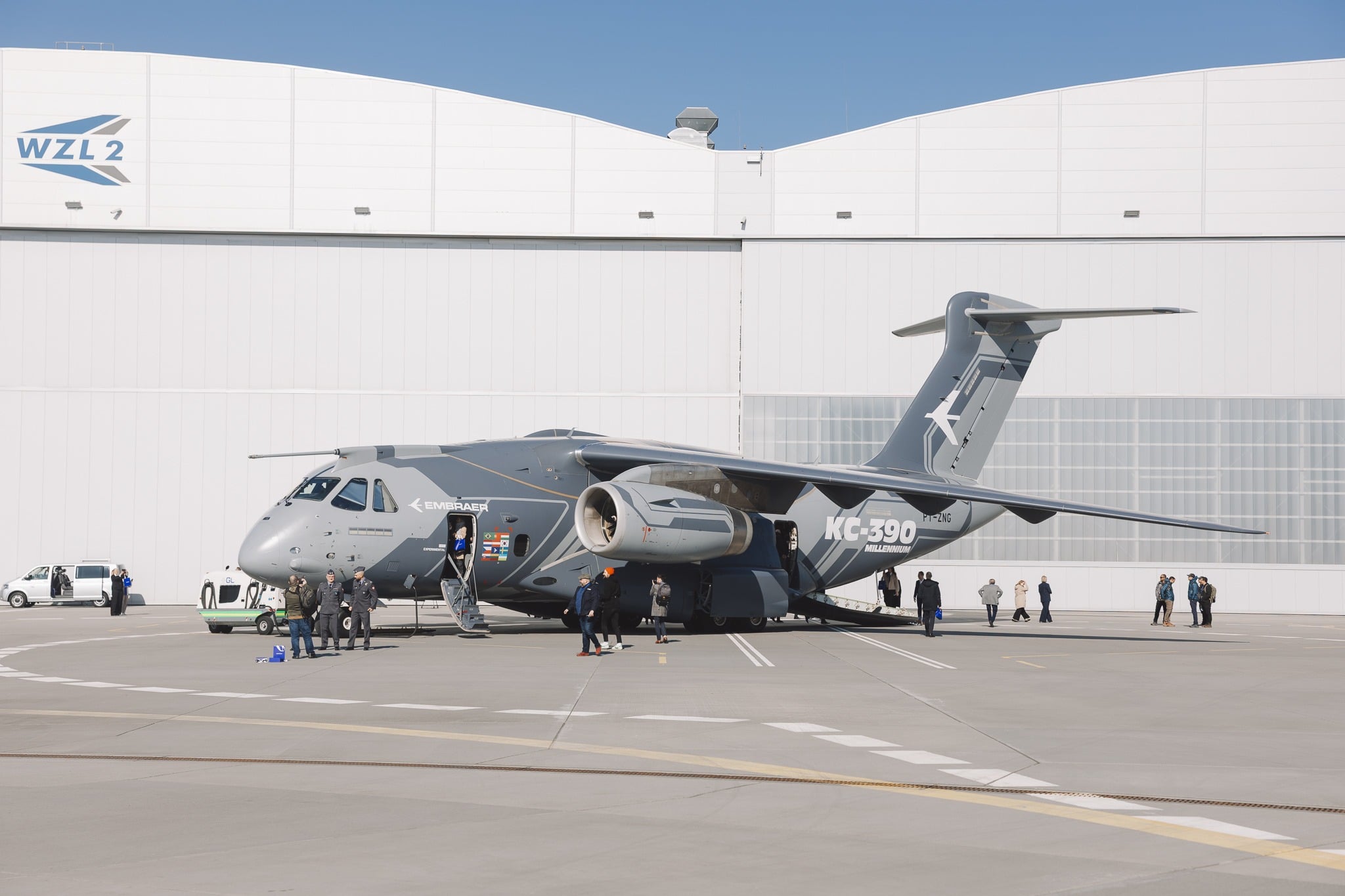
Brazilian aerospace company Embraer has formally presented the KC-390 Millennium multimission military transport aircraft to Wojskowe Zakłady Lotnicze Nr 2 SA (WZL‑2), Poland’s state defense enterprise, located in Bydgoszcz. This event marks a significant step in a broader collaboration that commenced with a memorandum of understanding signed between the two organizations in December 2025. The agreement aims to enhance both industrial and technological capabilities, establishing a stronger bilateral partnership.
One of the pivotal aspects of the memorandum is the establishment of a comprehensive maintenance, repair, and overhaul support framework for the KC-390 in Poland. This initiative is expected to bolster tactical airlift and refueling capabilities within NATO, thereby maintaining the aircraft’s operational readiness throughout Europe.
Douglas Lobo, Embraer’s Vice President of Services & Support, characterized the event in Bydgoszcz as a milestone in a “shared vision for innovation and collaboration,” which aims to strengthen Poland’s domestic defense capacities. Lobo emphasized the importance of close cooperation with the Polish defense industry, stating: “We aim to create a robust cooperation, fostering long-term value for the country while contributing to the European defense community.”
Complementing this perspective, WZL-2 CEO Jakub Gazda expressed enthusiasm for the partnership, highlighting the mutual benefits that arise from the collaboration. He noted that the alliance facilitates sustained support for an aircraft noted for its “innovative technical solutions, reliability, and enormous operational potential.” Gazda further stated, “Cooperation with Embraer opens up new opportunities for us, giving us what we want to experience — it allows us to exchange knowledge and develop our competencies.” He confidently added, “I believe that our cooperation will be an important chapter in the history of aviation innovation.”
The KC-390 Millennium is already gaining traction internationally, boasting an operational mission capability rate of 93 percent and mission completion rates exceeding 99 percent. Brazil, Portugal, and Hungary currently operate the aircraft, with several other countries, including the Netherlands, Austria, South Korea, Sweden, and Morocco, set to integrate the system in the coming years.
In terms of specifications, the KC-390 has a substantial length of 35 meters (115 feet) and can carry a payload of up to 26,000 kilograms (57,320 pounds), accommodating approximately 80 personnel or up to 35,000 kilograms (77,162 pounds) of fuel. Its versatile configuration enables missions ranging from logistics and air-to-air refueling to medical evacuations, humanitarian responses, search and rescue operations, and firefighting.
Equipped with twin IAE V2500-E5 turbofan engines, the KC-390 achieves speeds exceeding 500 knots (926 kilometers/575 miles per hour), can operate at altitudes of up to 11,000 meters (36,089 feet), and has a maximum range of 4,570 nautical miles (8,464 kilometers/5,259 miles). The aircraft can also be outfitted with an electronic warfare suite and additional countermeasure systems, which serve to safeguard warfighters and equipment against potential electromagnetic and missile threats.