


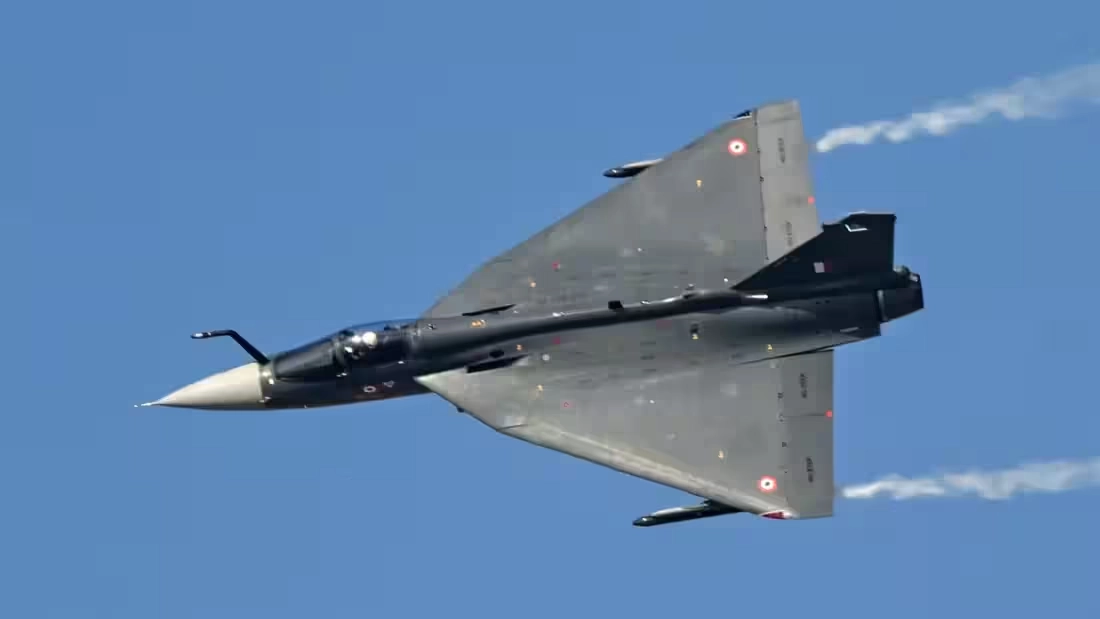
HAL’s latest target is to deliver 16 to 18 Tejas Light Combat Aircraft (LCA) Mk-1A fighters to the Indian Air Force (IAF) by March 31, 2027. The commitment followed a high-level review focused on delays in the indigenous fighter programme.
At a November 16 meeting at Air Headquarters, the IAF conveyed that it was prepared to accept a squadron’s worth of aircraft by the deadline, provided they meet the stipulated capability requirements. Chief of the Air Staff Air Chief Marshal Ashutosh Dixit and HAL Chairman and Managing Director Ravi K. attended the meeting.
Officials familiar with the discussions said hardware-related problems, including those connected with weapons trials, have been resolved. Software issues, including concerns involving the radar, are still being addressed and are in the final stages of resolution.
HAL is expected to begin the documentation needed for delivery and operational clearance. The company will approach the Centre for Military Airworthiness and Certification (CEMILAC) for the Release to Service Document (RSD) and seek a signal-out certificate from the Directorate General of Aeronautical Quality Assurance.
The documents authorise operation of a new aircraft system under specified conditions and within approved flight envelopes. HAL has said it aims to deliver a full squadron of LCA Mk-1A fighters by March 31, 2027, while meeting the IAF’s capability requirements.
First Mk-1A deliveries have slipped by nearly two years
The first LCA Mk-1A deliveries are nearly two years behind schedule. The aircraft is intended to replace ageing fighters in the IAF fleet, particularly the MiG-21s, which retired last year after more than six decades of service.
The IAF has placed two orders with HAL for 180 LCA Mk-1A fighters, worth approximately ₹1.1 lakh crore in total. The first contract, for 83 aircraft, was signed in February 2021; a second contract for 97 fighters followed in September 2025.
Deliveries under the first contract were due to start in March 2024. That timeline was missed amid several factors, including delays in the supply of F404-IN20 engines by US-based GE Aerospace and delays in securing key certifications.
HAL now aims to execute the first contract over three to four years. Deliveries under the second contract are expected to start in 2027-28 and be completed over six years.
IAF fighter squadron strength remains below authorised level
The LCA Mk-1A’s induction is an immediate priority as the IAF faces a fighter squadron shortfall. It currently operates 29 squadrons, compared with an authorised strength of 42.5.
The force also operates 38 LCA Mk-1 aircraft in Initial Operational Clearance (IOC) and Final Operational Clearance (FOC) configurations. The IAF plans to operate around 350 aircraft across the Mk-1, Mk-1A and Mk-2 variants in the coming decades, making the LCA family a significant part of its planned combat fleet.
After taking over as Chief of the Air Staff on October 31, Air Chief Marshal Ashutosh Dixit identified operationalisation of the LCA Mk-1A, alongside progress on the LCA Mk-2 and Advanced Medium Combat Aircraft (AMCA) programmes, as priorities in the IAF’s modernisation drive.
LCA Mk-2 airframe assembly completed
Development of the LCA Mk-2 is advancing alongside the Mk-1A programme. HAL has completed the structural assembly and coupling of the aircraft’s front, centre and rear fuselage sections, and the airframe is now ready.
HAL is targeting the first ground run by March 2027, with the maiden flight expected later that year. The IAF is also expected to move a procurement case for the aircraft.
The LCA Mk-2 is intended to replace the IAF’s Mirage 2000, MiG-29 and Jaguar fleets. Along with the Mk-1A and AMCA programmes, it is part of the effort to strengthen indigenous fighter aircraft development and address the IAF’s long-term combat aircraft requirements.
If achieved, the planned March 2027 delivery of the first 16 to 18 LCA Mk-1A fighters would bring the delayed programme closer to operational induction. The IAF has made clear that accepting the aircraft depends on their meeting its specified capability requirements.




