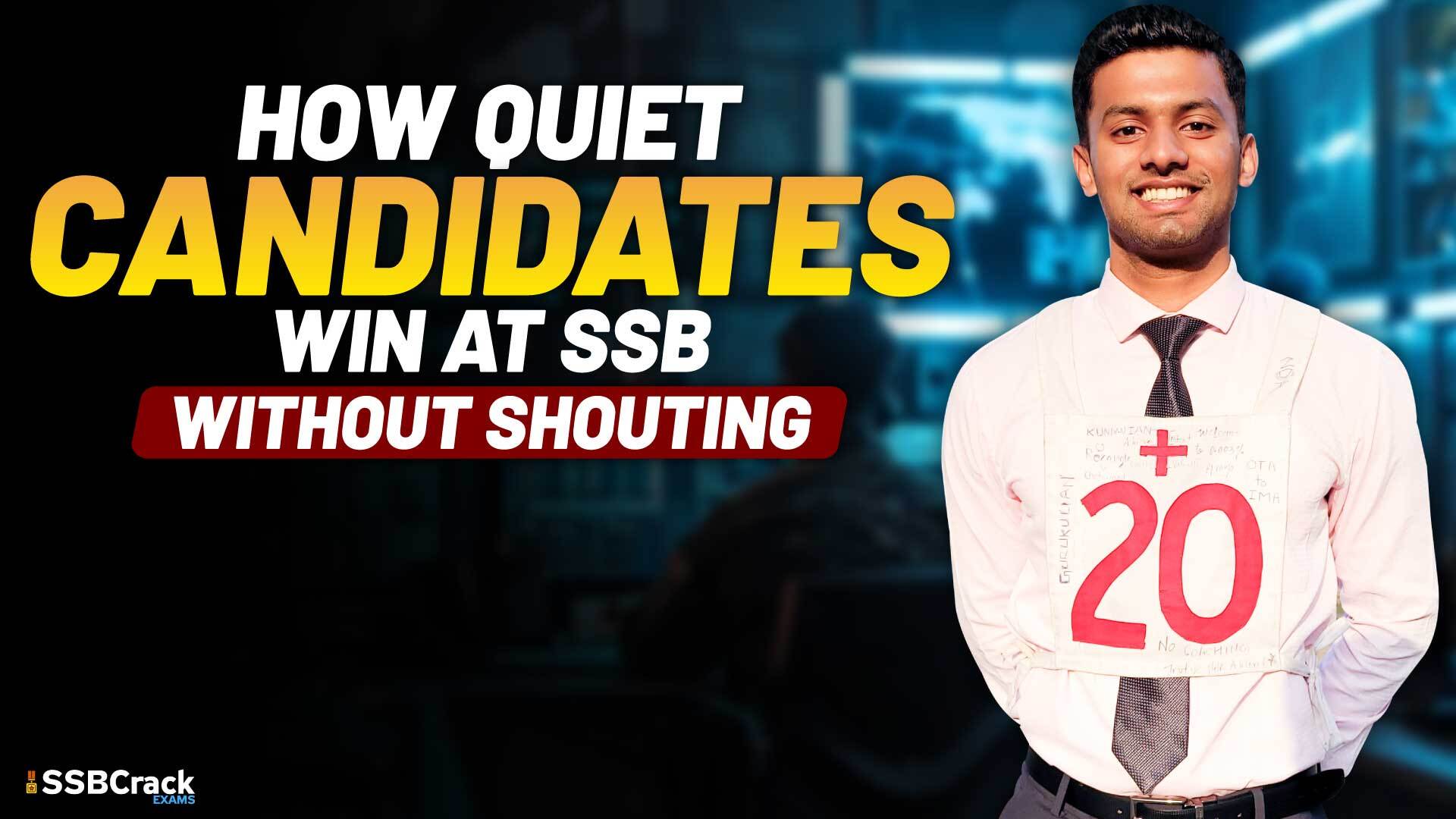
SSB does not select the loudest candidate.
It selects the most dependable one.
Yet many introverted or soft-spoken aspirants believe:
“If I don’t speak constantly, I won’t be noticed.”
Let’s break this myth—and show how a quiet candidate can influence the group, show leadership, and earn visibility naturally.
Why Silence Is Not the Problem
Silence becomes a problem only when it means:
- fear
- confusion
- withdrawal
But silence combined with clarity and timing becomes power.
Assessors value:
- judgement over volume
- action over noise
- balance over dominance
1️⃣ How a Quiet Candidate Influences the Group
🎯 Influence ≠ Talking First
Influence means changing the direction of the group—not the decibel level.
❌ Common Silent Mistake
- Staying quiet throughout
- Nodding without contribution
🧠 Assessor Reads:
Low initiative or confidence.
✅ Officer-like Silent Strategy
A quiet candidate:
- observes group behaviour
- waits for confusion
- speaks once, clearly, and logically
🗣️ Example Line
“If we stabilise this plank first, the rest becomes easier.”
🧠 Assessor Reads:
High situational awareness.
🎯 OLQs Displayed:
Effective Intelligence, Power of Expression.
2️⃣ How a Quiet Candidate Shows Leadership
🎯 Leadership ≠ Commanding
Leadership means taking responsibility when needed.
❌ Loud Candidate Trap
- speaking constantly
- forcing ideas
- dominating space
✅ Quiet Leadership in Action
A silent candidate:
- steps forward when others hesitate
- demonstrates action instead of instructions
- uses minimal words with clear purpose
🗣️ Example Line
“I’ll secure this end. You guide from there.”
🧠 Assessor Reads:
Action-oriented leadership.
🎯 OLQs Displayed:
Initiative, Organising Ability.
3️⃣ How a Quiet Candidate Earns Visibility
🎯 Visibility ≠ Attention-Seeking
Visibility is about being relied upon.
❌ Wrong Assumption
“If I don’t talk, the assessor won’t notice me.”
✅ Reality
Assessors notice:
- who holds the rope steadily
- who supports weaker members
- who stays calm under stress
🧠 Silent Candidate Advantage
- steady posture
- purposeful movement
- calm facial expression
🧠 Assessor Thinks:
“This person is dependable.”
🎯 OLQs Displayed:
Sense of Responsibility, Emotional Stability.
Role-Play: Loud vs Silent Candidate
Situation: Group is stuck mid-task
Loud Candidate:
- shouting instructions
- interrupting others
Silent Candidate:
- waits
- steps in
- calmly demonstrates
🗣️ One sentence:
“Let’s reset and try this way.”
🧠 Result:
Group follows clarity, not noise.
Common Mistakes Quiet Candidates Must Avoid
- Staying silent throughout
- Speaking apologetically
- Avoiding eye contact
- Waiting too long to act
Silence must be strategic, not fearful.
The 3-Step Silent Candidate Formula
- Observe first – build understanding
- Speak once – when clarity is needed
- Act consistently – earn trust
Do this repeatedly, and visibility becomes automatic.
What Assessors Write (Silently)
“Not loud, but firm.”
“Speaks when required.”
“Reliable team member.”
These are excellent GTO notes.
Final Message to Quiet Aspirants
“You don’t need to become louder.
You need to become clearer and braver at the right moment.”
SSB doesn’t want performers.
It wants officers who can be trusted when things get difficult.