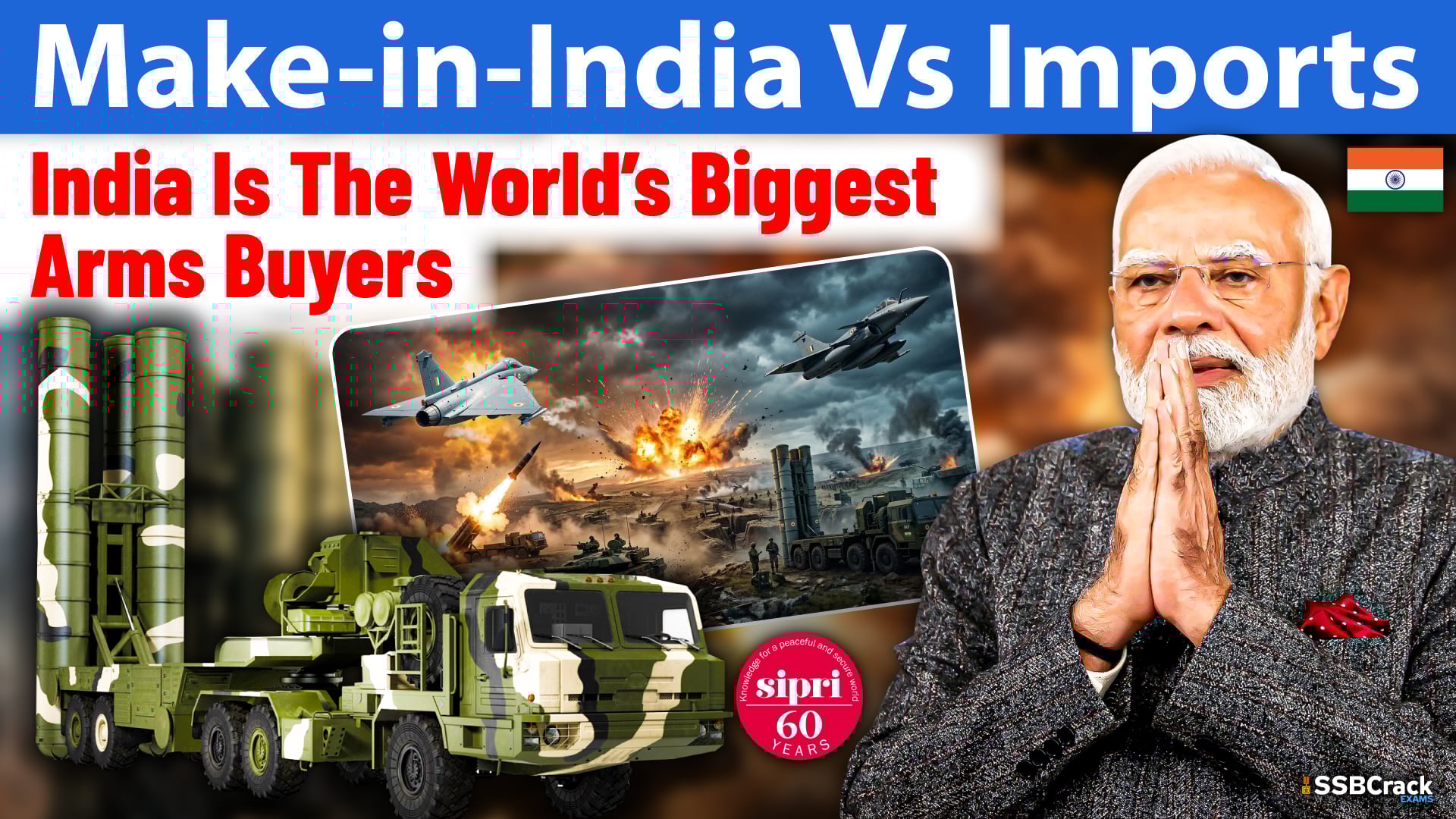
India has emerged as the world’s second-largest importer of arms and military equipment, according to a recent report by the Stockholm International Peace Research Institute (SIPRI). The report highlights India’s continued dependence on foreign defence equipment despite growing efforts to boost domestic manufacturing under initiatives such as Make in India.
India Emerges as the World’s Second-Largest Arms Importer: SIPRI Report
Global Ranking in Arms Imports
The SIPRI analysis of international arms transfers between 2021 and 2025 shows that Ukraine was the largest arms importer globally, accounting for about 9.7% of global imports, largely due to its ongoing war with Russia. India ranked second, representing about 8.2–8.3% of global arms imports during the same period.
This indicates that India remains one of the largest defence markets in the world, reflecting its significant security requirements and strategic challenges.
Major Arms Suppliers to India
The report also provides insights into the countries that supply most of India’s defence equipment. Despite diversification, Russia continues to remain India’s largest arms supplier, although its share has gradually declined over time.
The key suppliers of India’s arms imports during the period include:
- Russia – about 40% of India’s imports
- France – around 29%
- Israel – roughly 15%
This shift suggests that India is increasingly diversifying its defence procurement sources and strengthening partnerships with Western countries.
Declining Dependence on Russia
Historically, India relied heavily on Russian defence equipment. However, SIPRI data shows that Russia’s share of India’s arms imports has gradually declined, falling from about 70% in the early 2010s to around 40% in recent years.
This change reflects India’s efforts to reduce dependence on a single supplier and expand defence cooperation with countries such as France, Israel, and the United States.
Reasons Behind High Arms Imports
Several factors contribute to India’s high level of defence imports:
- Regional security challenges, including tensions with neighbouring countries.
- Modernisation of the armed forces, which requires advanced aircraft, missile systems, and surveillance technology.
- Technological gaps in domestic defence manufacturing that still require foreign collaboration.
Push for Indigenous Defence Production
The Indian government has been promoting domestic defence manufacturing through policies like Atmanirbhar Bharat and Make in India. These initiatives aim to strengthen indigenous production and reduce long-term dependence on foreign suppliers.
Although imports remain significant, India is increasingly investing in domestic defence industries, joint ventures, and technology transfers to develop its own advanced military systems.
Conclusion
The SIPRI report highlights India’s crucial position in the global arms market as the second-largest importer of weapons. While security concerns and modernization needs drive these imports, India is simultaneously working toward building a self-reliant defence ecosystem. Achieving this balance between imports and indigenous production will be essential for strengthening the country’s long-term strategic autonomy.