




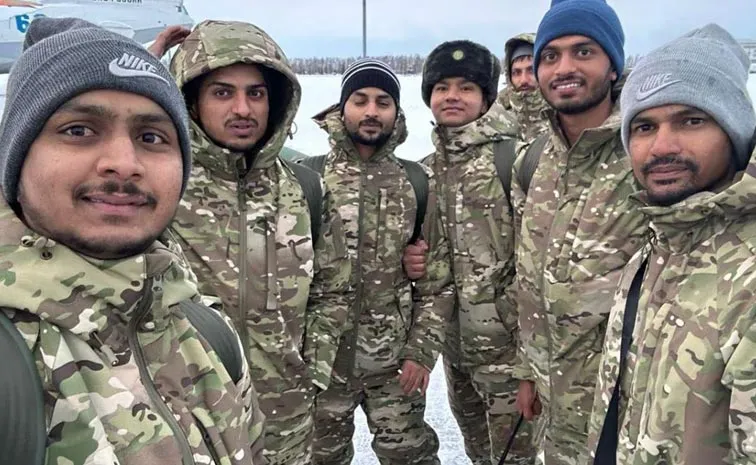
In a recent hearing before the Supreme Court of India, the government disclosed significant details regarding Indian nationals who have engaged with the Russian armed forces amid the ongoing conflict in Ukraine. A total of 217 Indians were reported to have joined these military ranks, with 49 confirmed fatalities and six individuals currently classified as missing in action.
The Ministry of External Affairs was represented by Additional Solicitor General Aishwarya Bhati, who informed the bench, led by Chief Justice Surya Kant, that the Indian Embassy in Russia is actively involved in efforts to facilitate the return of those released from military service. To date, 139 Indian nationals have been successfully released, with further arrangements underway for their repatriation. However, the status of 23 others remains uncertain, as Russian authorities confirmed only six individuals are missing.
The court was informed of an alarming trend where many Indians were reportedly enticed to enlist in the Russian military through appealing financial incentives, which included offers of Russian citizenship, social security benefits, and various compensation schemes. Potential recruits were presented with lucrative deals such as a signing bonus of approximately USD 5,000, monthly earnings of nearly USD 2,500, and substantial compensation amounting to around USD 168,000 payable in the event of death.
The case also highlighted the circumstances of two Indian students, Kishore Saravanan and Sahil Mahamadhusen Majothi, who entered into military contracts while attempting to secure amnesty during their imprisonment for drug-related offenses in Russia. Following intervention from the Indian government, Saravanan was released but later chose to remain in Russia where he obtained citizenship. In contrast, Majothi reportedly surrendered to Ukrainian forces, prompting Indian officials to pursue the matter through diplomatic channels.
In an effort to provide support to the families affected by this situation, Indian authorities are assisting in the processing of compensation claims. Of the four claims submitted through the Indian Embassy, one family has received compensation, and additional claims filed independently have also been addressed by Russian authorities.
To further aid in the identification of missing personnel and the recovery of remains, DNA samples from relatives of 21 individuals have been gathered and shared with Russian authorities. However, challenges persist, as recovery operations in active conflict zones are currently unfeasible due to the ongoing hostilities.
This case has shed light on the broader issue of Indian nationals being drawn into foreign conflicts and the complexities of diplomatic engagement required to ensure their safe return amidst continued warfare between Russia and Ukraine.


