




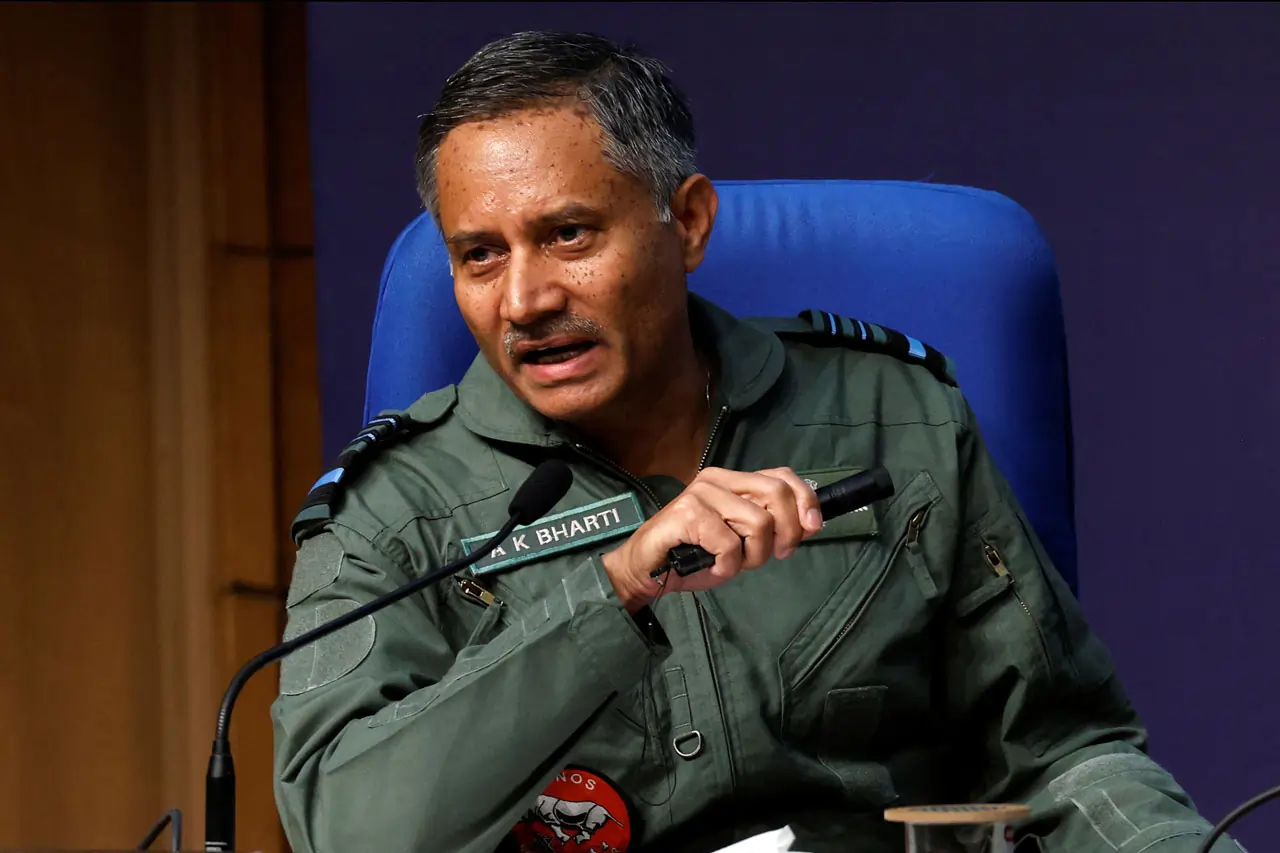
In a significant announcement, senior Indian military leaders revealed that Operation Sindoor resulted in the destruction of 13 Pakistani aircraft, both on the ground and in the air, alongside strikes on 11 Pakistani airfields. Air Marshal Awadhesh Kumar Bharti, Director General of Air Operations, provided a comprehensive account during a joint press briefing, emphasizing the operation’s decisive nature following the Pahalgam terror attack on April 22, 2025, which claimed 26 civilian lives.
The high-profile briefing, which also featured Lt Gen Rajiv Ghai and Vice Admiral AN Pramod, detailed the Indian Armed Forces’ strategy and execution during the operation. Air Marshal Bharti stated, “We struck and decimated their nine terrorist camps on May 7. The proof is there for everybody to see. We struck 11 of their airfields. We destroyed 13 of their aircraft either on the ground or in the air, including one high-value airborne asset at a record distance of over 300 kilometres.”
The Pahalgam attack, in which terrorists reportedly segregated victims by religion before opening fire, triggered widespread outrage in India. The assault, attributed to members of The Resistance Front—seen as an extension of the Pakistan-based Lashkar-e-Taiba—left 26 civilians dead, predominantly tourists, and about 20 others injured. The brutality of the attack prompted a robust military response from the Indian government.
Operation Sindoor was launched during the night of May 7–8, 2025, targeting critical terrorist infrastructure located in Pakistan and Pakistan-occupied Kashmir (PoK). The primary focus was on nine high-value camps associated with militant groups such as Jaish-e-Mohammed and Lashkar-e-Taiba, located in key areas such as Bahawalpur, Muridke, Kotli, and Sialkot. Air Marshal Bharti emphasized that the mission was executed with precision, ensuring no collateral damage to civilian lives.
The operation swiftly escalated as Pakistani forces attempted to retaliate against Indian military positions. Indian forces targeted and neutralized various air defense and aviation facilities within Pakistan. The Indian Air Force successfully deployed a range of precision-guided munitions, including SCALP cruise missiles, BrahMos supersonic missiles, and Crystal Maze ballistic missiles in their strikes.
In discussing the aerial component, Air Marshal Bharti confirmed significant success, stating, “We destroyed 13 of their aircraft either on the ground or in the air, including a high-value airborne asset.” He noted this included damage to a Pakistani Airborne Warning and Control System (AWACS) aircraft at Bholari airbase.
Through the operation, the Indian Air Force achieved temporary air superiority, ensuring the safe return of all pilots involved. Despite Pakistani claims of downing Indian aircraft, Indian officials maintained that there were no substantial damages to Indian military structures or civilian areas.
Further insights came from Lt Gen Rajiv Ghai, who indicated that Pakistani forces suffered over 100 personnel casualties during subsequent exchanges along the Line of Control. He highlighted that Operation Sindoor showcased India’s capabilities in indigenous defense production, with over 65 percent of the military’s equipment now being manufactured in India.
The operation was marked by exemplary coordination across the Army, Navy, and Air Force, utilizing the Integrated Air Command and Control System (IACCS) and advanced air defense technologies, including the much-discussed S-400 Triumf system. Air Marshal Bharti conveyed a strong message about India’s military stance, asserting, “We stepped back but didn’t blink. We delivered the message: misadventure will not go unanswered.”
After fulfilling its primary objectives of dismantling terrorist infrastructure and holding Pakistan accountable for its military support to terrorists, India decided to suspend further offensive actions. Subsequently, Pakistan initiated a request for a cessation of hostilities.
Operation Sindoor has been seen as a landmark reaction to cross-border terrorism, known for its precision strikes and robust air defense measures while maintaining a commitment to avoid civilian casualties. The revelations shared by military leaders have provided transparency regarding the operational successes of the Indian Armed Forces, marking a decisive shift in India’s approach toward confronting terrorism and state sponsors of such activities.
As India observes the upcoming anniversary of Operation Sindoor, it remains a crucial reference point for the country’s military resolve and its commitment to responding proportionately to aggression and terrorism.


