




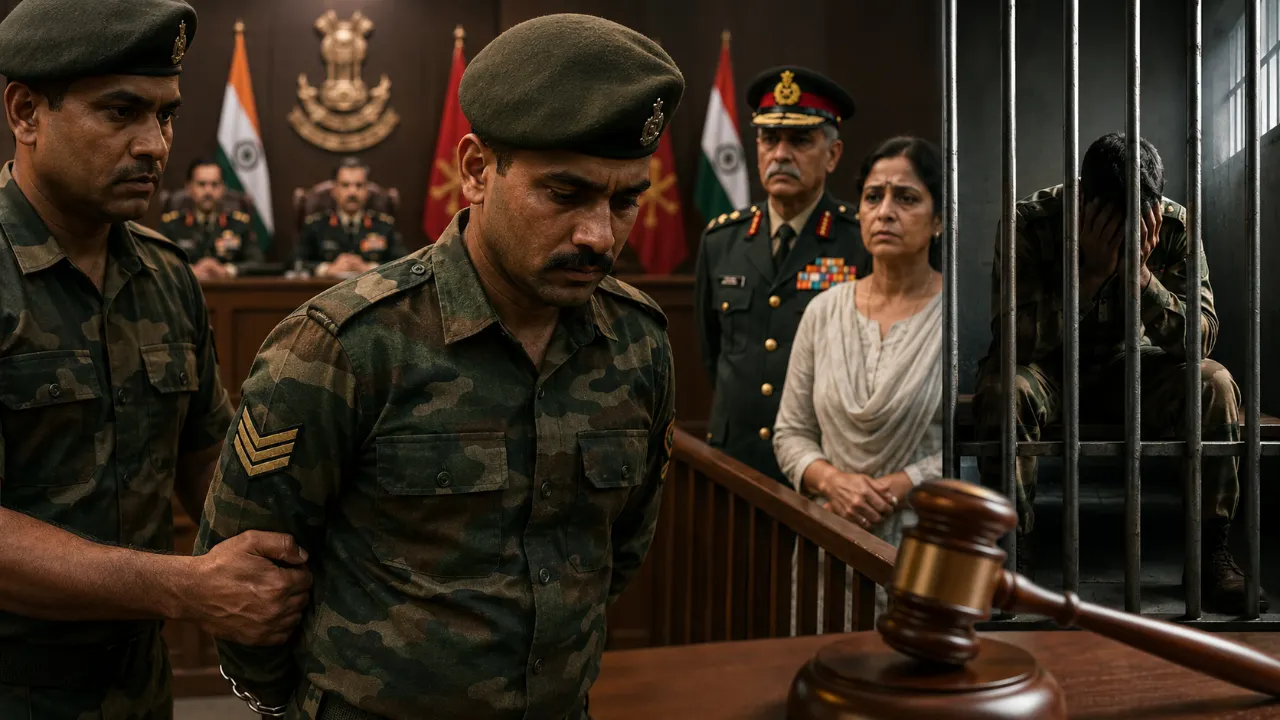
An Indian Army Havildar has faced serious repercussions following his conviction for molesting the wife of a serving Major General at a military station. The soldier, whose primary responsibilities included laundry services for the officer and maintaining a temple at the official residence, was found guilty by a Summary Court Martial. He has subsequently been dismissed from service and sentenced to one year of rigorous imprisonment.
The incident at the heart of this case occurred on May 19, 2026, within the confines of the Major General’s official residence. The Major General’s wife, upon visiting the temple located on the premises to offer prayers, found the Havildar already present. According to her complaint, the soldier approached her from behind, attempted to grope her, and covered her mouth when she tried to scream for help. In a panic, she managed to break free and run toward the residential building, where military personnel quickly intervened and apprehended the assailant.
The charges against the Havildar were framed under Section 69 of the Army Act, which pertains to civil offenses punishable under Section 74 of the Bharatiya Nyaya Sanhita, 2023. Section 74 addresses the assault or use of criminal force against a woman with the intent of outraging her modesty.
During the military proceedings, the Havildar reportedly admitted to his actions, acknowledging that he was assigned to the temple at the time of the incident. He later claimed to have been assaulted by guards following the altercation, resulting in a head injury that required medical attention.
The Commands Officer, who presided over the Summary Court Martial, highlighted that much of the evidence presented was uncontested, and the soldier had not challenged the testimonies of prosecution witnesses. A significant part of the evidence came from the soldier’s own written confession made before an independent Board of Officers, which confirmed that his acknowledgment of guilt was voluntary.
Despite the gravity of the accusations and the summary nature of the trial, the Commanding Officer defended the decision to conduct a Summary Court Martial, citing the need for prompt handling of sexual offense cases to prevent further trauma to the victim. The officer emphasized that delaying proceedings would only prolong the emotional distress experienced by the victim and could undermine confidence in the military’s commitment to safeguarding women’s dignity and safety.
However, the soldier’s defense attorney raised concerns about the fairness of the trial process. Anand Kumar contended that the soldier should not have been subjected to a Summary Court Martial for a civil offense. He argued that the proceedings seemed expedited because the victim was the spouse of a senior officer and that a District Court Martial would have allowed for a more thorough examination of the evidence and an opportunity for the accused to contest the allegations more robustly.
The debate centers around the procedural differences between a Summary Court Martial and a District Court Martial, with the former allowing for a quicker resolution but fewer protections for the accused. Though the Army maintained that the soldier’s admissions supported the determination to act swiftly, the defense insists that the case should have been handled with more extensive procedural safeguards, which could have led to a different outcome.
The conviction, dismissal, and sentence of the Havildar are subject to review and post-trial remedies under military law, as discussions around the appropriate treatment of such serious allegations continue.


