




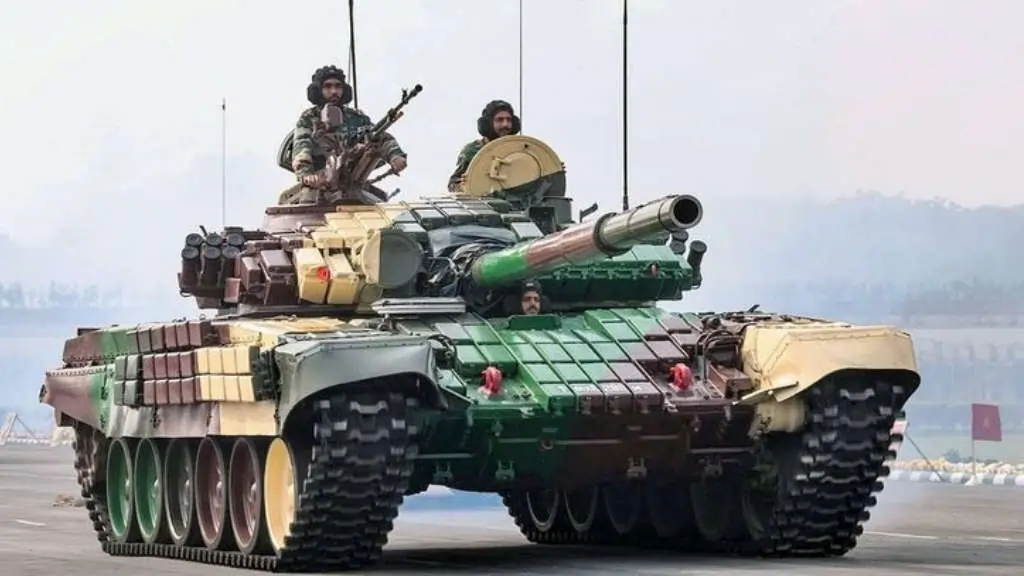
The Indian Army is set to implement a significant upgrade for its aging T-72 main battle tanks, part of a strategic initiative to bolster operational readiness against evolving threats from both China and Pakistan. Originally introduced to the Indian Army in 1978, the T-72 was once celebrated as one of the most sophisticated armored fighting vehicles globally, boasting a formidable 125 mm gun, advanced fire-control systems, a low battlefield profile, and commendable mobility. These features provided India with a distinct advantage over regional adversaries during the tank’s early years.
However, advancements in modern armored warfare and the introduction of more technologically sophisticated Western battle tanks have highlighted several limitations in the T-72 platform. Notably, issues have arisen concerning its night-fighting capabilities, thermal imaging, and overall fire-control systems.
In response to these challenges, the Indian Army began integrating the more advanced T-90 tanks in 2001, with the first units procured from Russia. Recently, Armoured Vehicles Nigam Limited (AVNL) celebrated a milestone by delivering the 1,000th T-90 tank from its facility in Tamil Nadu, underscoring a renewed focus on modern armored vehicles.
To prolong the operational life of the T-72 fleet beyond 2030, the Army has initiated an ambitious modernization project known as Project Rhino. This program aims to upgrade the tanks’ engines, enhance fire-control systems, improve protection features, and incorporate modern battlefield technologies. These enhancements are directed at increasing the survivability and effectiveness of the T-72s in combat scenarios.
Moreover, officials hinted that future enhancements might include refining some T-72 platforms into unmanned combat systems under the Aditi 4.0 Challenge initiative, showcasing the Army’s growing emphasis on automation and next-generation warfare technologies.
This modernization effort is crucial, especially as it seeks to address current capability gaps while the Indian Army moves toward the induction of the proposed Future Ready Combat Vehicle (FRCV), which is expected to ultimately replace the aging T-72 fleet.
Defense experts highlight that this upgrade initiative arrives at a critical juncture, marked by heightened focus on armored warfare preparedness along both the western and northern frontiers. The shifting dynamics on the battlefield necessitate improved mobility, enhanced protection, advanced night-fighting capabilities, and the adoption of network-centric combat systems, all of which are pivotal in maintaining strategic parity with potential adversaries.


