




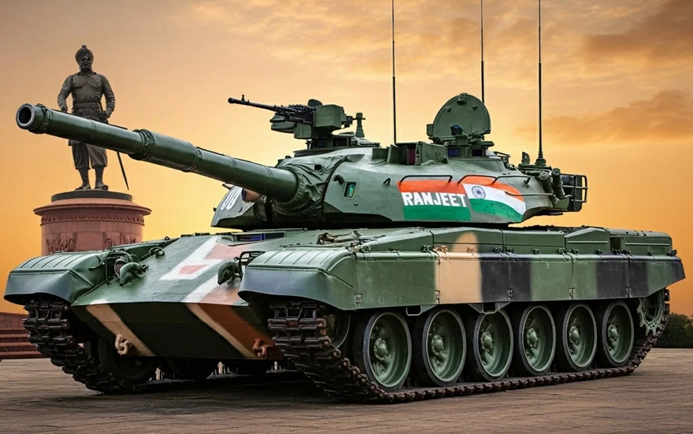
India’s Ranjeet Project, officially known as the Future Ready Combat Vehicle (FRCV) programme, is one of the most ambitious initiatives in the country’s defence modernization efforts. Spearheaded by the Defence Research and Development Organisation (DRDO), the project aims to replace the ageing fleet of T-72 Ajeya tanks currently used by the Indian Army with a new generation of advanced main battle tanks.
India’s Ranjeet Project (Future Ready Combat Vehicle – FRCV)
The T-72 tanks, inducted in the 1970s and 1980s, have formed the backbone of India’s armored forces for decades. However, with evolving battlefield requirements—such as network-centric warfare, precision targeting, and drone threats—these legacy systems are becoming outdated. The Ranjeet Project is designed to address these gaps by introducing a highly modern, adaptable, and technologically advanced combat platform.
Key Features of the Ranjeet (FRCV)
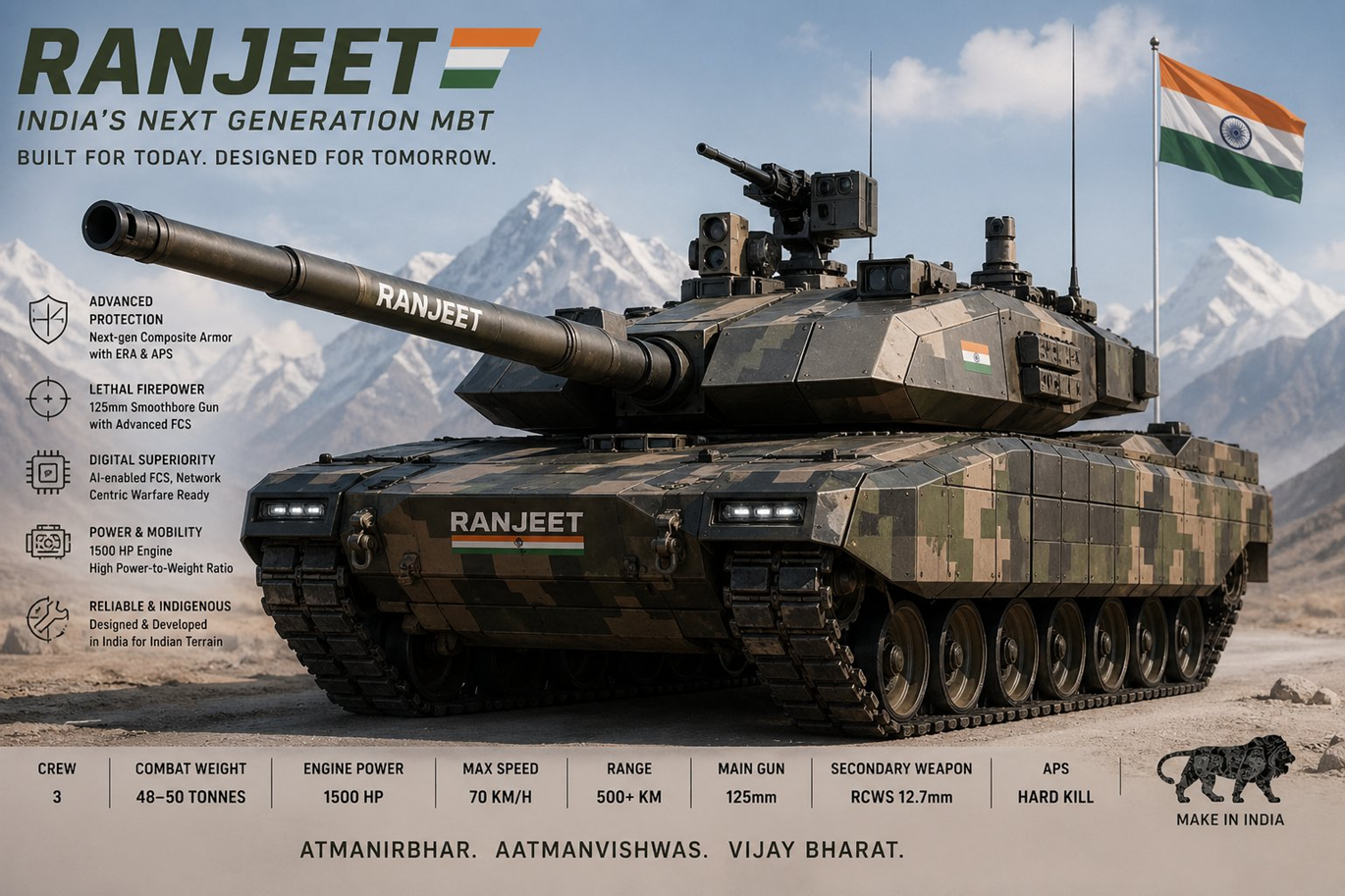
The upcoming tank under this project is expected to incorporate cutting-edge technologies:
- Advanced Firepower: Equipped with a high-calibre main gun, capable of firing next-generation ammunition.
- Enhanced Protection: Likely to include active protection systems (APS), composite armour, and anti-drone capabilities.
- Artificial Intelligence Integration: For battlefield awareness, target recognition, and automated decision-making support.
- Mobility & Agility: Improved engine power, suspension systems, and adaptability across varied terrains—from deserts to high altitudes.
- Network-Centric Capability: Seamless integration with digital battlefield systems for real-time data sharing.
Development and Industry Participation
The project is being led by DRDO’s Vehicles Research and Development Establishment. It emphasizes “Make in India” and encourages participation from both public and private sector defence manufacturers. This collaborative approach is expected to boost India’s indigenous defence production ecosystem.
Strategic Importance
The Ranjeet Project holds major significance for India’s military preparedness:
- Strengthening Armoured Corps: Will modernize India’s tank fleet with future-ready capabilities.
- Reducing Import Dependency: Promotes self-reliance in defence manufacturing.
- Enhanced Border Security: Critical for operations along sensitive borders, especially in western and northern sectors.
- Export Potential: If successful, the platform could be offered to friendly foreign nations.
Challenges Ahead
Despite its potential, the project faces certain challenges:
- High development costs and long timelines
- Integration of complex technologies like AI and APS
- Ensuring reliability across diverse combat environments


