




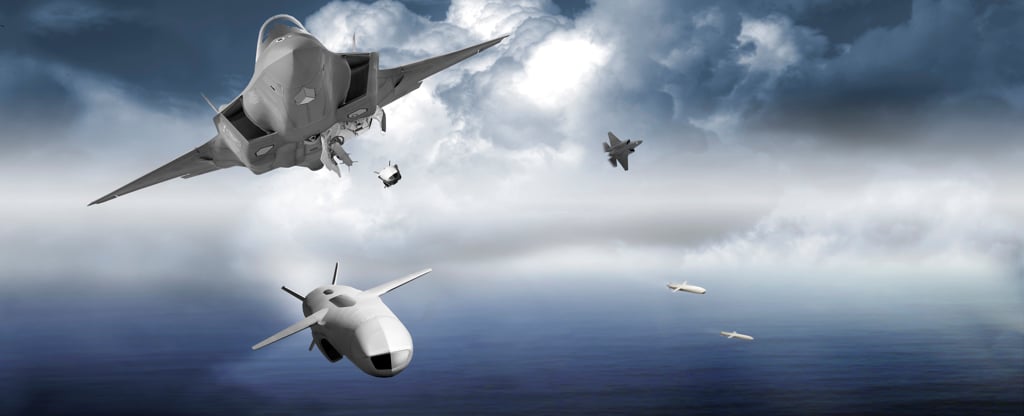
Kongsberg has secured a substantial contract worth approximately $100 million to deliver additional Joint Strike Missiles (JSMs) to the US Air Force, with completion of deliveries anticipated by the end of June 2030. This agreement follows a prior $240.9 million firm-fixed-price contract awarded in December for the second production lot of JSMs, expected to wrap up by November 30, 2028.
The timeline for JSM acquisitions has seen notable progression, beginning with the first production lot ordered by the Air Force in May 2024 under a $141 million agreement. This was succeeded by a $69.5 million order in January 2025, with initial deliveries projected to begin in 2026. Although the latest contract does not specify the number of missiles being procured, the Air Force announced in 2023 its intention to acquire a total of 268 JSMs over the next five years.
This increase in JSM procurement coincides with the US Department of Defense’s strategy to scale up the production of essential munitions, following heightened tensions and conflict with Iran.
The Joint Strike Missile is engineered for air-launched strikes against both land and maritime targets, boasting characteristics of a long-range, precision-guided cruise missile. Derived from Kongsberg’s Naval Strike Missile, the JSM has been specifically adapted for compatibility with modern fighter jets, especially the F-35 Lightning II.
Notably, the 13-foot (4-meter) missile is designed to fit within the F-35’s internal weapons bay, ensuring that it maintains the aircraft’s low-observable (stealth) qualities during operations. With a weight of approximately 917 pounds (416 kilograms) and a 260-pound (118-kilogram) warhead, the JSM can reach ranges of up to 217 miles (350 kilometers) and is capable of flying at high subsonic speeds.
Equipped with an inertial navigation system, terrain-reference navigation, an imaging infrared seeker, and a two-way data link, the missile is adept at functioning in environments where GPS signals may be compromised. The JSM is currently in service or on order for multiple countries, including Norway, Japan, Australia, Germany, and Canada, highlighting its global strategic importance and versatility in modern military operations.


