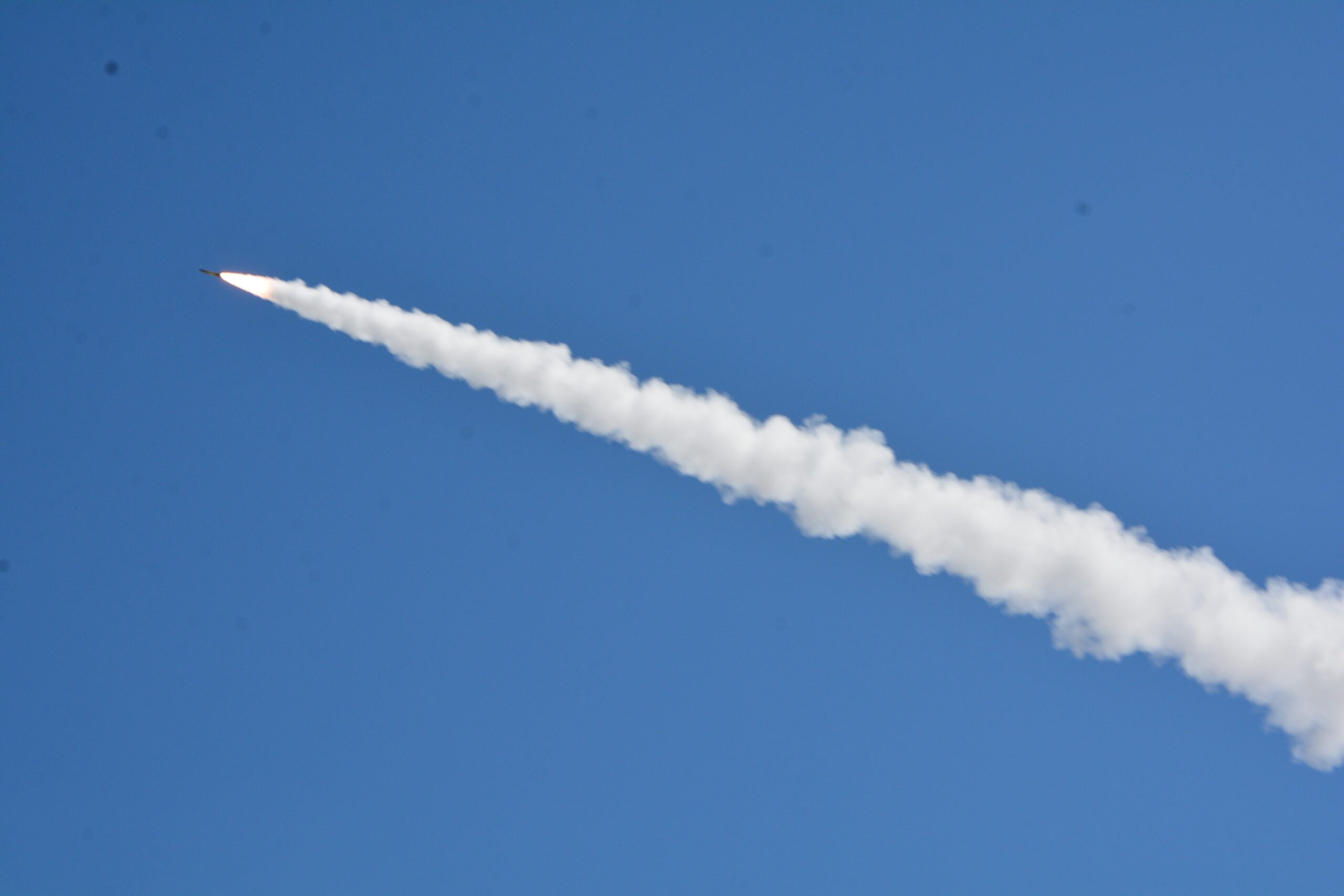
Modern warfare is increasingly characterized by the reliance on precision strikes delivered from a distance, where swift and definitive actions on the battlefield can often determine success. As military strategies evolve, artillery systems have shifted focus from merely covering expansive areas to honing in on accuracy and precision.
A prime example of this advancement is the Guided Multiple Launch Rocket System (GMLRS) developed by Lockheed Martin. This GPS-guided rocket is designed to execute rapid and precise strikes at distances previously unreachable by conventional munitions. Over time, the compact and mobile nature of this artillery package has made it a favored choice among contemporary military forces seeking reliable, all-weather strike capabilities even in complex terrains.
The GMLRS can be deployed from platforms such as the M270A1 or M270A2 Multiple Launch Rocket Systems and the M142 High Mobility Artillery Rocket System (HIMARS). Each rocket is equipped with an onboard guidance suite that directs it to programmed coordinates, significantly enhancing first-shot effectiveness while minimizing collateral damage. The system has been widely adopted by U.S. forces and their allies, solidifying its role in expeditionary operations and high-intensity conflicts.
There are three main variants of the GMLRS:
- GMLRS Unitary: This variant carries a single high-explosive warhead, enabling precise strikes.
- GMLRS Alternative Warhead (AW): Designed to create area effects while avoiding the use of cluster munitions.
- Extended-Range (ER) GMLRS: Offers extended reach with enhanced propulsion and aerodynamics.
In terms of specifications, the GMLRS boasts the ability to deliver quick-strike, high-lethality precision engagements. It is compatible with HIMARS and M270 launcher families and operates effectively in all weather conditions, with a common platform that allows ease in logistics and training.
A typical GMLRS round comprises a rocket motor, a warhead, and a guidance/control package. After being programmed with target coordinates, the rocket employs an inertial navigation system (INS) enhanced by GPS for accuracy. Small control surfaces adapt in-flight to steer the rocket toward its aim point. As a result, precision is often achieved within mere meters, significantly outperforming unguided rockets and allowing for rapid exercise of firepower while minimizing counter-battery exposure due to the mobile nature of launch platforms.
The unitary warhead (M30/M31 family) is deployed for exact strikes against specific targets while keeping collateral damage to a minimum. Both the tracked M270 series and wheeled HIMARS leverage a modular pod design, typically accommodating six GMLRS rounds. This common architecture streamlines logistics and creates flexibility in operational deployment across various platforms.
The GMLRS fills a pivotal gap in military capabilities, offering rapid, cost-effective, and precise long-range fire options that stand in stark contrast to the higher costs associated with cruise missiles. The advantages it provides extend from improved first-shot effectiveness to enhanced mobility, allowing forces to quickly reposition after firing to evade enemy counter-battery fire.
However, GMLRS is not without its challenges. Its reliance on satellite navigation can render it vulnerable to electronic jamming or spoofing, necessitating the ongoing development of resilient GPS systems and other guidance methods to maintain accuracy in contested environments. While the cost per guided round is higher than that of unguided rockets, it remains below that of larger missiles, forcing military commanders to carefully consider the economics involved in targeting decisions.
Looking ahead, advancements are already in the pipeline to enhance GMLRS capabilities, focusing on extended range, fortified navigation systems, and greater integration of sensors and targeting systems. These improvements aim to ensure that the GMLRS remains a critical tool for achieving fast and precise effects, even in environments where electronic warfare is prevalent.