




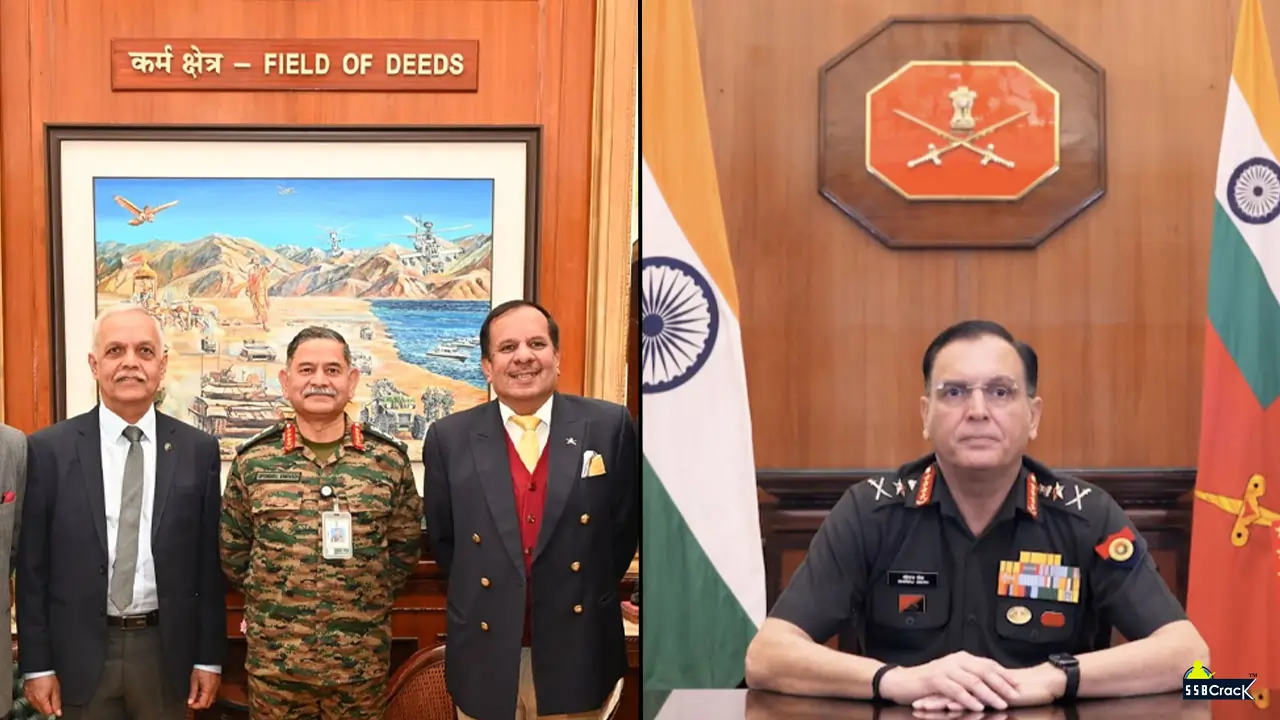
In a significant development, the Mahabharata-inspired painting titled Karam Kshetra (Field of Deeds) has been removed from the Chief of the Army Staff (COAS) lounge at South Block in New Delhi. This decision was confirmed via a video message from the official X account of the Eastern Command, where Army Chief General Dhiraj Seth was seen sitting against a backdrop featuring the Indian Army insignia, the same spot previously occupied by the contentious artwork. The video primarily conveyed his greetings for the ongoing 135th Indian Oil Durand Cup football tournament, which is being hosted by the Eastern Command.
General Dhiraj Seth took office as the 31st Chief of the Army Staff on June 30, 2026, succeeding General Upendra Dwivedi. The painting, Karam Kshetra, was introduced in December 2024 and had replaced a long-standing oil painting of the historic surrender of the Pakistan Army in Dhaka on December 16, 1971. That painting depicted Lieutenant General A.A.K. Niazi signing the Instrument of Surrender, marking a pivotal moment in Indian military history, where approximately 93,000 Pakistani troops surrendered during the Bangladesh Liberation War—the largest military surrender since World War II.
The new artwork, created by Lieutenant Colonel Thomas Jacob of the 28 Madras Regiment, featured contemporary Indian Army equipment and mythological elements. It showcased tanks, infantry combat vehicles, and helicopters along the banks of Pangong Tso in Eastern Ladakh, integrating figures like a charioted warrior associated with Lord Krishna and Arjuna, as well as a saffron-clad sage reminiscent of Chanakya. Official descriptions conveyed that the painting symbolized the Army as a “guardian of Dharma,” emphasizing its role in upholding justice and national values.
However, the introduction of Karam Kshetra sparked debate and criticism, particularly from veterans, serving officers, and the public. Many argued that the previous painting represented a significant milestone in military history and had long been a dignified backdrop for diplomatic engagements. Critics contended that integrating overt mythological symbolism into a professional setting was inappropriate for an institution committed to secularism and apolitical values. Some saw it as an attempt to shift focus from tangible military achievements to ideological narratives.
In light of this controversy, the 1971 surrender painting was relocated to the Manekshaw Convention Centre in Delhi Cantonment, an action justified publicly by General Dwivedi, who stated that the new artwork aimed to bridge the Army’s past, present, and future.
The recent removal of Karam Kshetra has garnered positive reactions from several retired officers. Lieutenant General H.S. Panag (Retd) expressed approval on X, stating, “Hail to the Chief! Indian Army emblem now forms the backdrop. Hope it is the first step towards bringing back the iconic ‘1971 Surrender’ painting!” Major General K. Khorana (Retd) also chimed in, criticizing the previous religious depictions and expressing hope for a restoration of the 1971 artwork.
Currently, no official statement has been issued by the Indian Army regarding the rationale behind the removal of Karam Kshetra, and the Army insignia now occupies the wall space in the lounge utilized for meetings with visiting dignitaries. This incident has again spotlighted the delicate nature of symbols and imagery within the upper echelons of the Indian Armed Forces, an institution that has traditionally emphasized professional decorum over political or religious symbolism. The future of the iconic 1971 surrender painting’s place in the South Block remains uncertain.


