




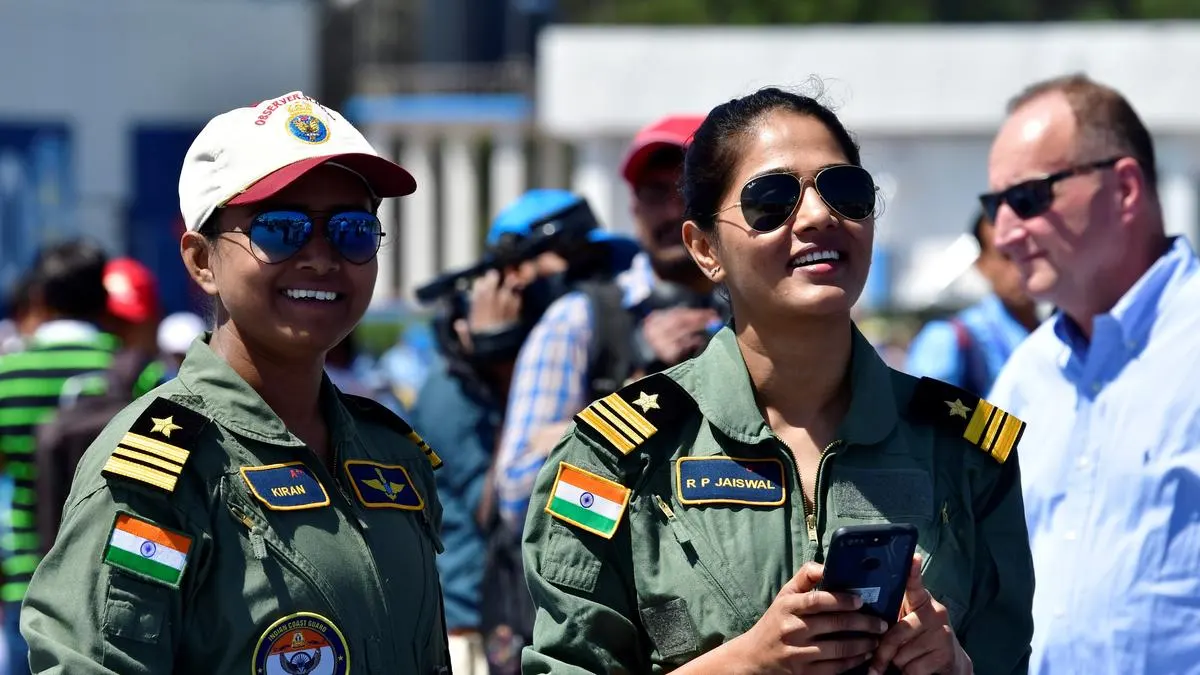
In a landmark action for gender equality within India’s maritime security framework, the Ministry of Defence has officially approved permanent commission status for women officers in the Indian Coast Guard (ICG). This decision was revealed by Defence Minister Rajnath Singh in New Delhi, aligning the ICG with the existing policies of the Army, Navy, and Indian Air Force, which had previously embraced such reforms.
The government has enacted two critical changes to its policy. First, it has established a gender-neutral framework for the induction of officers, allowing women candidates to join under both Short Service Appointments (SSA) and Permanent Appointments (PA) on the same terms as their male counterparts. Additionally, the SSA stream will now include male candidates, further promoting an inclusive environment within the force.
These reforms ensure that all officers—regardless of gender—will have equal opportunities for career advancement starting from the training phase. Current female officers holding Permanent Appointments will be eligible for promotion to higher ranks, provided they meet the prescribed criteria. Those serving under Short Service Appointments will also have the chance to transition to Permanent Appointments under specified conditions.
The Defence Ministry characterized this move as a reflection of the government’s commitment to “Nari Shakti” and equal opportunity within the maritime security sector. This initiative addresses criticisms over the ICG’s previously outdated stance on the inclusion of women within its ranks, particularly as it was the only major uniformed force without permanent commission opportunities for female officers.
Historically, the Indian Coast Guard faced scrutiny from the Supreme Court for its lack of progressive policies toward gender parity. In recent years, the court had rebuked the force for its “patriarchal attitude” and condemned it as an “outlier” in the context of the government’s pronouncements on women empowerment. The court’s intervention came after Commandant Priyanka Tyagi, a woman officer with 14 years of service, filed a petition challenging the lack of permanent commission opportunities. The judges made it clear that if the ICG did not reform, they would be compelled to mandate change.
Along with this shift towards gender parity, the government has also announced a new policy designed to streamline the process for families of Coast Guard personnel reported missing at sea. The new regulations empower authorities to presumptively declare such personnel as “presumed dead” for purposes of granting ex-gratia compensation and terminal benefits, thereby alleviating the fears and financial strain faced by families during uncertain times.
Minister Singh applauded the Indian Coast Guard’s five decades of dedication and emphasized that these reforms are essential for boosting morale and operational efficiency. He reiterated the government’s drive to modernize the Coast Guard to meet India’s growing maritime security challenges as it prepares for its golden jubilee in 2027.
The new policies come at a time when women officers across various forces have proven their capabilities in demanding roles. By creating permanent pathways for these officers, the reforms aim to widen the talent pool, improve retention of trained professionals, and ultimately enhance the effectiveness of the ICG in its mission of coastal security and maritime law enforcement. This significant policy shift marks a move away from limited short-service opportunities towards full career equivalence, reinforcing the commitment to gender-neutral permanent commissions in India’s armed forces.


