




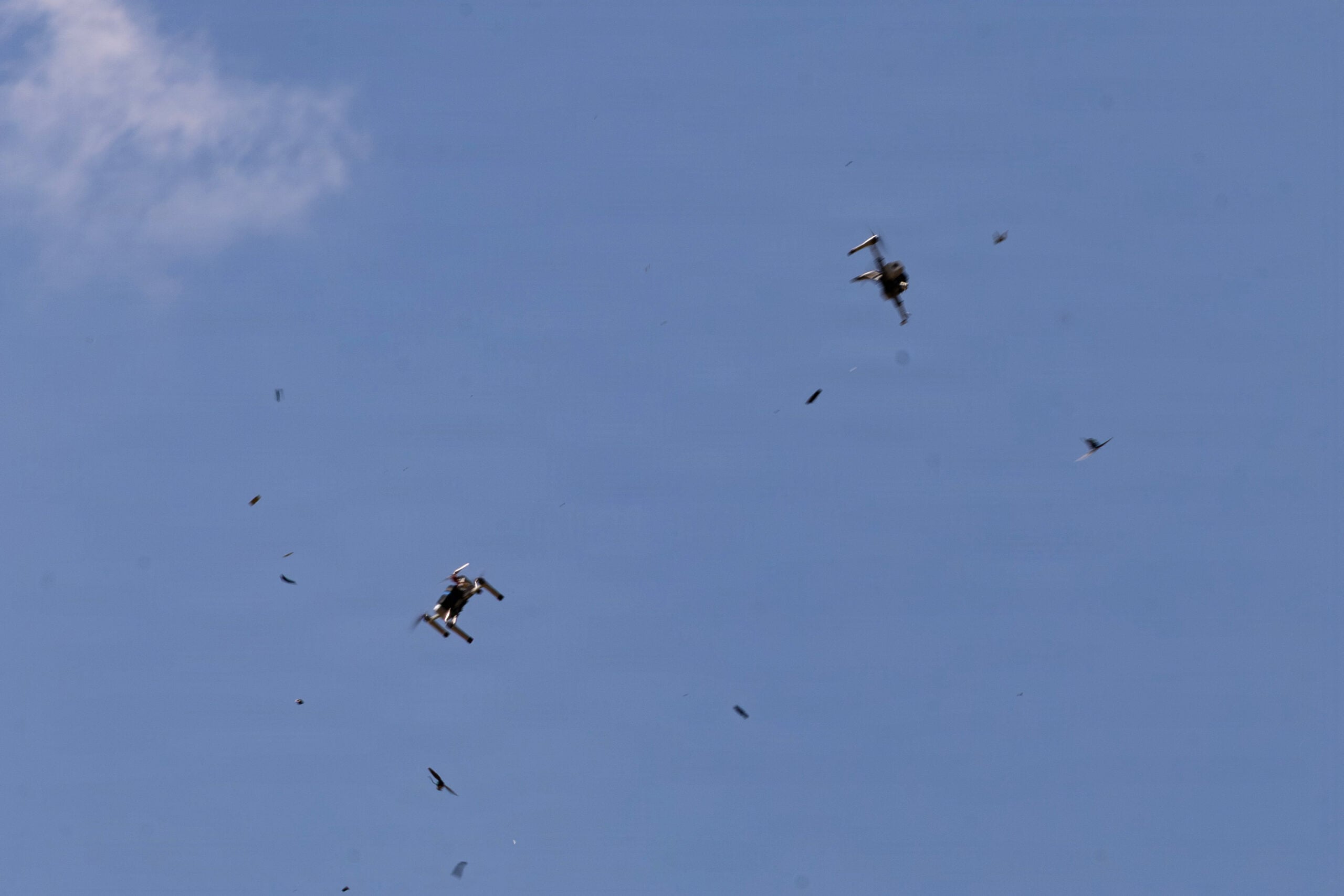
Perennial Autonomy has successfully secured a significant contract worth up to $500 million with the Joint Interagency Task Force 401 to bolster counter-uncrewed aerial system (C-UAS) operations for the U.S. military. This strategic agreement is expected to fast-track the deployment and scaling of affordable drone interception technologies, essential for addressing aerial threats directed at both deployed forces and critical assets, both domestically and abroad.
As part of this contract, Perennial Autonomy will supply an array of AI-driven C-UAS platforms, notably including the Merops air-to-air interceptor, the Bumblebee quadcopter, and the Hornet mid-range strike drone. Many of these systems have already been integrated into operational use by U.S. forces within the Central Command area, underscoring their readiness and effectiveness in real-world scenarios.
The platforms developed by Perennial Autonomy are designed to synergize detection, tracking, and engagement functionalities. They utilize advanced technologies such as computer vision, radio-frequency sensing, and jam-resistant communications to enhance operational efficacy. Importantly, the Joint Interagency Task Force clarified that human operators will maintain the authority to make decisions regarding the use of lethal force, emphasizing a commitment to controlled engagement in military operations.
The structure of the contract allows for multiple task orders to be issued over a three-year span, rather than a singular fixed purchase. This flexibility enables the military to adapt and procure additional systems as operational demands evolve, ensuring responsiveness to emerging threats.
This development is part of a broader trend as the U.S. government intensifies its emphasis on counter-drone capabilities, particularly through the integration of artificial intelligence technologies. Earlier this month, the Department of Defense initiated an effort led by the Defense Innovation Unit aimed at embedding AI, machine learning, and computer vision into C-UAS operations. This initiative seeks to expedite the identification, tracking, and engagement of small drones, while also minimizing the risk of false identifications.
In the initial phase, the focus is on implementing AI-assisted target recognition systems within vehicle-mounted weapon platforms. This strategic move reflects a growing recognition of the critical role that advanced technologies will play in future military operations, particularly in addressing the evolving landscape of aerial threats.


