




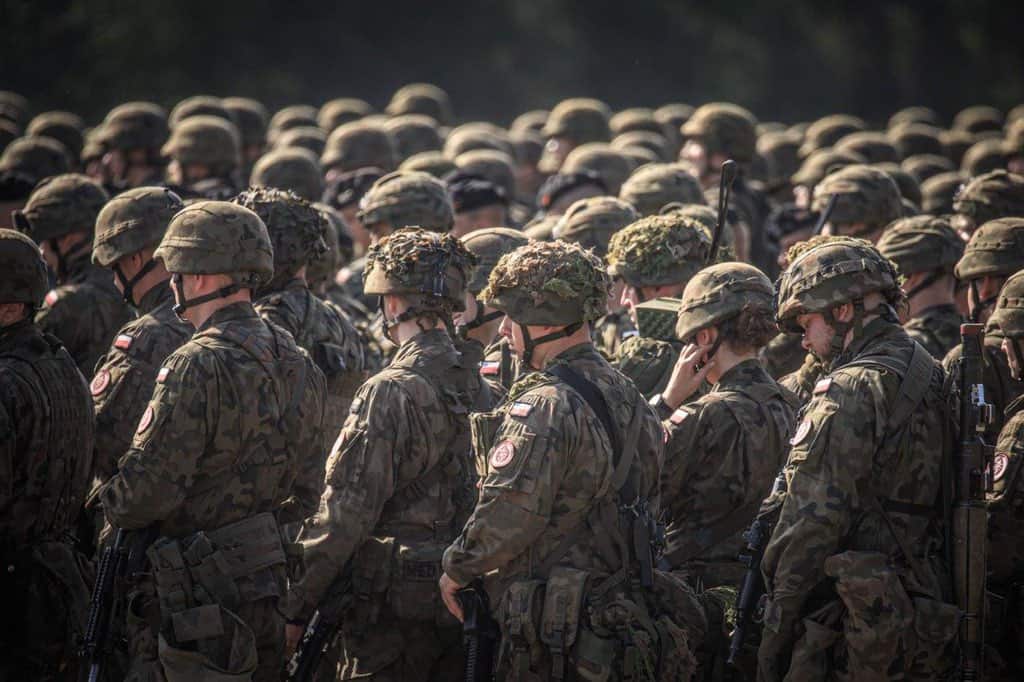
Poland has made a significant stride in modernizing its military by becoming the first country to sign a loan agreement with the European Commission, set to provide nearly 44 billion euros ($52 billion). This groundbreaking move was officially announced during a signing ceremony attended by Prime Minister Donald Tusk, who characterized the event as a pivotal moment for both Poland and the European Union.
Tusk emphasized that the agreement would enhance Poland’s security amid challenging global conditions, stating, “Poland will be safer in these difficult and highly risky times.” This financial injection—amounting to 43.7 billion euros—positions Poland as the largest defense spender within NATO, allocating an impressive 4.8 percent of its GDP to defense initiatives.
The funding is part of the Security Action For Europe (SAFE) scheme, which has earmarked approximately 150 billion euros ($176 billion) in preferential loans for joint defense projects across Europe, the acquisition of weapons and ammunition, and the development of critical military infrastructure. Poland stands out as the primary beneficiary of this program, which aims to rejuvenate the European defense industry in response to perceived threats, particularly from Russia, while also addressing concerns regarding potential U.S. disengagement from European defense matters.
Prime Minister Tusk remarked, “This is also the day when Europe … is showing that it has learned a lesson from history and that it is ready … to shoulder a much greater responsibility for our security.” The agreement was co-signed by Poland’s finance and defense ministers, alongside key EU officials including budget commissioner Piotr Serafin and defense commissioner Andrius Kubilius.
Strategically located neighboring Russia, Belarus, and Ukraine, Poland’s efforts are seen as crucial in fortifying NATO’s eastern flank, often referred to as the “eastern shield.” A significant portion of the loan is aimed at boosting the Polish defense industry, with an impressive 89 percent of the contracts directed towards domestic companies. Finance Minister Andrzej Domanski highlighted this commitment, stating, “We have the Polish defense industry everywhere … we want to produce equipment everywhere … for the modernization of the Polish army.”
The signing of the agreement marks an end to lengthy political discussions in Warsaw, where pro-European sentiments clashed with right-wing nationalist opposition and President Karol Nawrocki. In March, Nawrocki had vetoed a government proposal to allocate SAFE funds, prompting Tusk’s administration to seek alternative, albeit more complex, avenues for securing the funding.
Nawrocki and his supporters were critical of the SAFE initiative, arguing it could jeopardize Poland’s relationship with the United States by favoring European over American arms suppliers, potentially increasing dependency on Germany and the EU. Instead, Nawrocki proposed an alternative plan labeled “SAFE 0%,” aimed at utilizing central bank resources. However, Tusk’s government dismissed this approach as impractical due to the central bank’s financial challenges.
At the signing ceremony, Defense Minister Wladyslaw Kosiniak-Kamysz underscored the necessity of unity in national defense matters, stating, “Cooperation and action for security has no party colors, no political emotions, no worldviews or opinions. It is something we have been called to do.”


