Raytheon has chosen ST Engineering iDirect’s Manufacturing Competence Center in Belgium to enhance the Evolved Sea Sparrow Missile (ESSM) Block II program. This decision underscores Raytheon’s commitment to leveraging cutting-edge manufacturing practices to meet rising demands within the defense sector.
The Belgian facility was selected based on its recognized expertise in high-complexity, high-mix production tailored for defense applications. It boasts advanced testing capabilities, end-to-end traceability, and a robust supply-chain management system, all essential for delivering the precision and reliability required at contract levels. The facility is adept at producing secure and resilient communications components, which are critical for the effectiveness of modern naval air-defense systems.
This development coincides with Raytheon’s recent milestone of delivering the 500th ESSM Block II to the US Navy, paving the way for plans to nearly double production rates. To facilitate this increase, Raytheon is investing significantly in its infrastructure and material resources to ensure sustained delivery capabilities, with production ramp-up expected to be completed by mid-2026.
Misty Holmes, Vice President of Shipboard Missiles at Raytheon, emphasized the intrinsic relationship between innovation and the company’s operational ethos. She noted the synergy in strategic vision shared with ST Engineering iDirect’s European Manufacturing Competence Center, stating, “Together, we will pair cutting-edge technology with state-of-the-art manufacturing to deliver unmatched capability to US, NATO, and allied navies around the world.”
Tom Hamelinckx, Plant Director at ST Engineering iDirect, expressed pride in the partnership, highlighting that their selection to support the ESSM Block II program reflects the Manufacturing Competence Center’s commitment to excellence. This collaboration enhances its standing as a leading facility for high-reliability electronics manufacturing within Europe.
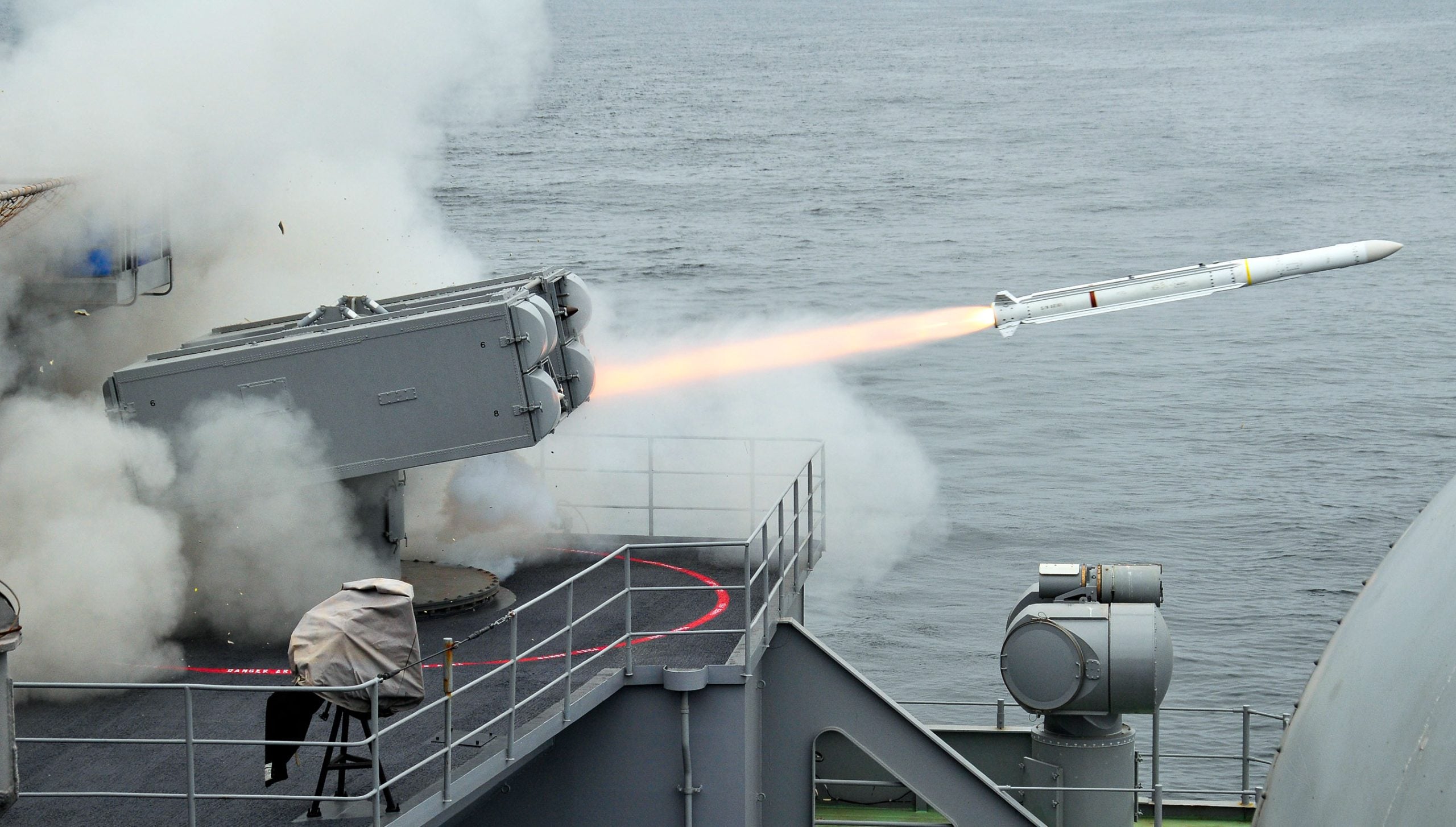
The ESSM itself is a significant advancement over its predecessor, the RIM-7 Sea Sparrow missile, first deployed in 1968. The newer ESSM is designed to effectively counter modern, highly maneuverable, sea-skimming cruise missiles, a change necessitated by evolving maritime threats. The first variant, ESSM Block I, entered production in 2000, featuring improvements such as a larger rocket motor, thrust-vector control, and enhanced aerodynamic fins for superior speed and agility.
The development of ESSM Block II commenced in 2015, bringing advancements such as a dual-mode guidance seeker and an upgraded warhead. This version achieved operational service by 2020 and is compatible with both MK 41 vertical launch systems and Mk 29 trainable launchers, ensuring versatile deployment across a variety of surface combatants.
The ESSM program embodies a collaborative effort among 12 nations, with Raytheon Missile Systems at the helm and BAE Systems leading the initiative in Australia. Besides its role in the US Navy, ESSM Block II has also been integrated into several allied fleets, including the Royal Netherlands Navy’s De Zeven Provinciën-class frigates, further solidifying its position in modern naval defense strategies.