




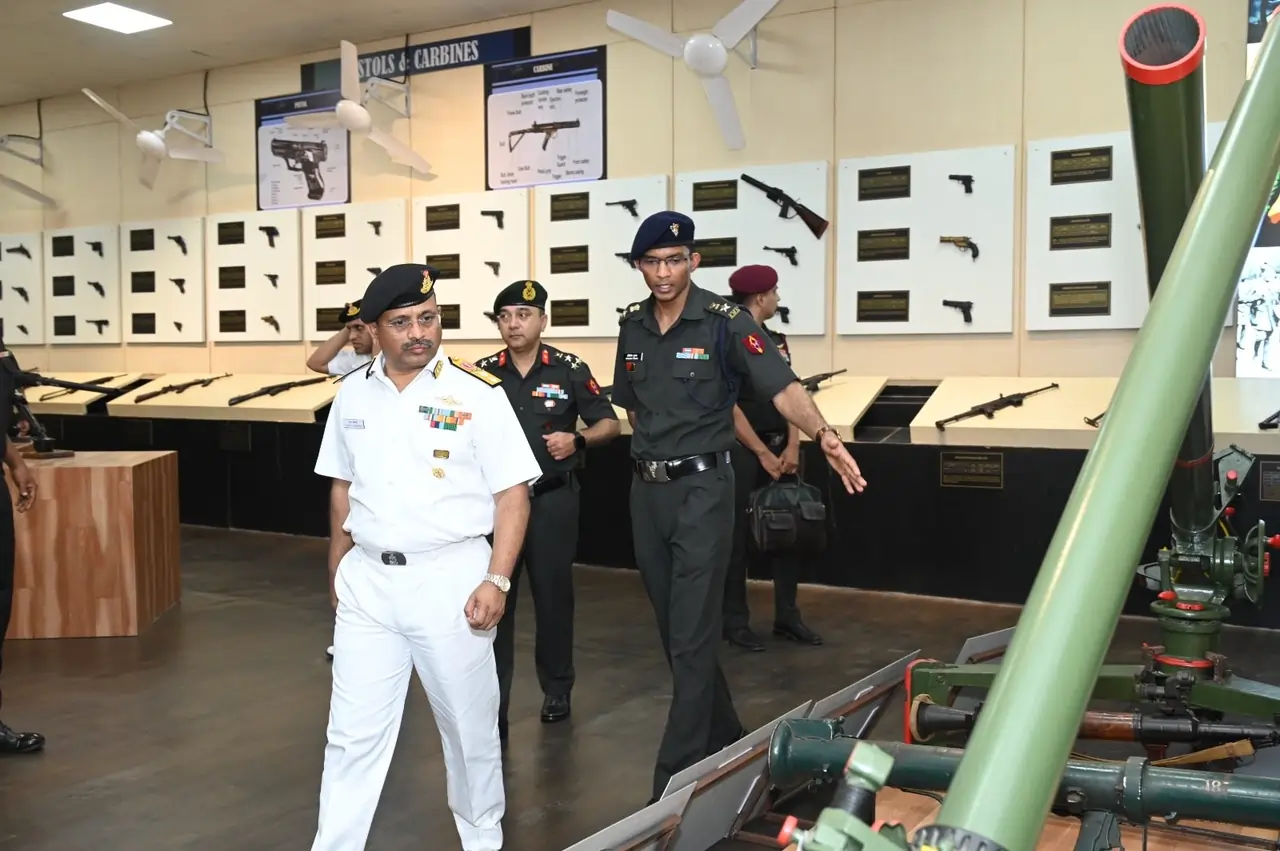
Rear Admiral Chetan C. Chandegave from the Headquarters Integrated Defence Staff (HQ IDS) recently visited the Military Institute of Technology (MILIT) in Pune to assess its training facilities, academic offerings, and ongoing initiatives designed to bolster professional military education. This visit emphasized the increasing significance of joint operations, technological advancements, and specialized military training in shaping the future leaders of the armed forces amid the rapidly changing landscape of warfare.
During his time at MILIT, Rear Admiral Chandegave engaged with faculty members, gaining insights into the institute’s academic programs and innovative training methods. He evaluated the modern training infrastructure in place, commending MILIT for its commitment to providing officers from the Indian Armed Forces with progressive and technologically-driven military education.
Recognized as one of India’s foremost tri-service military educational establishments, MILIT plays a crucial role in delivering specialized technical and operational expertise to personnel across the Indian Army, Navy, and Air Force. The institute prioritizes collaboration among the armed services and champions interdisciplinary learning as a key strategy to enhance operational integration.
A notable aspect of Rear Admiral Chandegave’s visit was the examination of MILIT’s initiatives surrounding the Combat Sustenance Wargaming Framework. This innovative approach aims to improve understanding of logistical planning and operational sustainment through realistic and technology-enriched military simulations. Such programs are instrumental in training military leaders to effectively tackle the complexities of modern and future operational scenarios.
The Rear Admiral praised the institute’s advancements in wargaming capabilities, which foster strategic thinking, operational planning, and informed decision-making among trainees. Wargaming has become an essential element of professional military education, allowing personnel to analyze complex battlefield situations and develop a robust grasp of joint operational principles.
Highlighting the ongoing transformation in warfare, Rear Admiral Chandegave underscored the critical role of niche technologies in determining future military effectiveness. Innovations like artificial intelligence, autonomous systems, cutting-edge simulation platforms, and network-centric operational models are increasingly shaping military strategy and execution across various domains. Thus, equipping officers with the knowledge and skills to leverage these technologies is vital for achieving and maintaining operational superiority.
The Rear Admiral called attention to the necessity of enhancing joint operations among the Armed Forces through integrated military education and cooperative training efforts. He stressed that contemporary security challenges require seamless interoperability among the services, making tri-service professional military education a cornerstone of India’s defense preparedness.
Encouraging continued investment in forward-looking educational methodologies, Rear Admiral Chandegave reinforced that innovation must remain central to military evolution. He observed that military institutions should consistently adapt their curricula and training programs to correspond with emerging technologies and the evolving nature of global security threats.
This engagement with faculty provided a platform to discuss the evolving demands of professional military education and the essential role specialized institutions play in cultivating adaptive, technology-savvy, and strategically oriented military leaders. The goal of developing officers who can meld innovation with operational excellence is pivotal for nurturing a future-ready armed force.
The visit reaffirmed MILIT’s long-standing dedication to enhancing joint professional military education through high teaching standards, technological innovation, and capability development. By fostering critical thinking, interdisciplinary collaboration, and the adoption of advanced technologies, the institute significantly contributes to strengthening India’s military leadership framework.
As the Indian Armed Forces continue to seek greater integration and modernization, institutions like MILIT will be vital in preparing officers to confront the challenges of future warfare. The focus on jointness, niche technologies, and innovation, as emphasized during Rear Admiral Chandegave’s visit, aligns with a broader vision of cultivating agile, technologically adept, and operationally proficient military leaders dedicated to safeguarding the nation’s strategic interests in an increasingly complex security landscape.


