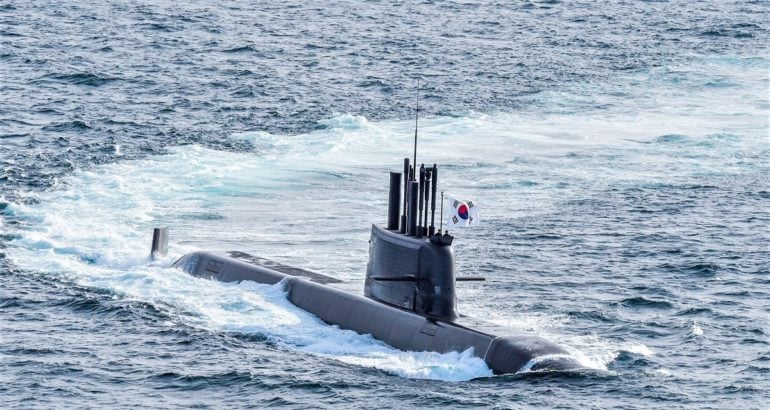
President Donald Trump’s recent decision to permit South Korea to develop a nuclear-powered submarine has marked a significant shift in allied defense cooperation. The move could potentially alter dynamics in deterrence strategies amid rising tensions in both the Taiwan Strait and the Korean Peninsula.
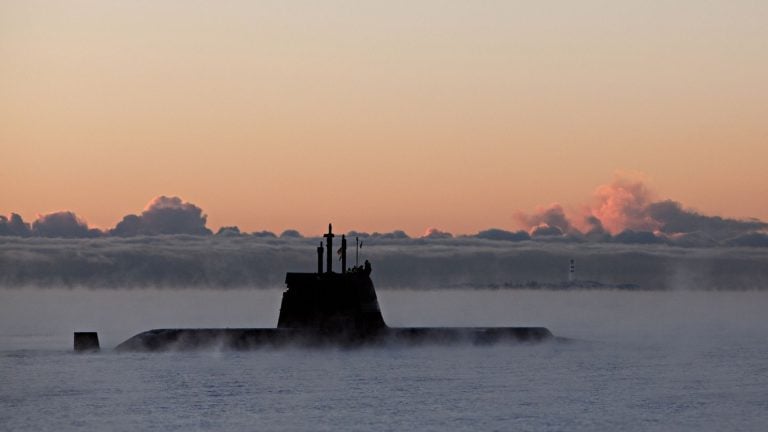
The initiative reportedly focuses on construction at Hanwha Ocean’s Philadelphia shipyard, symbolizing a blend of U.S. industrial resurgence and South Korean technological advancement. While details on fuel supply and non-proliferation safeguards are still being finalized under the existing 123 Agreement, the strategic implications are already evident: South Korea is set to enter the exclusive group of nations capable of operating submarines that can remain submerged for extended periods, traverse long distances rapidly, and execute missions well beyond their coastal territories.
For South Korea, the immediate operational advantages are substantial. A nuclear-powered submarine would significantly enhance the navy’s operational range, allowing it to patrol vast areas, including the East Sea, Yellow Sea, and even the Philippine Sea, without the need to surface. In scenarios where a crisis in Taiwan coincides with a conflict on the Korean Peninsula, an SSN would enable South Korea to play a crucial role in operations while providing uninterrupted undersea coverage at home.
The endurance and stealth associated with SSNs unlock capabilities that traditional diesel-electric submarines cannot match, such as prolonged intelligence collection, seabed surveillance, special operation insertions, and precision strikes from concealed locations. The psychological aspect of deterrence is equally paramount; even a solitary South Korean SSN operating covertly near strategic targets in North Korea or China would compel adversaries to expand their anti-submarine efforts, thereby complicating their military planning and increasing costs.
Politically, the introduction of an SSN would enhance South Korea’s influence within the U.S.-ROK alliance. By taking on greater underwater responsibilities, South Korea would strengthen its contributions to joint military planning and bolster the credibility of extended deterrence initiatives. Furthermore, discussions surrounding domestic nuclear fuel rights may shift focus from theoretical debates to tangible operational necessities.
The U.S. stands to gain as well: an increase in allied SSNs patrolling Korean waters lessens the burden on the already stretched U.S. submarine fleet, allowing American vessels to concentrate on monitoring China’s ballistic-missile submarines. Additionally, building the lead hull in Philadelphia revitalizes a once dormant shipyard, reinvigorating high-skilled maritime job networks within the U.S. Moreover, this initiative highlights that responsible collaboration on nuclear-powered submarines can extend beyond existing alliances like AUKUS.
Japan, while not directly involved, could benefit from South Korean SSNs operating in conjunction with its own maritime patrols, contributing to a comprehensive anti-submarine defense spanning from the Yellow Sea to the Philippine Sea. This cooperation could allow Japan to reallocate its resources during crises, enhancing trilateral defense cooperation among the U.S., South Korea, and Japan.
The implications for adversaries are concerning. For North Korea, which relies on coastally-based submarine-launched ballistic missile (SLBM) capabilities, the presence of South Korean SSNs could pose severe threats. These submarines could covertly position themselves near North Korean waters, forcing Pyongyang to disperse its limited resources while increasing vulnerability.
Beijing faces even greater challenges, as each allied SSN operating in the region elevates the likelihood of encounters with Chinese submarines. This necessitates costly upgrades in anti-submarine technologies, including sonar systems and stealth improvements. Over time, these demands could impede China’s military operations in both the Taiwan Strait and the East China Sea while also placing constraints on Russia’s capabilities in the Pacific theater.
In response to a potential dual crisis in the region, the operational advantages of South Korean SSNs, backed by their endurance and speed, could prove decisive in maintaining regional stability. A single South Korean SSN could ensure ongoing patrols within a decade, effectively deterring threats from North Korea while allowing U.S. and Japanese forces to focus on other critical missions.
From an industrial perspective, the SSN program promises significant economic benefits. South Korea would enhance its capabilities in nuclear-grade metallurgy and safety standards, which could impact civilian nuclear applications. The U.S. supply chain would see renewed orders for essential components, while Japan would benefit from a surge in regional demand for advanced maritime technologies.
However, challenges remain, particularly surrounding fuel policies. Current agreements prevent South Korea from enriching or reprocessing nuclear material without U.S. consent. Unless a leasing system utilizing low-enriched uranium can be established, South Korean SSN operations will hinge on U.S. fuel logistics. Additionally, the conversion of a commercial shipyard to fulfill nuclear certification requirements is expected to be a lengthy and costly endeavor.
Safety protocols and cooperation with the International Atomic Energy Agency will be crucial in navigating potential concerns from China regarding escalation in the region.
As the strategic landscape in the Indo-Pacific becomes increasingly complex, South Korea’s pursuit of a nuclear-powered submarine is not merely a prestige project. It reflects a pragmatic adjustment to a more volatile security environment. Should the U.S. and South Korea align on essential aspects such as fuel policy and budgetary priorities, the broader ramifications of this initiative could redefine the deterrence architecture in the Indo-Pacific. The move emphasizes the necessity for adaptability and persistence in maintaining regional stability when facing evolving threats.