




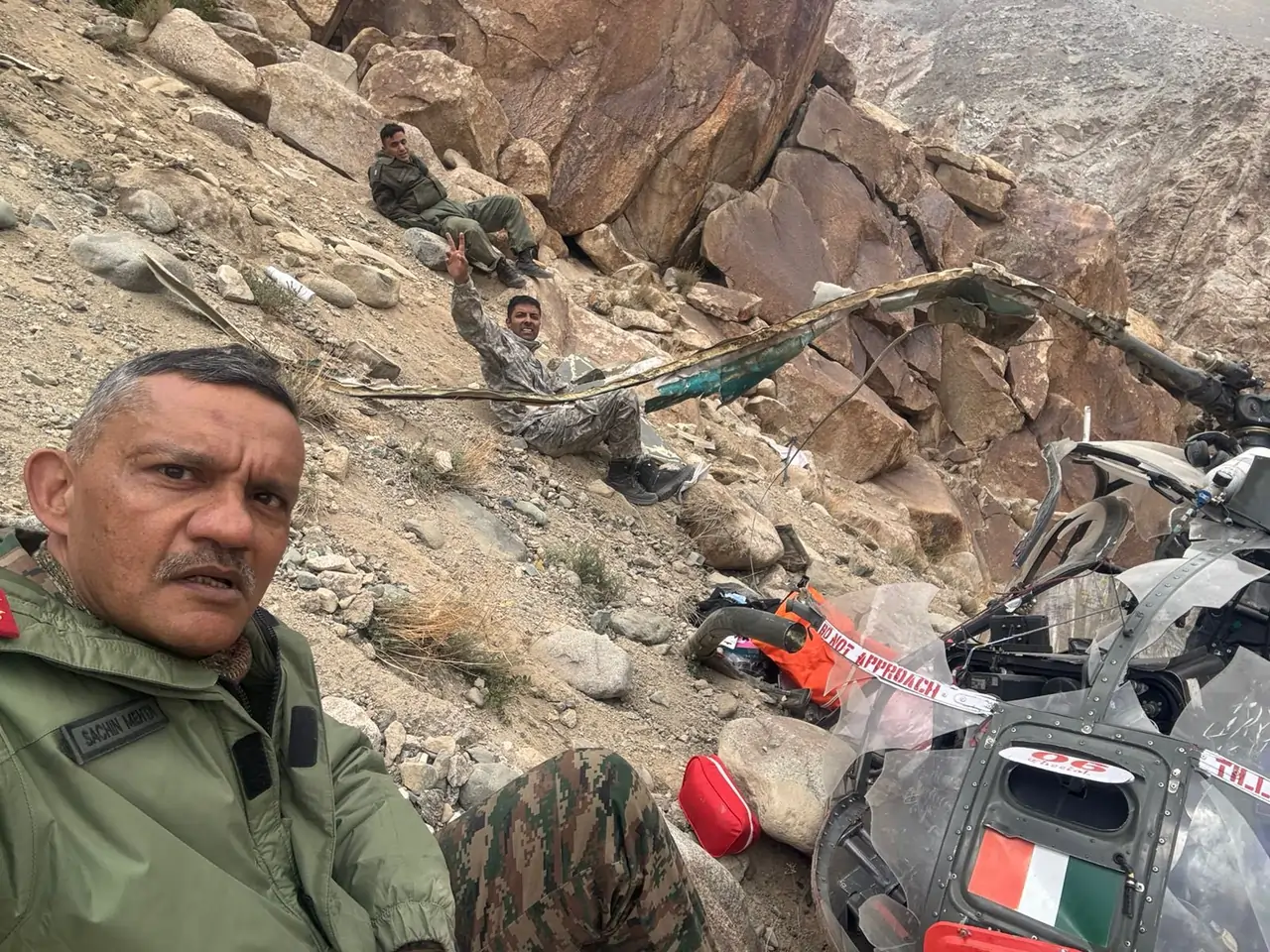
In a remarkable turn of events, three Indian Army officers, including Major General Sachin Mehta, escaped a helicopter crash near Tangste in the high-altitude region of Ladakh. The incident occurred on Wednesday during a routine sortie, leaving the officers with only minor injuries, which were promptly treated.
The dramatic scene unfolded as the Cheetah helicopter, operated by a Lieutenant Colonel and a Major, went down in the rugged terrain near Leh. What could have been a devastating tragedy turned into a remarkable survival story, as all occupants walked away from the wreckage. This resilience is particularly noteworthy given the challenging weather and altitude conditions prevalent in the area, known for its difficult mountainous terrain.
Adding to the narrative of survival, an image described as an iconic selfie surfaced from the crash site, featuring Major General Mehta and the other officers. The photo has resonated widely, serving as a symbol of calmness and fortitude in the wake of an incident that could have easily resulted in fatalities.
The Indian Army has initiated a formal investigation to determine the cause of the crash, focusing on both technical and operational factors. Sources indicate that, despite the unfortunate incident, the Cheetah helicopter fleet remains technically airworthy, although concerns persist regarding the age and safety of these aircraft. Over the past decade, more than 15 helicopters from the Cheetah and Chetak fleets have been involved in crashes, highlighting the pressing need for modernization.
The Cheetah is a critical asset for the Army, particularly in high-altitude operations, where its performance has been vital in challenging terrains such as the Siachen Glacier and other remote regions. However, the aging fleet has come under scrutiny due to its involvement in multiple accidents. This crash incident has reignited discussions about the urgency for upgrading the aging helicopter platforms, as the existing fleet continues to play a crucial role in military logistics and emergency response.
In response to these concerns, the Indian Army is implementing a modernization roadmap that includes phasing out the older Cheetah and Chetak helicopters. Plans indicate a gradual transition over the next eight to ten years, aimed at procuring around 250 new Light Utility Helicopters (LUHs). A dual approach is being adopted, combining the introduction of indigenously developed LUHs with interim leasing arrangements to address immediate needs.
The HAL’s Light Utility Helicopter is anticipated to significantly enhance operational capabilities. Designed for improved performance and safety, these new helicopters will be crucial for carrying out missions in challenging high-altitude environments. The Army has already placed orders for six limited-series-production LUHs, which are equipped with advanced features and are expected to complement the existing fleet.
As India focuses on modernizing its rotary-wing aviation assets, the crash near Tangste underscores the strategic importance of helicopters in the region. They are essential not only for logistical support but also for casualty evacuation and troop movements in one of the most unforgiving terrains.
Fortunately, Major General Sachin Mehta and the two pilots are reported to be safe following the incident. The Army’s investigation will delve into the specifics surrounding the crash and provide recommendations to minimize future risks.
The photograph of the officers after the crash adds a human element to this story, reflecting the inherent dangers faced by military aviators and officers in such demanding environments. It serves as a poignant reminder of their commitment and bravery, while simultaneously underscoring the urgent need for the adoption of safer, more reliable aviation technologies.


