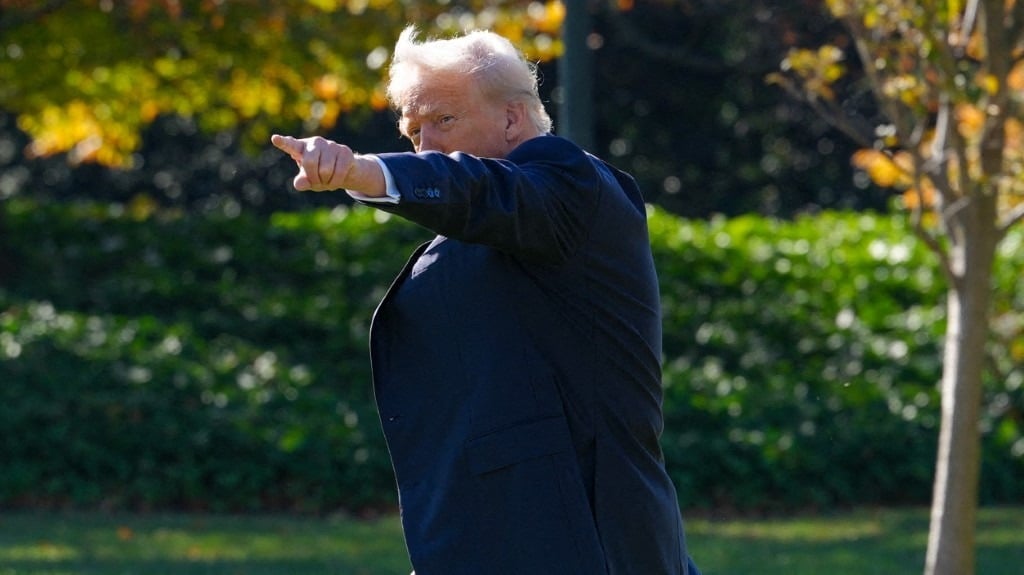
US President Donald Trump took to social media on Sunday to deliver a stark warning to Cuba, urging the nation to “make a deal” quickly, while pledging to cut off all oil and financial resources flowing from Venezuela, a key ally of the communist-run island. This announcement comes on the heels of a dramatic turn of events in Venezuela, where Trump asserts that the United States is effectively controlling the country after a US special forces operation led to the ousting of Venezuelan leader Nicolás Maduro.
In his post on Truth Social, Trump declared, “THERE WILL BE NO MORE OIL OR MONEY GOING TO CUBA – ZERO!” He suggested that Cuba, which has relied on Venezuelan oil and funding for years, must negotiate before facing dire consequences. He emphasized that the nation previously received significant support from Venezuela in exchange for providing security services to its leaders.
Trump’s threats drew a robust response from Cuban President Miguel Diaz-Canel. In a firm rebuttal, Diaz-Canel stated, “No one tells us what to do,” reinforcing Cuba’s sovereignty. He depicted a determination among Cubans to defend their homeland, expressing confidence in their resilience amid worsening economic conditions exacerbated by longstanding US sanctions.
The president of Cuba did not take the threats lightly, and Cuban Foreign Minister Bruno Rodriguez emphasized the country’s right to import fuel from any international partners without facing US intervention. He condemned the unilateral sanctions imposed by the US as coercive measures that stifle Cuba’s economy.
Historically, the US has maintained strict trade embargos against Cuba since the Cold War, tightening restrictions that have severely impacted the island’s economy since 1962. Over time, Cuba has increasingly relied on oil supplies from Venezuela, a relationship that deepened under the leadership of both Hugo Chavez and Maduro.
On the streets of Havana, residents expressed skepticism about Trump’s pronouncements. A retiree, Mercedes Simon, remarked, “Trump is not going to touch Cuba.” A young restaurant worker, Marcos Sanchez, emphasized the need for dialogue between the two nations, stressing the importance of finding common ground without resorting to aggression.
As Trump’s rhetoric intensifies, some Republican lawmakers have publicly praised his stance against Cuba. Congressman Mario Diaz-Balart from Florida asserted that the regime in Cuba would not withstand a second term for Trump, predicting an eventual end to the long-standing suffering of the Cuban people.
Amid these heated exchanges, Trump’s administration continues to navigate a complex geopolitical landscape, having already made bold claims about US control over Venezuela. With his focus now shifting to Cuba, the world watches closely to see how these tensions will unfold and what implications they may have for the region.