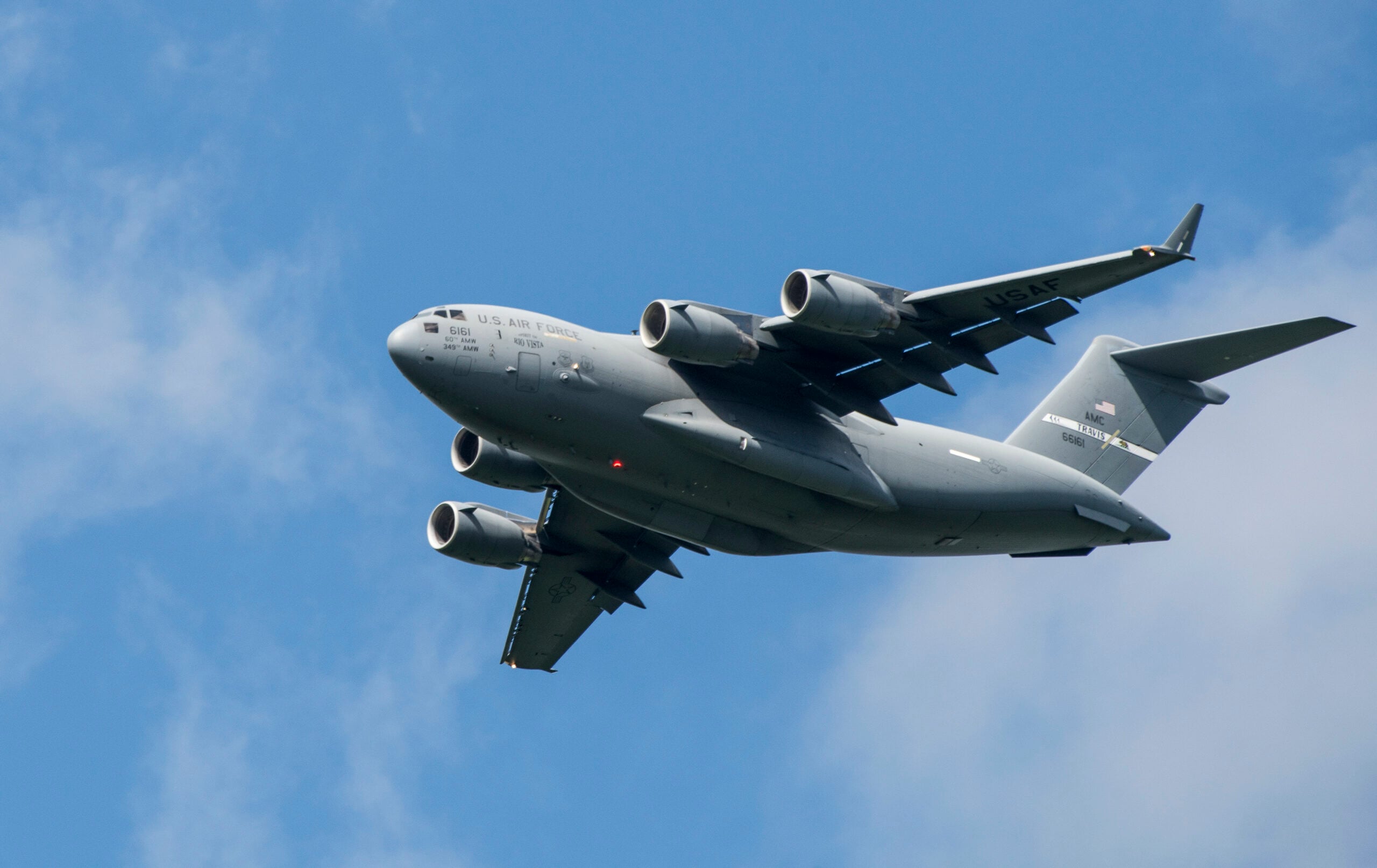
The US Air Force has solidified its long-term commitment to the C-17A Globemaster III by awarding Boeing a significant contract aimed at enhancing the aircraft’s flight deck. This comprehensive upgrade is set to extend the operational lifespan of the Globemaster III for decades to come.
This new contract encompasses various aspects, including the design, manufacture, integration, qualification, and military certification of updated avionics and mission-critical systems for the aircraft. The upgrade will involve replacing the existing flight deck equipment with modern systems that utilize a Modular Open Systems Architecture (MOSA). This innovative approach will allow for plug-and-play enhancements, facilitating the rapid and cost-effective integration of new capabilities into the fleet.
As part of this upgrade initiative, Boeing has partnered with Curtiss-Wright Corporation to supply mission computers for the C-17A, ensuring that the aircraft remains at the cutting edge of technology.
Travis Williams, Vice President of United States Air Force Mobility & Training Services at Boeing, emphasized the significance of the upgrade, stating, “The C‑17A has been the backbone of global air mobility for over three decades.” He added that with a requirement to keep the C-17A operational until at least 2075, Boeing has formulated a clear and feasible roadmap not only to meet the needs of the US Air Force but also those of international partners.
The upgrade aims to address the obsolescence of current avionics while making use of the MOSA framework. This initiative is designed to ensure that the C-17A remains a reliable and efficient heavy airlifter, equipped to maintain its performance for many years to come.
The C-17A Globemaster III has been operational since 1995 and is known for its versatility in tactical airlift and airdrop missions, as well as aeromedical evacuations. It boasts a remarkable payload capacity, capable of transporting up to 170,900 pounds (77,519 kilograms) of cargo or accommodating as many as 100 paratroopers. This capability allows for swift transportation of troops and equipment to primary operating bases or directly to forward positions in the field.
The aircraft typically operates with a crew of two pilots and a loadmaster, powered by four Pratt & Whitney PW2000 turbofan engines. It has a maximum speed of 450 knots (518 miles/833 kilometers per hour), a range of 2,420 nautical miles (2,785 miles/4,482 kilometers), and can operate at a service ceiling of 45,000 feet (13,716 meters).
In terms of fleet size, the US Air Force currently operates over 200 C-17 Globemaster IIIs across active-duty forces, the Air National Guard, and the Air Force Reserve. Recent statements from the Air Force indicate a plan to keep the C-17 in service through 2070, with considerations for upgrades such as re-engining. Additionally, a study aiming to develop its successor, the Next Generation Airlift, is scheduled for 2027, with production potentially commencing as early as 2038.