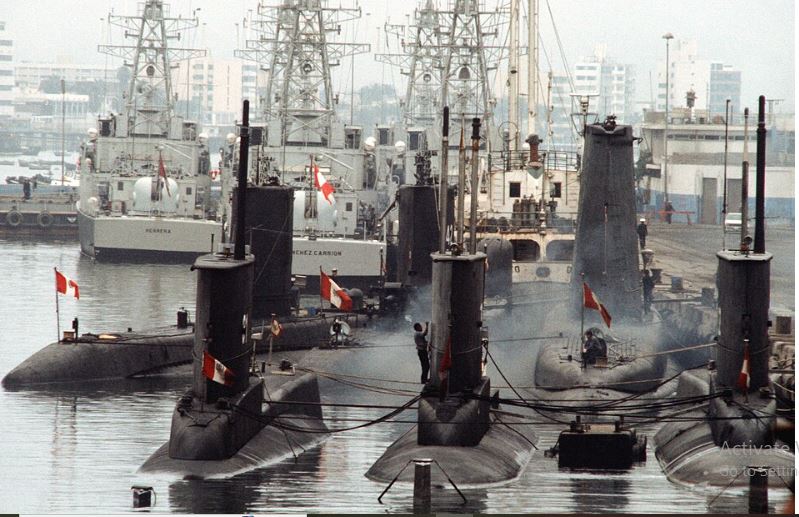
The US State Department has granted approval for a substantial potential Foreign Military Sale worth $1.5 billion, aimed at revitalizing Peru’s primary naval base in Callao. This strategic location is situated less than 50 miles from a Chinese-controlled port, intensifying the focus on military and logistical capabilities in the region.
The proposed sale is set to facilitate the relocation and redesign of the Callao Naval Base, which currently operates in close proximity to Peru’s busiest commercial port. This development aims to enhance the safety and efficiency of naval operations by minimizing civilian-military interactions that occur due to the shared waterways with the commercial port.
By relocating the naval facility, officials anticipate an expansion of the trading port’s capabilities, further optimizing its operations. The Pentagon’s Defense Security Cooperation Agency emphasized that the proposed sale would bolster Peru’s port infrastructure to better accommodate both current and future naval and logistical needs.
Furthermore, the Pentagon elaborated that this initiative aligns with the foreign policy goals of the United States, stating that it will support an important partner nation, which plays a crucial role in maintaining political stability, peace, and economic advancement in South America.
A competitive process will determine the principal contractors involved in the sale. Should the deal finalize, it may require the assignment of up to 20 US government or contractor representatives in Peru for a duration of up to ten years, dedicated to overseeing the construction management process.
This move comes at a critical time, as US officials express heightened concerns regarding China’s increasing influence in Peru’s port sector. The $1.3 billion Chancay port, developed and operated by China’s state-owned COSCO Shipping just north of Callao, has been flagged for its potential dual-use capabilities. Operational since 2024 under China’s Belt and Road Initiative, the Chancay port is expected to solidify trade links between South America and China, which has emerged as the region’s largest trading partner. This shift could potentially redirect Pacific shipping routes, posing challenges to existing US port infrastructure.