




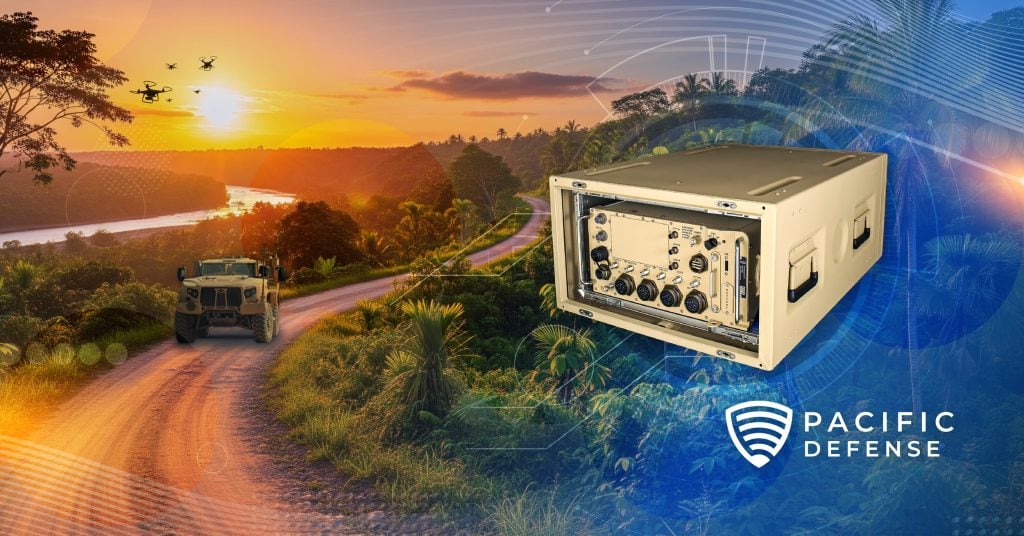
The US Army has awarded a contract to Pacific Defense for the development of an advanced version of its Assured Positioning, Navigation and Timing (APNT) plug-in card that will enhance military platforms. This contract specifically focuses on improving the existing Block 1 APNT plug-in card, ensuring compliance with the Army’s CMOSS Mounted Form Factor (CMFF) program requirements.
Under the contract, Pacific Defense is tasked with designing, building, and testing prototype hardware. This hardware will aid in system integration and evaluation, supporting the Army’s need for robust navigation solutions in challenging environments. The initiative builds upon previous APNT development work undertaken by Pacific Defense, which has included internal research, earlier US government partnerships, and collaboration with various entities in both industry and government sectors.
As potential adversaries expand their capabilities to disrupt GPS signals, ensuring reliable positioning and navigation has become a critical focus for the US military. The newly developed systems aim to integrate GPS with alternative navigation sources and onboard sensors. This approach allows military platforms to maintain operational integrity even in contested electromagnetic environments where traditional navigation signals may be compromised.
The Block 2 APNT plug-in card is engineered as a rugged 3U VPX module, adhering to The Open Group’s Sensor Open Systems Architecture and the C5ISR Modular Open Suite of Standards. These compliance standards are part of the Department of Defense’s broader initiatives to enhance interoperability and facilitate technology upgrades across military systems. The module is designed to combine data from multiple sources—including GPS, alternative navigation signals, inertial sensors, and vehicle information—to deliver accurate navigation and timing information in scenarios where satellite signals may be weak or unavailable.
Mike Repko, the general manager of APNT programs at Pacific Defense, highlighted the importance of these products in maintaining mission effectiveness under adverse conditions. He emphasized that the technology is designed with contested environments in mind and is adaptable to new technological advancements as they arise.
Although the initial focus of this effort is directed toward mounted ground vehicles and aviation platforms within the US Army, there is potential for the technology to be customized for airborne, ground, and maritime systems used by the US and its allies.
The contract encompasses a multi-phase, multi-year program, with work being carried out at various Pacific Defense facilities located in Cedar Rapids, Iowa; Mukilteo, Washington; Sunnyvale, California; and El Segundo, California. This collaborative effort aims to reinforce the Army’s capabilities in assured positioning and navigation, underscoring the critical role of advanced technology in modern military operations.


