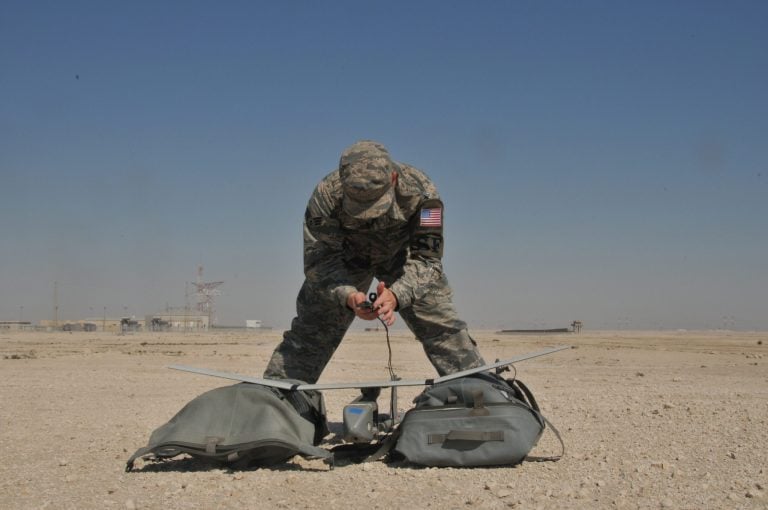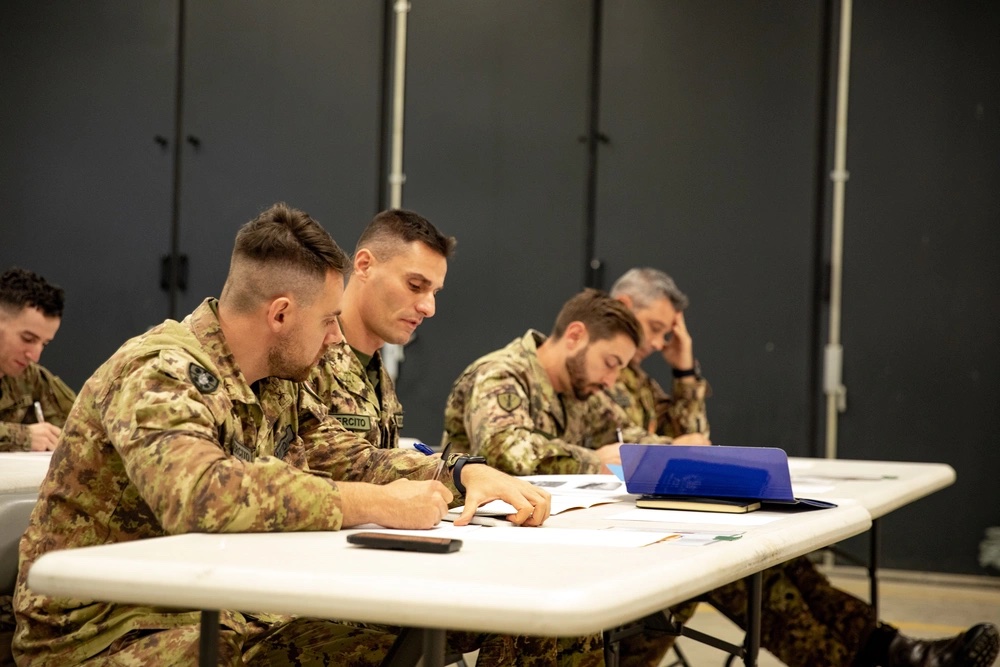
The US Army in Europe and Africa has initiated its inaugural best drone warfighter competition, a significant event that unites American, allied, and partner forces to demonstrate and hone their skills with advanced unmanned aircraft systems (UAS). This groundbreaking competition is taking place at the 7th Army Training Command’s Grafenwoehr Training Area in Germany, where nine teams are competing in a series of meticulously crafted scenarios aimed at testing the limits of drone operators.
Among the participants are key US Army units, including the 1st Battalion, 4th Infantry Regiment and the 2nd Cavalry Regiment, alongside rotational forces from V Corps and international teams from Italy and Spain. The competition spans three days and features a combination of written examinations and practical, scenario-based challenges.
Competitors first tackle a written UAS knowledge exam, followed by two hands-on scenarios that assess their operational skills. The first scenario focuses on tactical operations for reconnaissance and strike missions in urban settings, where teams must employ concealment strategies and security measures while maneuvering small drones. The second scenario tests participants on precision flying, navigation, and teamwork during simulated call-for-fire missions alongside obstacle course challenges.
Teams are utilizing a diverse array of drones, including both issued and custom-built models such as the Skydio X2D, ORQA FPV, DJI Mavic, DJI Avata, Vantage Vesper, and the Purpose Built Attritable System. The team that emerges victorious from this competition will secure a place in the next edition scheduled for 2026.
This competition is part of a broader initiative within the US military to explore and innovate with UAS and counter-UAS technologies. Events like the xTech Counterstrike competition have already begun identifying next-generation, AI-enabled passive sensing and threat-simulated drones to enhance air defense capabilities for small units. Additionally, the army’s Maneuver Battle Lab has integrated various drones into its exercises to evaluate their tactical applications, especially in electronic warfare in complex operational landscapes.
Such competitions are crucial for accelerating the adoption of ready-to-deploy technologies, fostering interoperability among NATO allies, and equipping soldiers to deal with increasingly sophisticated aerial threats in modern warfare.