In a rapidly escalating conflict in the Middle East, the United States launched extensive military operations against Iran, targeting hundreds of locations. This dramatic escalation follows the death of Iran’s Supreme Leader, Ayatollah Ali Khamenei, which has prompted President Donald Trump to vow fierce retaliation and a commitment to avenge the first U.S. casualties in the war aimed at destabilizing Tehran’s clerical regime.
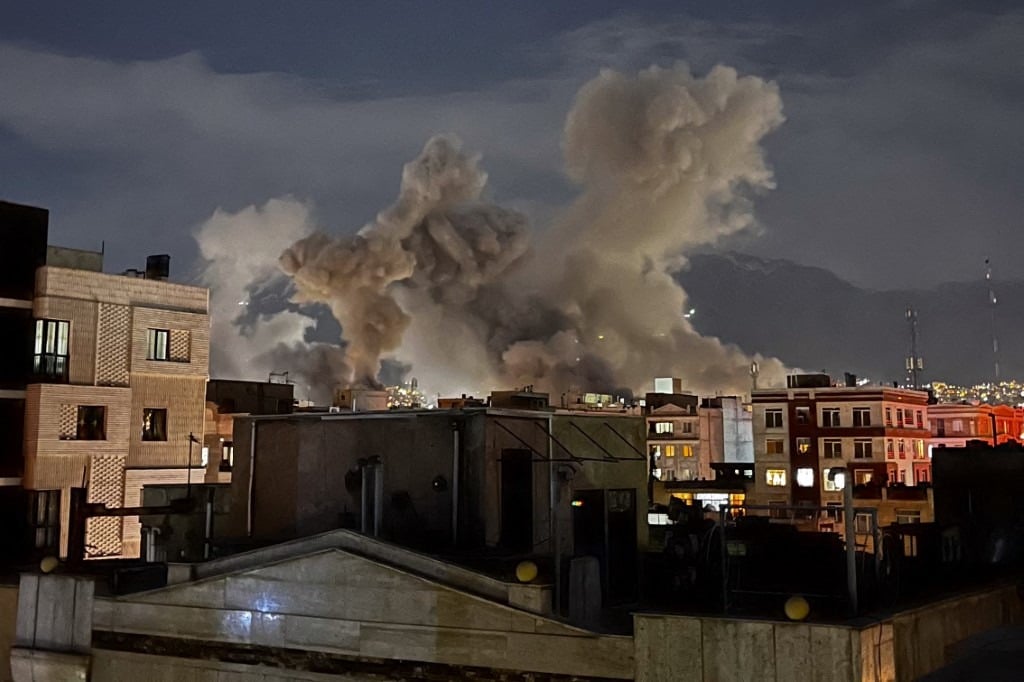
Iranian forces retaliated with missile and drone strikes across the region, resulting in fatalities in both Israel and the United Arab Emirates. The violence erupted just days ago when Khamenei was killed, igniting a chain of events that saw the U.S. military intensify its offensive on Iranian soil. Commanders reported the destruction of the headquarters of the Islamic Revolutionary Guard Corps (IRGC), the force responsible for upholding Iran’s Islamic regime since the 1979 revolution.
U.S. Central Command stated unequivocally, “The IRGC no longer has a headquarters,” signaling a significant blow to the Iranian military’s operational capabilities. Concurrently, Israel expanded its bombing campaigns, targeting sites in Tehran and launching strikes against Hezbollah positions in Lebanon. Israeli military spokespersons described these as “large-scale strikes,” following reports of explosions near Beirut. Hezbollah, responding to the renewed Israeli offensives, claimed responsibility for launching rockets and drones toward Israel in retaliation for Khamenei’s death.
President Trump, in communication with the New York Times, expressed confidence in the U.S. and Israel’s ability to maintain the level of assaults for several weeks, stating, “We have tremendous amounts of ammunition.” He suggested he has candidates in mind for potential leadership in Iran after the conflict subsides. In a stark warning to Iranian security forces, Trump urged them to “lay down your arms” or face overwhelming consequences, emphasizing the brutality that would ensue.
The Pentagon confirmed that three U.S. service members lost their lives in the recent military operations, now characterized as “Epic Fury.” Trump asserted that more casualties could occur, expressing resolve to deliver a punishing response to those he labeled terrorists.
Criticism of Trump’s decision to initiate military action has emerged from various quarters. Hakeem Jeffries, a prominent Democratic leader, characterized the deaths of the service members as a consequence of a “reckless decision,” arguing that there was no justification for such preemptive strikes given the lack of imminent threat to the U.S.
As Iranian leaders vowed to retaliate, sentiment in Iran remains divided. While some in the diaspora celebrated Khamenei’s death, public reaction has been mixed in Iran, where protests erupted in neighboring Pakistan, resulting in at least 17 fatalities as demonstrators attempted to storm the U.S. consulate in Karachi. Domestically, the Iranian government called Khamenei’s assassination a “declaration of war,” with officials asserting their right to respond forcefully.
Trump’s calls for Iranians to rise against their government have echoed amidst growing tensions, with mixed reactions from global leaders. British Prime Minister Keir Starmer indicated that the UK would permit the U.S. to utilize its bases for defensive measures but would not participate in offensive actions.
Iran’s initial retaliatory strikes targeted the Gulf states, with Oman’s commercial port sustaining drone damage, while additional assaults claimed lives and injuries in the region. The Revolutionary Guards even reported striking U.S. naval vessels, though the Pentagon dismissed these claims as exaggerated.
As the conflict unfolds, casualties have risen significantly, with the Red Crescent indicating that strikes had resulted in over 200 deaths and injuries to hundreds more within Iran alone. Key figures, including Khamenei’s top advisor and a general from the IRGC, were also reported killed in the assaults, underscoring the conflict’s devastating impact.