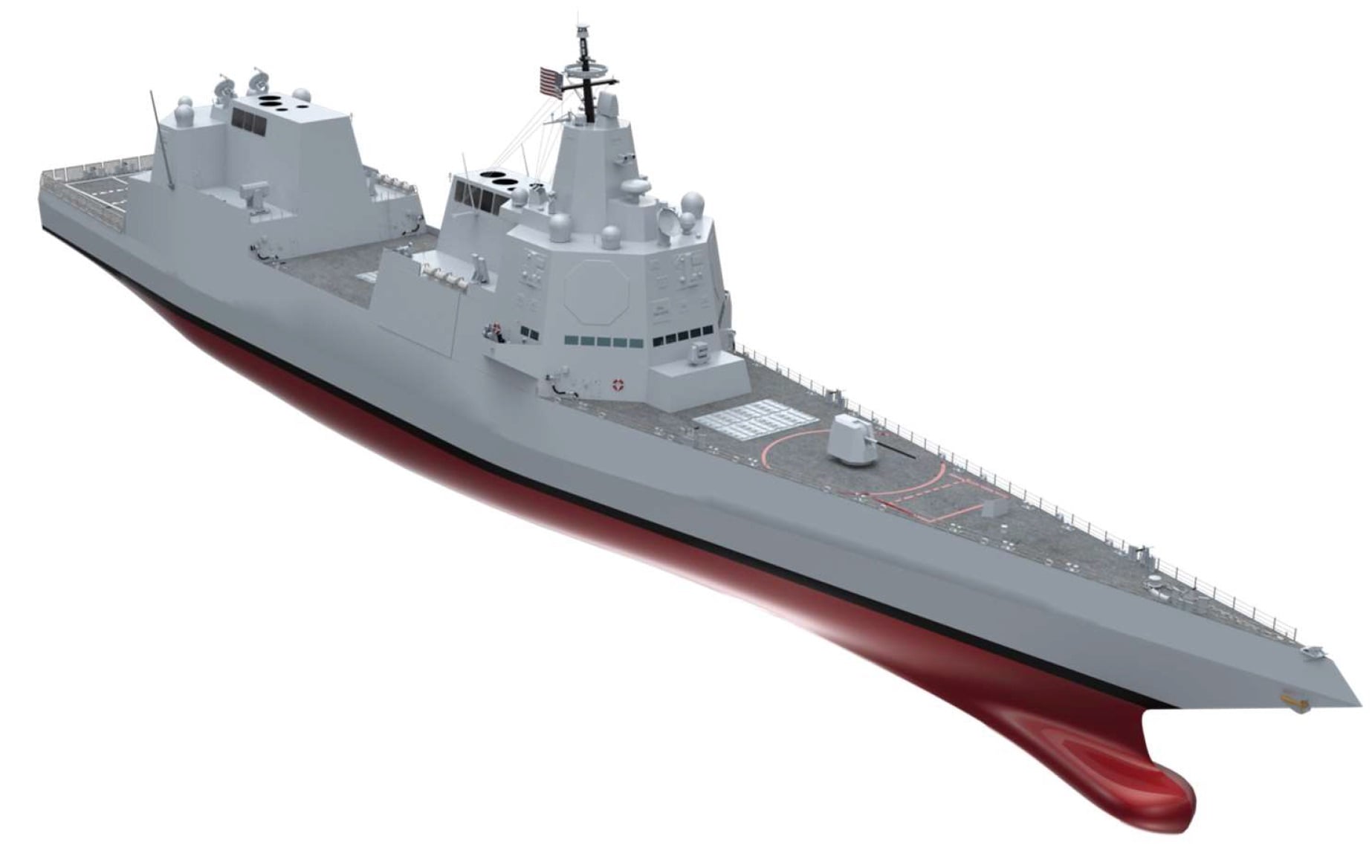
The DDG(X) program is an innovative initiative by the US Navy aimed at developing a next-generation destroyer to replace the aging Arleigh Burke-class ships. As the Arleigh Burke-class vessels, which have been the backbone of the Navy’s surface fleet since the 1990s, approach the limits of their design, the need for a new destroyer has become increasingly urgent. The DDG(X) seeks to integrate lessons learned from both the Arleigh Burke and the Zumwalt-class destroyers to better meet future naval warfare requirements.
Set to transition into service in the 2030s as the primary large surface combatant, the DDG(X) emphasizes improved efficiency, survivability, and adaptability to emerging threats. One of its primary focuses is incorporating advanced technologies, including hypersonic missiles and directed-energy systems, which are expected to dominate future conflicts.
The program has emerged in response to several critical factors. The aging Arleigh Burke-class destroyers lack the necessary space, power, and cooling capacity to accommodate the future systems essential for contemporary naval operations. Thus, the Navy requires a new hull designed with a greater growth margin for technological advancements.
Furthermore, the DDG(X) program addresses the rising threat posed by peer competitors like China and Russia. Both nations have developed sophisticated anti-ship missiles and air defense systems, necessitating a vessel that enhances survivability, increases missile capacity, and offers flexibility in combat scenarios.
To ensure that the DDG(X) avoids the pitfalls of previous naval shipbuilding efforts, the program aims to balance well-established systems with incremental improvements. This approach aims to provide a cost-effective solution while establishing a long-term replacement that can adapt to future developments.
The design philosophy behind the DDG(X) emphasizes flexibility, allowing the platform to evolve as new technologies emerge. The Navy’s incremental approach merges proven systems from the Burke-class with advancements such as a larger hull and stealth features inspired by the Zumwalt-class. Key design elements will include an integrated power system (IPS) to support energy-intensive weapons and advanced radars, modular missile cells for tailored weaponry, and an optimized hull for better fuel efficiency and longer deployment times.
A variety of advanced features are planned for the DDG(X):
-
Flight III Aegis Combat System Elements: Incorporating core components from the proven Aegis Baseline 10 architecture, including the SPY-6(V)1 radar, enables the Navy to leverage existing technologies without starting from scratch.
-
Expanded Growth Margins: By introducing greater capacity in space, weight, power, and cooling, the destroyer can integrate high-power sensors and future-directed energy weapons.
-
Integrated Power System (IPS): Designed to generate and distribute significantly more electrical power, facilitating the operation of advanced systems such as lasers and hypersonic weapons.
-
Increased Range and Time on Station: Enhancements in fuel efficiency will allow longer deployments without the need for resupply.
- Reduced Signatures: Efforts will be made to minimize infrared, acoustic, and underwater electromagnetic signatures, enhancing the ship’s stealth capabilities.
Automation and improved systems will lead to reduced crew requirements while maintaining operational effectiveness. The DDG(X) is intended not only to address current needs but also to be adaptable for future technological developments, ensuring its relevance for decades.
However, the DDG(X) program does face potential limitations. Since it remains in the design concept phase, many of its challenges and risks are still hypothetical. Cost remains a significant concern, as the Navy has yet to finalize the budget for each ship, raising questions about affordability and scalability. Additionally, the long development timeline, with initial construction expected in the early 2030s, means that the Navy will rely on the Arleigh Burke-class for the time being. The complexity of integrating advanced power systems and future weapon technologies also poses risks that must be carefully managed to avoid delays and budget overruns.
The DDG(X) represents more than just a new warship; it signifies a strategic effort to maintain maritime dominance amidst rapidly changing global threats and technologies, aiming to evolve and remain effective well into the future.