




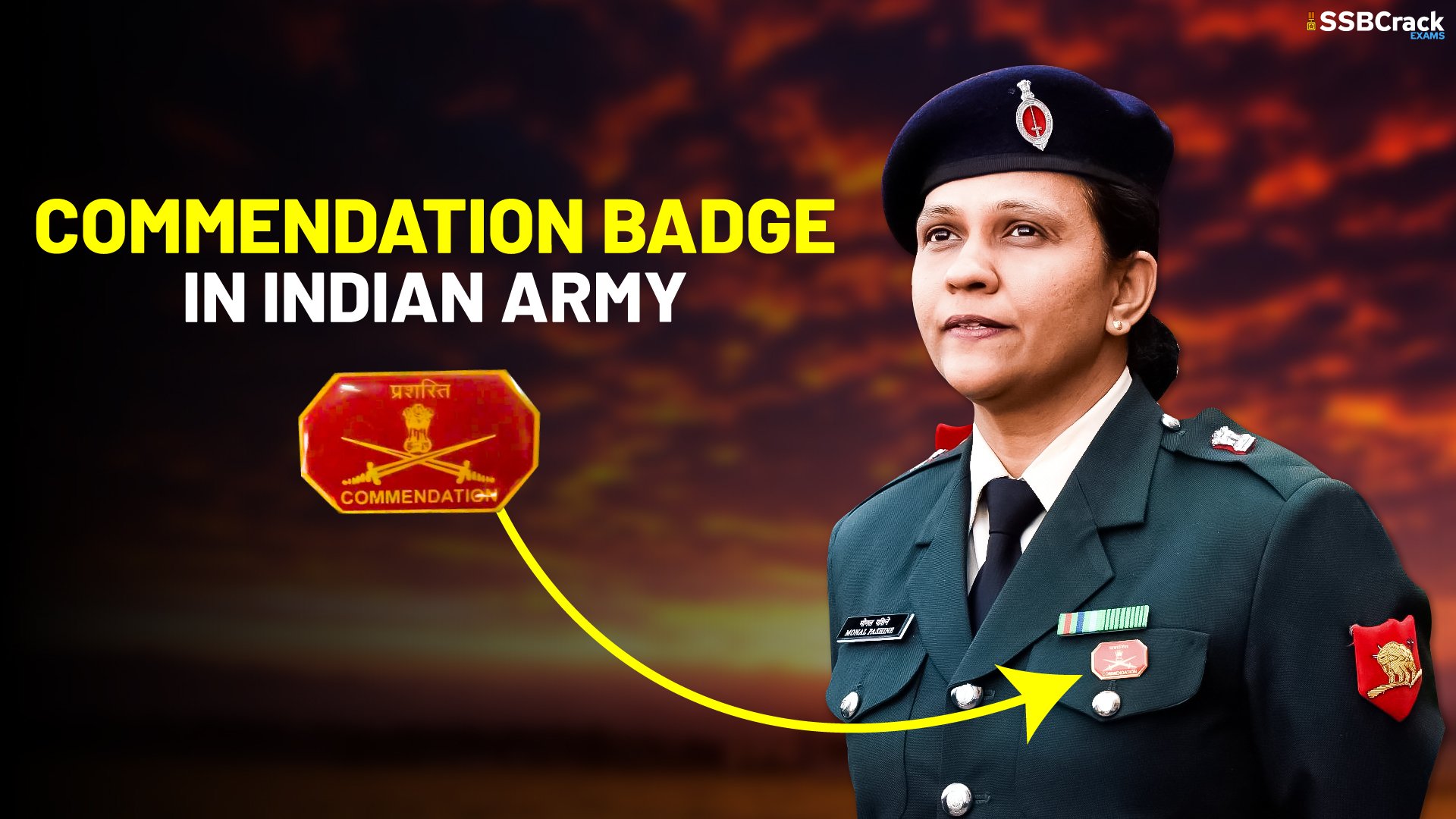
In the Indian Army, commendation badges serve as prestigious recognitions for personnel who demonstrate exceptional dedication, gallantry, or service beyond the ordinary call of duty. These awards bridge the gap between routine performance and the criteria required for higher gallantry honors, such as the Sena Medal or Vir Chakra. They are designed to acknowledge individual contributions that enhance operational effectiveness, morale, or administrative excellence within the armed forces. This article provides a comprehensive overview of commendation badges, including their types, eligibility criteria, earning process, and significance, drawing from established military protocols and historical context.
What Are Commendation Badges?
Commendation badges, often referred to as commendation cards in their formal issuance, are awards granted to members of the Indian Army for acts of gallantry, distinguished service, or unwavering devotion to duty. These are not medals in the traditional sense but rather certificates accompanied by wearable badges that symbolize the recognition. The awards are issued in operational or non-operational settings where the actions performed do not meet the threshold for more exalted gallantry awards but nonetheless warrant formal acknowledgment.
The concept of commendation badges emphasizes merit-based recognition, ensuring that exemplary conduct is highlighted to inspire others. They are typically presented as oval-shaped brass emblems featuring the Army’s crossed swords insignia, and recipients receive a formal card detailing the commendation. Importantly, these awards cannot be conferred posthumously, underscoring their focus on living personnel who can continue to serve as role models.
Types of Commendation Badges
The Indian Army has streamlined its commendation system to include primarily two categories of badges that are authorized for wear on the uniform. This standardization ensures clarity and uniformity in recognition:
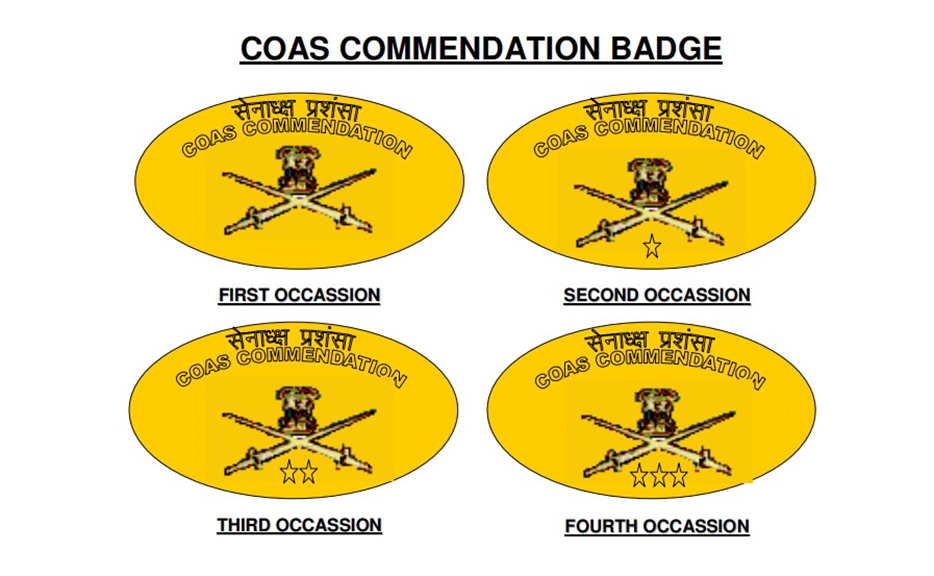
- Chief of the Army Staff (COAS) Commendation Badge: This is the highest level of commendation badge awarded directly by the COAS. It is reserved for outstanding acts that exemplify the highest standards of military professionalism and bravery.
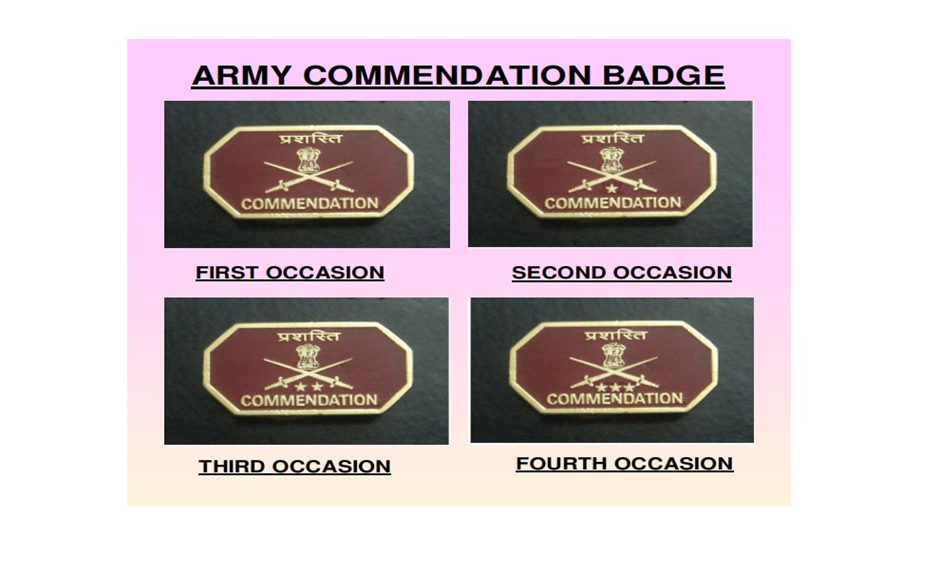
- Army Commendation Badge: This encompasses commendations issued by senior officers below the COAS level, including the Vice Chief of the Army Staff (VCOAS), General Officers Commanding-in-Chief (GOC-in-C) of the six operational commands, and the Army Training Command (ARTRAC). Previously, separate designations existed for VCOAS or command-specific commendations, but they are now consolidated under this unified “Army” category for uniform purposes.
In addition to these, personnel posted to inter-service organizations may wear commendation badges from the Chief of Naval Staff (CNS) or Chief of Air Staff (CAS) during their tenure, but they revert to the equivalent Army badge upon returning to Army units. This flexibility accommodates tri-service collaborations while maintaining Army-specific protocols.
Criteria and Eligibility
Eligibility for commendation badges is broad yet precise, extending to all ranks within the Indian Army, including officers, Junior Commissioned Officers (JCOs), Other Ranks (ORs), and in some cases, attached civilians. The key criteria include:
- Acts of Gallantry: Demonstrations of bravery in combat or high-risk situations that do not qualify for higher awards like the Param Vir Chakra or Ashoka Chakra.
- Distinguished Service: Exceptional performance in administrative, logistical, or training roles that significantly contribute to mission success or unit efficiency.
- Devotion to Duty: Consistent and exemplary commitment in operational or peacetime environments, such as innovative problem-solving, leadership under pressure, or selfless service that enhances overall military objectives.
Awards are not limited to combat scenarios; they can be earned in non-operational areas, such as during training exercises, disaster relief operations, or routine duties where extraordinary effort is evident. However, the actions must be individual in nature and not part of collective unit achievements. General Officers are typically excluded from receiving the Army Commendation Badge, as their roles involve higher-level decision-making.
Nominations are forwarded through the chain of command, with the awarding authority (COAS or relevant GOC-in-C) making the final decision based on verified reports and recommendations. Awards are often announced on significant occasions, such as Independence Day or Republic Day, to maximize their inspirational impact.
How to Earn Them
Earning a commendation badge requires a combination of skill, initiative, and circumstances that allow for standout performance. While there is no prescriptive “formula,” the process generally involves the following steps and considerations:
- Demonstrate Excellence in Duty: Personnel must excel in their assigned roles. For instance, a soldier might earn recognition by displaying innovative tactics during a counter-insurgency operation, leading to minimal casualties while achieving objectives. In non-combat roles, developing a new training module that improves unit preparedness could qualify.
- Nomination and Documentation: Superiors observe and document exceptional acts. A detailed citation report is prepared, outlining the specific contributions and their impact. This is reviewed at multiple levels to ensure merit.
- Evaluation Against Criteria: The nomination is assessed to confirm it aligns with the eligibility conditions—namely, that it represents gallantry or service not warranting a higher award. Examples include:
- Rescuing comrades under fire without qualifying for a Vir Chakra.
- Implementing cost-saving measures in logistics that benefit the Army’s resources.
- Exhibiting leadership in humanitarian missions, such as flood relief, where personal risk is involved.
- Approval and Award: Upon approval, the recipient is issued the commendation card and badge. Multiple commendations in the same category are denoted by stars (up to three per badge type), indicating repeated excellence.
It is worth noting that commendation badges are not easily attainable; they demand consistent professionalism and often arise from high-stakes situations. Special forces personnel, such as those in Para Special Forces, may earn them alongside other elite badges for confirmed acts of valor.
Wearing and Display
Commendation badges are worn on the uniform to visibly represent the honor. Regulations stipulate:
- Only one of each type (COAS and Army) is worn, positioned immediately above and on either side of the left breast pocket button.
- Subsequent awards are indicated by silver stars: one star for the second award, two for the third, and a maximum of three stars per badge.
- The badges must be maintained in pristine condition, reflecting the pride associated with them.
These rules were updated to simplify the system, reducing visual clutter while preserving the awards’ prestige.
Significance
Commendation badges hold profound significance within the Indian Army. They foster a culture of excellence, motivating personnel to strive for superior performance. For recipients, they enhance career prospects, boost morale, and serve as a lifelong testament to their contributions. Institutionally, these awards reinforce values such as discipline, courage, and innovation, contributing to the Army’s overall effectiveness. In a broader context, they highlight the human element in military operations, recognizing that individual efforts underpin national security.
Conclusion
Commendation badges in the Indian Army represent a vital mechanism for honoring exceptional service that might otherwise go unrecognized. By understanding their types, criteria, and earning process, aspiring and serving personnel can appreciate the pathways to such distinctions. These awards not only celebrate past achievements but also inspire future generations to uphold the highest standards of military conduct. For those in the defense community, pursuing excellence in every duty remains the surest route to earning this esteemed recognition.
Also Read:


