




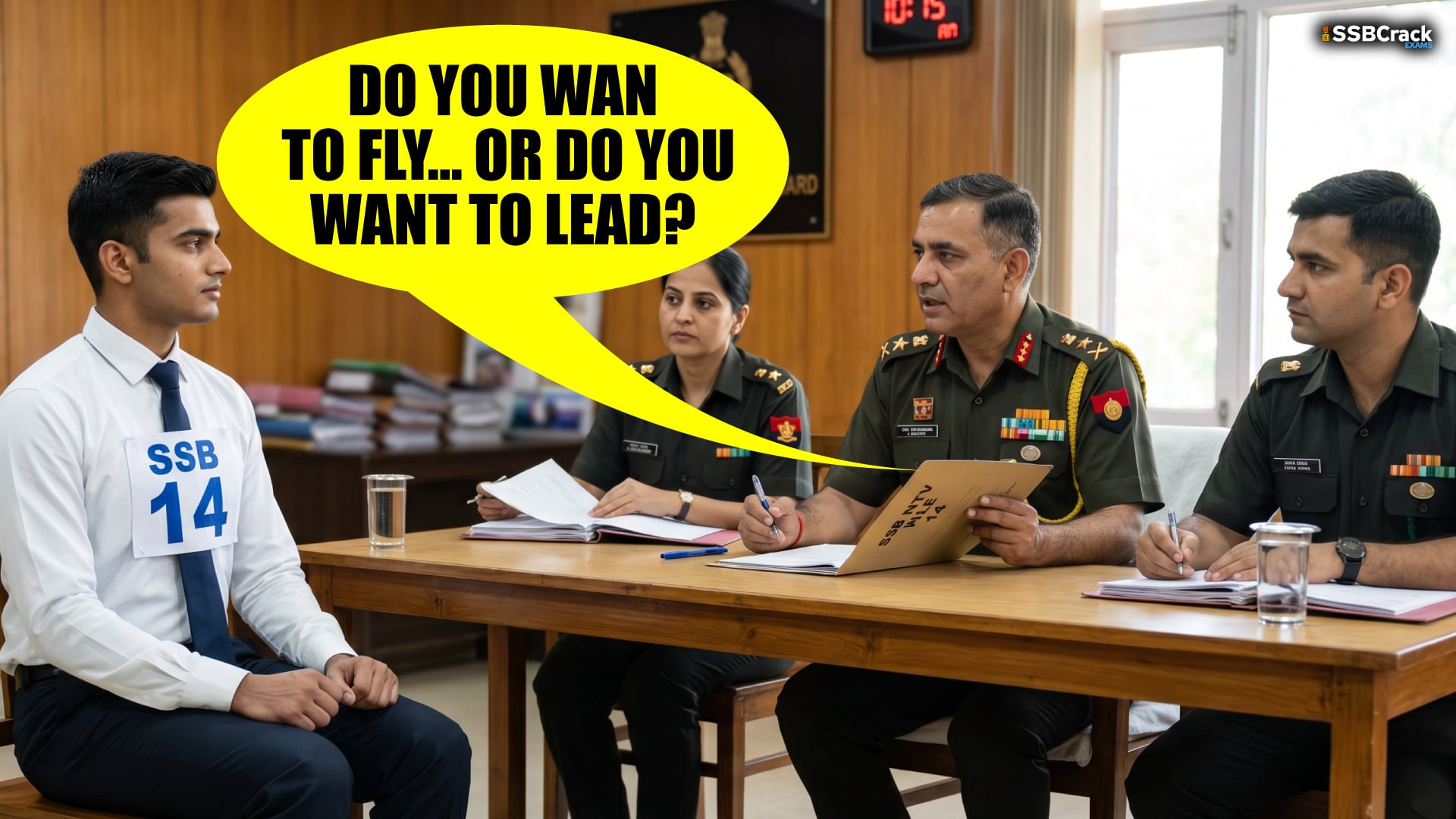
The Air Force Common Admission Test, popularly known as AFCAT, is one of the most sought-after entries into the Indian Air Force. Every year, thousands of graduates and young professionals dream of wearing the blue uniform and serving the nation as Air Force officers.
However, clearing the AFCAT written examination is only the beginning. The AFSB Interview evaluates your personality, leadership potential, officer-like qualities, communication skills, awareness, and suitability for a career in the Indian Air Force.
Many aspirants prepare extensively for psychological tests and group tasks but remain uncertain about the Personal Interview. In this article, we will discuss 20 important interview questions frequently asked to AFCAT candidates, understand why they are asked, learn how to answer them effectively, and review sample responses that reflect the qualities expected in future Air Force officers.
1. Tell me about yourself.
Why it is asked
To assess communication skills, confidence, self-awareness, and personality.
How to answer
Cover your family background, education, achievements, hobbies, and responsibilities.
Sample Answer
“I am a B.Com graduate from West Bengal. I come from a family that values discipline and education. I actively participate in sports, enjoy reading about aviation and defence affairs, and have experience organizing college events, which helped develop my leadership and teamwork skills.”
2. Why do you want to join the Indian Air Force?
Why it is asked
To assess motivation and understanding of the profession.
How to answer
Focus on service, aviation, leadership, and responsibility.
Sample Answer
“The Indian Air Force offers a unique combination of service to the nation, technological excellence, leadership opportunities, and professional growth. I am particularly attracted to the Air Force’s culture of precision, discipline, and operational excellence.”
3. Why Air Force and not Army or Navy?
Why it is asked
To assess clarity of career choice.
How to answer
Respect all services while explaining your preference.
Sample Answer
“All three services play vital roles in national security. However, I am particularly fascinated by aviation, aerospace technology, rapid decision-making environments, and the technical sophistication associated with Air Force operations.”
4. What do you know about the Indian Air Force?
Why it is asked
To assess preparation and awareness.
How to answer
Know basic facts about roles and responsibilities.
Sample Answer
“The Indian Air Force is responsible for protecting India’s airspace, conducting air operations, supporting ground and naval forces, humanitarian assistance missions, and strategic airlift operations. It is one of the most technologically advanced military services in the country.”
5. Why should we select you?
Why it is asked
To assess self-confidence and suitability.
How to answer
Link your qualities to officer requirements.
Sample Answer
“I possess qualities such as responsibility, adaptability, teamwork, discipline, and a strong desire to learn. I enjoy taking initiative and remain committed to achieving objectives even under challenging circumstances.”
6. What are your strengths?
Why it is asked
To assess self-awareness.
How to answer
Support strengths with examples.
Sample Answer
“My strengths are discipline, perseverance, and problem-solving ability. During college projects, I consistently took responsibility for coordination and ensured successful completion of assigned tasks.”
7. What are your weaknesses?
Why it is asked
To assess honesty and improvement orientation.
How to answer
Mention a genuine weakness and explain your efforts to improve it.
Sample Answer
“I occasionally spend extra time analyzing options before making decisions. To improve, I practice making timely decisions in daily activities and group situations.”
8. Tell me about your family.
Why it is asked
To understand your background and family environment.
How to answer
Briefly explain family details and values.
Sample Answer
“My family has always encouraged education, discipline, and self-reliance. These values have played a significant role in shaping my personality and career aspirations.”
9. What responsibilities do you handle at home?
Why it is asked
To assess maturity and responsibility.
How to answer
Mention genuine responsibilities.
Sample Answer
“I assist with household management, financial planning discussions, important documentation work, and other family responsibilities whenever required.”
10. What is your biggest achievement?
Why it is asked
To assess goal orientation and effort.
How to answer
Choose an achievement involving commitment and effort.
Sample Answer
“My biggest achievement was leading a college event involving multiple teams and successfully coordinating all activities within the available resources and timeline.”
11. Tell me about a failure and what you learned from it.
Why it is asked
To assess resilience and learning ability.
How to answer
Focus on lessons learned rather than the failure itself.
Sample Answer
“I once failed to qualify for a competitive event despite preparation. The experience taught me the importance of better planning, consistency, and identifying weaknesses early.”
12. How do your friends describe you?
Why it is asked
To assess social adaptability and interpersonal skills.
How to answer
Mention realistic qualities supported by examples.
Sample Answer
“My friends describe me as dependable, cooperative, and calm because I support team efforts and remain composed during stressful situations.”
13. What are your hobbies?
Why it is asked
To assess personality and interests.
How to answer
Mention genuine hobbies and explain their impact.
Sample Answer
“I enjoy reading newspapers, playing badminton, exercising, and learning about aviation developments. These activities help me stay informed, fit, and mentally active.”
14. What qualities should an Air Force officer possess?
Why it is asked
To assess understanding of military leadership.
How to answer
Mention practical officer qualities.
Sample Answer
“An Air Force officer should possess integrity, responsibility, courage, emotional stability, quick decision-making ability, teamwork, technical aptitude, and leadership skills.”
15. What current defence or aviation topic interests you?
Why it is asked
To assess awareness and curiosity.
How to answer
Choose a topic you genuinely follow.
Sample Answer
“I am interested in India’s indigenous defence aviation programs because they contribute to technological self-reliance and strengthen national security capabilities.”
16. How do you handle stress and pressure?
Why it is asked
To assess emotional stability.
How to answer
Mention practical coping strategies.
Sample Answer
“I handle stress by prioritizing tasks, maintaining physical fitness, focusing on solutions, and maintaining a structured routine during demanding situations.”
17. Describe a situation where you demonstrated leadership.
Why it is asked
To assess leadership potential.
How to answer
Use a real example from your life.
Sample Answer
“During a college project, I coordinated team activities, resolved scheduling conflicts, delegated tasks appropriately, and ensured successful completion before the deadline.”
18. What would you do if your team disagreed with your decision?
Why it is asked
To assess teamwork and flexibility.
How to answer
Show openness and objective thinking.
Sample Answer
“I would listen carefully to their viewpoints, evaluate alternatives objectively, and support the decision that best serves the team’s objective rather than insisting on my own opinion.”
19. If not selected this time, what will you do?
Why it is asked
To assess resilience and determination.
How to answer
Remain positive and practical.
Sample Answer
“I will continue improving myself, pursue my academic and professional goals, identify areas needing improvement, and prepare sincerely for future opportunities.”
20. What does becoming an Air Force officer mean to you?
Why it is asked
To assess understanding of military responsibility.
How to answer
Focus on service, leadership, and professionalism.
Sample Answer
“Becoming an Air Force officer means accepting responsibility, leading by example, making decisions under pressure, mastering professional skills, and serving the nation with integrity and dedication.”
Additional Questions Frequently Asked to AFCAT Aspirants
Aviation Interest Questions
- Why are you interested in aviation?
- What attracts you to flying?
- What do you know about military aviation?
Technical Awareness Questions
- What recent defence aviation developments have you followed?
- Which Indian aircraft interests you most and why?
Career Motivation Questions
- Why do you think you are suitable for Air Force life?
- What challenges do you expect during training?
What AFSB Assessors Look for in AFCAT Candidates
Officer Like Qualities (OLQs)
- Effective Intelligence
- Initiative
- Self-Confidence
- Responsibility
- Organizing Ability
- Determination
- Courage
- Cooperation
- Social Adaptability
- Emotional Stability
Leadership Potential
Ability to influence and guide others positively.
Awareness
Knowledge of current affairs, defence matters, and aviation-related developments.
Decision-Making Ability
Capability to think clearly under pressure.
Trainability
Potential to develop into a competent Air Force officer.
Common Mistakes AFCAT Candidates Make
- Memorizing model answers.
- Giving superficial reasons for joining the Air Force.
- Ignoring current affairs and defence awareness.
- Exaggerating achievements.
- Claiming leadership qualities without examples.
- Speaking negatively about previous failures.
- Focusing only on aviation knowledge and neglecting personality development.
Interview Answer Formula
For experience-based questions, use:
Situation → Action → Result → Learning
Example:
“Our event team faced a last-minute venue issue. I coordinated with organizers, identified an alternative venue, informed participants, and ensured the event proceeded smoothly. The experience improved my planning and crisis-management skills.”
Final Advice for AFCAT Aspirants
Remember that the AFSB interview is not a test of perfect answers. It is an assessment of your personality, character, leadership potential, and suitability for military service.
The most successful candidates are those who demonstrate genuine confidence, responsibility, awareness, teamwork, adaptability, and a sincere commitment to serving the nation.
Conclusion
The Indian Air Force seeks individuals who can think clearly, act responsibly, lead effectively, and remain composed under pressure. These qualities cannot be developed overnight through memorized answers; they are built through daily habits, responsibilities, experiences, and continuous self-improvement.
Focus on becoming a better leader, a better teammate, a better student, and a more responsible citizen. When these qualities become part of your personality, they will naturally reflect during the AFSB interview.


