




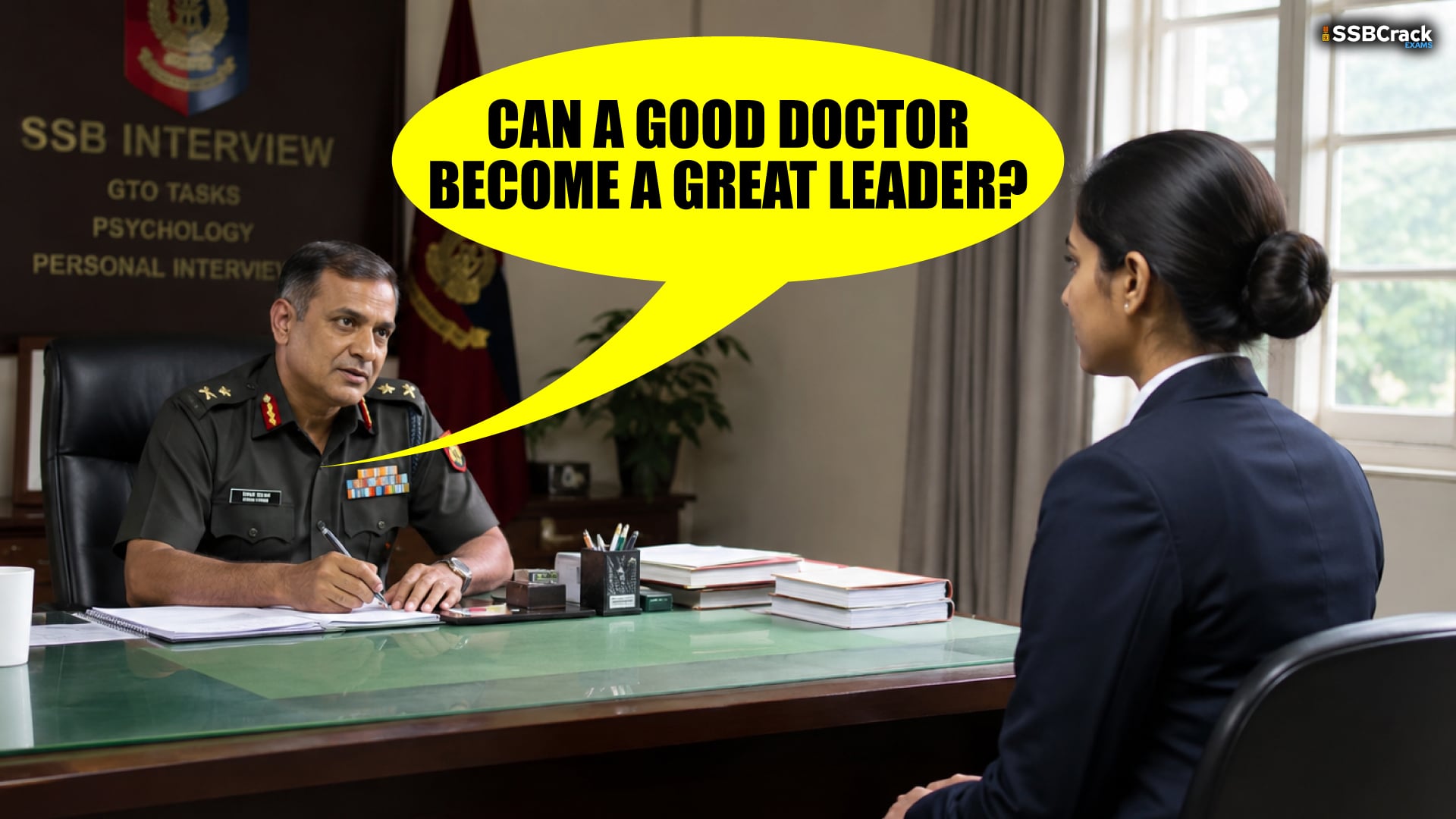
If you are a medical graduate aspiring to join the Armed Forces through entries such as AMC, SSC Tech, CDS, or any officer entry, then this session is specially designed for you. Medical graduates are expected to demonstrate not only professional competence but also leadership qualities, decision-making ability, responsibility, empathy, and Officer Like Qualities (OLQs).
In this article, we will discuss 20 commonly asked SSB interview questions for medical graduates, understand why the Interviewing Officer asks them, learn the correct approach to answering them, and review sample responses.
Question 1: Tell me about yourself.
Why is it asked?
To assess your communication skills, self-awareness, confidence, and overall personality.
How to answer:
Briefly cover your educational background, family, achievements, interests, and future aspirations.
Sample Answer:
“My name is Ananya Sharma. I completed my MBBS from XYZ Medical College. I belong to a family of four members. During my college years, I actively participated in health camps and awareness programs. I enjoy reading, fitness activities, and volunteering for community healthcare initiatives. My aim is to serve the nation as a medical officer in the Armed Forces.”
Question 2: Why do you want to join the Armed Forces after studying medicine?
Why is it asked?
To evaluate your motivation and sincerity.
How to answer:
Focus on service, leadership opportunities, discipline, adventure, and contribution to the nation.
Sample Answer:
“I want to combine my medical knowledge with national service. The Armed Forces provide an opportunity to serve soldiers in challenging environments while developing leadership and professional excellence.”
Question 3: Why did you choose medicine as a career?
Why is it asked?
To understand your career motivations and consistency.
How to answer:
Discuss genuine reasons rather than social prestige.
Sample Answer:
“I have always been fascinated by healthcare and helping people recover from illness. The ability to make a direct positive impact on someone’s life inspired me to pursue medicine.”
Question 4: What are your strengths as a medical graduate?
Why is it asked?
To assess self-awareness and professional confidence.
How to answer:
Mention relevant strengths supported by examples.
Sample Answer:
“My strengths include empathy, patience, teamwork, and the ability to remain calm during emergencies. During my internship, these qualities helped me manage patients effectively in a busy emergency department.”
Question 5: What are your weaknesses?
Why is it asked?
To evaluate honesty and self-improvement efforts.
How to answer:
Mention a genuine weakness along with corrective measures.
Sample Answer:
“I sometimes spend extra time ensuring perfection in my work. However, I have learned to prioritize tasks efficiently and balance accuracy with time management.”
Question 6: What qualities make a good doctor?
Why is it asked?
To assess your professional understanding.
How to answer:
Discuss competence, compassion, ethics, communication, and responsibility.
Sample Answer:
“A good doctor should possess medical knowledge, empathy, ethical values, communication skills, and the ability to make sound decisions under pressure.”
Question 7: Describe a challenging situation during your internship.
Why is it asked?
To evaluate problem-solving and emotional stability.
How to answer:
Use a real example and explain your actions.
Sample Answer:
“During an emergency shift, multiple trauma patients arrived simultaneously. I assisted senior doctors, coordinated with nurses, and ensured timely patient management. The experience taught me teamwork and composure.”
Question 8: How do you handle stress?
Why is it asked?
To assess emotional resilience.
How to answer:
Explain practical coping mechanisms.
Sample Answer:
“I prioritize tasks, maintain physical fitness, and engage in activities like reading and exercise. These habits help me remain focused during stressful situations.”
Question 9: What leadership experience do you have?
Why is it asked?
To evaluate leadership potential.
How to answer:
Mention actual leadership roles or initiatives.
Sample Answer:
“I led a team of volunteers during a rural health awareness camp where we successfully organized screenings and educational sessions for villagers.”
Question 10: What is your biggest achievement?
Why is it asked?
To understand your standards of success.
How to answer:
Choose a meaningful achievement and explain its significance.
Sample Answer:
“My biggest achievement was organizing a blood donation drive in college that collected over 200 units of blood and involved students from multiple departments.”
Question 11: Why should the Armed Forces select you?
Why is it asked?
To assess confidence and self-evaluation.
How to answer:
Connect your skills with organizational needs.
Sample Answer:
“I possess medical expertise, adaptability, teamwork, and a strong desire to serve the nation. I believe these qualities align well with the responsibilities of an Armed Forces Medical Officer.”
Question 12: How will you react if posted in a remote area?
Why is it asked?
To evaluate adaptability.
How to answer:
Demonstrate willingness and positivity.
Sample Answer:
“I would view it as an opportunity to serve where healthcare is most needed and to gain valuable professional and life experiences.”
Question 13: What do you know about the Armed Forces Medical Services?
Why is it asked?
To assess preparation and awareness.
How to answer:
Study the organization beforehand.
Sample Answer:
“The Armed Forces Medical Services provide healthcare support to military personnel and their families. They operate hospitals, field medical units, and participate in disaster relief and humanitarian missions.”
Question 14: How do you manage conflicts within a team?
Why is it asked?
To evaluate interpersonal skills.
How to answer:
Emphasize communication and cooperation.
Sample Answer:
“I listen to all perspectives, identify the root cause, encourage constructive discussion, and work toward a solution that benefits the team and the objective.”
Question 15: Have you ever made a mistake? What did you learn?
Why is it asked?
To assess accountability.
How to answer:
Be honest and explain the lesson learned.
Sample Answer:
“During my early internship, I overlooked a documentation detail. After correcting it, I became more systematic and developed a checklist approach to avoid similar errors.”
Question 16: How do you keep yourself physically fit?
Why is it asked?
To assess readiness for military life.
How to answer:
Discuss regular fitness activities.
Sample Answer:
“I maintain a routine that includes running, strength training, and outdoor sports. Physical fitness helps me remain energetic and disciplined.”
Question 17: What would you do if a senior officer’s decision appears incorrect?
Why is it asked?
To assess maturity and judgment.
How to answer:
Show respect while maintaining professional responsibility.
Sample Answer:
“I would respectfully present my observations and concerns through appropriate channels while maintaining discipline and professional decorum.”
Question 18: How would your friends describe you?
Why is it asked?
To cross-check personality traits.
How to answer:
Mention genuine qualities supported by examples.
Sample Answer:
“My friends would describe me as dependable, calm under pressure, and supportive. They often approach me for advice during difficult situations.”
Question 19: What are your long-term goals?
Why is it asked?
To assess career vision.
How to answer:
Align goals with service and growth.
Sample Answer:
“My long-term goal is to become a highly competent medical officer, contribute to military healthcare, and take on leadership responsibilities within the Armed Forces.”
Question 20: What does patriotism mean to you?
Why is it asked?
To understand your values and motivation.
How to answer:
Give a practical and sincere perspective.
Sample Answer:
“Patriotism means contributing positively to the nation through one’s duties and responsibilities. For me, serving as a doctor in the Armed Forces is a meaningful way to fulfill that commitment.”
These questions are not designed to test perfect answers but to assess your personality, honesty, leadership potential, communication skills, and Officer Like Qualities. The Interviewing Officer is more interested in understanding who you are rather than hearing rehearsed responses. Therefore, remain truthful, confident, and natural during the interview.
If you found this guide useful, make sure to practice these questions with your own experiences and examples. Consistent preparation, self-awareness, and confidence are the keys to success in the SSB Interview. Stay motivated, keep improving your Officer Like Qualities, and move one step closer to wearing the uniform with pride. Jai Hind!


