




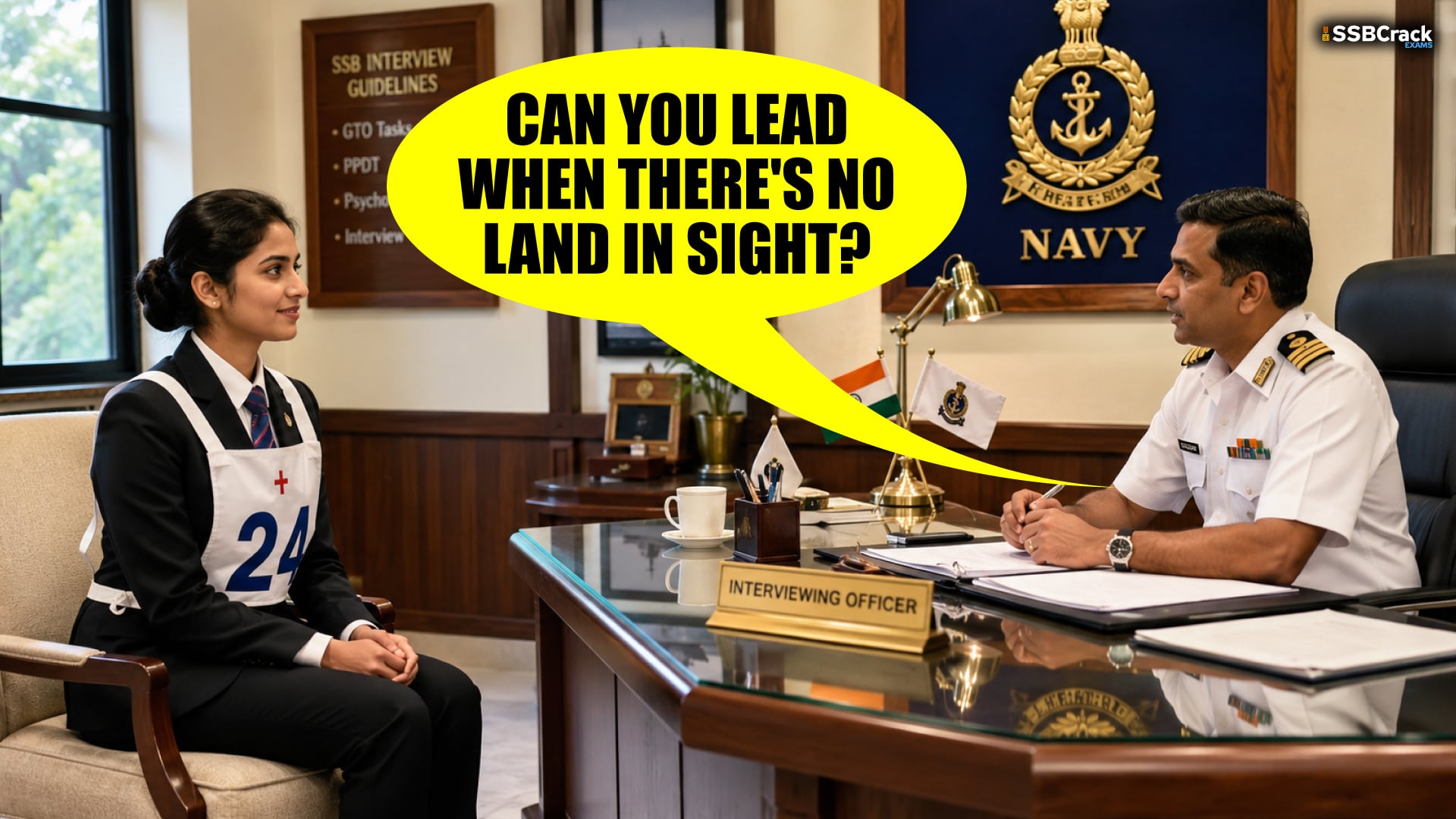
The Indian Navy is a highly professional force that protects India’s maritime interests, secures sea lanes, provides humanitarian assistance, and projects national power across the oceans. A Naval Officer is expected to lead teams in technologically advanced environments while operating far from home, often under challenging sea conditions.
During the SSB Interview, the Interviewing Officer is not simply evaluating your knowledge about ships or naval operations. He is trying to assess your personality, leadership potential, adaptability, teamwork, emotional stability, and readiness to embrace the unique demands of naval life.
In this article, we will discuss 20 important SSB Interview questions specifically for Navy aspirants. We will understand why these questions are asked, how to answer them effectively, and examine sample responses that reflect Officer Like Qualities expected in future Naval Officers.
1. Why do you want to join the Indian Navy instead of the Army or Air Force?
Why it is asked
To assess the clarity of your career choice and understanding of naval service.
How to answer
Mention genuine reasons related to naval operations, technology, maritime security, and leadership.
Sample Answer
“I am attracted to the Indian Navy because it combines leadership, advanced technology, and maritime operations. The opportunity to serve the nation while operating in challenging sea environments particularly appeals to me.”
2. What do you know about the role of the Indian Navy?
Why it is asked
To assess awareness about the service.
How to answer
Discuss maritime security, deterrence, disaster relief, and protection of national interests.
Sample Answer
“The Indian Navy safeguards India’s maritime borders, protects sea routes, supports humanitarian operations, participates in disaster relief missions, and contributes to national security through maritime dominance.”
3. How would you adapt to spending months away from home?
Why it is asked
To assess emotional stability and adaptability.
How to answer
Demonstrate maturity and commitment.
Sample Answer
“I understand that naval service involves long deployments. I would stay focused on my duties, maintain communication with family when possible, and adapt to the operational environment.”
4. What qualities are essential for a Naval Officer?
Why it is asked
To assess understanding of officer responsibilities.
How to answer
Mention leadership, responsibility, teamwork, and adaptability.
Sample Answer
“A Naval Officer should possess leadership, discipline, technical competence, teamwork, emotional stability, adaptability, and the ability to make sound decisions under pressure.”
5. Have you ever worked closely with people from different backgrounds?
Why it is asked
To assess social adaptability.
How to answer
Provide a real example.
Sample Answer
“During college projects, I worked with students from different regions and backgrounds. This taught me effective communication, cooperation, and respect for diverse perspectives.”
6. How would you handle living and working in a confined environment with the same people for extended periods?
Why it is asked
To assess interpersonal skills and adaptability.
How to answer
Focus on teamwork and emotional maturity.
Sample Answer
“I would maintain a positive attitude, respect personal boundaries, communicate openly, and focus on teamwork to ensure a healthy working environment.”
7. What interests you most about life at sea?
Why it is asked
To assess genuine interest in naval service.
How to answer
Mention challenge, learning, teamwork, and adventure.
Sample Answer
“I am fascinated by the challenge of operating in a dynamic environment where teamwork, discipline, and professional competence are essential for mission success.”
8. What would you do if a team member was struggling emotionally during deployment?
Why it is asked
To assess empathy and leadership.
How to answer
Show concern and practical action.
Sample Answer
“I would offer support, listen to their concerns, encourage them, and if necessary, ensure they receive appropriate assistance through the chain of command.”
9. Tell me about a time when you learned a new skill quickly.
Why it is asked
To assess learning ability.
How to answer
Provide a genuine example.
Sample Answer
“When assigned a new software project in college, I learned the required tools within a short time through self-study and guidance from seniors.”
10. How do you react when faced with uncertainty?
Why it is asked
To assess emotional stability.
How to answer
Demonstrate calmness and problem-solving.
Sample Answer
“I focus on available information, assess the situation carefully, and take logical steps rather than allowing uncertainty to affect my judgment.”
11. Why is teamwork especially important in the Navy?
Why it is asked
To assess understanding of naval operations.
How to answer
Connect teamwork with operational effectiveness.
Sample Answer
“On a ship, every department depends on the others. Effective teamwork ensures safety, efficiency, and successful completion of missions.”
12. Have you ever taken responsibility for someone else’s mistake?
Why it is asked
To assess leadership and accountability.
How to answer
Use a genuine example.
Sample Answer
“During a group assignment, I helped resolve issues caused by a teammate’s error and worked with the team to complete the project successfully.”
13. How would you respond if a senior officer corrected you publicly?
Why it is asked
To assess humility and professionalism.
How to answer
Accept feedback positively.
Sample Answer
“I would listen carefully, understand the correction, and improve my performance without taking it personally.”
14. What is the difference between being a manager and being a leader?
Why it is asked
To assess leadership understanding.
How to answer
Explain clearly.
Sample Answer
“A manager focuses on tasks and processes, while a leader inspires people, builds trust, and guides teams toward achieving common goals.”
15. Describe a situation where you remained calm during a difficult moment.
Why it is asked
To assess composure under pressure.
How to answer
Provide a real example.
Sample Answer
“During a major examination, several unexpected issues occurred. I remained calm, adjusted my approach, and completed the exam successfully.”
16. What role does technology play in modern naval warfare?
Why it is asked
To assess awareness and interest.
How to answer
Mention surveillance, communication, navigation, and combat systems.
Sample Answer
“Technology is central to modern naval operations, enabling surveillance, navigation, communication, intelligence gathering, and effective combat capability.”
17. If your team disagreed with your plan, what would you do?
Why it is asked
To assess leadership and flexibility.
How to answer
Show openness to discussion.
Sample Answer
“I would listen to their viewpoints, evaluate alternatives objectively, and choose the approach that best serves the mission.”
18. What personal quality helps you work effectively in a team?
Why it is asked
To assess teamwork.
How to answer
Choose one genuine quality.
Sample Answer
“My ability to listen and cooperate with others helps me contribute effectively to team goals.”
19. What would success as a Naval Officer mean to you?
Why it is asked
To assess values and aspirations.
How to answer
Focus on service and leadership.
Sample Answer
“Success would mean leading responsibly, continuously improving my professional competence, and contributing effectively to the mission and welfare of my team.”
20. If not selected this time, what will be your next step?
Why it is asked
To assess resilience and determination.
How to answer
Remain positive and realistic.
Sample Answer
“I would analyze my performance, improve my weak areas, continue my personal and professional development, and prepare sincerely for future opportunities.”
Common Traits Seen in Recommended Navy Aspirants
They possess adaptability and emotional stability.
They work effectively in teams.
They show genuine interest in naval life.
They communicate clearly and confidently.
They demonstrate responsibility and initiative.
They are comfortable learning new technologies.
They remain calm in uncertain situations.
They possess a positive and professional attitude.
Common Mistakes to Avoid
Choosing the Navy only because it seems adventurous.
Showing little understanding of naval responsibilities.
Giving memorized leadership answers.
Ignoring the importance of teamwork.
Providing unrealistic examples.
Being defensive about mistakes or failures.
Showing reluctance toward long deployments.
Closing Lines
The SSB Interview is not looking for someone who already knows everything about the Navy. It is looking for candidates who possess the potential to grow into effective Naval Officers.
The Navy can teach professional skills, technical knowledge, and operational procedures. However, qualities such as leadership, responsibility, adaptability, teamwork, emotional stability, and integrity must already be visible in your personality.
Stay authentic, draw from your real-life experiences, and approach every question with honesty and confidence.
Keep learning, keep leading, and keep sailing toward your dream of becoming a Naval Officer.
Jai Hind!


