




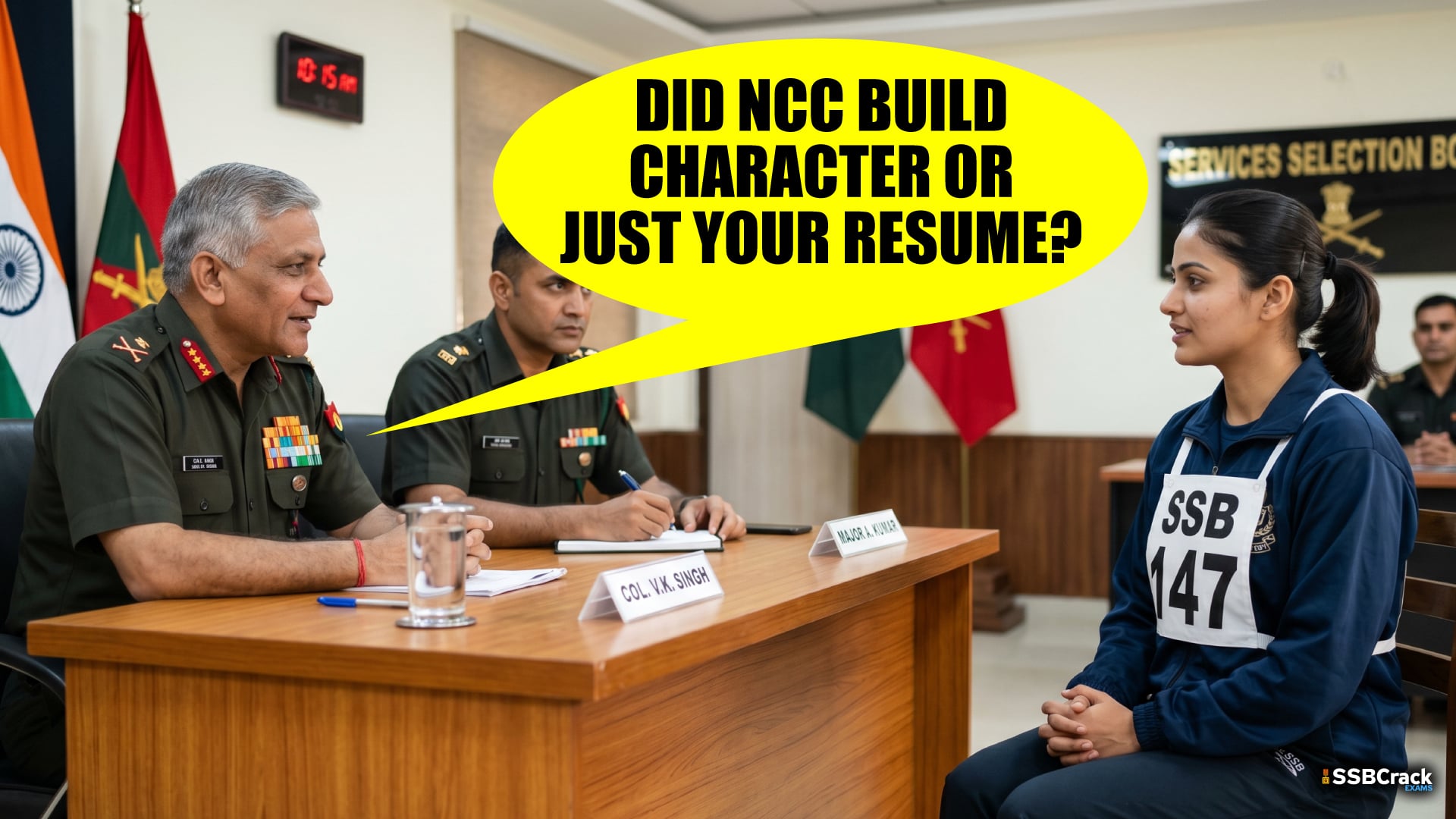
The NCC Special Entry is one of the most unique officer entries into the Indian Army because it recognizes candidates who have already undergone military-oriented training through the National Cadet Corps. Unlike many other entries, NCC candidates are expected to possess a better understanding of discipline, leadership, teamwork, and military values even before joining the Armed Forces.
However, many NCC cadets mistakenly believe that holding a ‘C’ Certificate guarantees success in the SSB Interview. The reality is that the SSB assesses your personality, Officer Like Qualities, leadership potential, social adaptability, responsibility, and suitability to become an officer—not just your NCC achievements.
In this article, we will discuss 20 important interview questions frequently asked to NCC Special Entry candidates, understand why these questions are asked, learn how to answer them effectively, and examine sample responses that reflect the qualities expected in future Army officers.
1. Tell me about yourself.
Why it is asked
To assess communication skills, confidence, self-awareness, and personality.
How to answer
Include:
- Family background
- Education
- NCC experience
- Hobbies
- Responsibilities
Sample Answer
“I am a graduate student and an NCC Senior Division cadet with a ‘C’ Certificate. Along with academics, I actively participated in NCC camps, social service activities, and leadership assignments. These experiences helped me develop discipline, teamwork, and confidence.”
2. Why do you want to join the Army through NCC Special Entry?
Why it is asked
To assess motivation and seriousness.
How to answer
Link NCC experiences with military aspirations.
Sample Answer
“My NCC experience strengthened my interest in military life. Through camps, drills, leadership tasks, and interactions with Army personnel, I developed a strong desire to serve the nation as an Army officer.”
3. How has NCC helped in your personality development?
Why it is asked
To assess learning and self-development.
How to answer
Mention specific improvements.
Sample Answer
“NCC improved my discipline, confidence, leadership skills, communication ability, and teamwork. It also taught me time management and responsibility.”
4. What do you know about NCC Special Entry?
Why it is asked
To assess awareness and preparation.
How to answer
Know the basic details.
Sample Answer
“NCC Special Entry allows eligible NCC ‘C’ Certificate holders to apply directly for SSB interviews without appearing for a written examination, subject to eligibility criteria.”
5. Why should we select you?
Why it is asked
To assess confidence and suitability.
How to answer
Connect your qualities with officer requirements.
Sample Answer
“My NCC experience has helped me develop discipline, responsibility, leadership, and teamwork. Combined with my academic background and commitment to self-improvement, I believe I possess the potential required of an Army officer.”
6. What are your strengths?
Why it is asked
To assess self-awareness.
How to answer
Support strengths with examples.
Sample Answer
“My strengths are discipline, adaptability, and teamwork. NCC camps often required working with people from different backgrounds, which strengthened these qualities.”
7. What are your weaknesses?
Why it is asked
To assess honesty and improvement mindset.
How to answer
Mention a manageable weakness.
Sample Answer
“I sometimes spend extra time ensuring that tasks are completed perfectly. I am learning to balance quality with efficiency and deadlines.”
8. Which NCC camp was most memorable and why?
Why it is asked
To assess involvement and learning.
How to answer
Describe experiences and lessons.
Sample Answer
“My most memorable camp was the Annual Training Camp because it challenged me physically and mentally while teaching teamwork, discipline, and leadership.”
9. What responsibilities did you hold in NCC?
Why it is asked
To assess leadership and responsibility.
How to answer
Mention actual appointments and duties.
Sample Answer
“I served as a section leader during camp activities where I coordinated cadets, ensured discipline, and assisted instructors in organizing training sessions.”
10. What is the difference between an NCC cadet and an Army officer?
Why it is asked
To assess understanding of military leadership.
How to answer
Highlight responsibility differences.
Sample Answer
“An NCC cadet undergoes military-oriented training, whereas an Army officer is professionally trained, commissioned, and responsible for leading soldiers and accomplishing operational objectives.”
11. Tell me about a leadership experience in NCC.
Why it is asked
To assess leadership potential.
How to answer
Use a real example.
Sample Answer
“During a camp competition, I coordinated a team of cadets, distributed responsibilities, motivated team members, and ensured effective preparation, resulting in a strong performance.”
12. What responsibilities do you handle at home?
Why it is asked
To assess maturity and accountability.
How to answer
Mention genuine responsibilities.
Sample Answer
“I assist with household management, important family errands, financial planning discussions, and supporting family members whenever required.”
13. What are your hobbies?
Why it is asked
To assess personality beyond NCC.
How to answer
Mention genuine hobbies.
Sample Answer
“I enjoy fitness training, football, reading biographies of military leaders, and participating in community service activities.”
14. What is your biggest achievement?
Why it is asked
To assess effort and accomplishment.
How to answer
Choose a meaningful achievement.
Sample Answer
“My biggest achievement was earning the NCC ‘C’ Certificate while balancing academics and other responsibilities. It required sustained effort and commitment.”
15. Tell me about a failure and what you learned.
Why it is asked
To assess resilience and learning ability.
How to answer
Focus on lessons learned.
Sample Answer
“I once failed to secure a position in a college committee. The experience taught me the importance of communication, preparation, and understanding team expectations.”
16. What qualities should an Army officer possess?
Why it is asked
To assess understanding of Officer Like Qualities.
How to answer
Mention practical qualities.
Sample Answer
“An Army officer should possess integrity, courage, responsibility, initiative, teamwork, emotional stability, determination, and the ability to inspire confidence in others.”
17. How do you handle pressure and stress?
Why it is asked
To assess emotional stability.
How to answer
Mention practical strategies.
Sample Answer
“I prioritize tasks, maintain physical fitness, stay organized, and focus on solutions rather than problems during stressful situations.”
18. What would you do if your team disagreed with your idea?
Why it is asked
To assess teamwork and flexibility.
How to answer
Show openness and objectivity.
Sample Answer
“I would listen carefully to their viewpoints, evaluate alternatives objectively, and support the solution that best serves the team’s objective.”
19. If not selected through NCC Special Entry, what will you do?
Why it is asked
To assess resilience and determination.
How to answer
Remain positive and practical.
Sample Answer
“I will continue improving myself, pursue professional opportunities, and prepare for future defence entry options because my aspiration to serve remains unchanged.”
20. What does becoming an Army officer mean to you?
Why it is asked
To assess understanding of military responsibility.
How to answer
Focus on leadership and service.
Sample Answer
“Becoming an Army officer means leading by example, accepting responsibility for people and missions, making decisions under pressure, and serving the nation with honor and dedication.”
Additional NCC-Specific Questions
About NCC Training
- What did you learn from NCC?
- What was your role during camps?
- What are the aims of NCC?
About NCC Certificates
- Explain the significance of the NCC ‘C’ Certificate.
- How did you prepare for your certificate examination?
About Leadership
- Describe a situation where you led fellow cadets.
- How did you handle conflicts during camp activities?
About Social Service
- What social service activities did you participate in through NCC?
- What lessons did you learn from community service?
What Assessors Expect from NCC Candidates
Better Discipline
A stronger understanding of military values and routines.
Leadership Experience
Evidence of leading cadets and organizing activities.
Teamwork
Ability to work effectively with people from diverse backgrounds.
Responsibility
Willingness to take ownership of tasks.
Officer Like Qualities
- Effective Intelligence
- Initiative
- Responsibility
- Organizing Ability
- Self-Confidence
- Cooperation
- Social Adaptability
- Determination
- Courage
- Emotional Stability
Common Mistakes Made by NCC Candidates
- Assuming NCC experience alone guarantees recommendation.
- Overemphasizing NCC achievements.
- Giving memorized answers.
- Claiming leadership without examples.
- Failing to connect NCC experiences with personal growth.
- Ignoring current affairs and defence awareness.
- Speaking negatively about instructors or fellow cadets.
Interview Answer Formula
For NCC-related questions:
Situation → Responsibility → Action → Result → Learning
Example:
“During camp preparations, I was assigned as section leader. I coordinated team activities, monitored attendance, and motivated cadets. Our section performed well, and I learned the importance of leadership and communication.”
Final Advice for NCC Special Entry Aspirants
Remember that the NCC ‘C’ Certificate opens the door to the SSB Interview, but your recommendation depends on your personality. Use your NCC experiences to demonstrate leadership, teamwork, discipline, responsibility, and initiative.
The assessors are looking for candidates who have transformed NCC training into genuine Officer Like Qualities.
Conclusion
The NCC Special Entry is a unique opportunity because it allows cadets who have already experienced military-oriented training to take the next step toward becoming commissioned officers. However, recommendation is earned not by certificates but by personality, leadership potential, and character.
Use your NCC experiences to demonstrate responsibility, teamwork, discipline, initiative, and leadership. Show the assessors how these experiences have shaped you into a more mature and capable individual ready to take on the responsibilities of an Army officer.


