




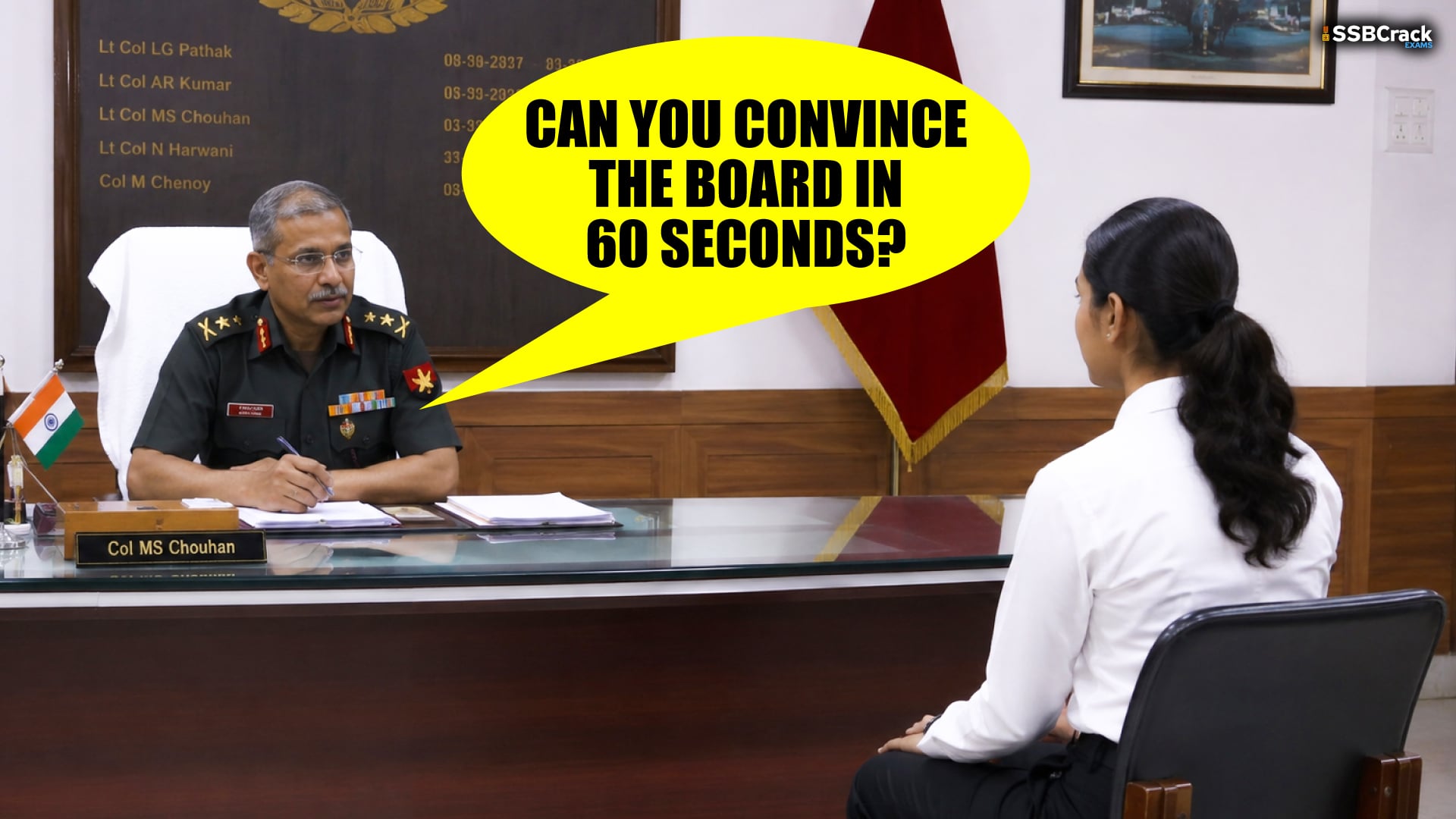
Every SSB aspirant dreams of hearing the word “Recommended.” But have you ever wondered what kind of responses and personality traits are commonly seen among candidates who finally earn a recommendation?
Recommended candidates are not selected because they memorize perfect answers. They are recommended because their responses consistently reflect Officer Like Qualities, practical thinking, responsibility, initiative, social adaptability, leadership potential, and emotional stability.
In this article, we will discuss 20 interview questions that are frequently answered effectively by recommended candidates. We will understand why these questions are asked, how to approach them, and examine sample responses that reflect the mindset of a future officer.
1. Why do you want to join the Armed Forces?
Why it is asked
To assess the candidate’s motivation and understanding of military service.
How to answer
Be genuine. Mention service, leadership, responsibility, and challenge. Avoid glamour-based reasons.
Sample Answer
“I want to join the Armed Forces because it offers an opportunity to serve the nation while leading and motivating people. I am attracted to the values of discipline, responsibility, teamwork, and continuous self-development that military life provides.”
2. Tell me about yourself.
Why it is asked
To assess self-awareness, communication skills, and confidence.
How to answer
Cover your family background, education, achievements, interests, and responsibilities.
Sample Answer
“I am a B.Com final-year student from West Bengal. I come from a family that values education and discipline. I actively participate in sports and college events and enjoy reading about defence affairs. I have also organized several academic and cultural activities, which helped develop my leadership and teamwork skills.”
3. What are your strengths?
Why it is asked
To evaluate self-awareness and confidence.
How to answer
Mention strengths supported by examples.
Sample Answer
“My strengths are responsibility, adaptability, and perseverance. During college projects, I often coordinate team activities and ensure tasks are completed on time. I remain calm under pressure and continue working toward goals despite setbacks.”
4. What are your weaknesses?
Why it is asked
To assess honesty and improvement mindset.
How to answer
Mention a manageable weakness and explain how you are working to improve it.
Sample Answer
“I sometimes spend extra time evaluating alternatives before making decisions. To improve, I consciously practice making timely decisions during daily tasks and group activities.”
5. Describe a situation where you led a team.
Why it is asked
To assess leadership potential.
How to answer
Use a real example from your life.
Sample Answer
“I coordinated a college cultural event involving multiple committees. I delegated responsibilities, monitored progress, resolved issues, and ensured that the event was conducted successfully within the planned schedule.”
6. What is your biggest achievement?
Why it is asked
To understand goals, effort, and accomplishment.
How to answer
Focus on achievements involving initiative and effort.
Sample Answer
“My biggest achievement was organizing a community awareness campaign involving students and local residents. It required planning, coordination, and communication with various stakeholders.”
7. How do you spend your free time?
Why it is asked
To assess personality and interests.
How to answer
Mention constructive hobbies and activities.
Sample Answer
“I spend my free time reading newspapers, exercising, playing sports, and following defence-related developments. I also enjoy interacting with friends and participating in community activities.”
8. Who is your role model and why?
Why it is asked
To assess values and inspiration.
How to answer
Choose someone you genuinely admire and explain why.
Sample Answer
“My role model is Dr. A.P.J. Abdul Kalam because of his humility, dedication to national development, scientific excellence, and ability to inspire young people.”
9. Tell me about a failure and what you learned from it.
Why it is asked
To assess resilience and learning ability.
How to answer
Focus on lessons learned rather than the failure itself.
Sample Answer
“I once failed to secure a leadership position in a student organization. I learned the importance of better communication, relationship-building, and understanding team expectations.”
10. How do your friends describe you?
Why it is asked
To assess social adaptability and interpersonal skills.
How to answer
Mention qualities supported by examples.
Sample Answer
“My friends describe me as dependable and cooperative because I willingly help during group projects and remain available whenever support is needed.”
11. What responsibilities do you have at home?
Why it is asked
To assess responsibility and maturity.
How to answer
Mention genuine responsibilities you perform regularly.
Sample Answer
“I assist my parents with financial planning, household errands, and managing important family tasks whenever required.”
12. What would you do if your team disagreed with your idea?
Why it is asked
To assess teamwork and flexibility.
How to answer
Show openness to others’ views and commitment to team objectives.
Sample Answer
“I would listen to their viewpoints, evaluate alternatives objectively, and support the option that best serves the team’s objective rather than insisting on my own idea.”
13. Why should we select you?
Why it is asked
To assess self-confidence and suitability.
How to answer
Connect your qualities with the requirements of an officer.
Sample Answer
“I possess qualities such as responsibility, teamwork, adaptability, and perseverance. I continuously seek self-improvement and enjoy taking responsibility in challenging situations.”
14. What are your short-term and long-term goals?
Why it is asked
To assess planning and ambition.
How to answer
Keep goals realistic and aligned with your aspirations.
Sample Answer
“My short-term goal is to successfully complete my training and develop as an effective officer. My long-term goal is to contribute meaningfully to the Armed Forces while continuously improving my professional and leadership abilities.”
15. Tell me about a difficult decision you made.
Why it is asked
To assess judgment and courage.
How to answer
Provide a real example involving responsibility and decision-making.
Sample Answer
“During a project, I reassigned responsibilities when a team member repeatedly missed deadlines. Although it was uncomfortable initially, it helped ensure successful completion of the project.”
16. What qualities make a good officer?
Why it is asked
To assess understanding of leadership.
How to answer
Mention practical Officer Like Qualities.
Sample Answer
“A good officer should possess integrity, courage, responsibility, effective intelligence, emotional stability, teamwork, initiative, and the ability to inspire confidence in others.”
17. How do you handle stress?
Why it is asked
To assess emotional stability.
How to answer
Mention healthy coping mechanisms and practical approaches.
Sample Answer
“I handle stress by prioritizing tasks, maintaining physical fitness, discussing issues with trusted people when necessary, and focusing on practical solutions rather than worrying excessively.”
18. What current national issue interests you?
Why it is asked
To assess awareness and analytical thinking.
How to answer
Present balanced and informed views.
Sample Answer
“I am interested in India’s defence modernization efforts because they directly influence national security, technological development, and strategic preparedness.”
19. Describe a situation where you helped someone.
Why it is asked
To assess empathy and social effectiveness.
How to answer
Give a genuine example from your life.
Sample Answer
“A classmate was struggling academically before examinations. I helped create a study schedule, explained difficult topics, and conducted revision sessions, which improved both confidence and performance.”
20. If not selected, what will you do?
Why it is asked
To assess resilience and maturity.
How to answer
Remain positive, practical, and growth-oriented.
Sample Answer
“I will continue improving myself, pursue my educational and professional goals, and prepare sincerely for future opportunities because personal growth should continue regardless of the outcome.”
Common Traits Seen in Recommended Candidates
Self-awareness: They know their strengths and weaknesses accurately.
Responsibility: They willingly accept accountability.
Positive Attitude: They focus on solutions rather than complaints.
Leadership Through Action: They influence others through example.
Real-Life Experiences: They draw answers from actual situations rather than memorized content.
Balanced Confidence: They are confident without being arrogant.
Consistency: Their personality remains natural and uniform throughout the SSB process.
Mistakes to Avoid
Giving rehearsed answers.
Exaggerating achievements.
Pretending to be perfect.
Criticizing others or blaming circumstances.
Memorizing ideal officer answers.
Hiding weaknesses.
Giving theoretical answers without examples.
Final Message for Aspirants
Remember that recommended candidates are not extraordinary people with perfect personalities. They are ordinary individuals who consistently demonstrate responsibility, initiative, social adaptability, effective intelligence, emotional stability, and a willingness to learn from experience.
Instead of preparing model answers, focus on developing genuine Officer Like Qualities through your daily actions, responsibilities, relationships, and decision-making. The interview is simply an opportunity for assessors to discover the person you already are.
Conclusion
The secret behind most recommended candidates is not exceptional intelligence or extraordinary talent. It is authenticity, self-awareness, responsibility, and consistent demonstration of Officer Like Qualities in everyday life.
Your goal should not be to impress the Interviewing Officer with perfect answers. Your goal should be to honestly reflect your personality, experiences, and leadership potential. When your actions, thoughts, and responses are naturally aligned, recommendation becomes a possibility.


