




The Indian Army has a structured, multi-stage process designed to identify, evaluate, and train candidates to become commissioned officers. The official Overview of Officers’ Selection Process explains the steps followed, what candidates can expect, and how the selection is managed across different entry schemes.
What Is UPSC CDSTE
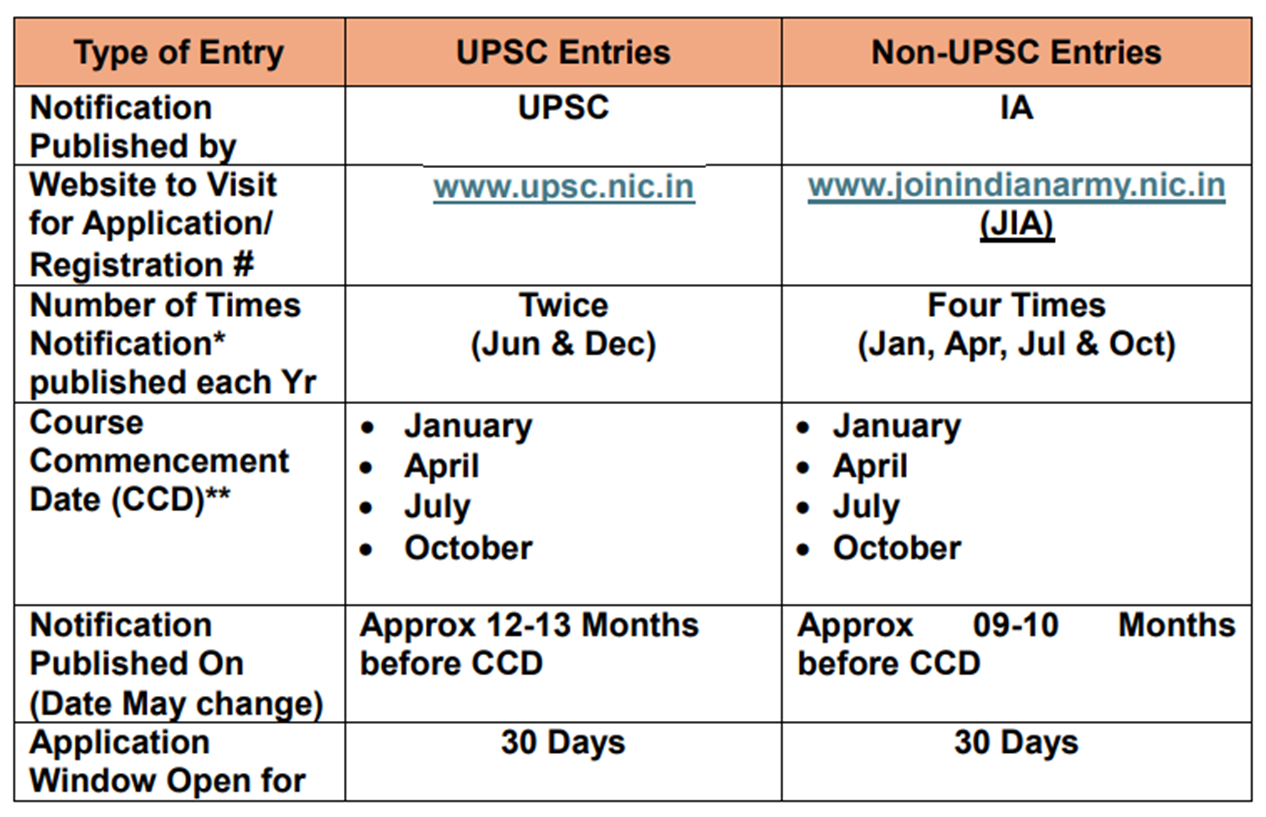
The Selection process begins with publication of Notification or Advertisement for an Entry and the Course. For administrative purposes and ease of candidates, notification for various entries and courses may be published together. IA Officers Entries are primarily classified under two categories i.e. UPSC entries and non-UPSC Entries.
Important Note
1. Once a candidate applies for an entry, information of all stages of the process will be conveyed through automated email and SMS.
2. Generally, two notification (two courses) per entry per year are published.
3. Notification for various entries may be combined or may be published separately as per organizational requirement.
Three-Stage Selection System
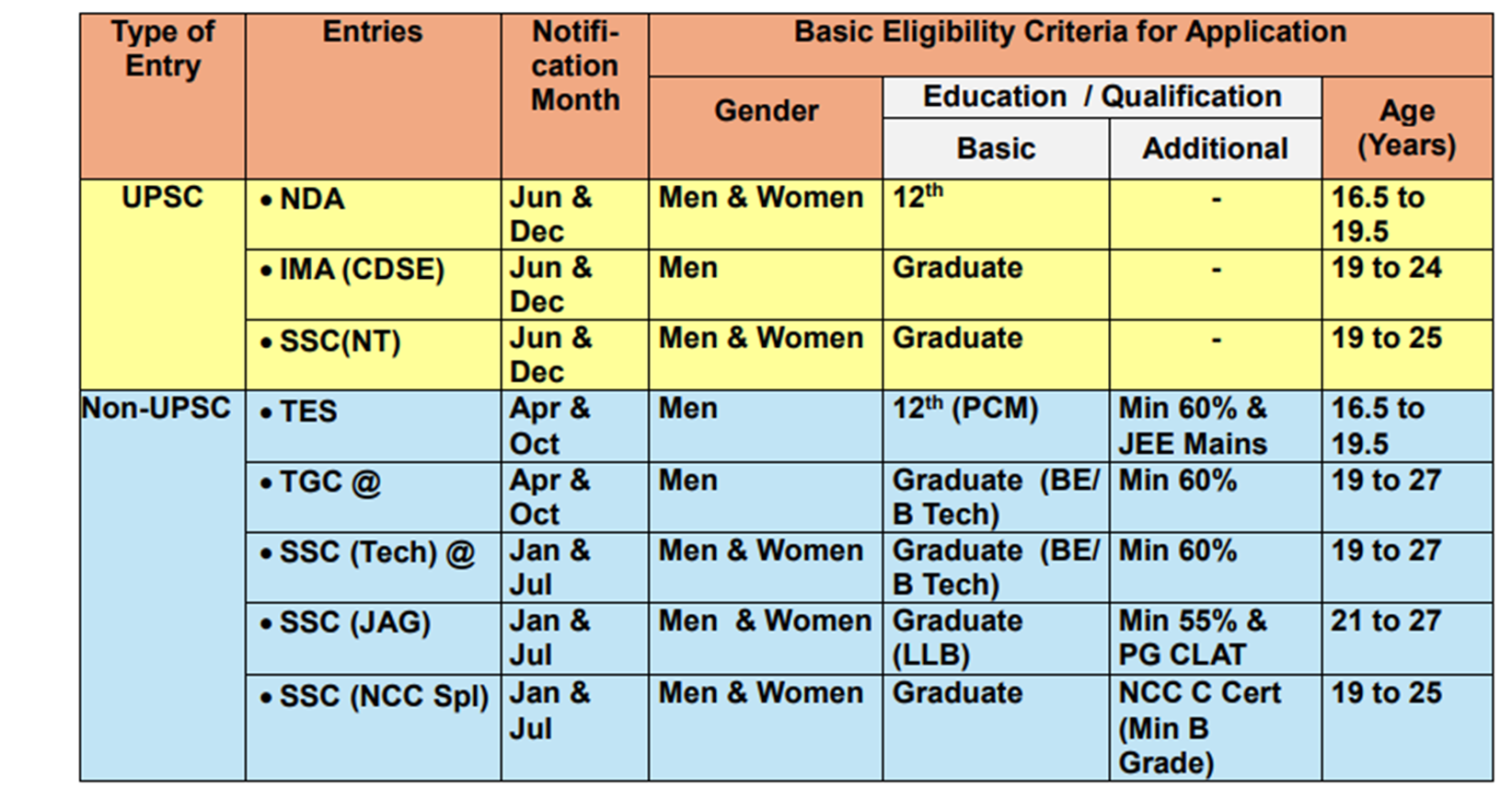
•All candidates should visit JIA website for checking their eligibility for an entry. Candidates are required to first register themselves on JIA before applying for any entry.
• Details of the registration process has been given on the website. Provisioning of any wrong, incomplete or partial information would result in cancellation of candidature at any stage of process.
TGC and SSC (Tech) are planned to be made UPSC Entries wef Yr 2026 (Notification likely in Yr 2026) by conduct of UPSC Written Exam viz Combined Defence Services Technical Examination (CDSTE).
The Broad Pattern of Exam Would Be
1. Paper I : General Ability Test (Common to all)
•English, GK, Engg Maths
•100 Ques / 100 Marks / 2 Hours
2. Paper II : Stream Specific Paper (05 Streams)
•Civil, Computer Sc, Electrical, Electronics, Mechanical
•100 Ques / 100 Marks / 2 Hours
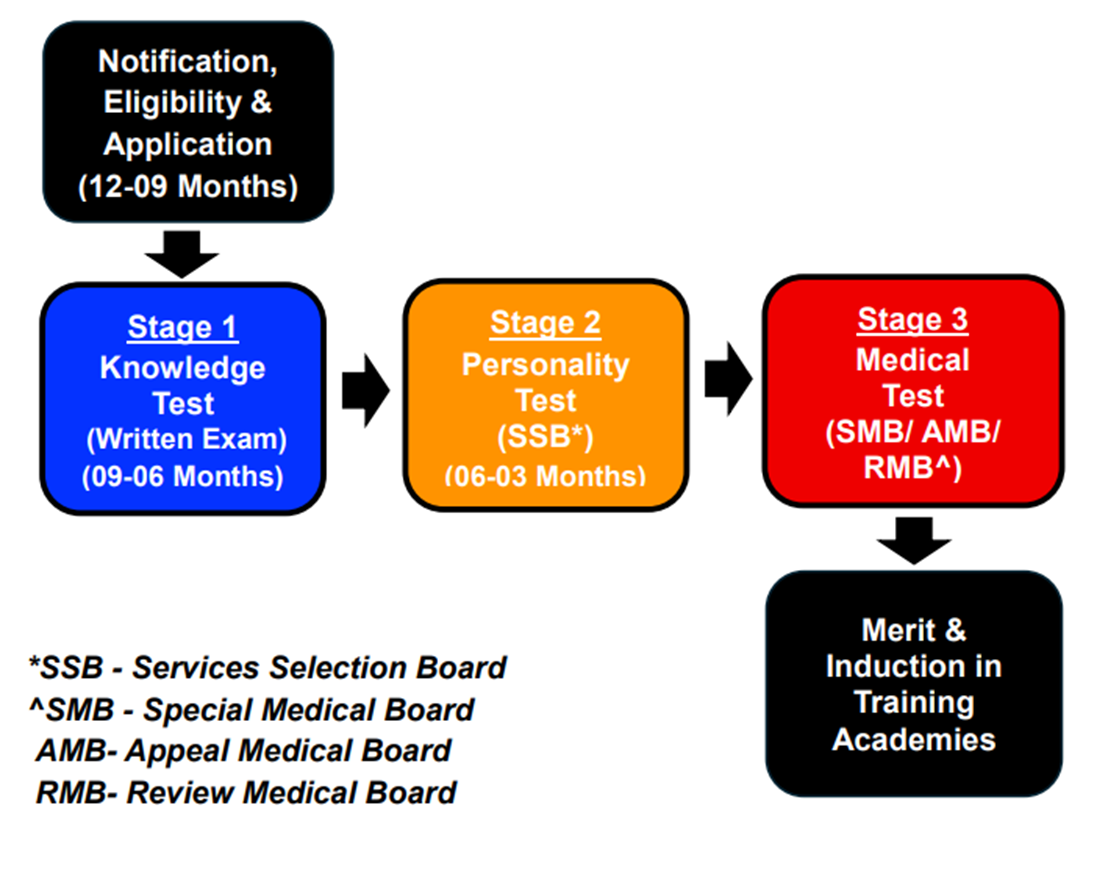
Three-Stage Selection System
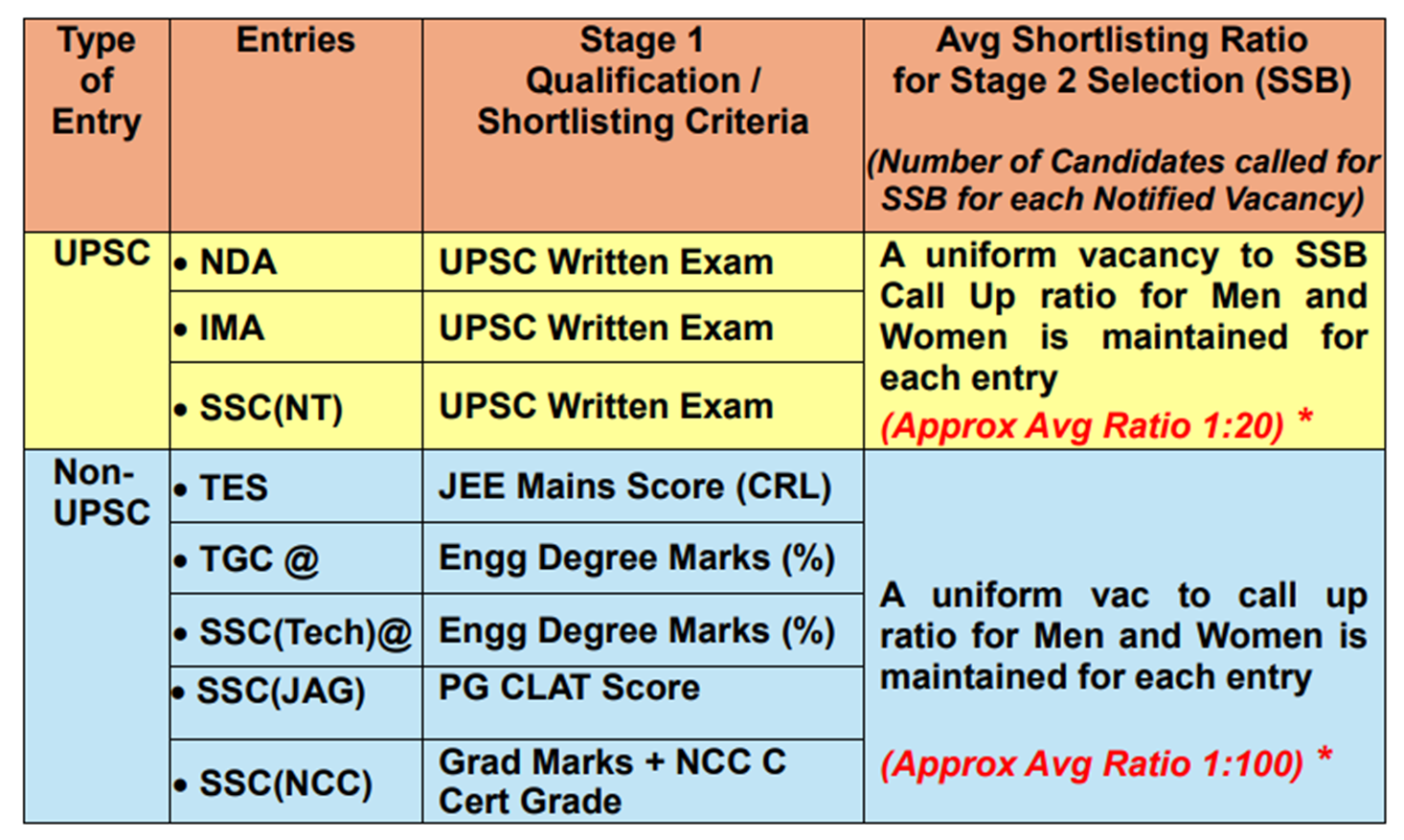
Stage- 1 Selection Process : Knowledge Test / Filter
Stage 1 requires all candidates to qualify the Knowledge Component Test (Intelligence,
Reasoning, Knowledge, Proficiency) or Knowledge Filter criteria, which would be specified in the notification for each entry.
•In UPSC based entries, this test will be conducted by UPSC and for other entries (Non-UPSC) various national level exams / additional filters, as given in notification, would be applicable.
•Qualifying Getting Shortlisted in Stage 1 selection process is necessary to graduate to Stage-2 of selection process.
Note
•Shortlisting is independent for each category of notified vacancies, even if these vacancies are notified in same notification.
•Vacancies for each course, entry, gender etc are purely based on current operational needs of Indian Army.
•Men & Women will be shortlisted independently at same vacancies to call up ratio as per vacancies notified.
•The ratio of vacancies to Candidates Shortlisted for SSB may vary for each course and entry based on numbers of applicant and minimum acceptable score / cutt-off.
Stage-2 Selection Process
•Once applications are accepted, candidates undergo a three-part selection assessment:
A. Written or Knowledge Screening
•Depending on the entry type:
•UPSC entries: Candidates appear for exams such as NDA/NA or CDS, which are written tests assessing subjects like English, General Knowledge and Mathematics.
•Non-UPSC entries:
•Shortlisting is often done based on academic performance (e.g., engineering marks for TGC/SSC Tech), aptitude filters or national exams like JEE/CLAT depending on entry.
B. SSB Interview (Personality Assessment)
•The heart of the selection process is the SSB interview, a five-day assessment that evaluates candidates for leadership potential and officer-like qualities.
This includes:
•Stage I Screening: Intelligence tests, picture perception & discussion.
•Stage II: Group tasks, psychological tests, personal interviews, and group discussions.
•Candidates who fail Stage I are sent back on Day 1. Those who pass proceed to Stage II.
What SSB Evaluates
•Leadership qualities
•Communication skills
•Teamwork and planning
•Confidence and emotional stability
•Logical thinking and decision-making
After successful completion, candidates are either “recommended” or “not recommended”. Recommended ones move to the next stage.
Stage 3 — Medical Examination
After clearing SSB:
•Candidates undergo a thorough medical evaluation conducted by a Special Medical Board (SMB).
•This is to ensure physical and medical fitness according to Army standards.
If a candidate is found unfit at first, there are options like:
•Appeal Medical Board (AMB)
•Review Medical Board (RMB)
Each gives an opportunity to reassess medical status under certain conditions.
Merit List & Training Induction
Once all tests are completed:
•A merit list is prepared based on candidates’ performance (SSB scores and exam results).
•Medical outcomes do not affect the merit list order; fitness is verified separately.
Candidates who qualify all stages are selected for Pre-Commission Training at designated training academies such as:
•Officers Training Academy (for SSC entries)
•Indian Military Academy (IMA) or National Defence Academy (NDA)/other academies (for UPSC entries).
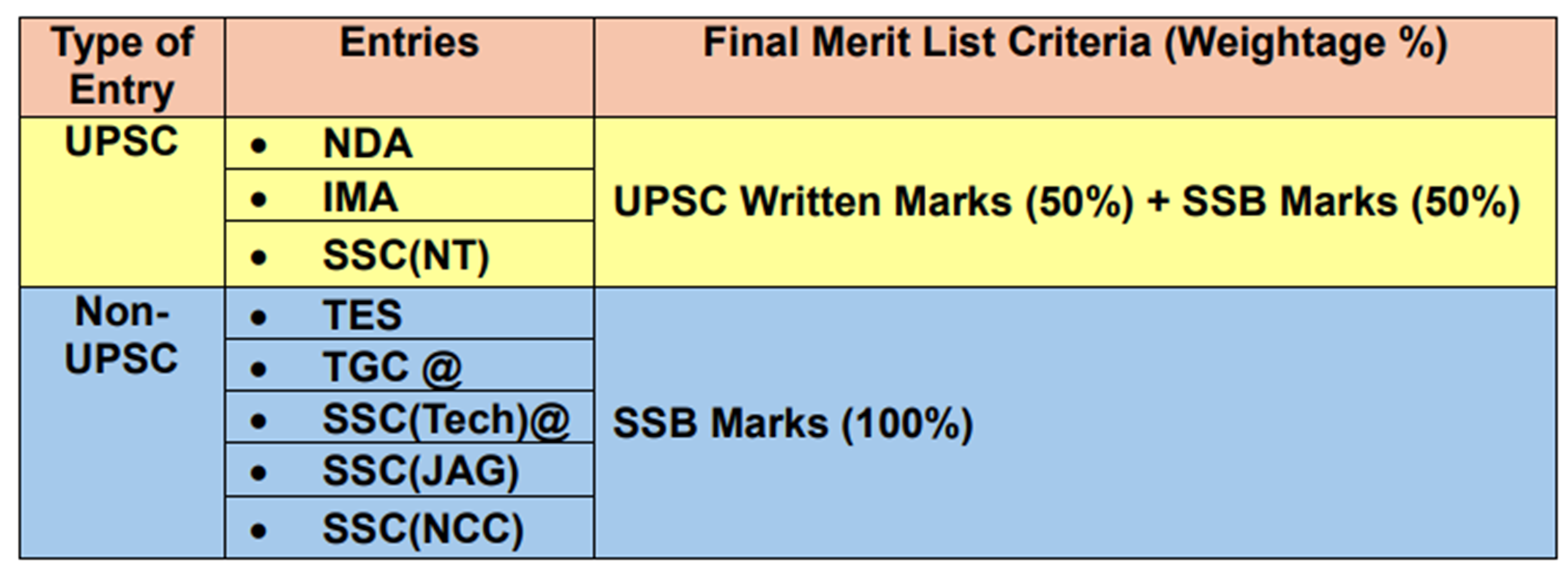
Note
For candidate with same marks, the merit will be decided as under :-
* Level I : Older candidate (DOB) i.e. more in age will be considered higher.
* Level II : If DOB is same, candidate with higher percentage of marks in qualifying exam
Key Points to Remember
✔ The three-stage system (Notification → SSB → Medical) is central to all officer entries in the Indian Army.
✔ UPSC entries involve a written exam, while some Army entries use academic performance or other filters for initial selection.
✔ SSB is a rigorous personality evaluation that tests traits essential for leadership.
✔ Medical examinations are thorough and critical before induction into training.


