




In Current Affairs for 13 March 2026, we will see the latest national and international current affairs news. These important current affairs will be beneficial for your upcoming NDA, CDS, CDS OTA, AFCAT, TA, Agniveer Army, Agniveer Navy, Agniveer Air Force, Women Military Police, INET, MNS, ACC exams, SCO, PCSL, CAPF, and SSB interviews, and direct entries for Army, Navy, and Air Force like SSC Tech, TGC, JAG, NCC, TES, 10+2 Cadet. Download a PDF file about current events at the end of this article. Let us now see the Current Affairs.
Defence Current Affairs 13 March 2026
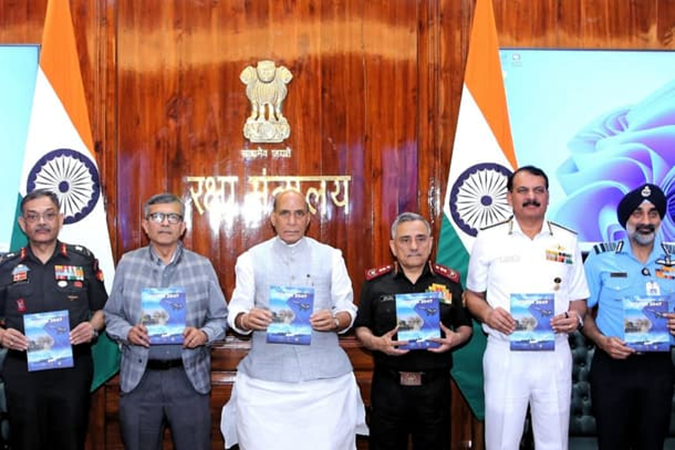
India’s Defence Vision 2047
- India is preparing a comprehensive transformation of its military capabilities under the Defence Vision 2047 plan. The strategy emphasizes the use of advanced technologies to address emerging security threats and ensure the armed forces remain capable of handling future conflicts.
- A key feature of this roadmap is the creation of several specialized forces and institutions. These include a dedicated drone force, a military geo-spatial agency, a data force, and a cognitive warfare unit. Together, these organizations will strengthen India’s ability to gather intelligence, conduct precision operations, and manage digital and information warfare.
- The focus on drones, big data, and geospatial intelligence reflects the changing nature of modern warfare, where technological superiority plays a decisive role. By investing in these capabilities, India aims to build a future-ready military capable of operating effectively across land, air, sea, cyber, and space domains.
IAF Chief Reviews Operational Readiness with MiG-29 Sortie
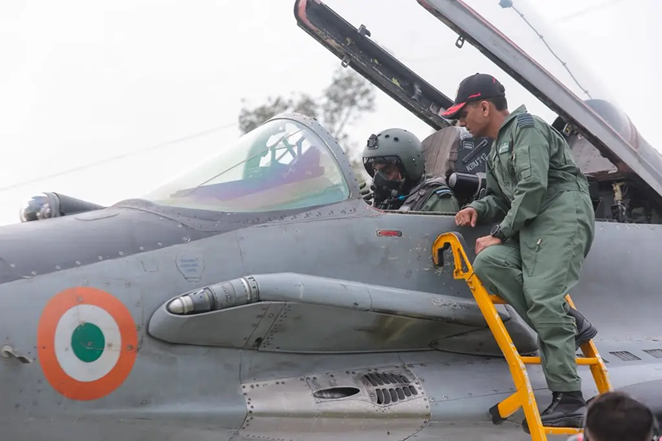
- In another significant development, Air Chief Marshal A. P. Singh, Chief of the Indian Air Force, personally flew a sortie in an upgraded MiG-29 fighter aircraft from a frontline base under the Western Air Command.
- The flight lasted approximately 45 minutes and allowed the Air Force chief to evaluate the aircraft’s performance and operational readiness. During the visit, he also assessed the preparedness of personnel, maintenance infrastructure, and operational systems at the base.
- The upgraded MiG-29 UPG fighters play an important role in India’s air defence system. These aircraft are primarily deployed along the western and northern sectors and serve as a key component in safeguarding the country’s airspace.
- Such high-level inspections demonstrate the leadership’s commitment to maintaining combat readiness and ensuring that frontline units remain fully prepared for any contingency.
India’s Push for Small Modular Nuclear Reactors
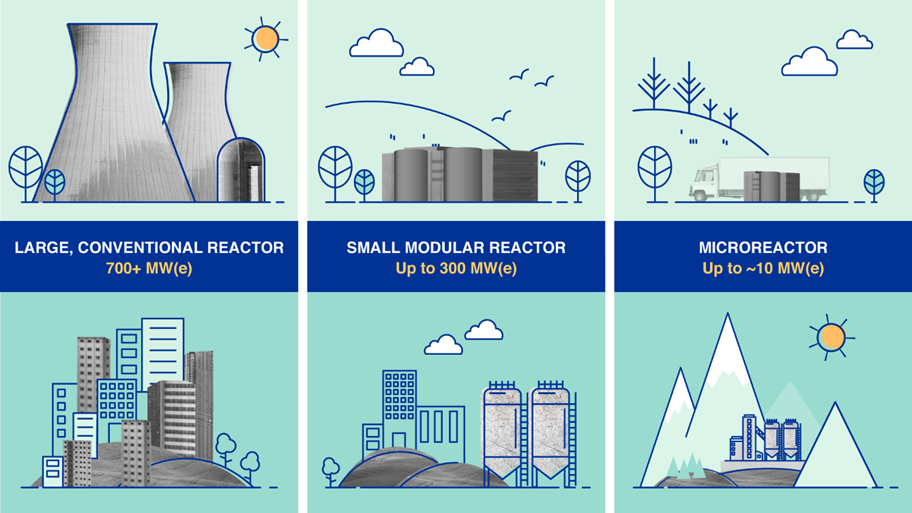
- India is also accelerating its efforts to expand nuclear energy through the development of Small Modular Reactors (SMRs). The government has allocated ₹20,000 crore under the Nuclear Energy Mission to support research, development, and deployment of these advanced reactors.
- SMRs are compact nuclear reactors that can be deployed more quickly and flexibly compared to traditional large reactors. India plans to develop at least five indigenous SMRs by 2033, including designs such as the Bharat Small Modular Reactor (BSMR-200).
- These reactors will contribute to several strategic goals:
- Expanding India’s clean energy capacity
- Reducing dependence on fossil fuels
- Supporting industrial decarbonization
- Enhancing energy security
- India currently has nuclear power capacity of about 8.78 gigawatts, but the long-term objective is to increase it dramatically to 100 gigawatts by 2047.
India’s First Indigenous Single-Seater eVTOL Aircraft
- India is making rapid progress in both technological innovation and energy security. Recent developments in indigenous aviation technology and the diversification of crude oil imports demonstrate the country’s strategic approach to self-reliance and resilience in a rapidly changing global environment.
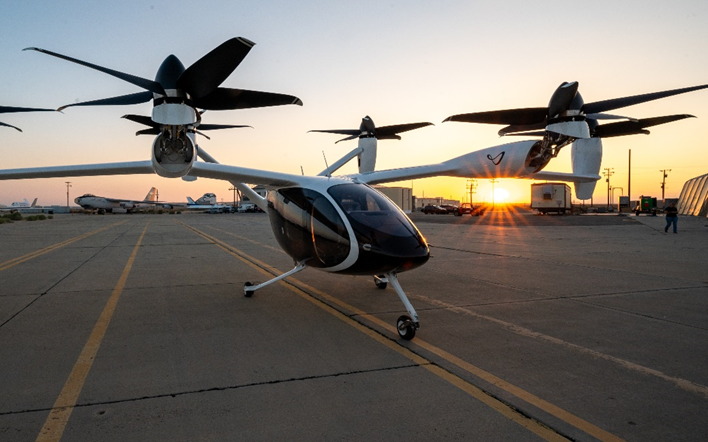
- India has achieved a major milestone in advanced aviation technology with the development of its first indigenous single-seater electric vertical take-off and landing (eVTOL) aircraft, named Aer Genesis.The aircraft has been designed and developed by Bengaluru-based aerospace startup Aexo Aerospace, marking an important step toward urban air mobility and future transportation systems.One of the key technological features of this aircraft is its distributed electric propulsion system. Instead of relying on a single large rotor like conventional helicopters, the aircraft uses multiple smaller electric lift units.
- This design improves operational safety through redundancy, reduces mechanical complexity, and significantly lowers noise and vibration levels.The aircraft has already completed hundreds of controlled test flights, demonstrating that the project has moved beyond the concept stage toward a production-ready prototype.
- Engineers have also focused on developing advanced digital flight-control algorithms to ensure stability, safe transitions between hover and forward flight, and reliable operation even in the event of system failures.
India Diversifies Oil Imports to Enhance Energy Security
- In parallel with technological advancements, India is also strengthening its energy security by diversifying the sources of its crude oil imports. Around 70% of India’s crude oil imports are now sourced from routes outside the Strait of Hormuz, a crucial maritime chokepoint in the Persian Gulf.
- The Strait of Hormuz has long been a critical transit route for global oil shipments. However, geopolitical tensions and regional conflicts have raised concerns about potential disruptions in energy supply. By expanding procurement from alternative regions and routes, India aims to reduce its dependence on any single region.
- India now imports crude oil from around 40 different countries, reflecting a deliberate strategy to create a more resilient supply network. This diversification helps ensure stable fuel availability even during geopolitical crises or supply chain disruptions.
- As the world’s third-largest oil consumer, India depends heavily on imported crude to meet its growing energy needs. Expanding the supplier base and strengthening logistical flexibility are therefore critical components of the country’s long-term energy policy.

Review Questions
- India’s first indigenous single-seater eVTOL aircraft “Aer Genesis” has been
developed by which company?
A. Hindustan Aeronautics Limited
B. Aexo Aerospace
C. Bharat Electronics Limited
D. Tata Advanced Systems
Answer: B. Aexo Aerospace
Explanation:
India’s first indigenous single-seater electric vertical take-off and landing (eVTOL)
aircraft Aer Genesis has been developed by the aerospace startup Aexo Aerospace,
based in Bengaluru. - The “Aer Genesis” aircraft mainly uses which propulsion technology?
A. Jet propulsion
B. Turbofan propulsion
C. Distributed electric propulsion
D. Ramjet propulsion
Answer: C. Distributed electric propulsion
Explanation:
The aircraft uses distributed electric propulsion, which means several small electric
rotors provide lift and propulsion instead of one large rotor. This increases safety
and reduces noise. - The primary purpose of eVTOL aircraft like Aer Genesis is to support which
emerging transportation concept?
A. Hyperloop transport
B. Urban Air Mobility
C. Supersonic commercial travel
D. Deep-sea exploration
Answer: B. Urban Air Mobility
Explanation:
eVTOL aircraft are designed mainly for Urban Air Mobility (UAM), which includes
applications such as air taxis, emergency services, and short-distance city
transportation. - According to recent reports, approximately what percentage of India’s crude oil
imports now come from routes outside the Strait of Hormuz?
A. 40%
B. 50%
C. 70%
D. 90%
Answer: C. 70%
Explanation:
India has diversified its energy supply routes, and about 70% of crude oil imports
now come from outside the strategic Strait of Hormuz, reducing geopolitical risks. - India is currently the __ largest consumer of crude oil in the world.
A. First
B. Second
C. Third
D. Fourth
Answer: C. Third
Explanation:
India is the third-largest oil consumer globally, making diversification of oil import
sources essential for national energy security. - In which country is the joint military exercise “LAMITIYE-2026” being
conducted with
A. Mauritius
B. Seychelles
C. Sri Lanka
D. Maldives
ANSWER: B - In which city did the Indian Army’s Central Command organise its first-ever
Strategic Communication Conclave on 7 March 2026?
A. New Delhi
B. Bhopal
C. Lucknow
D. Jaipur
ANSWER: C - What is the name of the Indian Navy’s maritime security mission launched in
2019 to protect merchant ships?
A. Operation Samudra Suraksha
B. Operation Sea Guardian
C. Operation Blue Shield
D. Operation Sankalp
ANSWER: D - Who assumed charge as the DG of Naval Armament at Naval Headquarters,
New Delhi, on March 1, 2026?
A. Divakar Jayant
B. Ajay Kumar
C. B.P. Singh
D. Rajesh Verma
ANSWER: C - The Indian Army signed an MoU with the Forest Department of which region
on World Wildlife Day 2026 to protect the Snow Leopard and other high
altitude wildlife?
A. Himachal Pradesh
B. Uttarakhand
C. Ladakh
D. Sikkim
ANSWER: C - Which location hosted Exercise Kalari Leap led by Southern Air Command?
A. Lakshadweep and Minicoy islands
B. Andaman and Nicobar Islands
C. Pokhran Field Firing Ranges
D. Siachen Glacier
ANSWER: A - Where did the Indian Army successfully conduct the Strela-10 VSHORADS test
firing exercise?
A. Jaisalmer
B. Pokhran
C. Bikaner
D. Barmer
ANSWER: B - What type of missile is Air LORA classified as?
A. Subsonic cruise missile
B. Quasi-ballistic, supersonic missile
C. Hypersonic glide vehicle
D. Short-range surface-to-air missile
ANSWER: B - India’s One and Only Tri-Services Command
A. New Delhi
B. Northern Army Command
C. Andaman & Nicobar Command
D. None of the above
ANSWER: C - The ALH MK III Helicopters Have Been Indigenously Manufactured By__.
A. Boeing
B. HAL
C. DRDO
D. Dassault Aviation
ANSWER: B - INS Satpura Is A
A. Destroyer
B. OPV
C. Submarine
D. Guided Missile Stealth Frigate
ANSWER: D - INS Jalashwa Is A
A. Destroyer
B. OPV
C. Submarine
D. Amphibious transport dock
ANSWER: D - Exercises B/w The India And UK Is Called:
A. Desert Eagle
B. SLINEX
C. Indra
D. Indradhanush
ANSWER: D - How Many Countries Are In SAARC?
A. 3
B. 4
C. 8
D. 6
ANSWER: C - Current CDS of Indian Armed Forces Is
A. Gen Anil Chauhan
B. Gen Bipin Rawat
C. Gen M M Narravane
D. None
ANSWER: A
ALSO READ:
- Latest Daily Current Affairs and Defence Updates
- Latest Daily Current Affairs February 2026[DOWNLOAD PDF]
- Latest Daily Current Affairs January 2026[DOWNLOAD PDF]
- Latest Daily Current Affairs November 2025[DOWNLOAD PDF]
- Latest Daily Current Affairs October 2025[DOWNLOAD PDF]
- Latest Daily Current Affairs August 2025[DOWNLOAD PDF]
- Latest Daily Current Affairs July 2025[DOWNLOAD PDF]
- Monthly Defence Current Affairs June 2025 [DOWNLOAD PDF]
- Monthly Defence Current Affairs May 2025 [DOWNLOAD PDF]
- Monthly Defence Current Affairs April 2025 [DOWNLOAD PDF]
- Monthly Defence Current Affairs March 2025 [DOWNLOAD PDF]
- Monthly Defence Current Affairs February 2025 [DOWNLOAD PDF]
- Monthly Defence Current Affairs January 2025 [DOWNLOAD PDF]
- Defence Current Affairs Year End Review 2024
- Monthly Defence Current Affairs November 2024 [DOWNLOAD PDF]
- Monthly Defence Current Affairs October 2024 [DOWNLOAD PDF]
- Monthly Defence Current Affairs September 2024 [DOWNLOAD PDF]
- Monthly Defence Current Affairs August 2024 [DOWNLOAD PDF]
- Monthly Defence Current Affairs July 2024 [DOWNLOAD PDF]
- Monthly Defence Current Affairs June 2024 [DOWNLOAD PDF]


