




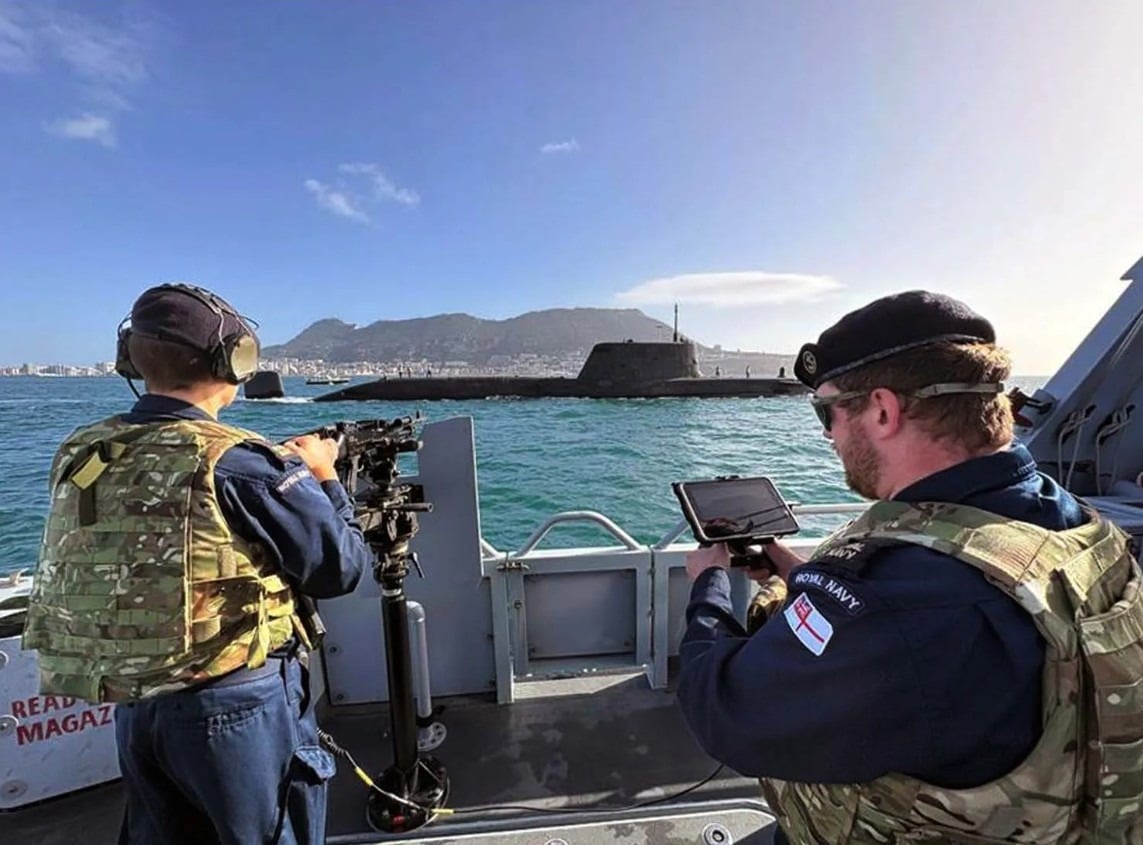
The UK Royal Navy Gibraltar Squadron has successfully adopted the ANAFI Parrot quadcopter into its operational framework to enhance maritime surveillance, force protection, and intelligence collection in and around Gibraltar. These advanced unmanned aerial vehicles (UAVs) serve critical functions such as short-range aerial reconnaissance, tracking vessel movements, and providing overwatch capabilities for the Royal Navy’s warships.
The ANAFI quadcopter is notable for its lightweight and electric design, equipped with high-resolution electro-optical sensors that facilitate real-time situational awareness through detailed imagery. Its compact size and minimal logistical requirements make it adaptable for deployment from patrol boats and auxiliary craft, eliminating the need for specialized launch or recovery equipment.
Lieutenant Commander Jonathan Davies, Commanding Officer of the Royal Navy Gibraltar Squadron, expressed optimism regarding the drones’ operational capabilities. “The ANAFI drones have enhanced our ability to deliver effective surveillance during both routine patrols and major tasking,” Davies remarked. He highlighted the dual role of the drones in intelligence gathering and protecting high-value units, such as the Carrier Strike Group, emphasizing that the clear imagery provided significantly improves situational awareness and aids tactical decision-making.
Recent drone operations included aerial views of HMS Dagger and the police launch guiding HMS Anson out of Gibraltar, underscoring the practical application of the drones in mission-critical scenarios.
The integration of the ANAFI system into operational use was facilitated by a new approval framework for small drones launched from naval platforms. Previously, “ship air release” procedures tailored for larger UAVs demanded extensive certification processes, potentially delaying the deployment of lower-risk drones. The revised framework now employs platform-specific risk assessments, standardized documentation, and digital tools that streamline and accelerate the approval process.
Clearance timelines for drone operations have significantly improved, decreasing from several weeks or months to just a few days following successful trials conducted on HMS Cutlass and HMS Dagger, alongside smaller vessels within the Gibraltar Squadron.
This innovative approach to drone usage is paving the way for broader implementation across various Royal Navy units, including experimental vessels and commando-operated crafts, signifying a shift towards greater reliance on lightweight UAVs in maritime operations.


